
Last Updated: June 2026
Quick answer: Busan is Korea’s relaxed coastal second city — Haeundae and Gwangalli beaches, the pastel Gamcheon Culture Village, Jagalchi fish market, and a seaside temple. It’s about 2.5 hours from Seoul by KTX, easy as a long day trip but best with an overnight or two.
Busan is Korea’s laid-back coastal counterpoint to Seoul — the country’s second city, strung along the southeast shore with broad beaches, a working harbor, seafood markets, hot springs, and a pastel hillside village that has become one of Korea’s most photographed places. It’s sunnier, slower, and more relaxed than the capital, and with the high-speed train putting it just two and a half hours from Seoul, it’s an easy and rewarding add-on to a Korea trip — whether as a long day out or a couple of unhurried nights by the sea.
This guide covers the best things to do in Busan, its beaches, how to get there from Seoul, and where to stay, so you can fit Korea’s coastal city into your trip with confidence. If you’re weighing where to go beyond the capital, Jeju Island is the other classic escape — volcanic beaches and crater hikes rather than Busan’s big-city coastline.
Table of Contents
- What Is Busan Known For?
- How to Get to Busan from Seoul
- Best Things to Do in Busan
- Busan’s Beaches
- What to Eat in Busan
- Where to Stay in Busan
- How Many Days Do You Need?
- Plan Your Trip
What Is Busan Known For?
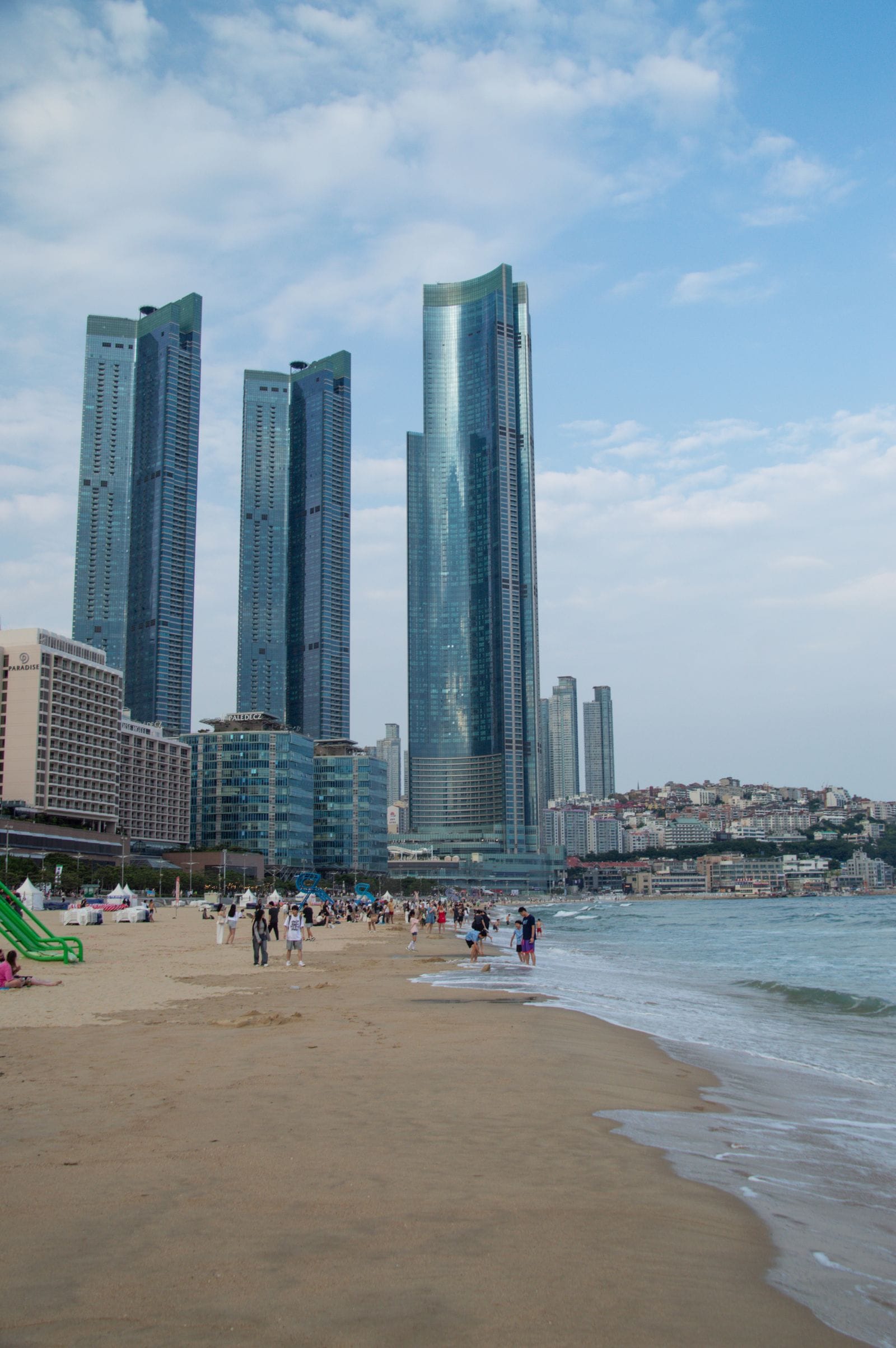
Busan is known for its beaches, its seafood, and a relaxed seaside character that feels a world away from Seoul’s intensity. As Korea’s biggest port and second-largest city, it blends a gritty maritime side — the vast Jagalchi fish market, the harbor, the shipyards — with resort-town glamour at Haeundae Beach, plus mountain temples, hot-spring spas, and the kaleidoscopic alleys of Gamcheon Culture Village. It also hosts the country’s biggest film festival each autumn — the Busan International Film Festival returns October 6–15, 2026 — which has given it a cultural cachet to match its coastline. The overall mood is easygoing: this is where Koreans themselves go to slow down. It’s the kind of place that surprises first-timers who expect a smaller, sleepier Seoul and instead find a big, confident city with its own distinct, salty-aired identity.
How to Get to Busan from Seoul
The fast, comfortable way is the KTX high-speed train (our Seoul to Busan transport guide compares it with flying and the bus), which links Seoul Station to Busan Station in about two and a half hours, running frequently throughout the day. It’s far less hassle than flying domestically, and seats sell out on weekends and holidays, so it pays to reserve ahead — you can book a high-speed rail ticket🚄 in advance for the time you want. Once in Busan, the city has its own clean, English-signed subway that reaches the beaches, markets, and main sights. Our guide to getting around Seoul covers the T-money card, which also works on Busan’s transit.
Best Things to Do in Busan
Busan’s highlights are spread along the coast and into the hills, and they cluster well for a short visit:
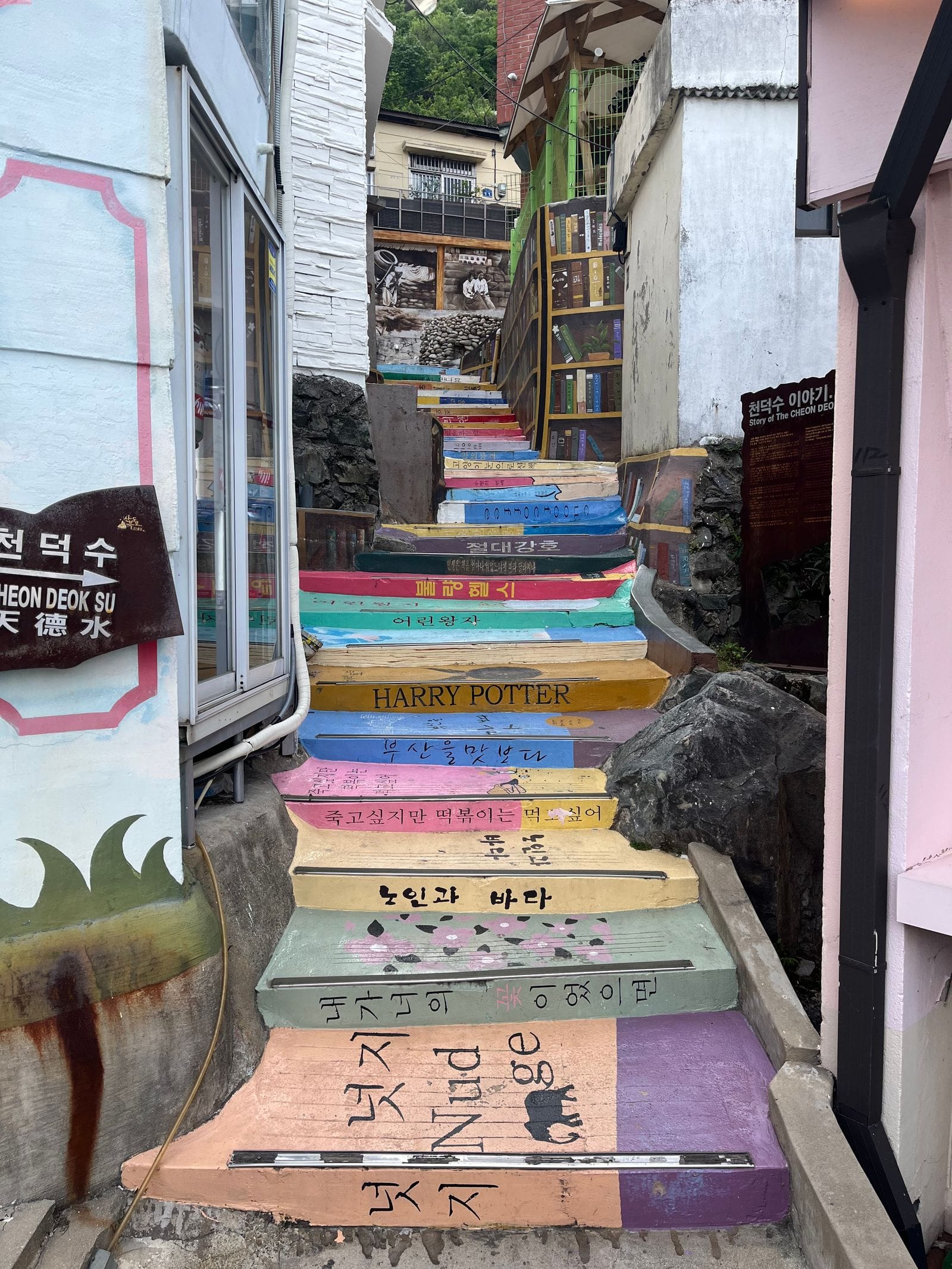
- Gamcheon Culture Village — a hillside maze of pastel houses, murals, and art installations, often called Busan’s “Santorini” or “Machu Picchu.”
- Jagalchi Market — Korea’s largest fish market, where you can pick your seafood and have it cooked upstairs.
- Haedong Yonggungsa — a rare seaside Buddhist temple perched on the rocks above the waves.
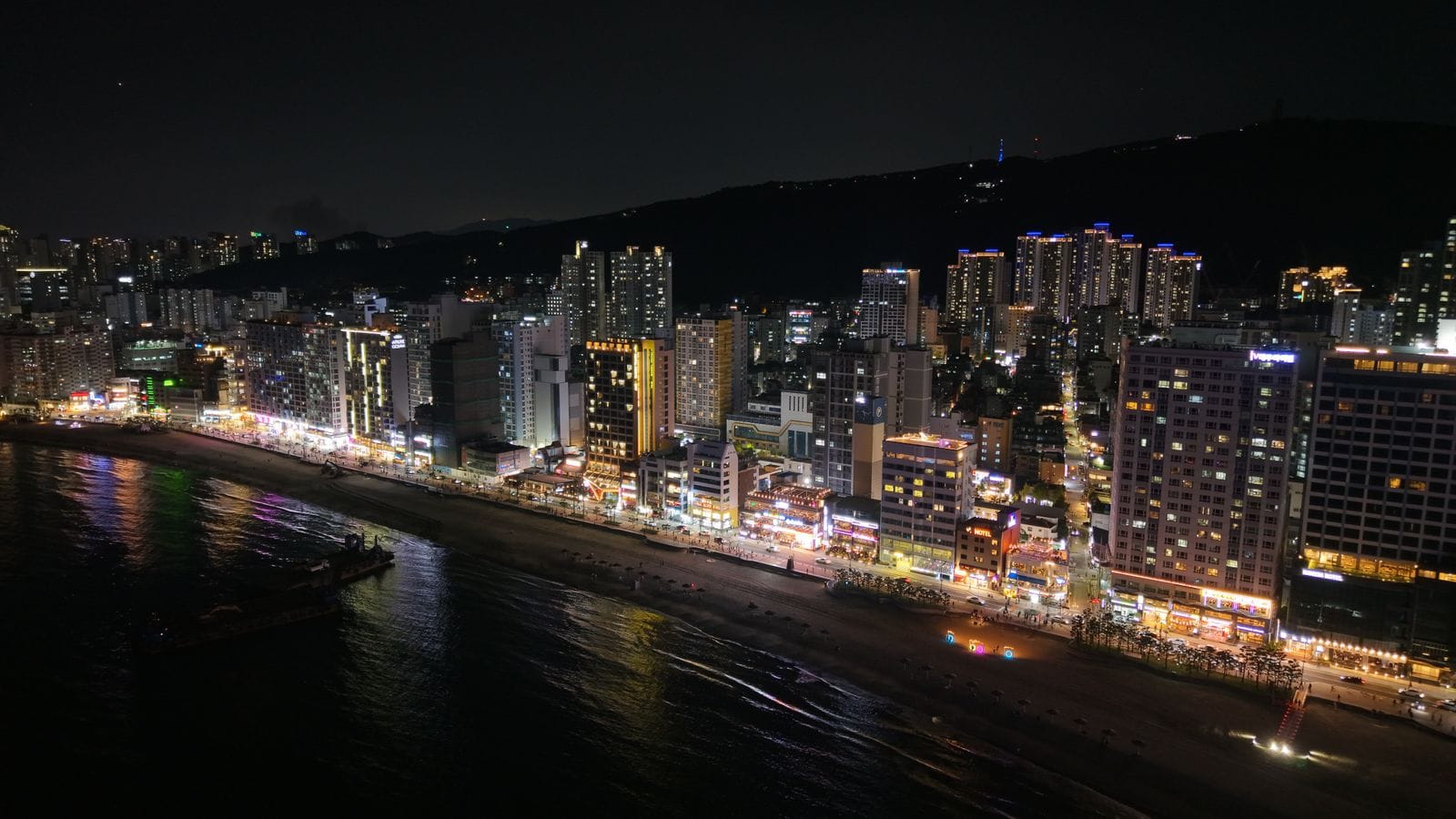
- Gwangalli Beach & the Diamond Bridge — a buzzy beach with cafés and a glittering bridge that lights up at night.
- Haeundae Blueline Park — the seaside sky-capsule and beach train running along a scenic stretch of coast.
Busan’s Beaches
Beaches are Busan’s signature, and they each have their own feel. Haeundae is the famous one — a long, wide stretch backed by luxury hotels, restaurants, and a boardwalk, busiest and most resort-like. Gwangalli is younger and trendier, with a café-and-bar scene and the photogenic Gwangan Bridge as a backdrop, especially after dark. Quieter Songjeong draws surfers and a more local crowd. In summer they’re packed and lively; in the shoulder seasons they’re calm and walkable, with the sea air and skyline making even a cool-weather stroll worthwhile.
What to Eat in Busan
Busan is a seafood city, and eating here is half the reason to come. The obvious move is fresh fish at Jagalchi Market — choose from the tanks and have it served as sashimi (hoe) or grilled upstairs. Beyond that, the city has its own specialties: dwaeji gukbap (a hearty pork-and-rice soup), milmyeon (cold wheat noodles), and ssiat hotteok (a seed-stuffed version of the sweet street pancake). For the wider world of Korean dishes you’ll meet across the country, our guide to what to eat in Seoul is a useful primer.
Timing a visit around events. Late summer is Busan’s busiest cultural stretch: the Busan Biennale takes over three city venues from August 29 to November 1, and the Starry Night Festa runs a coastal Night Walk in late August before moving to Dadaepo Beach for Night Music Campnic in September. Both are worth building a night around if your dates line up. Come October, the Jinju Namgang Lantern Festival lights up a river and fortress about an hour away and pairs easily with a Busan trip.
Where to Stay in Busan
Most first-timers base themselves around Haeundae for the beach and the hotels, or Seomyeon for a central, transit-friendly hub. A couple of standout seaside picks:
- Paradise Hotel Busan🏨 — Right on Haeundae Beach, with an outdoor hot-spring spa; the most central splurge if you want the sand at your doorstep.
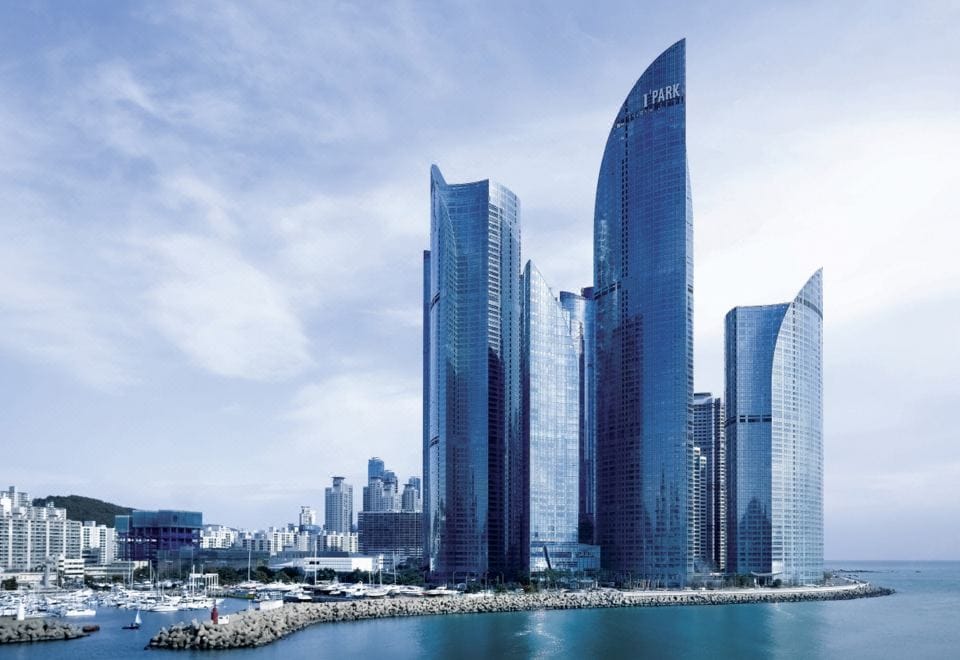
- Park Hyatt Busan🏨 — In Marine City, with sweeping views over Gwangan Bridge and the bay; quiet, polished, and a short walk from the beach.
For budget and mid-range rooms, the Seomyeon and Nampo areas are well-priced and well-connected — it’s worth comparing stays across Busan🏨 for your dates before booking. It is also worth comparing hotel deals for your dates🏨 across the big travel sites. For the full rundown of neighborhoods and hotels at every price point, see our guide to where to stay in Busan.
How Many Days Do You Need?
You can see the highlights of Busan in a packed day trip from Seoul if you catch the first train, but the city genuinely rewards an overnight or two. With one night you can pair Gamcheon and Jagalchi with a beach sunset and a proper seafood dinner without rushing the train back. With two, you can add the coastal temple, a second beach, and a slower morning by the water. For most travelers, a couple of nights is the sweet spot — long enough to feel the change of pace that makes Busan such a good contrast to the capital. With an extra day to spare, the ancient capital of Gyeongju is barely an hour away by KTX and makes an easy historical add-on, and the harbor town of Tongyeong is only about 90 minutes further down the south coast by bus.
Plan Your Trip
Book the train and a bed. Reserve a high-speed train ticket🚄 early for weekends, and lock in a room near Haeundae Beach🏨 if you’re staying over. If you’re coming from overseas, Busan has its own international airport at Gimhae, so flying straight into the city✈️ can save you the Seoul connection.
Fit it into your trip. Busan slots neatly onto the end of a Seoul trip — see our guide to day trips from Seoul for the day-trip version, and our 4-day Seoul itinerary for the city before you head south.
Disclosure: This post contains affiliate links. If you book through these links, I may earn a small commission at no extra cost to you. I only recommend services I’d use myself.