
Last Updated: June 2026
Quick answer: A perfect Seoul 4-day itinerary spends Day 1 on the palaces and Bukchon, Day 2 on Gwangjang Market and Hongdae, Day 3 on Namsan and Myeongdong, and Day 4 on a day trip such as the DMZ — grouping each day by area to keep subway time down.
Four days is the sweet spot for a first trip to Seoul. It’s enough to see the palaces, eat your way through the markets, feel the energy of Hongdae at night, and still have a day left for something beyond the city. It’s not enough to see everything — but nobody sees everything in Seoul on their first try, and pretending otherwise just leaves you exhausted. For the full first-timer’s overview beyond this itinerary, see our complete Seoul travel guide.
This itinerary is built around one principle: stop wasting time on the subway. Seoul is huge, and the single biggest mistake first-timers make is zig-zagging across the city. Each day below is grouped by area, so you walk more and transfer less.
Table of Contents
- Where Should First-Time Visitors Stay in Seoul?
- How Do You Get Around Seoul?
- Day 1: Palaces, Hanok Village & Insadong
- Day 2: Hongdae, Markets & Street Food
- Day 3: Namsan, Myeongdong & Modern Seoul
- Day 4: Day Trip or Deeper Dive
- How Much Does 4 Days in Seoul Cost?
- Practical Tips for First-Timers
- Book Your Trip
Where Should First-Time Visitors Stay in Seoul?
For a first trip, stay in Myeongdong. It’s the most central base in the city, within walking distance of palaces and markets, and sitting on top of two subway lines that connect to everything else. It’s touristy and busy — locals will tell you they’d never stay there — but for a first-timer juggling jet lag and an unfamiliar transit map, that convenience is worth more than authenticity. Our Myeongdong hotel guide breaks down the best part of the area to book.
If you’re under 35 and nightlife is a priority, Hongdae is the alternative. It’s younger, louder, cheaper than Myeongdong, and has direct airport train access via the AREX line. The trade-off is noise and weekend chaos.
For something quieter and more atmospheric, Bukchon / Insadong puts you among traditional hanok houses and within walking distance of the main palaces — at the cost of fewer budget options and a slightly less convenient subway position.
Not sure which area fits your trip? Our guide to where to stay in Seoul compares every neighborhood with hotel picks — and you can browse hotels across every Seoul neighborhood🏨, from budget guesthouses to high-end towers.
How Do You Get Around Seoul?
Seoul’s subway is one of the best in the world — clean, cheap, punctual, and signed in English. It will be your primary way of getting around, and for this itinerary you’ll rarely need anything else — though our complete guide to getting around Seoul covers the buses, taxis, and airport options for when you do.
The one thing to sort out first is a T-money card. It’s a rechargeable transit card that works on every subway, bus, and most taxis in the country. You tap in and out, and it’s cheaper than buying single-journey tickets. You can buy one at any convenience store or station machine, or pick one up at the airport on arrival.
You can also pre-book a T-money card and an airport pickup🎫 so it’s ready the moment you land.
Taxis are affordable for short hops, especially if you’re splitting between two or more people. Download Naver Map or KakaoMap before you go — Google Maps walking directions are unreliable in Korea, and these local apps are far more accurate.
Day 1: Palaces, Hanok Village & Insadong
Start with the history. This whole day is walkable and flows north to south, so you’re never backtracking.
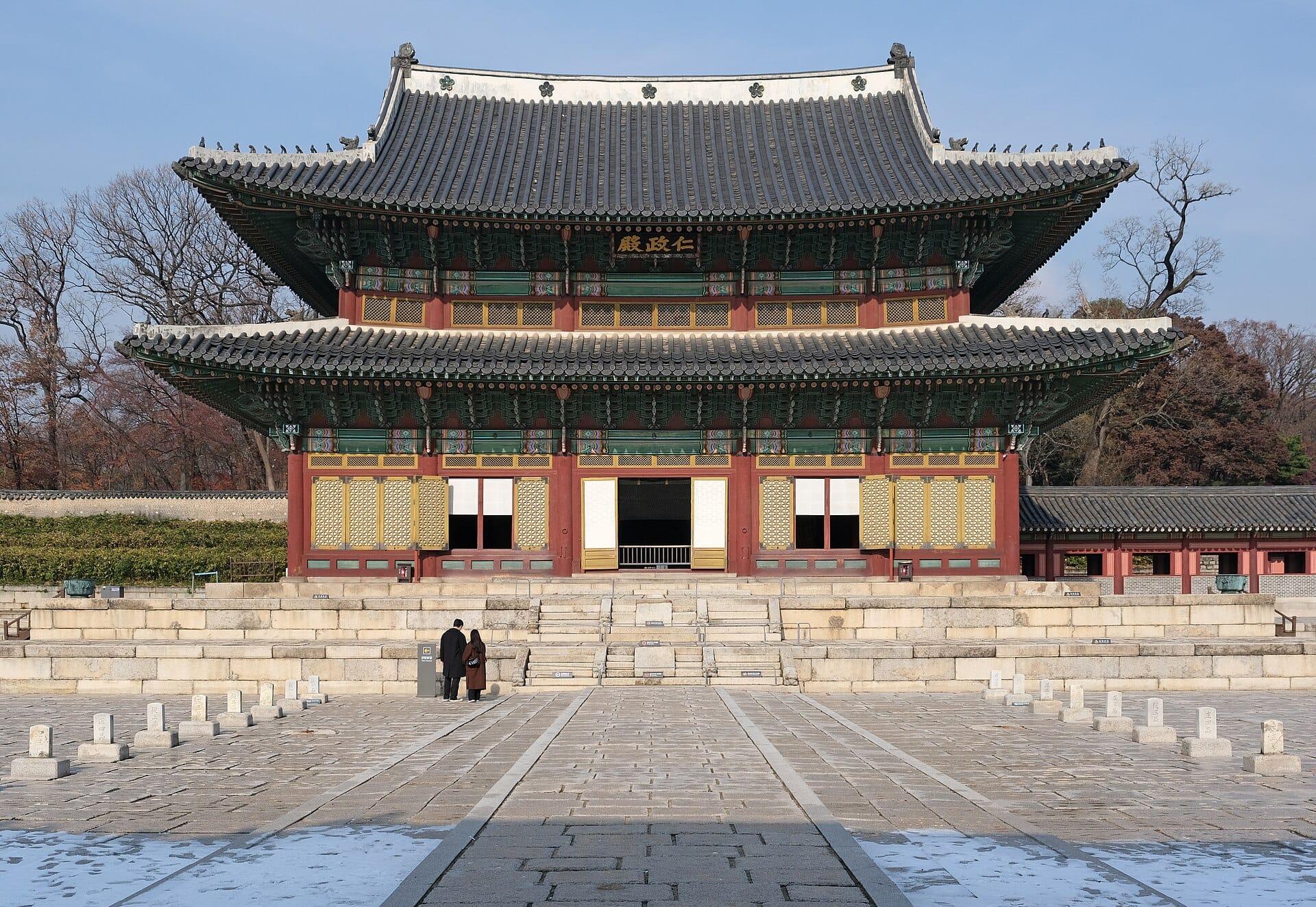
Morning — Gyeongbokgung Palace. Arrive early to catch the changing of the guard ceremony at 10:00 AM. This is the grandest of Seoul’s five palaces and the right place to start understanding the city — our Gyeongbokgung Palace guide covers tickets, hours, and the guard ceremony. Tip: entry is free if you wear a hanbok (traditional dress), which you can rent from shops near the entrance. It’s touristy, yes, but the photos are worth it and you save the ticket price.
Midday — Bukchon Hanok Village. A 10–15 minute walk from the palace. A neighborhood of preserved traditional houses wedged between modern Seoul. It gets crowded by noon, so the earlier you arrive the better. Don’t just stick to the main street — wander up the side alleys.
Afternoon — Insadong. A short walk south. Seoul’s arts-and-crafts district, full of galleries, tea houses, and traditional rice cake shops. A good place to slow down and have lunch — Tosokchon Samgyetang (ginseng chicken soup) near the palace is a classic if you want something hearty.
Evening — Korean BBQ in Jongno. End the day with grilled pork belly and a cold beer in the Jongno area. You’re in the historic heart of the city, and it’s an easy subway ride or walk back to Myeongdong.
Day 2: Hongdae, Markets & Street Food
Today is about energy and food — younger, messier, and more fun than Day 1.
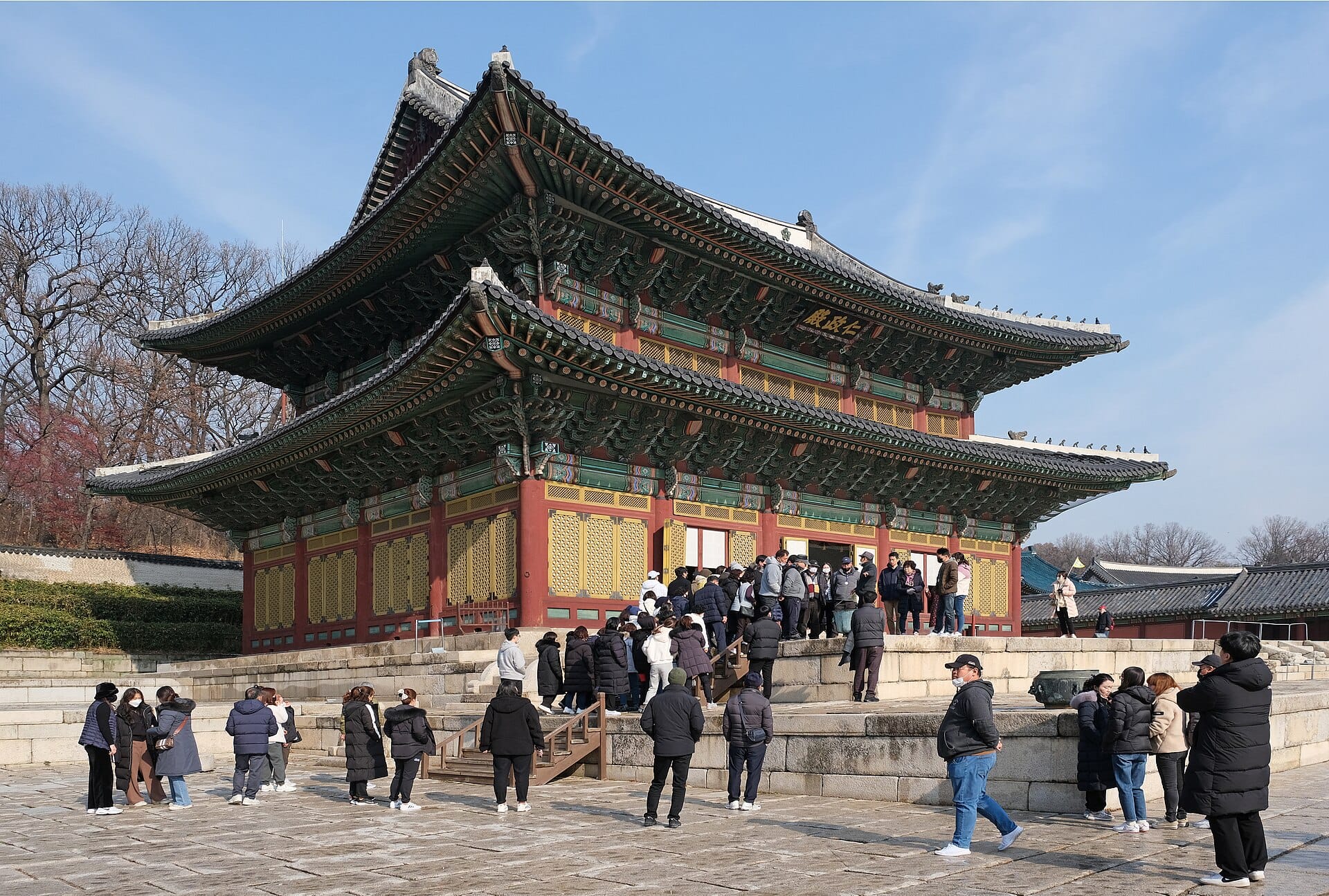
Morning — Gwangjang Market. One of Seoul’s oldest traditional markets and a street-food institution. Come hungry. Try the bindaetteok (mung bean pancakes), mayak gimbap (mini seaweed rolls), and raw beef tartare if you’re brave. It’s a working market, not a tourist set-piece, which is exactly why it’s worth it. Our guide to what to eat in Seoul breaks down the dishes to look for here.
Afternoon — Hongdae. Take Line 2 west to Hongik University Station. This is Seoul’s creative, student-driven district — indie shops, street performers, themed cafés, and graffiti. Spend the afternoon wandering, café-hopping, and people-watching.
Evening — Stay in Hongdae for nightlife, or head to Dongdaemun for the late-night shopping and the illuminated Dongdaemun Design Plaza (DDP). Hongdae’s energy peaks after dark, so if you came to Seoul to go out, this is your night.
Day 3: Namsan, Myeongdong & Modern Seoul
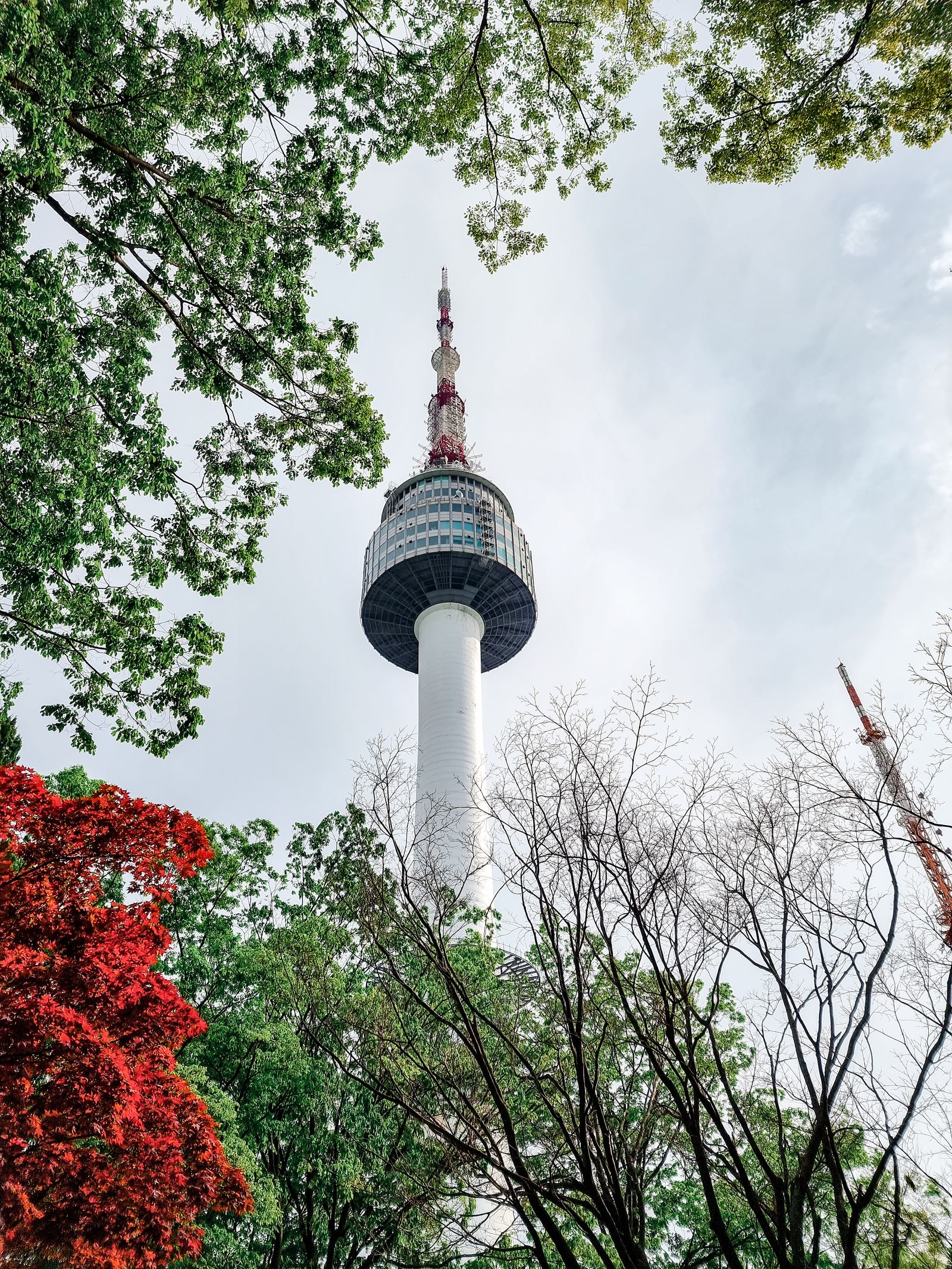
Morning — N Seoul Tower & Namsan. Take the cable car up Namsan Mountain to N Seoul Tower for the best panoramic view of the city. Go on a clear morning before the haze and crowds build. The walk down through Namsan Park is pleasant if the weather’s good. The tower’s famous love-lock fences also make it one of the most-filmed spots in K-drama history — see our guide to K-drama filming locations in Seoul if you want to build a fan itinerary.
Afternoon — Myeongdong. Since you’re based here, use the afternoon for what Myeongdong does best: K-beauty shopping and street food. The evening street-food stalls (fried chicken skewers, tornado potatoes, egg bread) are the main event.
Evening — Cheonggyecheon Stream. A restored stream running through downtown, lit up at night and a calm place to walk off the day. It’s a short walk from Myeongdong.
Want a more modern day instead? Swap this for Gangnam and Seongsu — glass towers, concept stores, and the city’s most inventive cafés, south of the Han River. It’s worth booking skip-the-line tickets and passes🎫 ahead if you want to save time at the tower and other attractions.
Day 4: Day Trip or Deeper Dive
Your last day depends on what kind of traveler you are — and if you’d rather leave the city entirely, our guide to the best day trips from Seoul covers the DMZ, Nami Island, and farther escapes by train. With a few extra days, a short flight south reaches Jeju Island, Korea’s volcanic holiday island of beaches and crater hikes, or a bus east reaches Sokcho and Seoraksan National Park on the coast.
For history and a bucket-list experience — the DMZ. A guided tour to the Demilitarized Zone between North and South Korea is one of the most memorable things you can do from Seoul. It’s a half- or full-day organized tour (you can’t go independently), so book ahead.
These guided DMZ tours🎫 sell out quickly, especially in peak season, so book ahead.
For more of the city — Changdeokgung Palace & the Secret Garden. The most beautiful of Seoul’s palaces, a UNESCO site. The Secret Garden requires a timed guided tour that sells out, so arrive early or book ahead.
For something local and trendy — Seongsu & Ikseon-dong. Spend a relaxed final day in Seoul’s coolest café neighborhoods, away from the tourist trail.
How Much Does 4 Days in Seoul Cost?
Four days in Seoul costs roughly ₩75,000–145,000 (about $55–105 USD) per person per day on a budget, or ₩205,000–370,000 (about $150–270 USD) mid-range, covering accommodation, food, transport, and activities but excluding flights — usually the single biggest cost, and worth comparing once your dates are set✈️. Seoul can be done cheaply or expensively. For a full breakdown of prices across food, transport, attractions, and hotels, see our Seoul travel cost guide. Here’s the rough per-person daily estimate:
| Category | Budget | Mid-Range |
|---|---|---|
| Accommodation | ₩40,000–70,000 | ₩120,000–200,000 |
| Food | ₩20,000–35,000 | ₩50,000–90,000 |
| Transport | ₩5,000–10,000 | ₩5,000–10,000 |
| Activities | ₩10,000–30,000 | ₩30,000–70,000 |
| Daily Total | ~₩75,000–145,000 (~$55–105 USD) | ~₩205,000–370,000 (~$150–270 USD) |
Practical Tips for First-Timers
- Sort your entry paperwork early. Visa-waiver visitors need no visa in 2026, and 22 countries and territories are also K-ETA-exempt — but other visa-free nationalities still need one, and nearly everyone must file the free e-Arrival Card before arrival — see our Korea entry requirements guide.
- Get a local maps app. Naver Map or KakaoMap, not Google Maps. Download before you arrive.
- Carry some cash. Cards are widely accepted, but small market stalls and older restaurants are often cash-only.
- Get a SIM or eSIM. Pick one up at the airport or pre-book online. You’ll need data for maps and translation constantly.
- Avoid Google Translate for menus only — Papago (a Korean translation app) handles Korean far better.
- Best seasons are spring (Mar–May) and autumn (Sep–Nov). Summer is hot and humid; winter is cold but cheaper and less crowded.
- Tipping isn’t expected in Korea. Don’t do it — it can cause confusion.
Book Your Trip
Book Accommodation. Stay in Myeongdong for your first trip. It’s worth comparing hotel prices across Asia🏨 against bundled hotel-and-transport deals🏨 to find the best rate. It is also worth checking hotel deals across the big travel sites🏨 for your dates.
Book Tours & Activities. Most of Seoul’s tours, attraction tickets, and transfers🎫 — DMZ trips, N Seoul Tower, T-money cards, airport pickups — can be booked online in advance, which saves time and often money.
Get Connected. Pre-book a SIM card or portable WiFi router for pickup at Incheon Airport so you’re online the moment you land.
Disclosure: This post contains affiliate links. If you book through these links, I may earn a small commission at no extra cost to you. I only recommend services I’d use myself.