
Last Updated: November 2026
Quick answer: Daegu is Korea’s fourth-largest city, about 1 hour 45 minutes from Seoul and under an hour from Busan by KTX. Come for Seomun Market’s night stalls, the old-downtown history alleys, the Gatbawi stone Buddha on Palgongsan, and some of the country’s most distinctive food: grilled makchang and garlic-heavy jjimgalbi. Two days covers it well, and it also makes an easy base for Gyeongju.
Most first-time visitors to Korea shoot straight past Daegu on the train between Seoul and Busan. That’s a mistake if you like cities that feel lived-in rather than staged. Daegu has no beach and no palace. What it has is a 350-year-old herbal medicine market, one of the three great markets of late Joseon Korea, a compact downtown where you can walk through a century of history in an afternoon, and a mountain on its northern edge with temples worth a full day. It’s also noticeably cheaper and calmer than the capital.
This Daegu travel guide covers whether the city is worth your time, how to get there, the best things to do downtown and on Palgongsan, what to eat, when to go, where to base yourself, and how many days to give it.
Table of Contents
- Is Daegu Worth Visiting?
- How Do You Get to Daegu from Seoul or Busan?
- How Do You Get Around Daegu?
- What Are the Best Things to Do in Downtown Daegu?
- Is Palgongsan Worth the Trip Out of the City?
- What Food Is Daegu Famous For?
- When Is the Best Time to Visit Daegu?
- Which Area Should You Stay in?
- How Many Days Do You Need in Daegu?
- Plan Your Trip
Is Daegu Worth Visiting?
Yes, if you’re spending more than a week in Korea or you’ve already done Seoul and Busan. Daegu is a metropolitan city of over 2.3 million people in the southeast. It’s the hub of the old Gyeongsang region, and it has kept more of its everyday character than the big tourist hubs. You’ll see far fewer foreign visitors here. Signs and transit are still bilingual, and the city is easy to handle without Korean.
What makes Daegu worth the stop is the mix. You get a traditional market culture that’s still in daily use, a walkable modern-history district, a serious mountain with Silla-era Buddhist sites, and a food scene built on dishes you won’t find done the same way elsewhere. It’s not a replacement for Seoul. It’s a good way to see what an ordinary big Korean city feels like.
Daegu is also well placed. Gyeongju, Korea’s ancient Silla capital, is a short train ride east. That makes Daegu a practical, cheaper base if you want to see both cities without changing hotels.
How Do You Get to Daegu from Seoul or Busan?
The KTX high-speed train is the easiest way to get to Daegu. It runs from Seoul Station to Dongdaegu Station in roughly 1 hour 40 minutes to 1 hour 50 minutes, depending on the service. SRT trains run the same route from Suseo Station in southern Seoul, which is handier if you’re staying in Gangnam. From Busan, the KTX reaches Dongdaegu in under an hour. Daegu sits right on the main Gyeongbu line, so trains run all day.
Weekend and holiday trains fill up, so it’s worth booking ahead. You can reserve a KTX seat to Dongdaegu🚄 before you travel. Korail also merged KTX and SRT booking into one app, which our guide to Korea’s unified train booking app walks through. For a full comparison of trains, buses and flights along this corridor, see our guide to getting from Seoul to Busan. Daegu is the biggest stop along the way.
Daegu also has its own airport. Daegu International Airport (TAE) sits close to the city center and has regional international routes, mainly to Japan and Southeast Asia, plus domestic flights to Jeju. Most long-haul visitors still land at Incheon and take the train down.
How Do You Get Around Daegu?
Daegu’s metro has three lines that cover almost everything a visitor needs. Line 1 runs through Dongdaegu Station and downtown. Line 2 crosses the center east to west and stops near Seomun Market. Line 3 is an elevated monorail, and it doubles as a cheap sightseeing ride, with views over rooftops and the Sincheon stream. The same T-money card you use in Seoul works on Daegu’s metro, buses and most taxis. Our guide to getting around Seoul explains how to buy and top one up.
Downtown Daegu (the Jung-gu district around Banwoldang and Jungangno stations) is compact enough to cover on foot. You’ll only need a bus or taxi for Palgongsan, Apsan and the airport.
What Are the Best Things to Do in Downtown Daegu?
Downtown Daegu is best seen on foot, mixing markets with the modern-history sites in between. The city calls this route its “golmok” (alley) tour. These are the essentials:
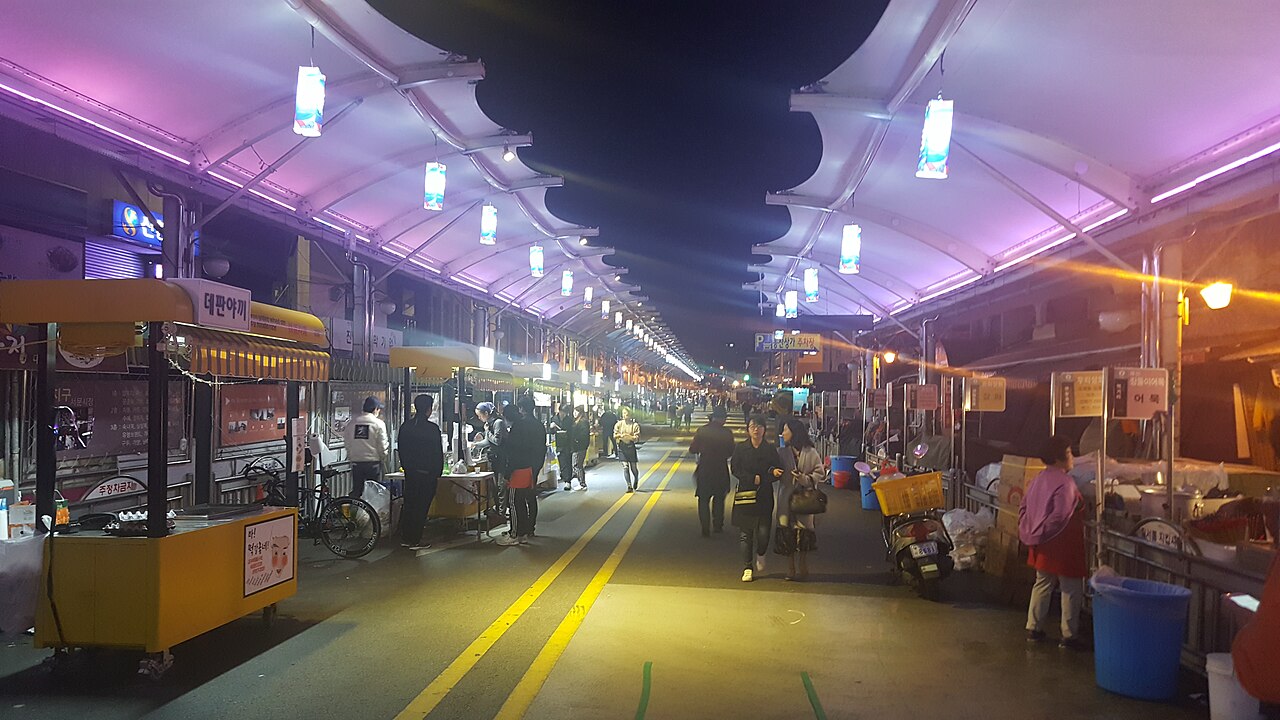
- Seomun Market. Seomun Market is Daegu’s largest traditional market, with more than 4,000 shops. It dates back to a late-Joseon five-day market and was one of the country’s three largest markets in that era. By day it’s known for fabrics and tailoring. In the evening, the night market lines the main lane with food stalls. Take Line 3 to Seomun Market Station.
- Yangnyeongsi Herbal Medicine Market. This is one of Korea’s oldest herbal medicine markets, founded in 1658. The street still smells of roots, dried mushrooms and ginseng. The small Yangnyeongsi Museum of Oriental Medicine explains the trade, and visitors can try hands-on activities such as making herbal sachets.
- Cheongna Hill and Gyesan Cathedral. Early-1900s missionary houses sit on a quiet hill above the 3·1 Movement Road. This stone stairway is tied to the 1919 independence protests. At the bottom stands Gyesan Cathedral, a red-brick church with twin spires and one of the oldest Western-style buildings in the region.
- Kim Kwang-seok-gil. This roughly 350-meter mural alley beside Bangcheon Market was created in 2010. It honors the folk singer Kim Kwang-seok, who was born in Daegu. The walls are covered with his lyrics and portraits, and buskers sometimes play his songs on weekends.
- Dongseongno. This is downtown’s shopping and café district, the place for an evening stroll, street fashion and dessert after the markets close.
For skyline views, ride the cable car up Apsan on the south side of the city to an observatory over the whole basin. Sunset into evening is the best time. The other option is 83 Tower, the observation tower inside E-World amusement park, which lights up across the city at night.

Is Palgongsan Worth the Trip Out of the City?
Yes. Palgongsan is the reason many Koreans come to Daegu, and it gets you the best scenery in the area. The mountain range rises on the city’s northern edge. Its temples make it a full-day trip, and in late October and early November its maple valleys are among the best fall foliage drives in the southeast.
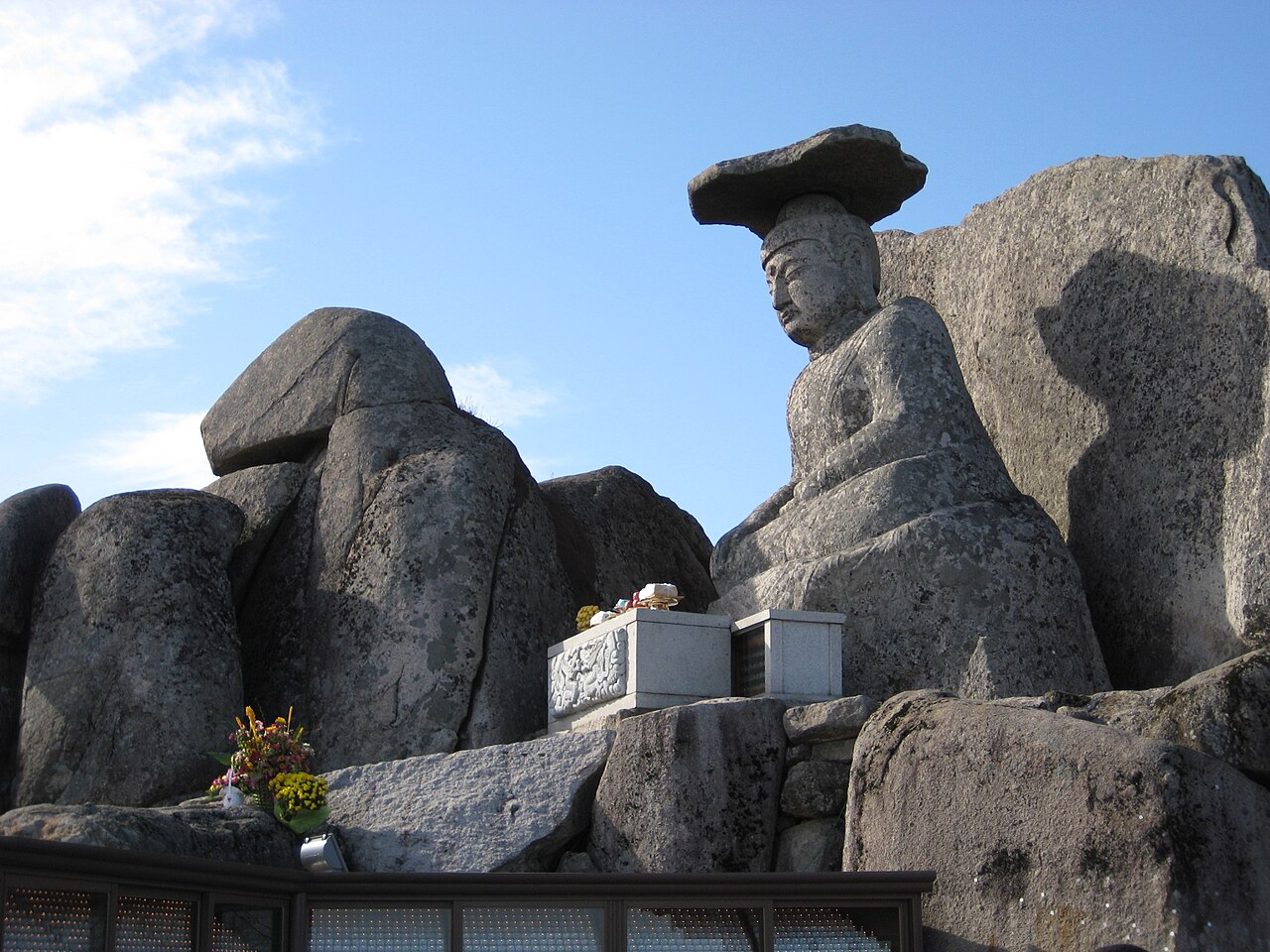
Its most famous sight is Gatbawi. This stone Buddha from the Unified Silla period stands about 4 meters tall on an 850-meter ridge, wearing a flat slab of granite like a hat. Pilgrims believe it grants one sincere wish, so students and their parents climb it before Korea’s college entrance exam. The usual route is a steep climb up stone stairs from Gwanamsa Temple. It’s not technical, but bring water and expect to feel it in your legs.
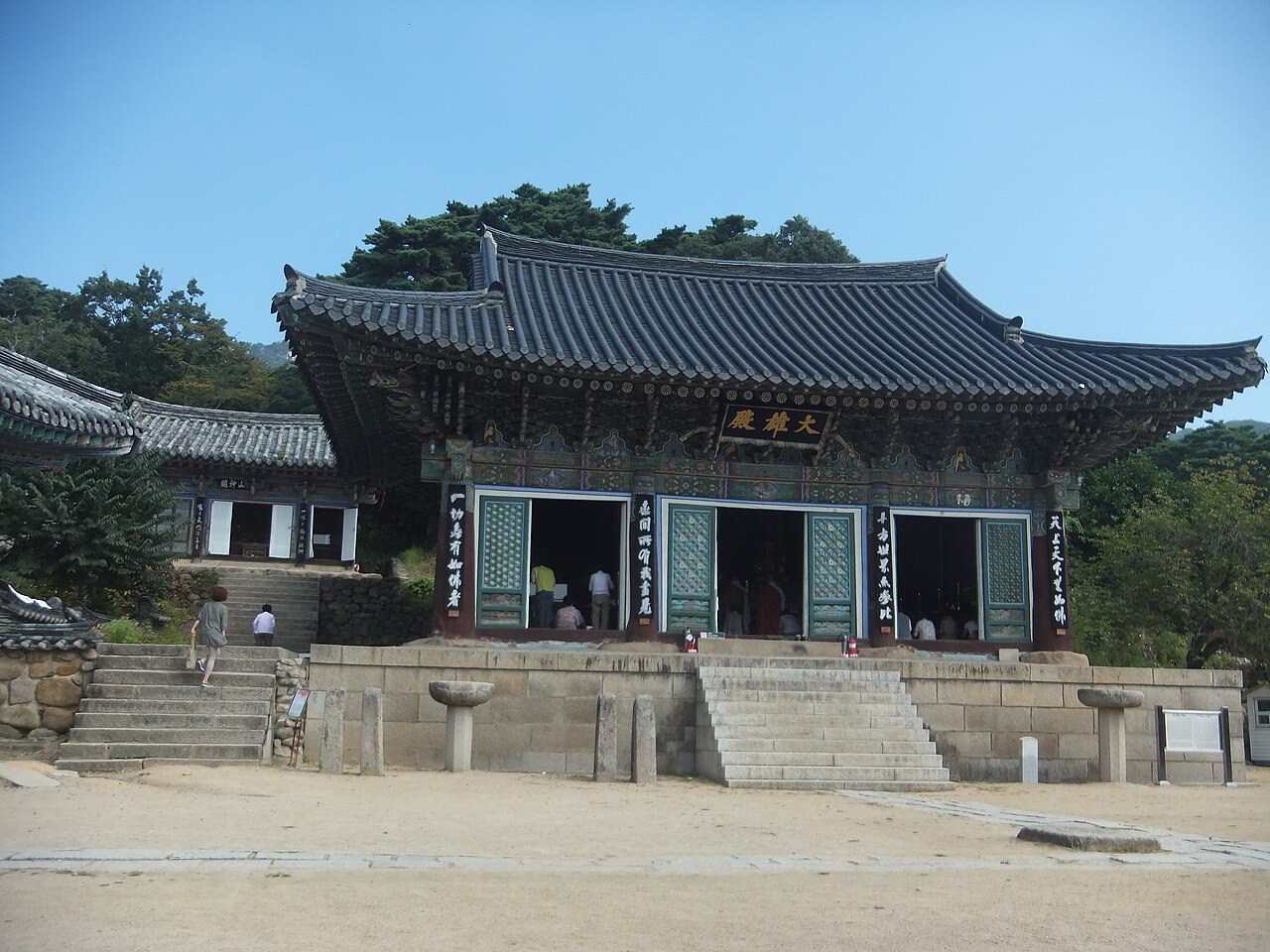
On the same mountain, Donghwasa is a large head temple founded in the Silla era. Its grounds include a giant stone Buddha built as a prayer for Korean reunification. Donghwasa is one of the temples that offer templestay programs for foreign visitors. Our guide to templestays and hanok stays in Korea covers how those overnights work. A cable car also runs up the mountain from the Donghwasa side for an easier view without the hike.
City buses run to both Donghwasa and the Gatbawi trailhead from downtown and Dongdaegu Station, but they take a while. Plan Palgongsan as its own day, or at least a long morning.
What Food Is Daegu Famous For?
Daegu is known for bold, fiery, garlic-forward food. These are the dishes to plan around:
- Makchang. These are grilled pork intestines, cooked over charcoal until crisp and dipped in a doenjang-based sauce with chopped chili and scallion. Daegu is the country’s makchang capital. Whole streets of grill houses fill up after work, and it’s a natural follow-on if you enjoyed our guide to Korean BBQ.
- Dongin-dong jjimgalbi. These short ribs are braised in a fierce sauce of red pepper powder and a heap of minced garlic, served in battered aluminum pots on the Dongin-dong jjimgalbi alley. You usually pick your spice level when you order.
- Napjak mandu. These are flat, thin-skinned dumplings filled with glass noodles and chives. They’re often eaten with tteokbokki at Seomun Market and are one of the cheapest snacks in town.
- Mungtigi. These are thick slices of very fresh raw beef dipped in a sesame-chili sauce. It’s a Daegu specialty, best tried at an established restaurant.
For a wider tour of what to order in Korea, our guide to what to eat in Seoul covers the national staples you’ll also find here, and our guide to what to eat in Busan covers the coast an hour south.
When Is the Best Time to Visit Daegu?
Spring (April to May) and autumn (October to mid-November) are the best times to visit Daegu. The city sits in a basin ringed by mountains, so summer is famously hot. Koreans jokingly call it “Daefrica,” and July and August regularly bring some of the highest temperatures in the country. Plan outdoor sightseeing for early morning and evening if you visit then. Summer also brings Daegu’s chimaek (chicken and beer) festival, a big outdoor party typically held in July. Our guide to Korean fried chicken explains the culture behind it.
Autumn is the standout season, when Palgongsan’s foliage peaks around late October to early November. Our 2026 Korea autumn foliage forecast shows how peak dates move south through the country. Winter is cold and dry but quiet and clear, which is good for the Apsan views. Bring a proper coat for the mountain.
Which Area Should You Stay in?
Where you stay depends on how you’ll spend your days. There are two sensible bases in Daegu:
- Downtown (Jung-gu, around Banwoldang and Jungangno). Stay here for the markets, the alleys and nightlife within walking distance, and for evenings out in Dongseongno. It’s the best choice if this is your first visit and your time is mostly in the city.
- Around Dongdaegu Station. Stay here if you’re using Daegu as a transit base for Gyeongju, Busan or the airport, or heading to Palgongsan early. The station complex has a department store and food courts, and downtown is a few stops away on Line 1.
Daegu’s hotels are generally better value than Seoul’s for the same standard. It’s worth comparing hotels across Daegu for your dates🏨, especially in October when the foliage season and weekend events push up demand.
How Many Days Do You Need in Daegu?
Two days is the sweet spot. Here’s a simple way to split them:
- Day 1, downtown: Yangnyeongsi in the morning, then Cheongna Hill, the 3·1 Movement Road and Gyesan Cathedral. Have napjak mandu at Seomun Market for lunch, walk Kim Kwang-seok-gil in the afternoon, and take the Apsan cable car at sunset. Finish with makchang for dinner.
- Day 2, Palgongsan: An early bus to the Gatbawi trailhead, then Donghwasa in the afternoon. Back in the city, have jjimgalbi in Dongin-dong and visit the Seomun night market if it’s running.
- Day 3 (optional): A day trip to Gyeongju for its royal tombs and Bulguksa Temple, or continue on to Busan.
If you’re short on time, a single overnight on the Seoul–Busan train line still gets you the downtown loop and a market dinner. Our 7-day Korea itinerary shows how a stop like this fits between the capital and the coast, and our Busan travel guide picks up the next leg.
Plan Your Trip
If you’re flying in from nearby, you can compare fares straight into Daegu✈️. Otherwise, land at Incheon and take the KTX down. Book your train seat ahead for weekends, and pick a hotel downtown or by Dongdaegu Station depending on your plans.
Check before you go. Night market days, cable car hours and temple programs change by season. Daegu’s official tourism site, Daegu Tour, lists current information and events.
Disclosure: This post contains affiliate links. If you book through these links, I may earn a small commission at no extra cost to you. I only recommend services I’d use myself.