
Last Updated: June 2026
Quick answer: Jeju Island is Korea’s volcanic holiday island — beaches, waterfalls, lava tubes, and the Hallasan volcano. Fly from Seoul’s Gimpo Airport in about an hour, rent a car to explore (the sights are spread out), and give it two or three days; don’t miss Seongsan Ilchulbong and Manjanggul lava tube.
Jeju Island is Korea’s holiday island — a volcanic landscape of beaches, waterfalls, lava tubes, and a dormant volcano rising from the sea off the country’s southern coast. It’s where Koreans go for honeymoons and getaways, and for visitors it’s the easiest way to swap the intensity of Seoul for something slower and wilder: emerald coastlines, tangerine groves, fresh seafood pulled from the water by the island’s famous female divers, and hiking trails that loop the whole island. A short flight from the mainland makes it a tempting add-on to a Korea trip.
This guide covers the best things to do on Jeju Island, how to get there from Seoul, how to get around, and where to stay.
Table of Contents
- What Is Jeju Island Known For?
- How to Get to Jeju from Seoul
- Best Things to Do on Jeju Island
- Beaches & the Coast
- What to Eat on Jeju
- How to Get Around Jeju
- Is Jeju Island Worth Visiting?
- Do You Need a Car to Explore Jeju?
- Where to Stay & How Long to Visit
- Plan Your Trip
What Is Jeju Island Known For?
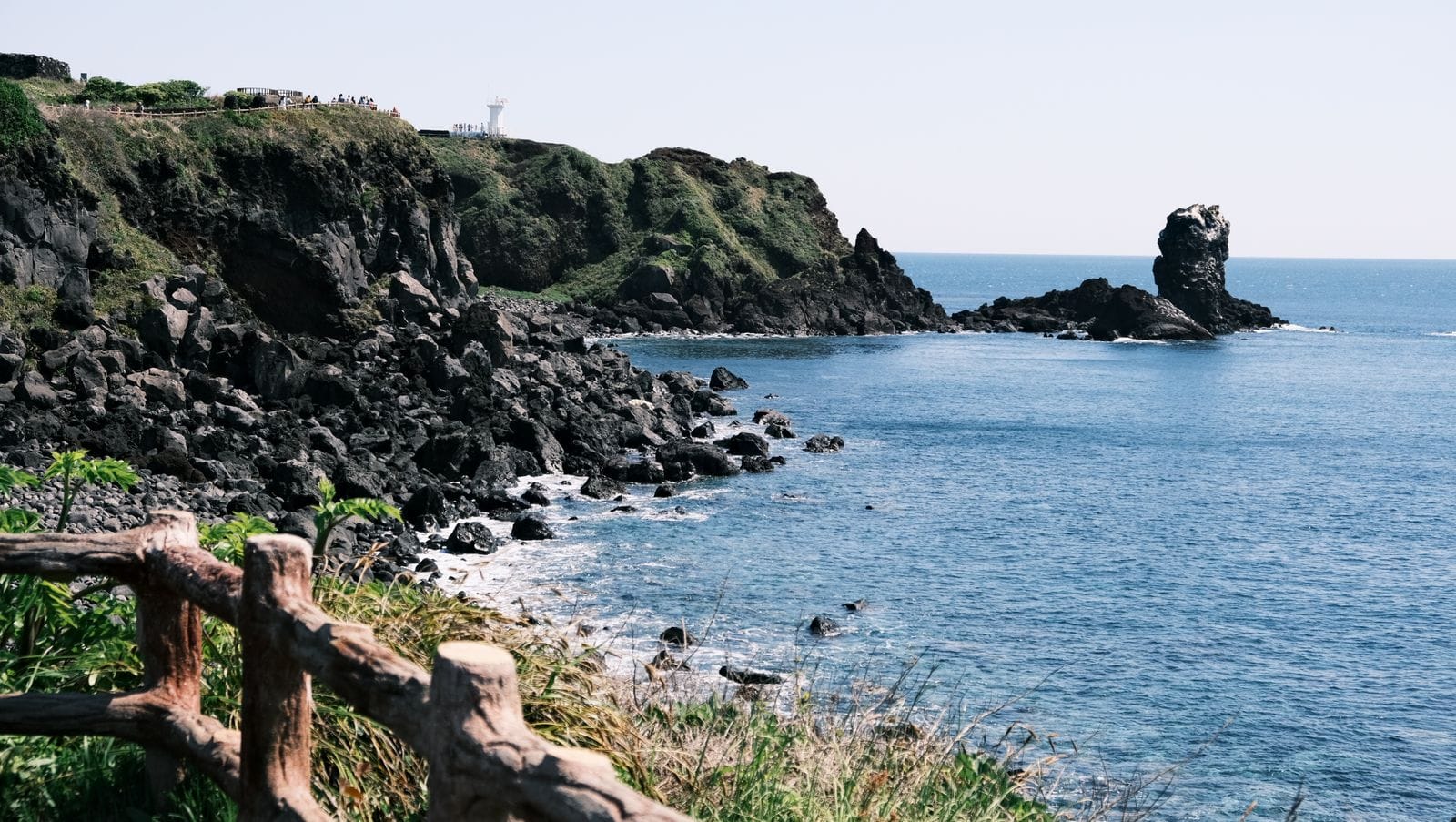
Jeju Island is known for its volcanic scenery and relaxed, resort-island pace. Formed by eruptions of Hallasan — at 1,947 m (6,388 ft) South Korea’s highest mountain, which sits at the island’s center — it’s a UNESCO World Heritage landscape of black basalt coastlines, crater peaks, lava-tube caves, and waterfalls, ringed by beaches and walking trails. It’s also famous for its culture: the haenyeo (female free-divers) who harvest seafood by hand, the stone dol hareubang grandfather statues, black pork, and sweet hallabong tangerines. The overall feel is mild, green, and unhurried — a complete change of pace from the capital. First-timers often find it the easiest, most restful counterpoint to a Seoul-heavy trip: a few days of sea air, slow coastal drives, and big skies that reset the pace entirely.
How to Get to Jeju from Seoul
The easy way to reach Jeju is to fly. The Seoul–Jeju air route is consistently ranked the world’s busiest passenger air route, with frequent, cheap flights from Seoul’s Gimpo Airport taking only about an hour, plus some services from Incheon. Booking ahead keeps fares low, and you can compare flights to Jeju✈️ online for your dates. There are also overnight ferries from mainland ports for those who prefer the sea, but for almost every visitor the short, cheap flight is the obvious choice — and it leaves far more time on the island itself. Jeju’s airport sits right by Jeju City, so you’re on the island and moving within minutes of landing.
Best Things to Do on Jeju Island
Jeju’s highlights are spread around the coast and up the central mountain:
- Hallasan — hike (or part-hike) South Korea’s tallest mountain, a dormant volcano with crater views and trails for every level.
- Seongsan Ilchulbong — the “Sunrise Peak,” a dramatic tuff crater rising from the sea, best at dawn.
- Manjanggul Lava Tube — walk through one of the world’s finest lava-tube caves.
- Waterfalls — Cheonjiyeon and Jeongbang, the latter tumbling straight into the sea.
- Jeju Olle Trails — a network of coastal walking routes that ring the island.
- Udo Island — a tiny, bike-friendly island off the east coast, a popular day trip.
Beaches & the Coast
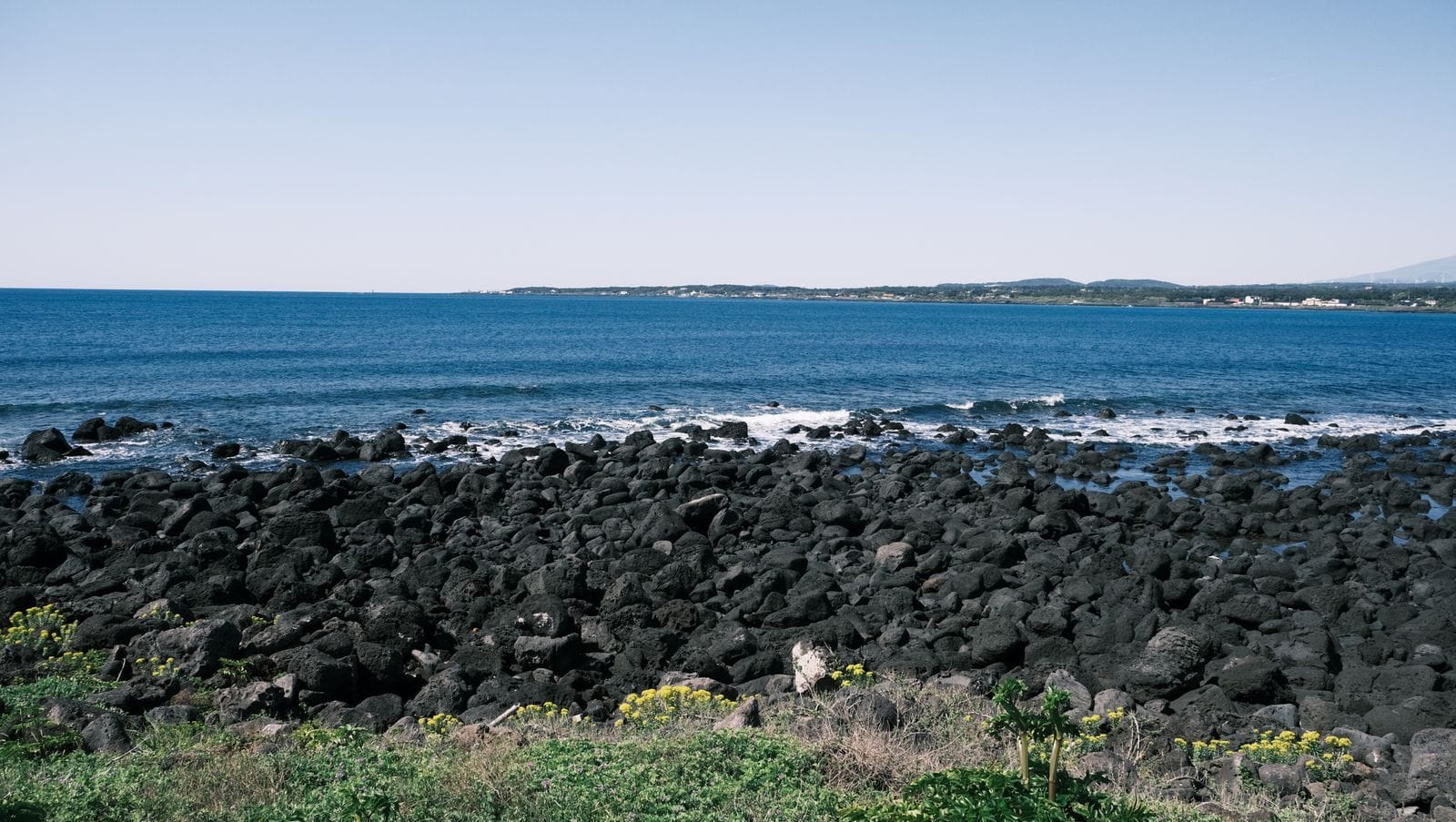
Jeju’s coastline is its glory. The beaches here have a different character from the mainland — white or even black volcanic sand, turquoise shallows, and basalt rock formations. Hyeopjae and Hamdeok are among the prettiest for swimming and lazing, with views out to offshore islets, while the south coast around Seogwipo offers cliffs, waterfalls, and quieter coves. In summer the beaches are lively; in the shoulder seasons they’re peaceful and made for coastal walks. Wherever you base yourself, the ring road around the island delivers one sea view after another.
What to Eat on Jeju
Jeju has its own distinct food, shaped by the volcanic land and the sea. Black pork (heuk-dwaeji) — from the island’s native pigs — is the signature, grilled at the table much like mainland barbecue but prized for its flavor. The sea delivers the rest: abalone, fresh sashimi, and seafood harvested by the haenyeo divers, often served in a simple, briny hot pot. Finish with a hallabong, the sweet, knobbly tangerine grown all over the island, or a tangerine-flavored treat. For the wider world of Korean dishes, our guide to what to eat in Seoul is a useful primer.
One thing to watch when you book: Korea’s three biggest budget carriers are merging into a single Jin Air by March 2027, which affects miles and existing bookings on the Seoul–Jeju route.
How to Get Around Jeju
Unlike Seoul, Jeju is best explored by car. The island is large and its sights are spread out, with public transport that’s workable but slow, so renting a car is the standard way to get around and lets you chase coastlines and craters on your own schedule (you’ll need an International Driving Permit). If you’d rather not drive, the island has an improving bus network, and guided day tours bundle the major sights with transport🎫. For a short visit centered on one area, taxis and buses can be enough, but for the full island a car is the way.
Is Jeju Island Worth Visiting?
Yes — for most Korea trips, Jeju is worth it if you have the time. It’s a completely different experience from the mainland: wilder, greener, and slower, with a volcanic landscape, distinct local culture, and seafood you won’t find anywhere else in the country. The flight is short and cheap, and most visitors who make the detour say it was a trip highlight. If you have two or more weeks in Korea, a two-to-three night Jeju stop rounds out a Seoul-heavy itinerary beautifully. If you’re tight on time, it’s the first thing to cut — but don’t skip it if your schedule allows.
Do You Need a Car to Explore Jeju?
For the full island, yes — a car makes the difference between a great Jeju trip and a limited one. The headline sights are spread right around the coast and up the central mountain: Seongsan Ilchulbong is on the east, Manjanggul cave is on the north, the waterfalls are near Seogwipo in the south, and Hallasan rises in the center. Public buses connect the main sights but take much longer and run less frequently than on the mainland. Renting a car (you’ll need an International Driving Permit, or IDP from your home country) is how most visitors get around, and it opens up the scenic coast roads and out-of-the-way spots that buses miss entirely. If driving isn’t an option, organized day tours are a practical alternative for a short visit focused on the highlights — most bundle multiple sights with transport and an English-speaking guide.
Where to Stay & How Long to Visit
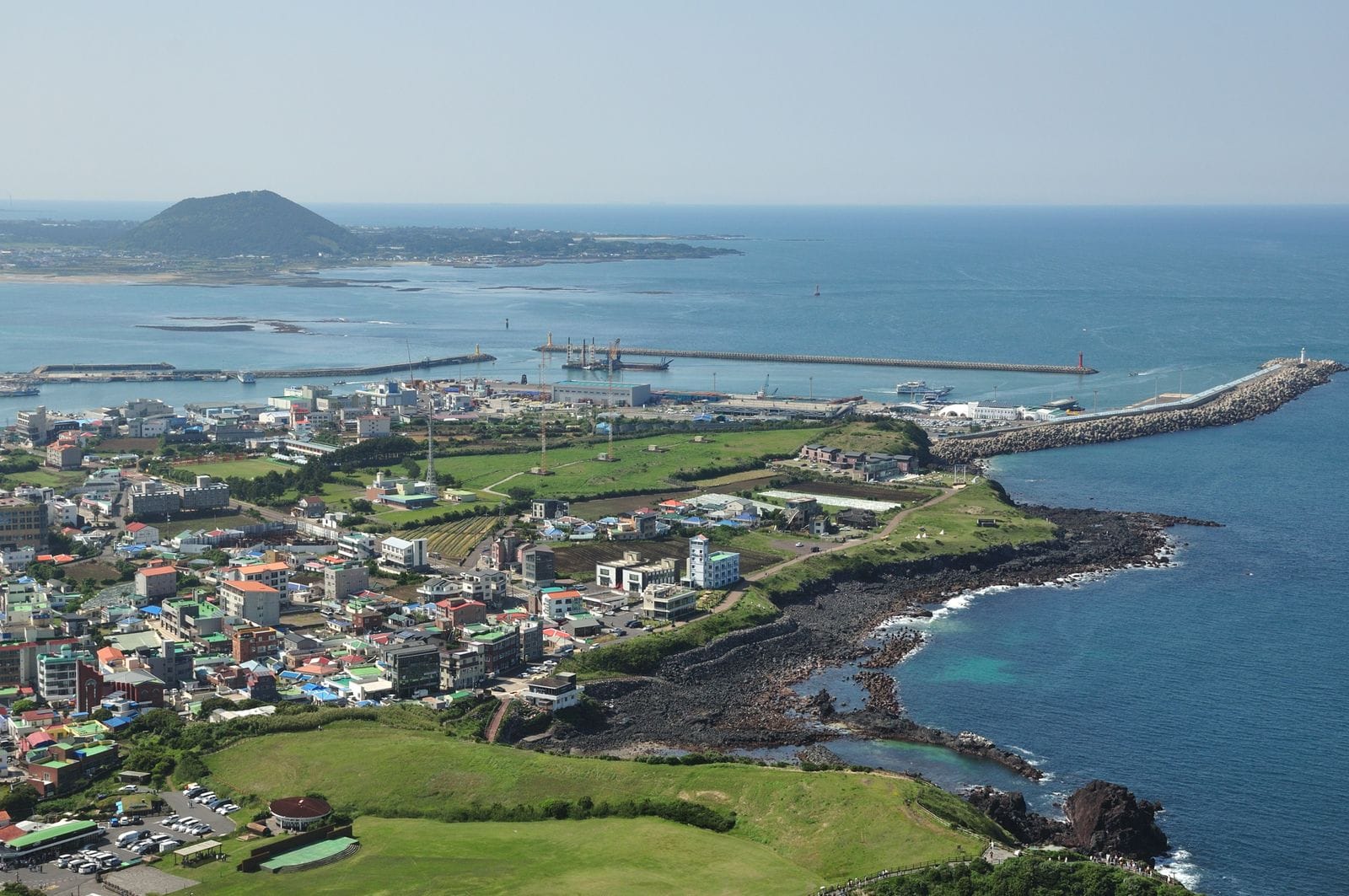
Most visitors base in Jeju City in the north (near the airport and convenient for the east) or Seogwipo in the south (closer to the waterfalls, resorts, and the prettier coast) — our full guide to where to stay in Jeju compares each area and picks specific hotels for couples, families, and ocean views. Two to three days is enough for the headline sights; a longer stay lets you slow to the island’s natural pace, hike Hallasan, and explore the Olle trails. For a first trip combined with the mainland, two or three nights pairs well with a week in Seoul and Busan — see how it fits in our 7-day Korea itinerary. Beyond hotels, the island is full of villas and guesthouses — you can browse whole-home rentals on Jeju🏨.
Plan Your Trip
Book the flight early. The Seoul–Jeju route is cheap if you book ahead — compare flights to Jeju✈️ as soon as your dates are set.
Fit it into your trip. Jeju works as an add-on to the mainland — plan the Seoul half with our 4-day Seoul itinerary, and sort the city basics with our guide to getting around Seoul.
Disclosure: This post contains affiliate links. If you book through these links, I may earn a small commission at no extra cost to you. I only recommend services I’d use myself.