
Last Updated: July 2026
Quick answer: Where to stay in Busan depends on whether you want the sea or the subway at your door. Sleep in Haeundae for the classic beachfront resort strip, Seomyeon for the Line 1/Line 2 interchange and the best value, Gwangalli for cafés and the lit-up Gwangan Bridge, or Nampo-dong for the old port and Jagalchi Fish Market. Value rooms run around ₩60,000–100,000 a night, mid-range hotels ₩120,000–200,000, and beachfront or five-star stays ₩250,000 and up.
Busan is Korea’s second city and its coastal counterpart to Seoul — beaches, mountain-backed bay views, the country’s biggest fish market, and a two-and-a-half-hour KTX ride from the capital. Unlike Seoul, where one sprawling subway map ties everything together, Busan’s best areas are strung along the coast and around a handful of transit hubs. That makes the neighborhood decision bigger here than almost anywhere else in Korea: pick the wrong side and you can spend 40 minutes each way on the subway to reach the thing you came for.
Below, the four bases are compared by what they are actually good for, hotels are grouped by the area they sit in, and the season and train questions that decide your booking are answered one by one.
Table of Contents
- Beach or Transit Hub: Which Side of Busan Should You Sleep On?
- Haeundae or Seomyeon If You Only Have Two Nights?
- Which Busan Hotels Put You on the Sand, and Which Put You on the Subway?
- When Do Busan Room Rates Jump — Summer or Film-Festival Week?
- Arriving by KTX: Does It Pay to Sleep Near Busan Station?
- Is One Night in Busan Enough?
Beach or Transit Hub: Which Side of Busan Should You Sleep On?
Decide first whether you want to wake up by the water (Haeundae or Gwangalli) or in the middle of the rail network (Seomyeon or Nampo-dong) — that one choice matters more than any individual hotel. Busan is a working port city of 3.4 million people wrapped around beaches, cliffside temples, and Asia’s largest department store, and its four useful bases barely overlap in character:
- Haeundae (Line 2 / Busan-Gimhae Line). Busan’s most famous beach and its resort strip — wide sand, a boardwalk, and the city’s biggest concentration of hotels. The default for first-timers and beach-first trips, but a 30–40 minute subway ride from downtown.
- Seomyeon (Line 1 / Line 2 interchange). The commercial heart, where the two main subway lines cross — roughly 20 minutes to Haeundae, 15 to Nampo-dong, and close to Busan Station. Dense with restaurants, an underground shopping arcade, and department stores, but no sea view.
- Gwangalli (Line 2, Geumnyeonsan Station). A younger, trendier beach a few stops from Haeundae, known for its café scene and the illuminated Gwangandaegyo Bridge after dark. The middle ground between sand and a livelier bar scene.
- Nampo-dong & Jagalchi (Line 1). Busan’s oldest commercial district, built around the port — Jagalchi Fish Market, BIFF Square, and the closest base to Busan Station and the ferry terminal. Pick it if old Busan and market food matter more than the beach.
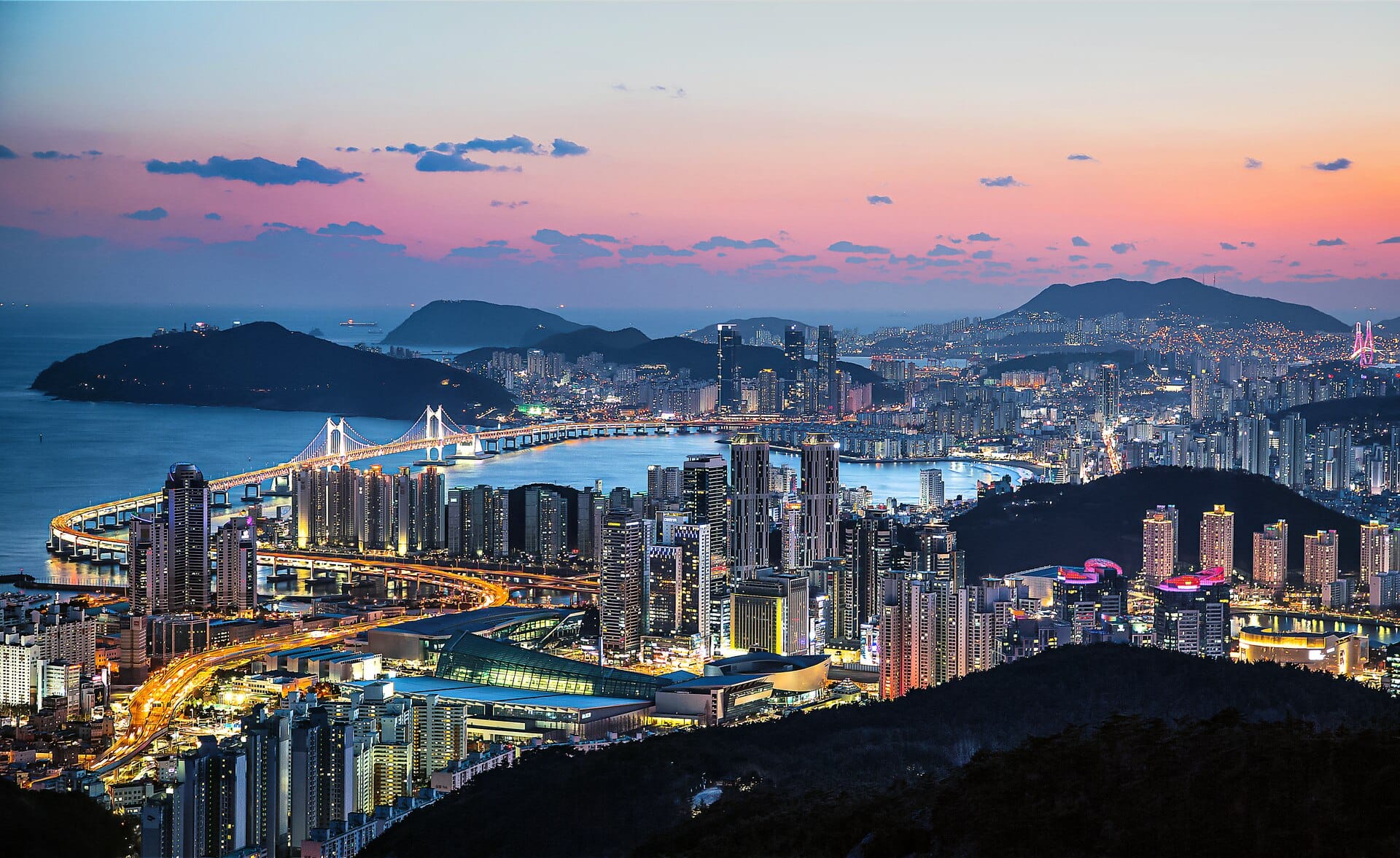
A useful way to think about it: the two beach bases sit on the eastern arm of Line 2, while Nampo-dong sits at the old-port end of Line 1. Seomyeon is the knot where those lines meet, which is why it wins on pure logistics even though it has none of the scenery.
Haeundae or Seomyeon If You Only Have Two Nights?
With only two nights, choose Haeundae if the beach is the point of the trip, and Seomyeon if you want to see the whole city — Jagalchi, Gamcheon, Gwangalli and Haeundae — without committing to one end of it. Seomyeon is about 20 minutes from Haeundae and 15 from Nampo-dong, so every major area is a short hop. From Haeundae, the old-port sights are 30–40 minutes away, and you’ll feel that on a tight schedule.
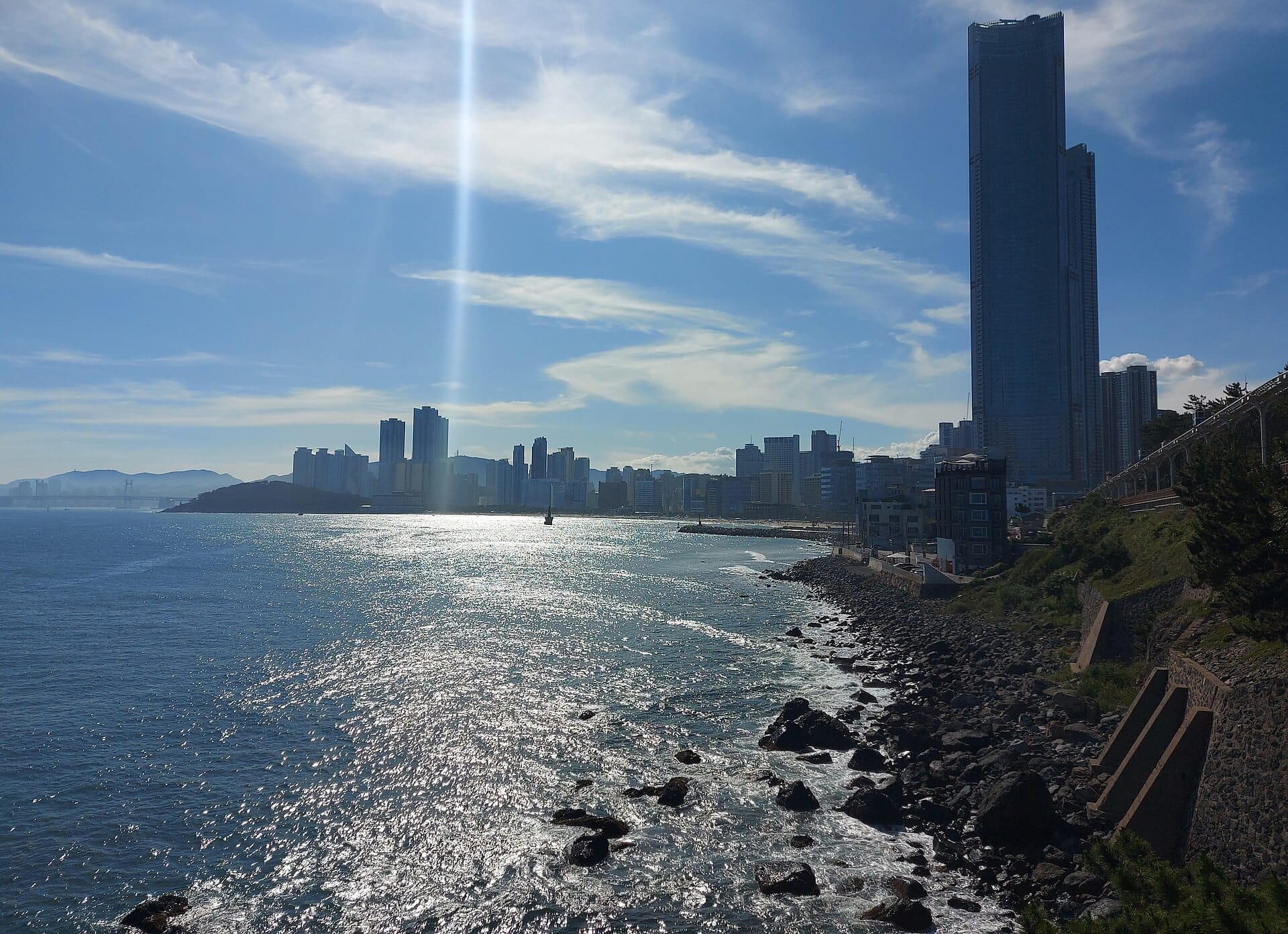
Gwangalli is the tiebreaker for couples and night owls: you keep a beach on your doorstep and the bridge view after dark, and you’re a few stops closer to the centre than Haeundae. Nampo-dong makes the most sense on a short trip only if you’re arriving and leaving by KTX, or if your top priorities are the fish market and Gamcheon Culture Village rather than sand.
One more practical point: check the subway line, not just the neighborhood name. A hotel a few blocks off Haeundae’s main strip can be a 15-minute walk from the nearest station, which cancels out much of the time you saved by choosing a “central” pick.
Which Busan Hotels Put You on the Sand, and Which Put You on the Subway?
Busan’s hotel stock runs from beachfront five-stars to simple budget chains, and each of the four areas has real options. Grouped by where they sit, rather than by price, these are the picks that make the most sense for each kind of trip.
Haeundae: splurge on the beach or save a couple of minutes back?
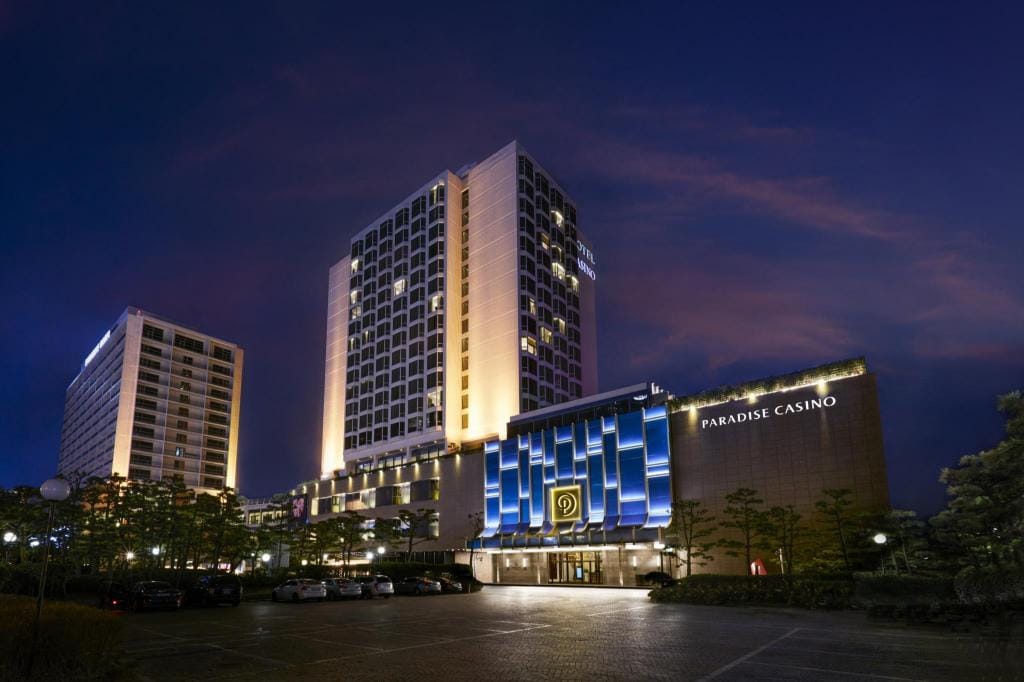
- Paradise Hotel Busan🏨 — Right on Haeundae Beach, with an outdoor hot-spring spa and a casino on site; the most central splurge if you want the sand at your doorstep.
- Toyoko Inn Busan Haeundae 2🏨 — A no-frills budget chain a couple of minutes from the same beach, with breakfast included; hard to beat for the location at the price.
The contrast here is the whole Haeundae story: both hotels put you on the same stretch of sand, so the extra money at the top end buys the spa and resort facilities, not a better location.
Seomyeon: shopping-mall comfort or a clean budget base?
- Lotte Hotel Busan🏨 — Connected underground to a duty-free store and department store, with an indoor and outdoor pool; the pick if convenience and shopping matter more than beach views.
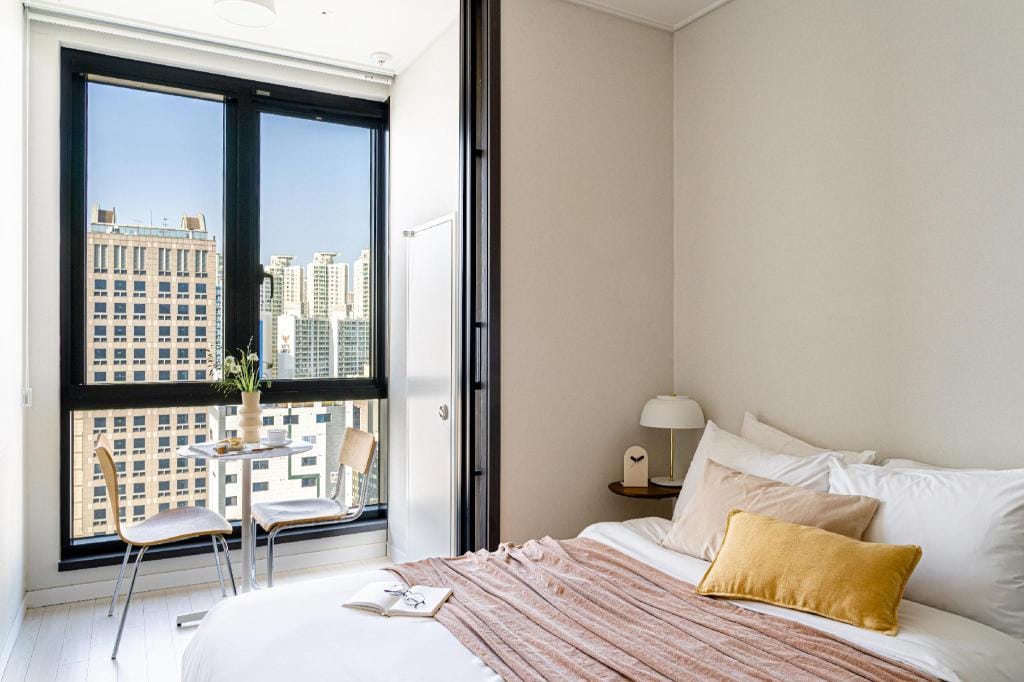
- Urbanstay Seomyeon🏨 — A clean, modern budget option in the middle of Seomyeon, close to the subway interchange and the underground shopping arcade.
Gwangalli: where to wake up facing the bridge
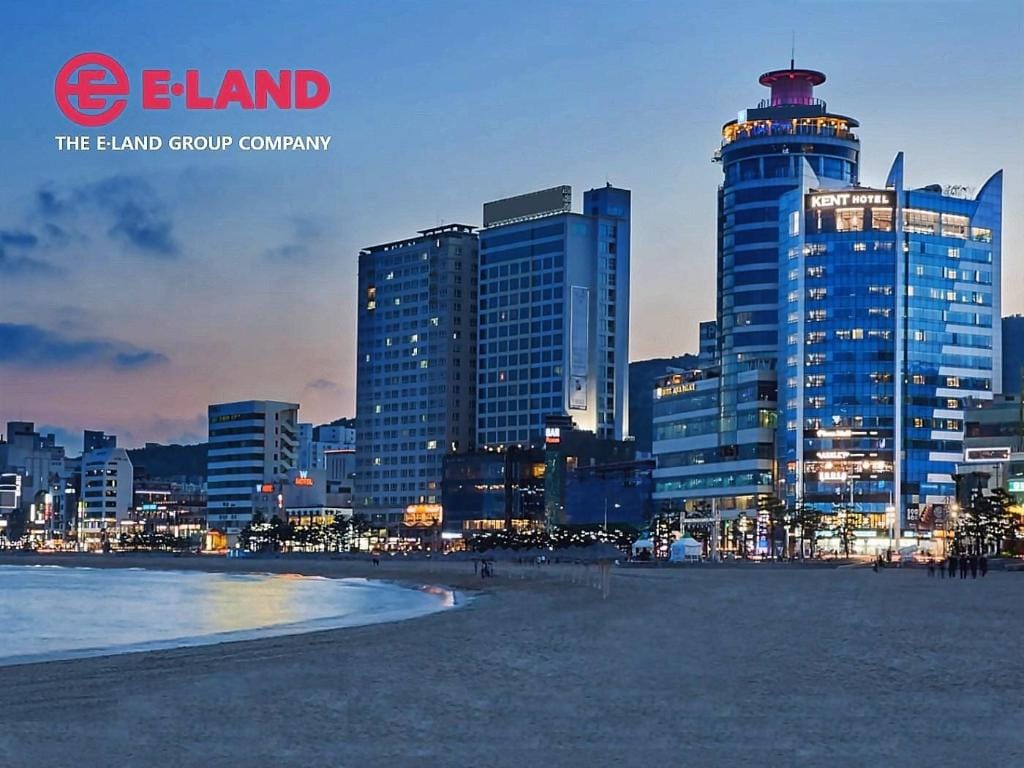
- Kent Hotel Gwangalli by Kensington🏨 — About five minutes’ walk from Gwangalli Beach, with an ocean-view restaurant looking out toward Gwangan Bridge; a solid mid-range base for the café-and-bridge-view scene.
Nampo-dong: sleeping next to the fish market
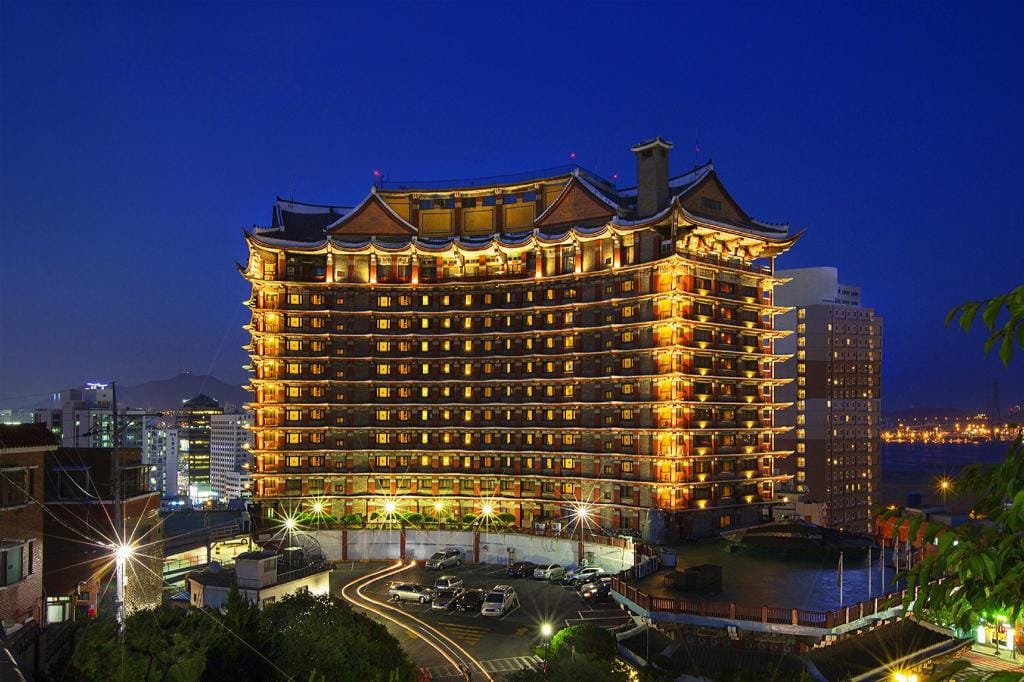
- Commodore Hotel Busan🏨 — A distinctive ship-shaped landmark a short walk from Jagalchi Market, with a revolving rooftop restaurant; handy for old Busan and Busan Station.
Prices swing with the season and with proximity to Haeundae Beach, so it’s worth comparing rooms across Busan🏨 for your exact dates before booking — and comparing the same room across a few booking sites, since rates can vary noticeably between them.
When Do Busan Room Rates Jump — Summer or Film-Festival Week?
Both: July–August is the peak for the beach bases, and early October brings a second spike around the film festival. Outside those windows, Busan generally runs a notch cheaper than central Seoul. As a rough guide per night:
- Value / budget chain: around ₩60,000–100,000
- Mid-range / 3–4-star: around ₩120,000–200,000
- Upscale & beachfront: ₩250,000 and up
In summer, Haeundae and Gwangalli fill with domestic beachgoers and prices climb well before the dates do, so book those two areas early — or base yourself in Seomyeon and ride out to the sand. In October, the Busan International Film Festival pushes up rates around Haeundae and Nampo-dong, the festival’s venues, even for travelers who aren’t attending. If your dates land in early October, our coverage of the Busan International Rock Festival explains what fills Samnak Park that weekend and why rooms tighten further.
The practical takeaway: in peak weeks, Seomyeon is the pressure valve. It’s neither a beach nor a festival venue, which makes it a useful fallback when Haeundae or Gwangalli rooms are full or overpriced — and it’s still only about 20 minutes from Haeundae by subway.
Arriving by KTX: Does It Pay to Sleep Near Busan Station?
It does if you’re arriving late, leaving early, or planning a day trip — Nampo-dong and Seomyeon are both a short subway ride from Busan Station, while Haeundae and Gwangalli add another 20–30 minutes by subway or a similar taxi ride. The KTX high-speed train takes around two hours and forty minutes from Seoul Station to Busan Station, with departures roughly every 15–30 minutes through the day. Booking a train ticket ahead of time🚄 is worth it on weekends and holidays, when popular departure times sell out.
Flying from Gimpo into Gimhae International Airport is faster in the air (about an hour) but rarely saves time door-to-door once you add the airport transfers, so most travelers coming from Seoul stay on the train. An intercity express bus is the budget option at around four to four-and-a-half hours each way. If you’re coming straight from overseas and skipping Seoul, you can also compare flights to Busan✈️ that land at Gimhae directly.
The station question matters most if you want to see Gyeongju, Korea’s ancient capital, which is under an hour away by KTX. Base in Seomyeon or Nampo-dong for that day and an early start is easy; from Haeundae you add a cross-city ride before the train even leaves.
Is One Night in Busan Enough?
No — plan on at least two nights, because Busan’s highlights sit at opposite ends of the city and a single day only scratches the surface. Day-trippers from Seoul tend to see Haeundae Beach and little else. Staying over lets you add Gwangalli’s evening bridge views, a proper seafood dinner near Jagalchi, and the hillside lanes of Gamcheon without rushing.
Here is how the main sights map onto the bases, which is the easiest way to decide whether to split your stay:
- From Nampo-dong: Jagalchi Fish Market — Korea’s largest seafood market, worth visiting even just to watch the auctions and eat at a stall upstairs — is on your doorstep, and Gamcheon Culture Village, a hillside of pastel-painted houses, is a short taxi ride away.
- From Haeundae or Gwangalli: both beaches have long boardwalks that turn into a proper stroll at sunset, and the clifftop Haedong Yonggungsa Temple — one of the few major Korean temples built directly on the coast — sits on this eastern side of the city.
- From Seomyeon: none of these is on your doorstep, but all of them are reachable without crossing the whole city twice.
With three or more nights, a split stay works well: a night or two in Nampo-dong for the market and old port, then move to Haeundae or Gwangalli for the beach. For everything to see and eat once you’re settled, our Busan travel guide covers the beaches, sights, and food in full.
Pairing Seoul and Busan in one trip is common enough that our 7-day Korea itinerary builds in exactly that — a few days in the capital, then the KTX down to the coast. If you’re splitting the trip, our guide to where to stay in Seoul covers the other half.
Disclosure: This post contains affiliate links. If you book through these links, I may earn a small commission at no extra cost to you. I only recommend services I’d use myself.