
Last Updated: October 2026
Quick answer: A Korean convenience store — usually a CU, GS25, 7-Eleven, or Emart24 — is far more than a snack shop. Most are open 24 hours, sell hot meals you can eat on the spot, and come equipped with microwaves, hot-water dispensers, and a small table to eat at. The things worth buying first are a samgak gimbap (triangle rice ball), a dosirak lunch box, a cup of ramyeon, and a bottle of banana milk. A full meal typically costs well under ₩10,000, and you can also top up your T-money transit card at the counter.
This guide explains how the stores work, what to eat at each time of day, how the 1+1 and 2+1 deals work, and the practical services — transit cards, ATMs, parcel drop-offs — that make them a traveler’s best friend in Korea. Prices quoted here are rough ranges that change often, so treat the shelf tag as the final word.
Table of Contents
- Why Are Korean Convenience Stores So Popular With Travelers?
- CU, GS25, 7-Eleven or Emart24 — Does the Chain Matter?
- What Should You Eat at a Korean Convenience Store?
- Which Drinks and Snacks Are Worth Trying?
- How Do You Cook Ramyeon in the Store?
- How Much Does a Convenience Store Meal Cost?
- What Else Can You Do at a Convenience Store?
- Rules and Etiquette Worth Knowing
- Plan Your Trip
Why Are Korean Convenience Stores So Popular With Travelers?
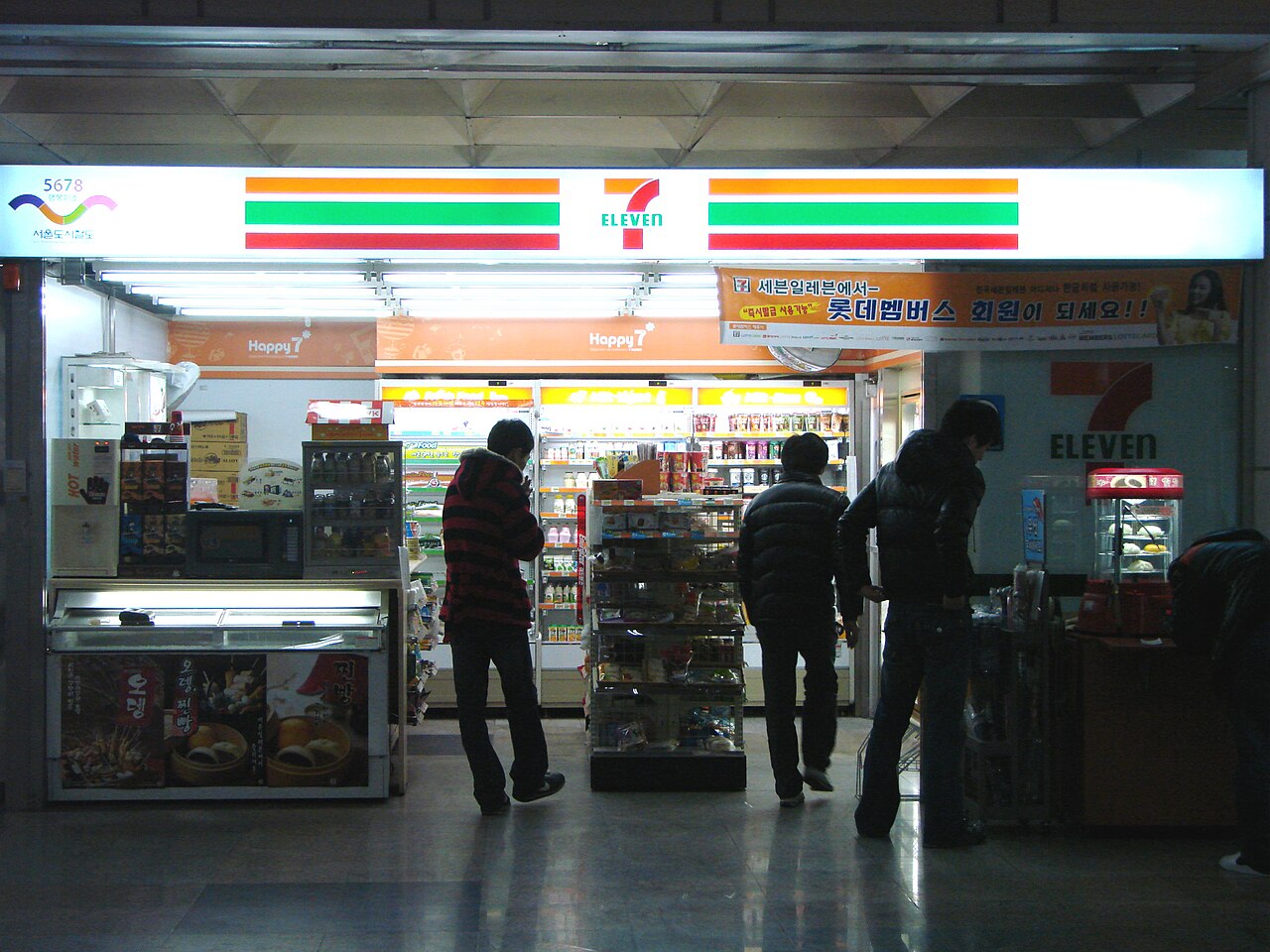
Korean convenience stores are popular because they solve almost every small problem a visitor runs into, at any hour, within a few minutes’ walk. In central Seoul it is common to see two or three on the same block, and you will also find them inside subway stations, at the foot of hiking trails, along the Han River parks, and in nearly every hotel lobby district. When restaurants close, the convenience store is still lit.
The food is the other reason. Korean chains compete hard on ready-to-eat meals, so the shelves turn over new lunch boxes, rice balls, and limited-edition snacks constantly. Many locals — students and office workers especially — eat a quick convenience-store lunch several times a week, so the quality is aimed at people who eat it every day, not just at tourists. For travelers watching a budget, it is the easiest way to stretch the money for one good restaurant dinner; our Seoul on a budget guide shows how that fits into a full daily plan.
CU, GS25, 7-Eleven or Emart24 — Does the Chain Matter?
For a visitor, the chain matters much less than the location — buy from whichever store is closest. The four big names all carry the same core products: the major ramyeon brands, banana milk, triangle rice balls, lunch boxes, drinks, toiletries, and a small range of over-the-counter basics such as plasters and pain relievers. Where they differ is in their own-brand items and collaborations.
| Chain | What it is known for | Good to know |
|---|---|---|
| CU | A huge store network and a steady stream of viral, limited-edition snacks and desserts | Often the first to stock trend items you see on social media |
| GS25 | Strong own-brand lunch boxes and fresh food | A reliable pick for a proper sit-down meal |
| 7-Eleven | Familiar to international visitors; strong in transit hubs | Common inside subway stations and near tourist streets |
| Emart24 | Run by the Emart supermarket group; wide imported goods range | Some branches are larger and roomier than rivals |
The one practical difference is the promotion: each chain runs its own monthly 1+1 and 2+1 deals, so the same drink can be a bargain at one store and full price at the one across the road. If you are buying several of something, a quick look at the colored tags is worth it.
What Should You Eat at a Korean Convenience Store?
The best things to eat at a Korean convenience store are the rice-based ready meals, because that is where the chains put the most effort. Start with these four, roughly from cheapest to most filling:
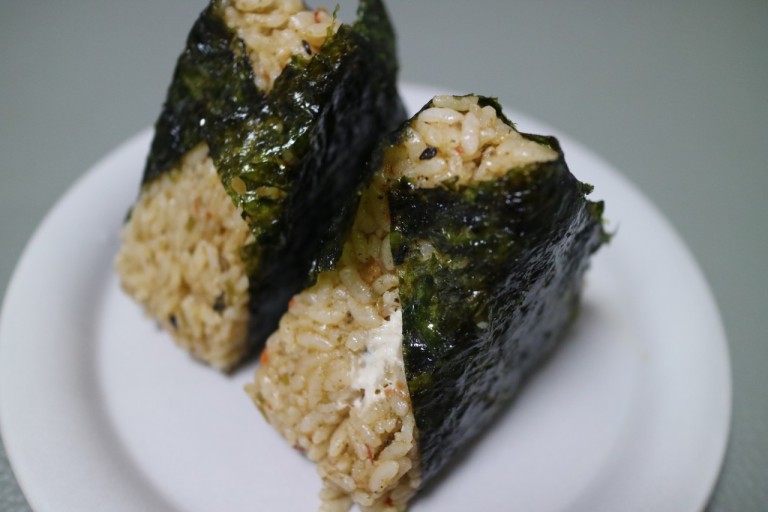
- Samgak gimbap (triangle rice ball). Rice, a filling, and a sheet of seaweed in clever packaging that keeps the seaweed crisp until you open it. Common fillings include tuna mayo, spicy pork, kimchi fried rice, and bulgogi. Open it by pulling tab 1 down the middle, then peeling off sides 2 and 3 — the numbers are printed on the wrapper.
- Gimbap rolls. Sliced seaweed rice rolls, a more filling version of the triangle. Check the label if you avoid meat — ham and fish cake are common.
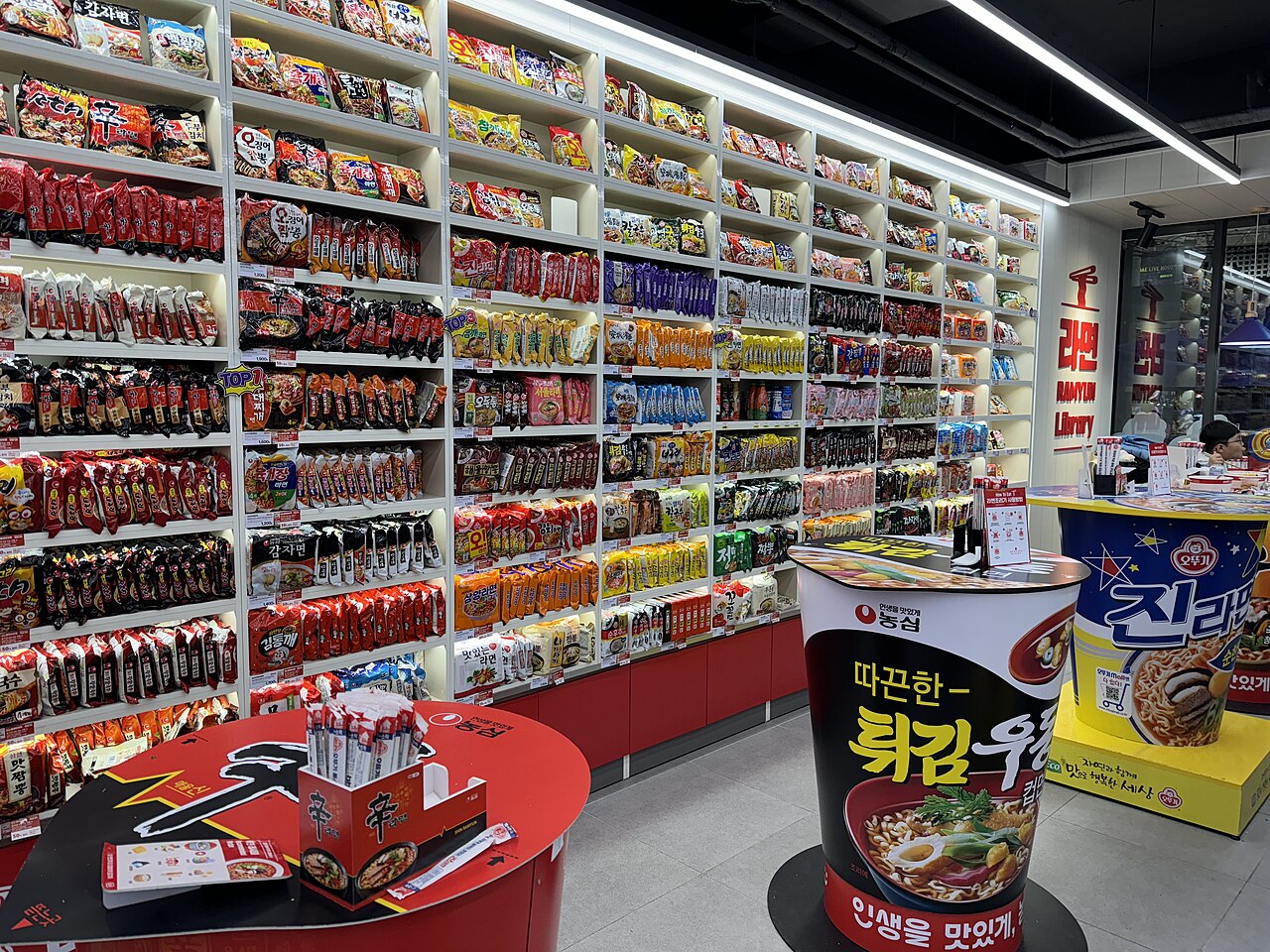
- Dosirak (lunch box). A full meal in a tray: rice plus several side dishes such as fried chicken, stir-fried pork, egg rolls, and kimchi. Heat it in the store microwave; the heating time is printed on the lid.
- Hot snacks at the counter. Many stores keep steamed buns, fishcake skewers, or fried chicken in a warmer by the till, especially in colder months.
Gimbap in all its forms is the backbone of convenience-store eating, and the triangle version is the cheapest hot-or-cold snack in the country. If you want to compare it with the sit-down versions, our what to eat in Seoul guide covers the dishes you will meet in restaurants, and the Korean street food guide covers the market stalls.
Vegetarian, vegan, or halal? Convenience-store food is hard work for restricted diets: broths, sauces, and fillings frequently contain meat, fish, or pork products, and labels are mostly in Korean. Plain rice, tofu, nuts, fruit, and some snacks are safer bets — the vegetarian and vegan food guide and the halal food guide explain what to look for.
Which Drinks and Snacks Are Worth Trying?
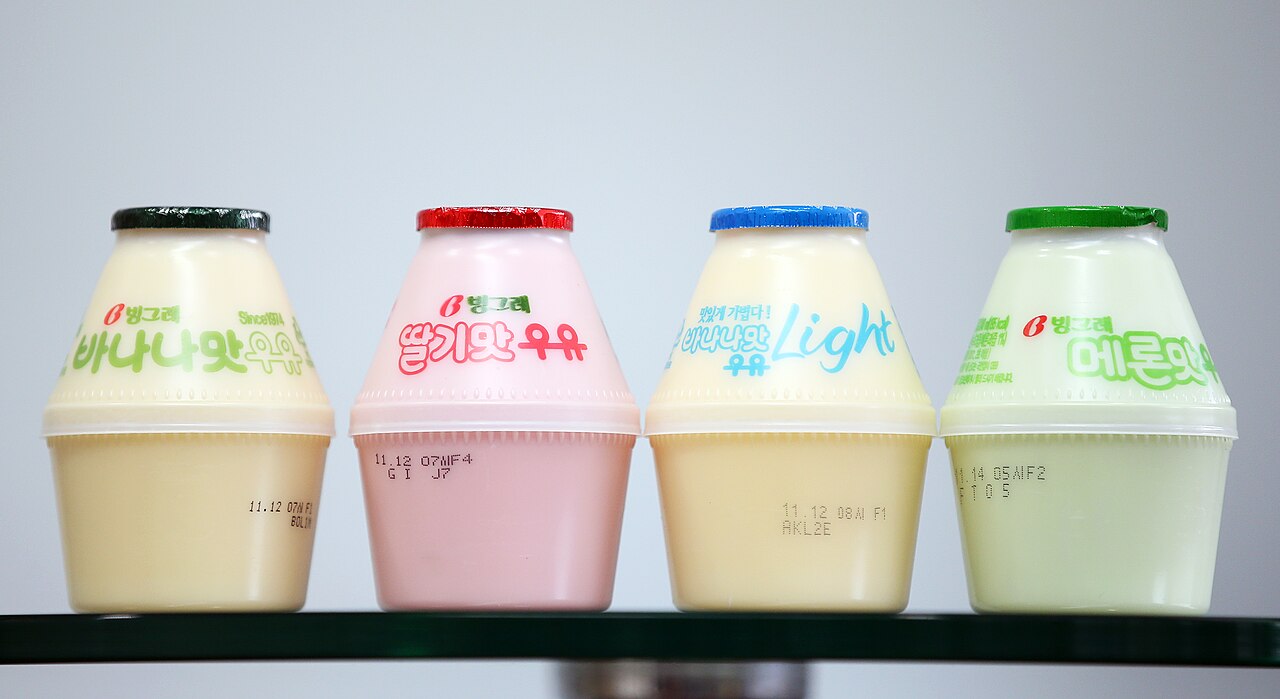
The single drink almost every visitor tries is Banana Flavored Milk from Binggrae, sold in a squat, jar-shaped bottle that has barely changed since the 1970s. It is sweet, mild, and inexpensive, and the strawberry and melon versions sit right beside it. A recent tourist habit is mixing banana milk with a canned or bottled black coffee to make a cheap “banana latte.”
Beyond that, the fridge and snack aisles are worth a slow browse:
- Canned and bottled coffee. Cheap, cold, and everywhere — a decent backup before the cafés open. Our café culture guide covers the real thing.
- Korean soft drinks and teas. Look for barley tea, corn silk tea, rice drinks, and sparkling fruit sodas you will not see at home.
- Snacks. Honey butter chips, shrimp crackers, and choco-pie style cakes are classics; the chains also release limited flavors constantly, so the “new” shelf changes from week to week.
- Ice cream. The freezer is a cheap way to try Korean flavors such as melon bars and fish-shaped red bean ice cream sandwiches.
- Beer, soju, and makgeolli. Sold to adults only (see the rules below), and often on multi-can deals.
How Do You Cook Ramyeon in the Store?
You cook cup ramyeon in a Korean convenience store by filling it from the hot-water dispenser to the line inside the cup, closing the lid for the time printed on the pack (usually three to four minutes), and eating it at the store’s counter or outside table. Chopsticks are free at the hot-water station or the till — just ask if you cannot see them.
Some stores, especially near the riverside parks and in tourist districts, have a dedicated ramyeon cooking machine: you buy a packet of noodles and a paper bowl, put them in the machine, and it boils the water and cooks the noodles for you in a few minutes. It is the famous Han River picnic ritual — our Han River guide shows which parks are best for it. When you are done, sort your waste: liquid soup goes in the sink or bucket provided, and the cup and lid in the bins.
How Much Does a Convenience Store Meal Cost?
A filling Korean convenience store meal usually costs between about ₩4,000 and ₩8,000, depending on whether you choose a lunch box or a rice ball and noodles. Prices rise every year and vary slightly by chain and location, so use these only as a guide:
| Item | Typical price range |
|---|---|
| Samgak gimbap (triangle rice ball) | about ₩1,200–2,000 |
| Gimbap roll | about ₩2,500–4,000 |
| Cup ramyeon | about ₩1,200–2,800 |
| Dosirak lunch box | about ₩4,500–7,000 |
| Banana milk | about ₩1,500–2,000 |
| Canned coffee | about ₩1,500–3,000 |
How do 1+1 and 2+1 deals work? “1+1” means buy one and get a second identical item free; “2+1” means buy two and get a third free. The tag is on the shelf edge. You usually have to take all the items to the till together, and the deals are mostly on drinks and snacks rather than lunch boxes. To set an overall daily number for food, see our Seoul travel cost guide.
What Else Can You Do at a Convenience Store?
Beyond food, Korean convenience stores handle a surprising number of travel errands. The most useful ones:
- Buy and top up a T-money card. Most stores sell the transit card and will top it up with cash at the till — just hand over the card and say the amount. It works on the subway, buses, and most taxis, and many stores also accept it as payment. If you would rather not hunt for one on arrival, you can collect a ready-loaded transit card at the airport🎟️. Our getting around Seoul guide covers how to use it.
- Withdraw cash. Many stores have an ATM, and some accept foreign cards, but fees can be higher than at a bank ATM. The money in Korea guide explains which cards and machines work best.
- Pay by card. Contactless and chip cards are accepted almost everywhere, even for a single drink.
- Pick up essentials. Phone chargers, umbrellas, socks, face masks, sunscreen, and travel-size toiletries — handy when a sudden downpour or a forgotten cable catches you out.
- Free seating. The window counter or the plastic tables outside are fair game for whatever you just bought.
For detailed and up-to-date visitor information, including tax-refund rules if you plan bigger shopping, the Korea Tourism Organization’s VisitKorea site is the official starting point, and the multilingual Korea Travel Hotline (1330) can help in English, Japanese, and Chinese.
Rules and Etiquette Worth Knowing
Convenience stores are informal, but a few local habits make the visit smoother:
- Alcohol and cigarettes are age-restricted. Korea’s legal age is 19, counted by birth year, and staff may ask to see a passport — carry it or a photo of it if you look young.
- Clean up after yourself. If you eat in the store, throw away your rubbish and tip leftover soup into the drain or bucket provided. Recycling is sorted, so look for the separate bins.
- Bags cost extra. Single-use plastic bags are restricted, so carry a small foldable bag or ask for a paper or reusable one.
- Drinking outside is generally fine. Sitting at the outdoor tables with a beer is a normal summer evening in Korea, though some parks post no-drinking areas — follow the signs, and keep noise down late at night.
- A simple greeting goes a long way. “Annyeonghaseyo” when you come in and “Gamsahamnida” when you leave. Our Korean etiquette guide covers the rest.
Plan Your Trip
Convenience stores cover breakfast and late-night snacks, which leaves your budget free for the meals that are worth sitting down for. If you want someone local to steer you through the rest of the food scene, it is easy to join a guided Seoul food tour🎟️ on your first evening.
If you are still choosing dates, it is worth taking a moment to compare current fares to Seoul✈️ before you book. For the bigger picture, our Seoul travel guide and 3 days in Seoul itinerary show how to build a first visit around the city’s neighborhoods.
Disclosure: This post contains affiliate links. If you book through these links, I may earn a small commission at no extra cost to you. I only recommend services I’d use myself.