
Last Updated: July 2026
Quick answer: Bring a Visa or Mastercard (Amex is hit-or-miss) plus about ₩100,000–200,000 in cash as backup — Korea is cashless for most locals, but small shops, markets, and some transit kiosks still don’t take foreign cards. Exchange most of your cash at a bank counter, a Myeongdong exchange shop, or a WOWPASS kiosk rather than at the airport, get a T-money card for buses and subways, and if you shop at stores with a “Tax Free” sign, keep your receipts to claim a VAT refund before you fly home.
Korea runs on two payment tracks at once. Locals pay for almost everything — coffee, taxis, even a single item at a convenience store — with a tap of a card or phone, and the country is often cited as one of the most cashless societies in the world. But that infrastructure was built for Korean-issued cards. Foreign-issued Visa and Mastercard now work in most places, foreign card acceptance at transit kiosks has expanded, and travel-specific tools like WOWPASS exist precisely to bridge the gap — but a fair number of small restaurants, traditional markets, and street stalls still expect cash or a domestic card only.
This guide covers what actually matters on the ground: how much cash to carry, where foreign cards work and where they don’t, the best places to exchange currency, how T-money and its rivals work, and how to actually get your tax refund back before you leave.
Table of Contents
- The Essentials at a Glance
- How Much Cash Should You Bring to Korea?
- Do Foreign Credit and Debit Cards Work in Korea?
- Where Should You Exchange Currency in Korea?
- What Is T-Money, and Do You Need One?
- T-Money vs WOWPASS vs Climate Card — Which Should You Get?
- How Does the Tax Refund Work for Tourists?
- Is Tipping Expected in Korea?
- Plan Your Trip
The Essentials at a Glance
If you only remember five things about money in Korea, make it these:
- Carry ₩100,000–200,000 in cash as backup even if you mostly pay by card.
- Visa and Mastercard work almost everywhere that takes cards — small independent shops and markets are the main exception.
- Get a T-money card on arrival for buses, subways, and many convenience stores.
- Exchange cash in Myeongdong or at a WOWPASS kiosk, not at the airport, for the best rate.
- Keep every “Tax Free” receipt — you can claim part of the VAT back before you leave.
How Much Cash Should You Bring to Korea?
Plan on ₩100,000–200,000 (roughly $75–150) in cash as a rolling backup, topped up as you spend it, rather than one large sum for the whole trip. That covers a few taxi rides paid by card decline, a market stall lunch, a shrine donation box, or a small guesthouse that quotes cash-only pricing. If your trip leans heavily on street food stalls or traditional markets, keep more of it in smaller ₩1,000–₩10,000 notes — vendors there often can’t break a ₩50,000 bill early in the day.
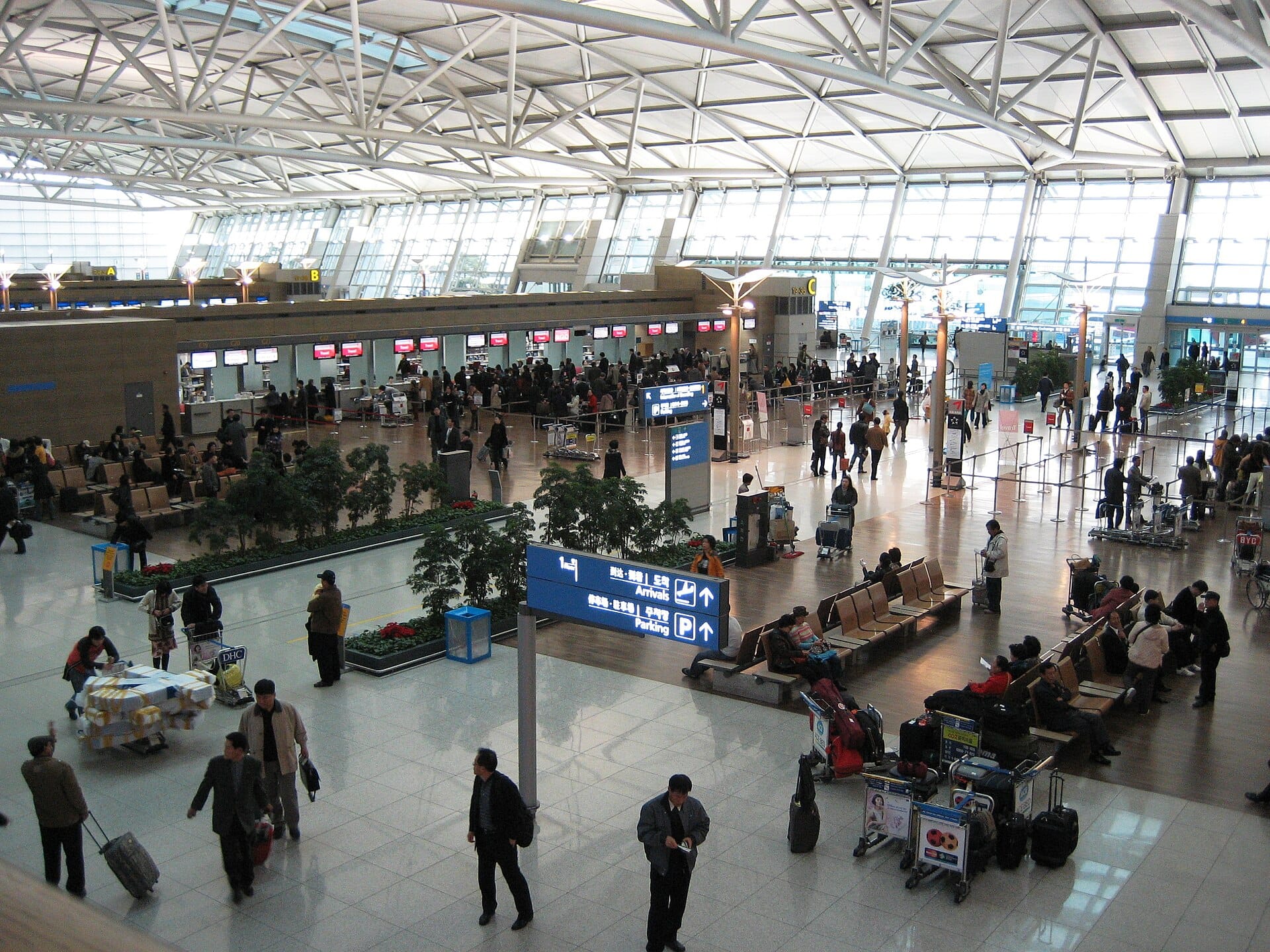
You don’t need to bring won from home. Korean won isn’t easy to source at a good rate outside Korea, and ATMs plus exchange counters at Incheon and Gimpo airports mean you can get cash the moment you land, even if the rate there isn’t the best available (more on that below).
Do Foreign Credit and Debit Cards Work in Korea?
Mostly, yes. Visa and Mastercard are accepted widely — hotels, restaurant chains, department stores, convenience stores, and most tour operators all take them without issue. American Express and Discover are accepted less consistently, so don’t rely on Amex as your only card. Contactless tap-to-pay is common in Seoul and Busan but still patchy elsewhere, so having a physical chip-and-PIN card as a fallback is worth it.
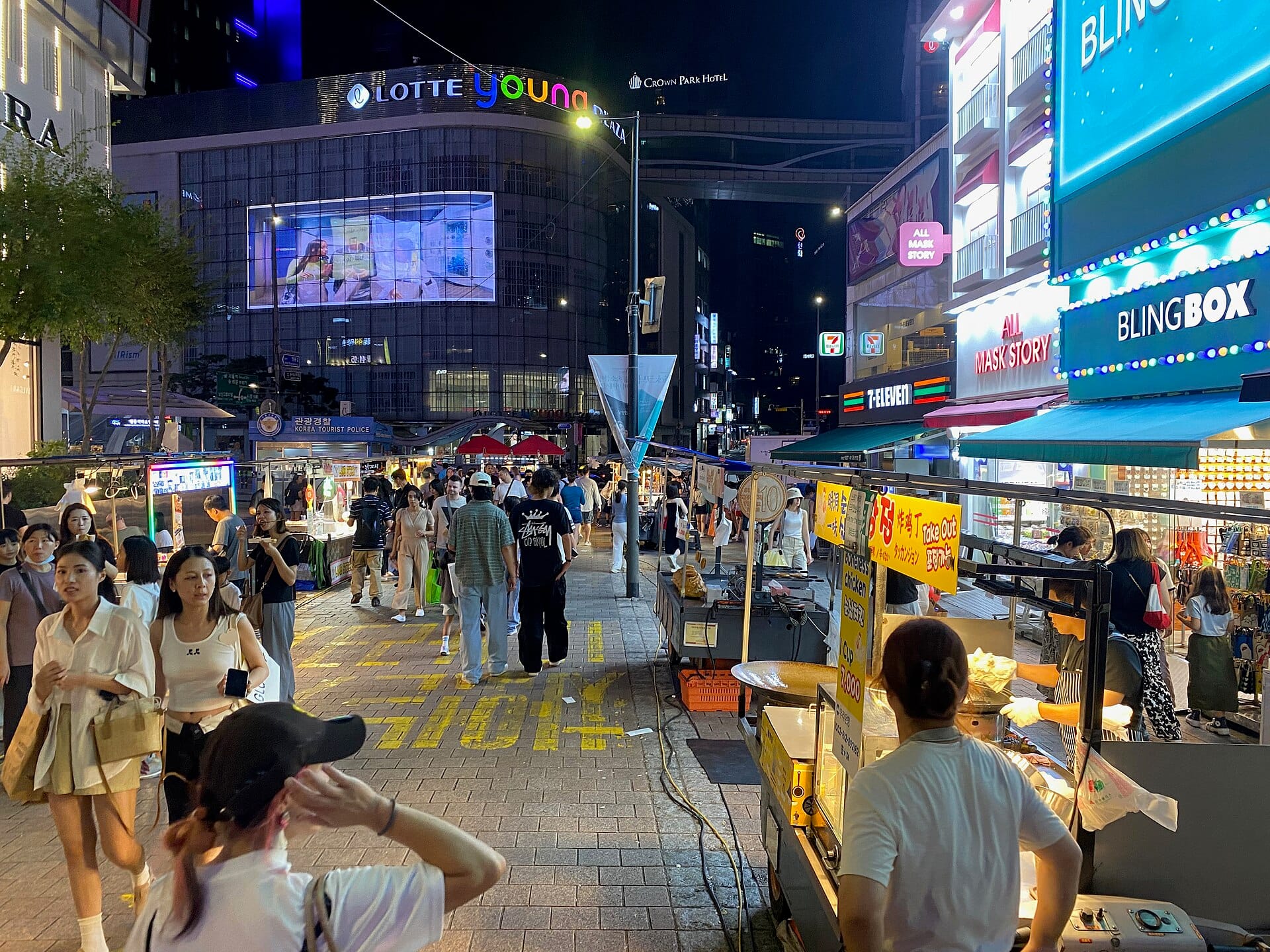
Where foreign cards genuinely struggle: small independent restaurants and cafes, traditional markets, street food carts, some local buses and taxis outside major cities, and a handful of coin-locker or vending machines that only read domestic cards. The practical fix is simple — carry two different card networks (a Visa and a Mastercard, ideally from different banks) plus the cash buffer above, and you’ll cover almost every situation you run into.
Where Should You Exchange Currency in Korea?
Airport currency counters are the most convenient option but consistently offer the weakest rate — treat them as a way to get enough cash for your first taxi or AREX train into the city, not your whole trip’s cash. For everything beyond that, three options beat the airport:
- Myeongdong’s exchange shops. This Seoul neighborhood is dense with small, licensed currency exchange counters competing on rate, and it’s generally recognized as the best place in the country for cash exchange. Bring clean, larger-denomination foreign bills for the best rate.
- WOWPASS kiosks. These bright yellow machines — now at airports, subway stations, and tourist areas nationwide — accept around 16 foreign currencies, convert them to won on the spot, and load the balance onto a reusable prepaid card that also works for transit and everyday purchases. The companion app lets you exchange and reload from a foreign card too, at a rate that comfortably beats the airport counters.
- Bank branches. Major banks exchange currency at posted rates during business hours; slower than a kiosk, but reliable if you’d rather deal with a teller.
Whichever you use, count your cash before leaving the counter, and skip any exchange booth advertising a rate that looks noticeably better than everyone else’s nearby — a red flag for hidden commission.
What Is T-Money, and Do You Need One?
T-money is Korea’s rechargeable transit card — tap it on subway and bus readers nationwide, and at many convenience stores and taxis, instead of buying single tickets each ride. The card itself costs ₩2,500–₩4,000 (non-refundable), and you load it separately with however much travel money you want. Pick one up at any convenience store near a subway station, at ticket machines inside the station, or at the Incheon Airport transit centre when you land, then top it up with cash at the same convenience stores or at in-station reload machines.
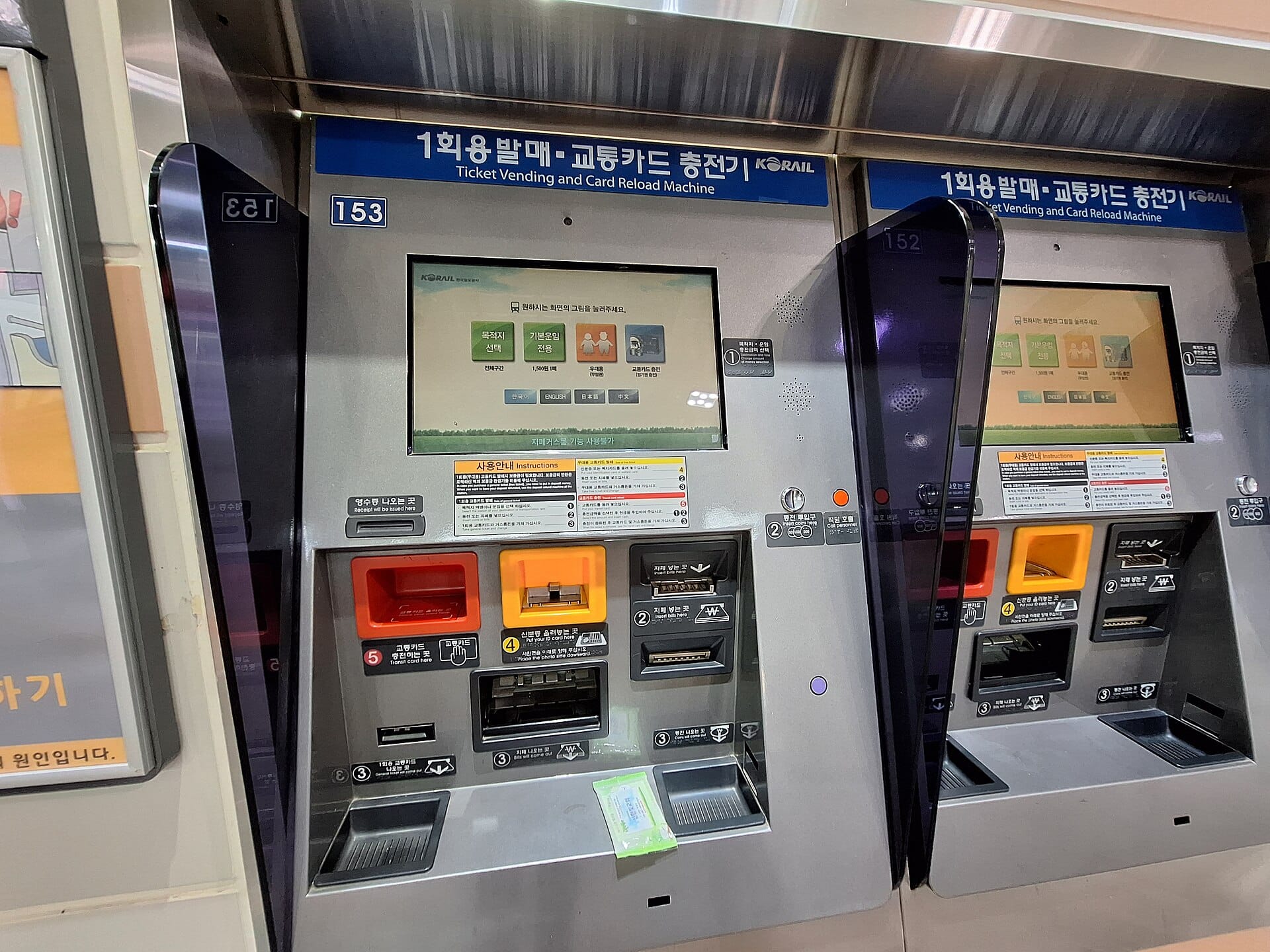
As of March 2026, Seoul Metro upgraded roughly 440 kiosks across 273 stations on Lines 1–8 to accept foreign-issued Visa, Mastercard, JCB, UnionPay, and Amex for buying or reloading a T-money card directly — handy if you land without won yet, though a small foreign-card service fee applies. For getting around Seoul day to day, T-money (or its tourist-focused rivals below) is close to essential — riding on single paper tickets everywhere adds up in both cost and hassle.
T-Money vs WOWPASS vs Climate Card — Which Should You Get?
All three work on the same subway and bus readers, so the choice comes down to how much else you want the card to do:
| Card | Best for | Extra features | Where to get it |
|---|---|---|---|
| T-money | Simplicity — just transit and small purchases | Works at convenience stores too | Convenience stores, station machines, airport |
| WOWPASS | First-timers who also need currency exchange | Currency exchange + payment card + transit in one | Yellow kiosks at airports, stations, tourist areas |
| Climate Card (Tourist Pass) | Heavy subway/bus use over several days | Unlimited rides within Seoul for the pass period | Upgraded subway kiosks, some convenience stores |
If you’re only in Korea a few days and want one less thing to think about, WOWPASS is the easiest single answer — it replaces both your currency exchange stop and your transit card errand. If you already have won and just want the cheapest, most universally accepted transit card, plain T-money is fine.
How Does the Tax Refund Work for Tourists?
Korea has two separate systems that get confused: duty free shops (mostly at airports and a few downtown locations) sell goods with tax already excluded, while regular “Tax Free”-signed stores charge you the full price including VAT, and you claim part of it back afterward. The refund applies to purchases of at least ₩15,000 in a single transaction at a participating store (some retailers set the bar at ₩30,000), and you’ll need your passport at checkout to get the tax-free receipt.
From there, some larger stores issue an immediate discount at the register; otherwise you present your receipts, passport, and goods at a downtown refund kiosk (common in shopping districts like Myeongdong) or at the airport refund counter and customs kiosk before you fly out — budget extra time at the airport for this if you’ve shopped seriously. Note that the actual cash back is typically 4–7% of the purchase price rather than the full 10% VAT, since the refund operator deducts a processing fee, and goods generally need to leave Korea within three months of purchase. For the full breakdown of duty-free versus tax-refund rules, the Korea Tourism Organization’s official tax-free guide is the most current reference.
Is Tipping Expected in Korea?
No — tipping isn’t part of Korean service culture and is already built into the prices you’re quoted, so there’s no need to budget for it separately. For the fuller picture of what is and isn’t expected socially, see our Korean etiquette guide.
Plan Your Trip
Sort out your money logistics before you land: check the current Korea entry requirements, budget your trip with our Seoul travel cost breakdown, and line up a Korea SIM or eSIM so you can navigate straight from the arrivals hall. If you’re taking the AREX express train or a KTX connection once you’re in, it’s worth reserving your rail ticket🚄 ahead of time rather than queuing at the machine with unfamiliar currency in hand.
Once your dates are set, compare flights to Seoul✈️, and for the rest of the trip, our complete Seoul travel guide covers where to stay, what to eat, and how to get around once you’ve got your cards and cash sorted.
Disclosure: This post contains affiliate links. If you book through these links, I may earn a small commission at no extra cost to you. I only recommend services I’d use myself.