
Last Updated: October 2026
Quick answer: Seoul is easier for vegetarians and vegans than its meat-heavy reputation suggests, but it takes planning. The two best bets are Buddhist temple food around Insadong and Jogyesa (naturally meat-free, and the most distinctive meal you can have) and the plant-based cafés and restaurants clustered in Itaewon, Haebangchon, and Hongdae. The catch is that ordinary Korean restaurants often hide fish sauce, anchovy stock, or beef broth in dishes that look vegetarian — so knowing what to ask matters more than knowing where to go.
This guide covers how Korean cooking works against you, where to eat well anyway, and the exact phrases and habits that keep a meal genuinely plant-based. Restaurant lists change quickly in Seoul, so treat every name below as a starting point and confirm on a map app before you go.
Table of Contents
- Why Is Eating Vegetarian in Korea Harder Than It Looks?
- What Is Temple Food, and Where Can You Try It?
- Where Are Seoul’s Vegan Restaurants?
- What Can You Order at a Regular Korean Restaurant?
- What Should You Say When You Order?
- Practical Tips for Plant-Based Travelers
- Plan Your Trip
Why Is Eating Vegetarian in Korea Harder Than It Looks?
Korean food looks full of vegetables — banchan side dishes, namul, kimchi, tofu stews — which is why many travelers assume it is easy. The problem is what is behind the vegetables. Stocks for soups and stews are commonly made from dried anchovy or beef bones, kimchi is traditionally fermented with fish sauce or salted shrimp, and a dish named “vegetable” may still be cooked with pork fat or finished with a fish-based seasoning. Even a plain-looking bibimbap often comes topped with minced beef or an egg, and gimbap frequently includes ham or fish cake.
Two vocabulary points help. Korea has a long tradition of Buddhist vegetarian cooking that is meat-free by design, and a newer, growing scene of plant-based cafés aimed at residents and visitors alike. Between those two, you can eat very well; the difficulty is only at the ordinary neighborhood restaurant, where “no meat” is rarely the same as “no animal products.”
What Is Temple Food, and Where Can You Try It?
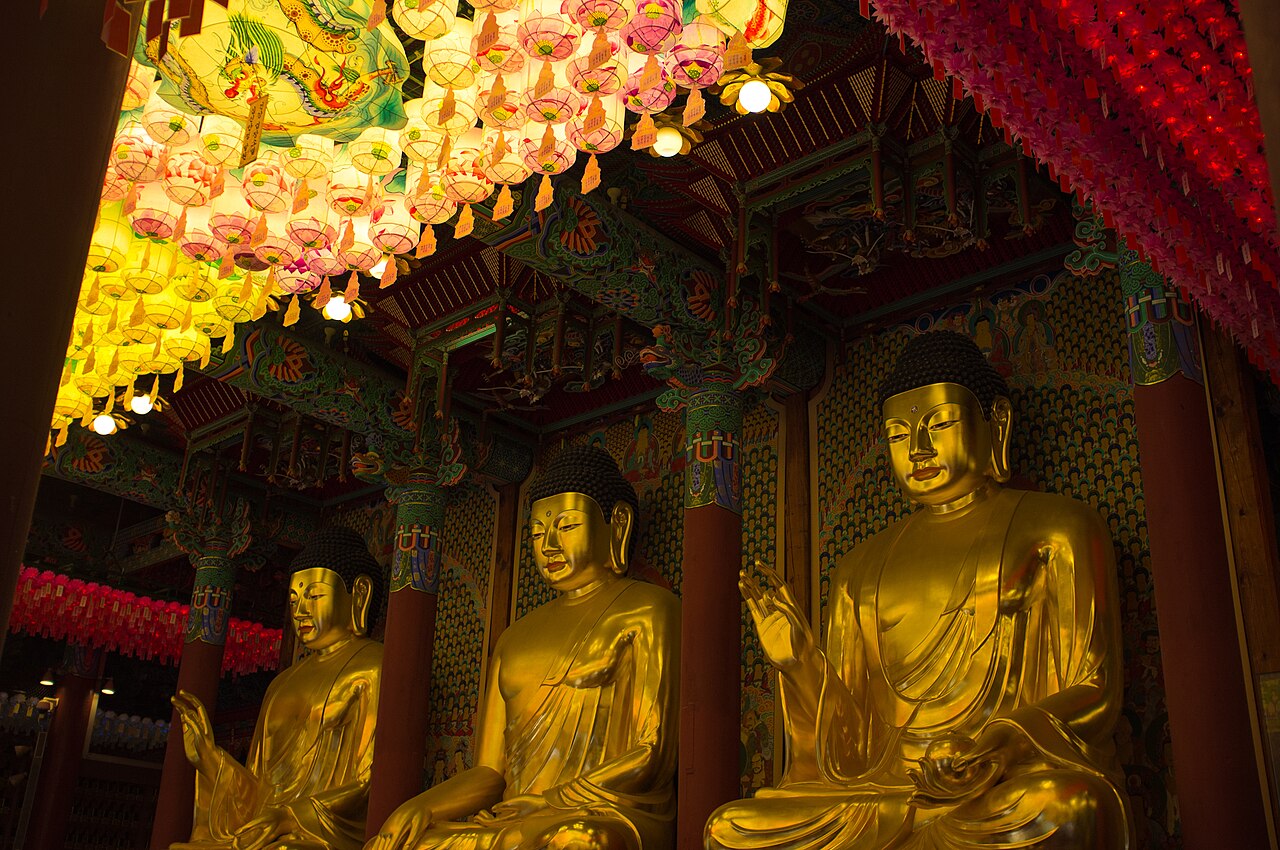
Korean temple cuisine is the cooking of Buddhist monasteries: seasonal vegetables, wild greens, tofu, grains, and fermented sauces, prepared without meat or fish. It also traditionally leaves out the “five pungent vegetables” — garlic, onion, scallion, chives, and leek — which makes its flavor noticeably quieter and cleaner than the garlic-forward food elsewhere in Korea. That last detail is the key difference from ordinary vegan food: temple food is vegetarian by religious rule, but it is not always certified vegan in the modern sense, so mention dairy or honey if those matter to you.
The best-known place to try it in Seoul is Balwoo Gongyang, a restaurant run by the Jogye Order of Korean Buddhism in the Insadong–Anguk area, within walking distance of Jogyesa Temple. It serves multi-course set menus; published prices vary widely by source, from a few tens of thousands of won to well over ₩100,000 for the longest courses, so check the current menu before you commit. Reservations are strongly advised — travelers report needing to book days to weeks ahead for dinner — and it is worth asking at booking whether the menu can be made fully vegan. A more casual option is the temple-food restaurant attached to the Jogyesa grounds, which serves simpler lunch-style plates.
Because Jogyesa and Insadong sit side by side, a temple-food lunch fits naturally into a day exploring the area; our Bukchon and Insadong guide maps out the rest of that walk, and the Ikseondong hanok village guide covers the nearby alleys, where at least one hanok restaurant has built its menu around vegan Korean food.
Where Are Seoul’s Vegan Restaurants?
Counts of “vegan-friendly” places in Seoul vary enormously between guides — from around a hundred fully vegan restaurants to figures in the hundreds or more, depending on how loosely “friendly” is defined — so use the neighborhoods as a guide rather than any single number. The densest clusters are:
- Insadong and Ikseondong. Traditional Korean vegan kitchens and tea houses. Names that come up repeatedly include Osegye Hyang (a fully vegan Korean restaurant, with a weekly closing day worth checking), Maru (vegan street-food-style tteokbokki and gimbap), and Vegan Insa, a hanok restaurant in Ikseondong.
- Itaewon, Hannam-dong, and Haebangchon. The most English-friendly area and the best choice for Western-style vegan cafés, burgers, and brunch. Plant Café & Kitchen and Vegetus are frequently cited here. Our Itaewon neighborhood guide covers the area beyond the food.
- Hongdae. Younger, cheaper, and full of cafés; a good place to find plant-based pubs and dessert shops. See the Hongdae guide.
Some of these are fully vegan and some are only “vegan-friendly,” and a few reviews report animal ingredients showing up in dishes labeled vegan — so even at a dedicated restaurant, a quick confirmation about stock and sauces is worth the five seconds. The Korea Tourism Organization’s VisitKorea site also points visitors to vegetarian-friendly restaurants, including Michelin Green Star recognition for sustainable cooking, and you can call the multilingual Korea Travel Hotline at 1330 if you want a human to help you find or verify a place.
What Can You Order at a Regular Korean Restaurant?
You can eat at ordinary restaurants if you accept some compromise and ask the right questions. The dishes with the best odds of being meat-free, once you confirm the details:
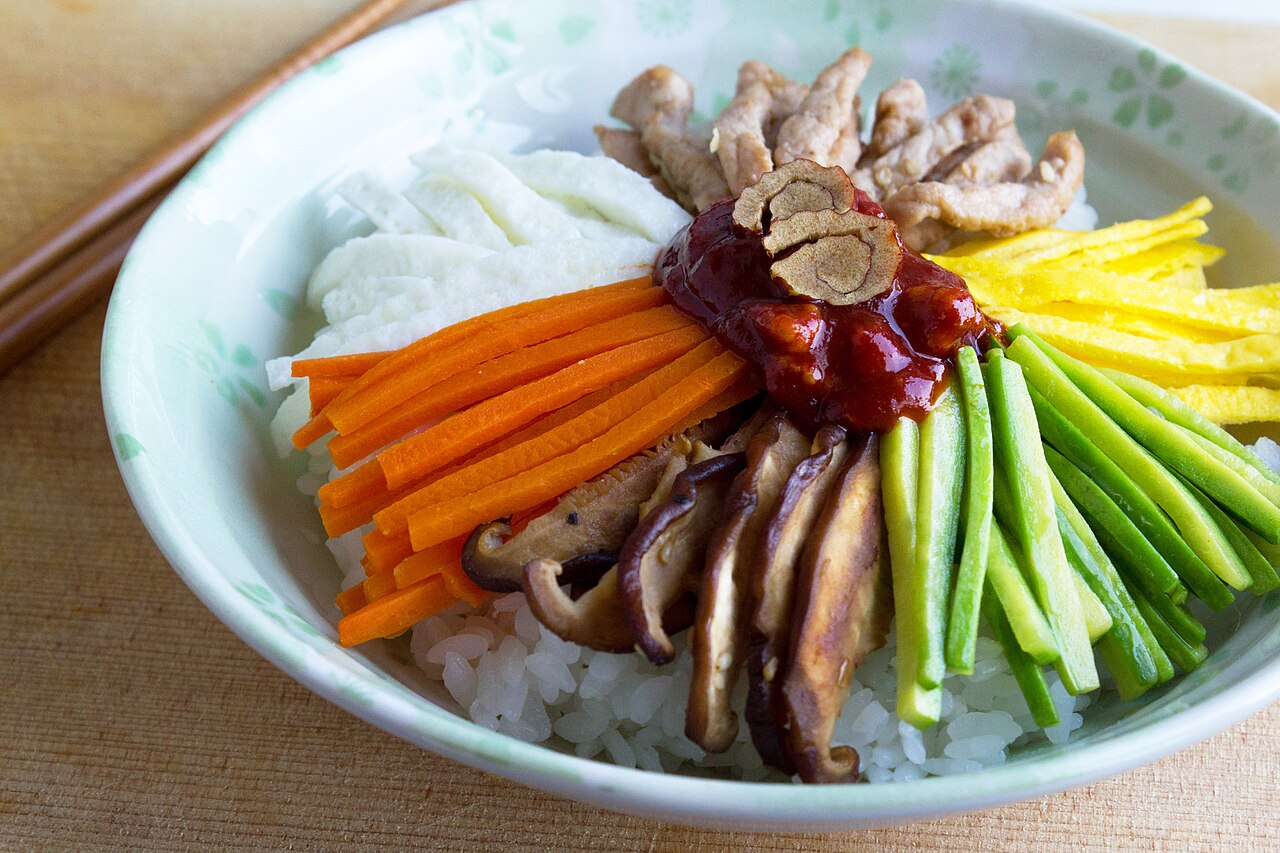
- Bibimbap. Ask for it “without meat and without egg” (sanchae bibimbap, made with mountain vegetables, is the natural order). Request the gochujang on the side — it is usually vegan, but confirm.
- Sundubu-jjigae (soft tofu stew). Usually made with anchovy or beef stock and often contains seafood or pork; some restaurants will make a vegetable version if asked ahead.
- Japchae (glass-noodle stir-fry). Often contains beef; ask for a version with vegetables only.
- Pajeon and other savory pancakes. A vegetable pancake is frequently fine, but seafood versions are common, and the dipping sauce may contain fish.
- Kimchi and banchan. Standard kimchi often contains fish sauce or shrimp; the side dishes are a mix. Treat banchan as “ask first,” not “free to eat.”
Korean BBQ restaurants are the hardest case, since the table is built around grilling meat, and our Korean BBQ guide is mainly useful for mixed groups: a vegetarian can usually order a rice or stew side while others grill, but expect limited choice. For a broader view of what else is on the menu, see what to eat in Seoul, and the same ask-about-the-broth habits apply in our halal food guide, which faces the same hidden-ingredient problem from a different angle.
What Should You Say When You Order?
Short, specific phrases work far better than “I’m vegan,” a concept many restaurant staff will translate as “no red meat” or “less meat.” Save these to your phone, ideally in Hangul so you can show the screen:
| What you mean | Korean | Romanized |
|---|---|---|
| I don’t eat meat | 저는 고기를 안 먹어요 | Jeoneun gogireul an meogeoyo |
| No fish or seafood either | 생선과 해산물도 안 먹어요 | Saengseongwa haesanmuldo an meogeoyo |
| No meat or fish stock, please | 고기 육수, 멸치 육수 빼 주세요 | Gogi yuksu, myeolchi yuksu ppae juseyo |
| Without egg | 계란 빼 주세요 | Gyeran ppae juseyo |
| Is this vegetarian? | 이거 채식이에요? | Igeo chaesigieyo? |
The anchovy-stock line is the one that does the most work: myeolchi yuksu is the default base for a large share of Korean soups and stews, and naming it explicitly shows you know exactly what you are avoiding.
Practical Tips for Plant-Based Travelers
- Book temple food early. Balwoo Gongyang in particular fills up; reserve before you fly, not after you land.
- Use Insadong for your first lunch. It has the highest concentration of vegetarian-friendly kitchens within a short walk, and it is easy to reach from Anguk Station.
- Keep a backup. Convenience stores sell plain rice balls, tofu, nuts, and fruit; check the label in the app or ask, as many triangle gimbap fillings contain tuna or ham.
- Verify before you travel across town. Hours, closing days, and even whole restaurants change often; a quick check on a map app saves a wasted trip.
- Budget differently. Dedicated vegan cafés and temple-food courses tend to cost more than a standard Korean lunch, so plan for it — our Seoul travel cost guide helps set a daily number.
Plan Your Trip
If you are still settling on dates, it is worth taking a look to compare current fares to Seoul✈️ before you lock in your trip.
For the full city plan around your meals, our 3 days in Seoul itinerary and the Seoul travel guide show how Insadong, Itaewon, and Hongdae fit together on a first visit.
Disclosure: This post contains affiliate links. If you book through these links, I may earn a small commission at no extra cost to you. I only recommend services I’d use myself.