
Last Updated: November 2026
Quick answer: Korean fried chicken is double-fried for a thin, glassy crust that stays crunchy even under sauce. Order a whole chicken half-and-half (banban) — half plain huraideu, half sticky sweet-and-spicy yangnyeom — and drink it with a cold beer, a combination Koreans call chimaek. At the big chains a standard whole chicken now costs around ₩20,000, enough for two people, and the most memorable place to eat it is on the grass at a Han River park after dark.
This guide explains what makes the Korean version different, the flavors and sauces worth knowing, how to order at a chicken pub (and what the words on the menu mean), what it costs, and how the famous Han River delivery picnic actually works for a visitor without a Korean phone number.
Table of Contents
- What Makes Korean Fried Chicken Different?
- Which Flavors Should You Order First?
- What Is Chimaek?
- How Do You Order at a Korean Chicken Restaurant?
- How Much Does Korean Fried Chicken Cost?
- Chain or Independent — Which Chicken Places Are Worth It?
- Where Is the Best Place to Eat Fried Chicken in Seoul?
- Can Tourists Order Fried Chicken Delivery?
- Fried Chicken Beyond Seoul
- Plan Your Trip
What Makes Korean Fried Chicken Different?
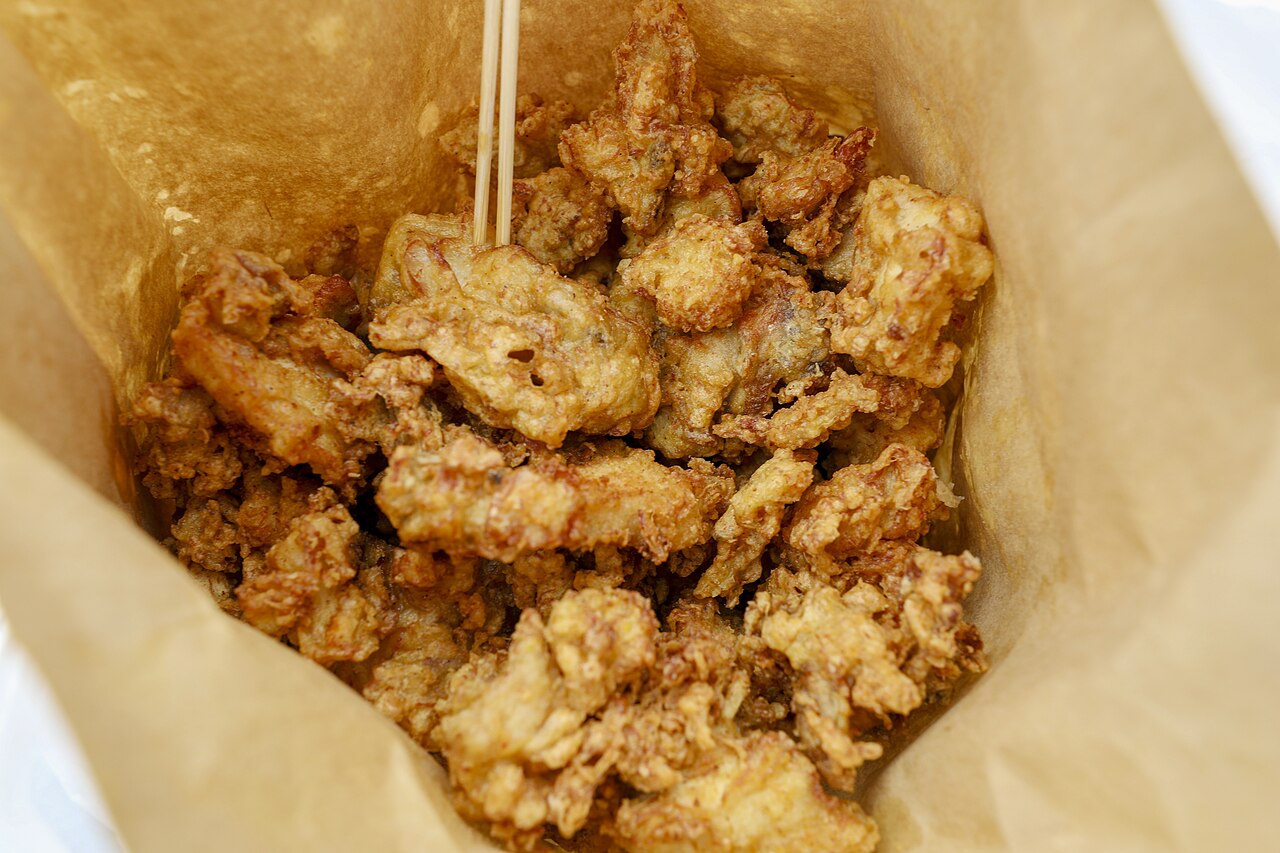
Korean fried chicken is different mainly because it is fried twice. The first fry cooks the meat; the second, after a short rest, drives out moisture from the coating and leaves a crust that is thin, almost translucent, and loud when you bite it. Compared with the thick, craggy breading of Southern-style chicken, the Korean version is lighter, less greasy, and built to hold a glaze without going soggy.
Fried chicken arrived in Korea with the American military presence after the Korean War, but the style that travelers line up for today took shape from the 1980s, when sauced chicken and the first franchise chains spread across the country. The well-documented history in Wikipedia’s Korean fried chicken article traces that evolution, including the invention of the sweet-and-spicy yangnyeom glaze in the early 1980s — commonly credited to Yun Jong-gye, founder of the Pelicana chain, although who came up with it first is still argued over in Korea.
The other difference is how it is eaten. Korean fried chicken is rarely a quick solo meal. It is a shared, late-evening thing — ordered by the whole bird, eaten with your hands from a big platter or a cardboard box, and always with something cold to drink.
Which Flavors Should You Order First?
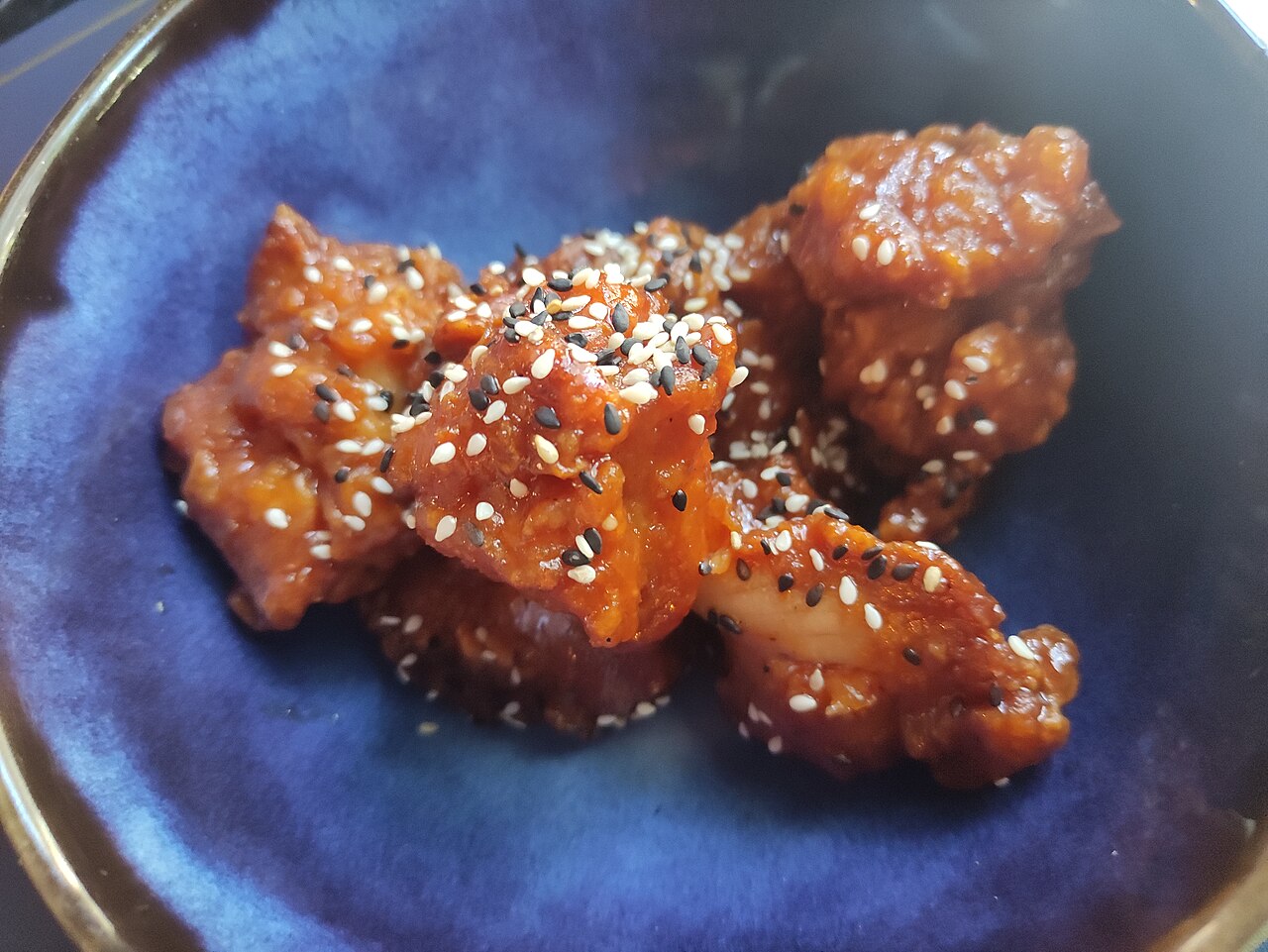
Order huraideu (plain fried) and yangnyeom (sauced) first — they are the two flavors every chicken place in Korea serves, and splitting one bird between them is the classic first order. Once you know those, the rest of the menu is variations on a theme.
| Flavor | Korean name | What it tastes like |
|---|---|---|
| Plain fried | Huraideu (후라이드) | Unsauced and very crunchy; dipped in salt or sauce on the side |
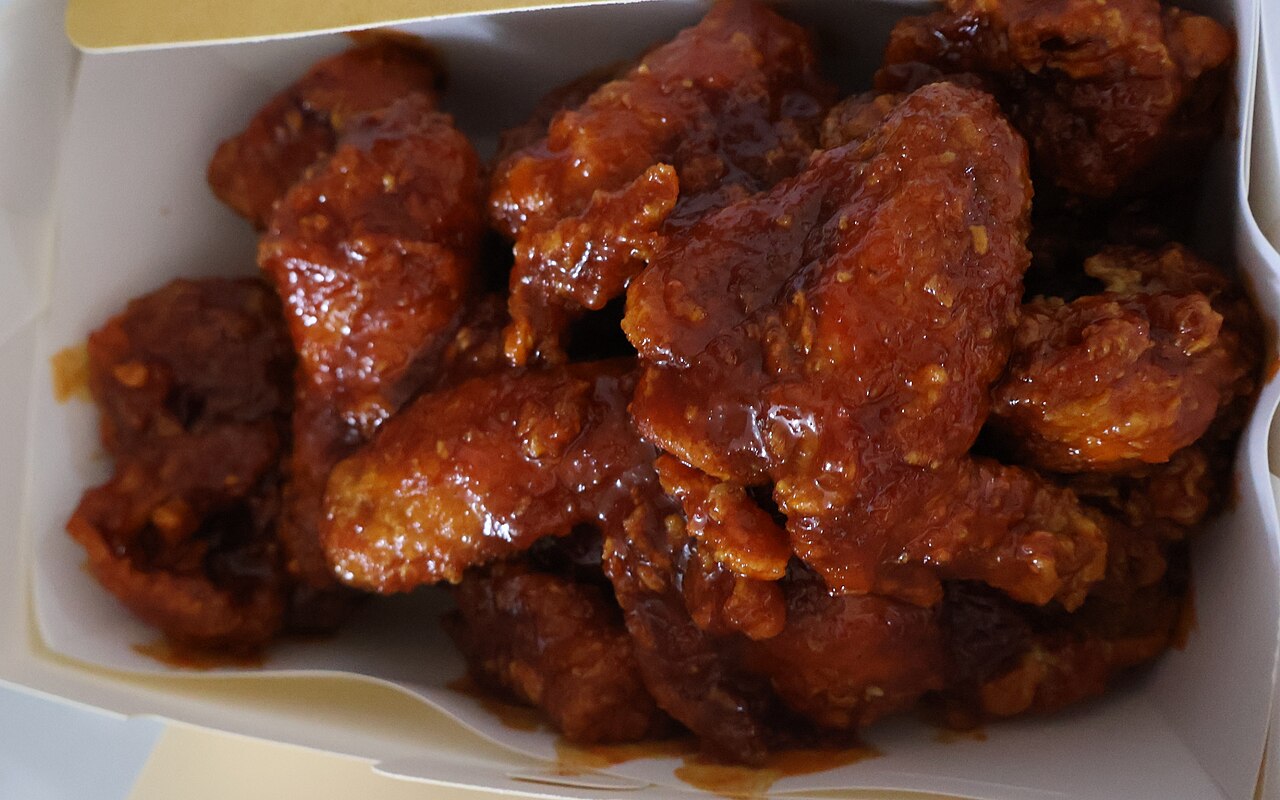
| Sweet & spicy | Yangnyeom (양념) | Sticky red glaze of gochujang, garlic and sugar; mild heat |
| Soy garlic | Ganjang (간장) | Savory-sweet soy glaze, thin and shiny; great with beer |
| Green onion | Pa-dak (파닭) | Plain chicken buried under a heap of shredded scallion in a tangy dressing |
| Snow / cheese powder | Varies by chain | Dusted in sweet-salty seasoning powder; popular with younger diners |
| Fiery hot | Ttaengcho / buldak style | Chili-heavy glaze with real heat — order this once you know your limit |
Yangnyeom sounds spicy but is usually more sweet than hot, so most visitors who avoid spice handle it fine. If you are unsure, ask for deol maepge (“less spicy”), or stick to soy garlic. If you are working through the wider menu of dishes, our what to eat in Seoul guide shows where chicken fits alongside BBQ, stews and street snacks.
What Is Chimaek?
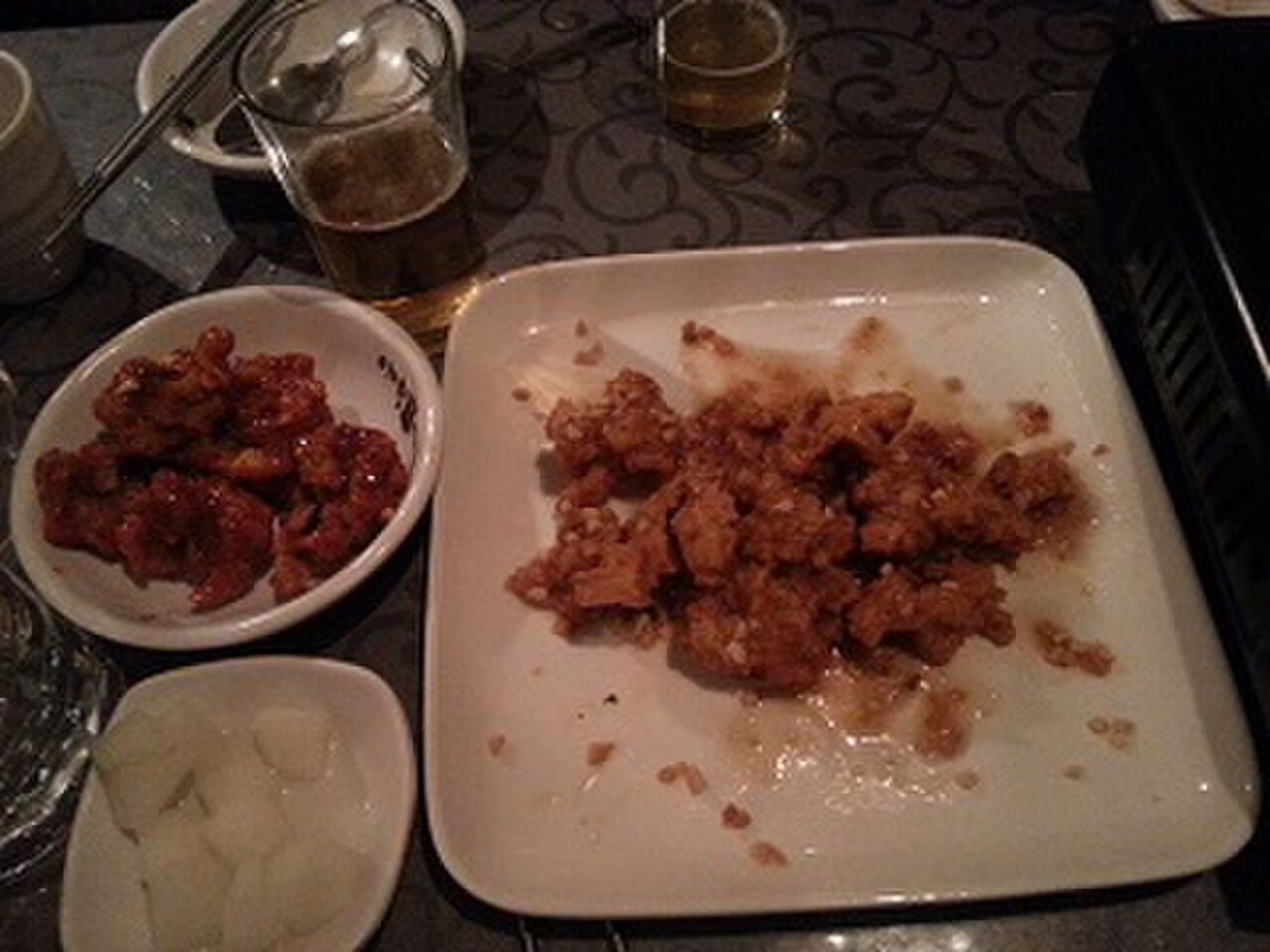
Chimaek is fried chicken eaten with beer — the word joins chikin and maekju, the Korean for beer. It is less a dish than a social habit: the default after-work meal for office teams, the thing friends order while watching football, and the snack that fills Han River parks on summer nights.
The beer is usually a crisp Korean lager on draft, served in a large mug or a 500 ml glass, sometimes by the pitcher. Non-drinkers are not left out: chicken pubs always sell soft drinks, and a cola with yangnyeom chicken is a perfectly normal order. The habit is popular enough that the city of Daegu runs a whole festival around it every summer — the Daegu Chimac Festival, held at Duryu Park in early July (the 2026 edition ran July 1–5).
How Do You Order at a Korean Chicken Restaurant?
You order Korean fried chicken by the bird, not by the piece. One whole chicken (han mari) is cut into pieces and arrives on one platter for the table; two people sharing one is normal, and a group of four usually gets two. Most places have a picture menu or a tablet with an English option, so pointing works fine.
A few menu words make it easier:
- Banban (반반) — half-and-half, two flavors on one platter. Usually costs the same as or slightly more than a single flavor.
- Sunsal (순살) — boneless. Easier to eat, often a little more expensive.
- Ppyeo (뼈) — bone-in, the default and, to most Koreans, the tastier option.
- Chikin-mu (치킨무) — the small dish of cubed pickled white radish that comes free with every order. Eat it between bites to cut the richness.
- Saengmaekju (생맥주) — draft beer. “Saengmaek hana” gets you one.
Chicken pubs often expect each table to order at least one main, and many also sell side dishes like fries, tteokbokki or corn cheese. Service is fast but unhurried — nobody will rush you out, and paying at the counter on the way out is standard. Our Korean etiquette guide covers the small table manners, like pouring for others rather than yourself.
How Much Does Korean Fried Chicken Cost?
A standard whole fried chicken at one of the big national chains costs roughly ₩19,000–₩23,000 in 2026, and combo or specialty menus run higher. Prices climbed steadily through 2023 and 2024 as the major chains raised menus — the Korea Times reported on Kyochon’s 2023 increase pushing its premium combo toward ₩30,000 once delivery fees are added.
| What you order | Typical price (2026) |
|---|---|
| Whole chicken, plain or sauced (big chain) | about ₩19,000–₩23,000 |
| Premium combo or specialty flavor | about ₩23,000–₩28,000 |
| Neighborhood or market-style chicken | often cheaper than the chains |
| Draft beer, 500 ml | about ₩4,000–₩6,000 |
| Delivery fee (if ordered by app) | usually a few thousand won extra |
Treat these as rough ranges — prices differ by chain, flavor and neighborhood, and the menu on the wall is the final word. Split between two people with a beer each, chimaek works out at about the cost of one casual restaurant meal per person, which is why it shows up in our Seoul on a budget guide as one of the best-value nights out.
Chain or Independent — Which Chicken Places Are Worth It?
Both are worth it, for different reasons. The big franchise chains are consistent, open late and easy to find anywhere in Korea; independent and older neighborhood shops are where you find the cheaper, crunchier, more old-fashioned chicken that many Koreans grew up on.
A few chain names you will see everywhere, and what each is known for:
- Kyochon — thin, shiny soy-garlic and honey glazes; a favorite for people who want flavor without much heat.
- BBQ — known for its “golden olive” fried chicken, cooked in olive-oil blends.
- bhc — famous for chicken dusted in a sweet-salty cheese seasoning powder.
- Goobne — oven-roasted rather than deep-fried, for a lighter option.
- Pelicana, Mexicana, Nene — older chains that helped make sauced chicken a national habit.
The “best” chain is a running argument in Korea, so the easy approach is to try one chain and one local shop and decide for yourself. A useful rule for independents: a busy shop full of Korean office workers at 8 p.m. is the best review you will get.
Where Is the Best Place to Eat Fried Chicken in Seoul?
The best places to eat Korean fried chicken in Seoul are the university and nightlife districts, where chicken pubs line the side streets and stay busy until late. You do not need a specific address — in these areas you will pass several in every block.
- Hongdae and Sinchon — student neighborhoods packed with cheap chicken-and-beer pubs, many with outdoor seating. Our Hongdae Seoul guide maps out the streets.
- Konkuk University (Kondae) — a lively food alley east of the center with a younger, local crowd.
- Jongno and Euljiro — older office districts where after-work chimaek is a ritual; Euljiro’s alley pubs have plastic stools spilling onto the street.
- Han River parks — the classic picnic option, covered below.
For the full after-dark picture — pojangmacha tents, bar streets and late-night eats — see our nightlife in Seoul guide. If you would rather have someone local choose the stops, an evening Seoul night food tour🎟️ usually includes a chicken-and-beer round alongside market snacks.
Can Tourists Order Fried Chicken Delivery?
Yes, but it takes a little workaround. Korea’s food-delivery apps generally work best with a Korean phone number and a Korean payment method, which most short-term visitors do not have. The easy routes are:
- Ask your hotel or guesthouse. Front desks often keep chicken-shop flyers and will place the call for you.
- Order takeout in person. Walk into any chicken shop, order to go (pojang), and come back in 15–20 minutes.
- Use a local number. A Korean SIM with a phone number makes app ordering easier; our Korea SIM and eSIM guide explains which options include one.
At the Han River, the routine is simple once you see it: riverside parks have signposted spots where delivery riders meet customers, and chicken shops nearby hand out flyers or post their numbers there. Many people simply buy chicken on the way, then pick up beer and snacks from the park’s convenience store — our Korean convenience store guide explains what is worth grabbing.
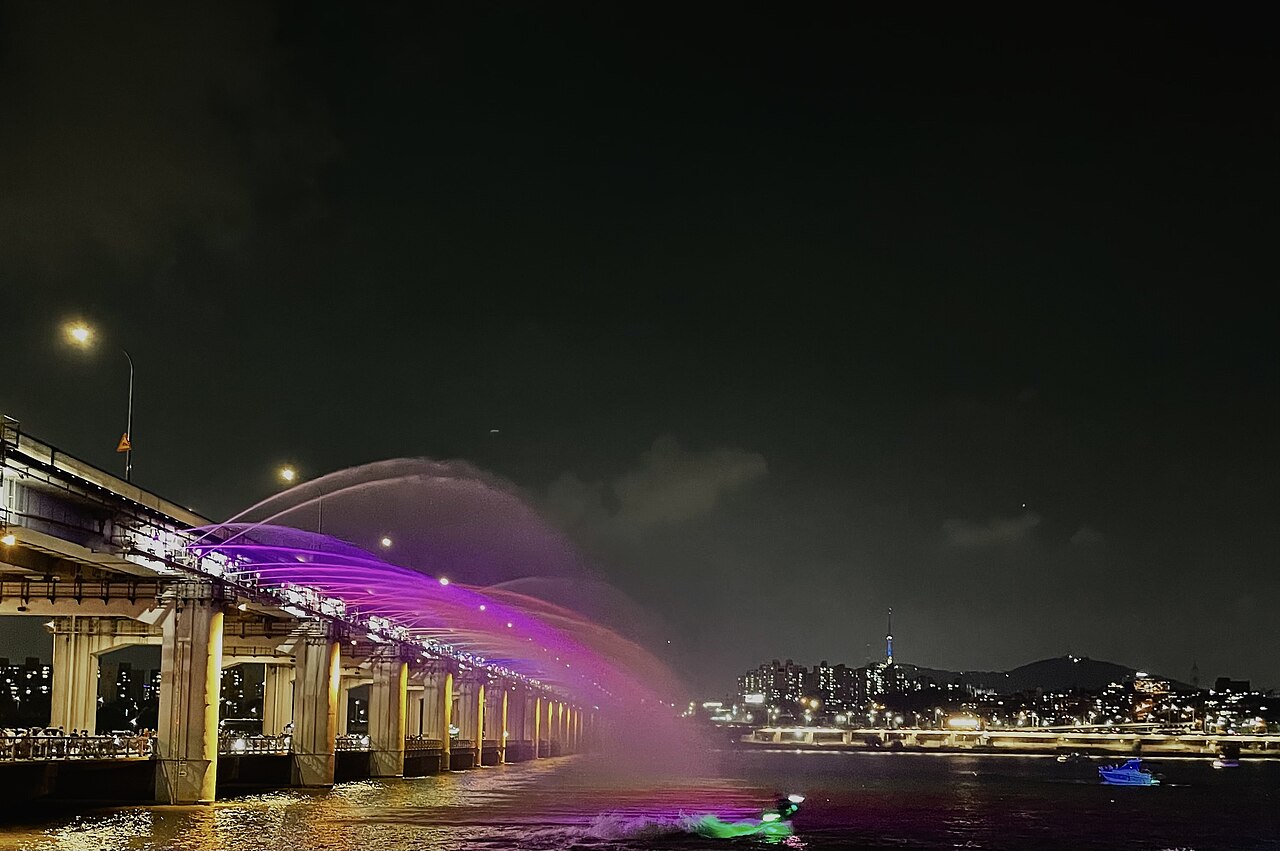
Banpo Hangang Park, with its rainbow fountain on the bridge, and Yeouido Hangang Park are the most popular chimaek spots. Our Han River Seoul guide compares the parks, and if you are visiting while the riverside events are on, the Han River drone light show makes for a memorable backdrop to a chicken picnic. Bring a mat, take your rubbish with you, and follow any no-drinking signs.
Fried Chicken Beyond Seoul
Outside Seoul, two places are worth knowing about. Suwon has a well-known “chicken street” (tongdak geori) near Paldalmun Gate, where old-school shops fry whole chickens in big iron pots — an easy dinner after walking the fortress walls on a Suwon Hwaseong Fortress day trip.
Daegu, in the southeast, is the home region of several of the country’s best-known chains and hosts the summer chimaek festival mentioned above. If your trip passes through in early July, it is the most concentrated fried-chicken experience in Korea.
Chicken is only one half of Korea’s great shared-meal culture. For the other, see our Korean BBQ guide, and for the snacks you will find between meals, our Korean street food guide.
Plan Your Trip
Fried chicken is easy to fit into any itinerary — it is the dinner you have on the night you are too tired to plan dinner. Build at least one chimaek evening into your trip, ideally a warm one by the river.
If you are still choosing dates, it is worth taking a moment to compare current fares to Seoul✈️ before you book. For the bigger picture, our Seoul travel guide and 3 days in Seoul itinerary show how to build a first visit around the city’s neighborhoods.
Disclosure: This post contains affiliate links. If you book through these links, I may earn a small commission at no extra cost to you. I only recommend services I’d use myself.