
Last Updated: September 2026
Quick answer: For a first trip, the best place to stay in Seoul is Myeongdong — central, on two subway lines, and walkable to the main sights. Hongdae suits nightlife, Seoul Station suits early trains, Itaewon suits food and bars, Bukchon suits atmosphere, and Gangnam suits modern shopping.
Deciding where to stay in Seoul is the single biggest choice you’ll make when planning your trip — bigger than which hotel, even. Seoul is huge and spread out, so the neighborhood you pick decides how much time you spend on the subway, how easy your nights out are, and how the city feels when you step out the front door each morning. For the bigger picture on planning the trip, see our complete Seoul travel guide.
The good news: a handful of areas cover almost everything a first-timer needs. This guide breaks down the best neighborhoods to stay in, what each one does well, and three solid hotels in each — so you can book with confidence instead of guessing. If you want the freshest options, it’s also worth seeing which new hotels are opening in Seoul this year.
Quick picks by traveler type
- First trip, 3–5 nights: Myeongdong, at a hotel within two minutes of a Line 4 exit such as Migliore — the airport bus stops at its door, so arrival day needs no subway at all. Myeongdong picks ↓
- Nights out, or arriving on a budget: Hongdae, near Hongik University Station — the only big nightlife district with the airport railroad in the same station. Hongdae picks ↓
- One night before a KTX or an early flight: Seoul Station, ideally Four Points, which connects to the station through an underground passage. Seoul Station picks ↓
Table of Contents
- Where Should First-Time Visitors Stay in Seoul?
- Where to Stay in Seoul: At a Glance
- Myeongdong — Best for First-Timers
- Hongdae — Best for Nightlife & Budget
- Seoul Station — Best for Easy Transit
- Itaewon — Best for International Vibe
- Insadong & Bukchon — Best for Traditional Atmosphere
- Gangnam — Best for Modern Seoul & Shopping
- How Long Does It Take From Each Base to the Palaces and the Airport?
- Which Area Is Best for You?
- Practical Tips for Booking
- Book Your Trip
Where Should First-Time Visitors Stay in Seoul?
For a first trip, stay in Myeongdong. It’s the most central base in the city, within walking distance of palaces and markets, and it sits on top of two subway lines plus the airport bus. Locals will tell you they’d never stay there — it’s touristy and busy — but for a first-timer juggling jet lag and an unfamiliar transit map, that convenience is worth more than authenticity.
That said, “best” depends on your trip. If nightlife is the priority, base yourself in Hongdae. If you’re catching early trains or short on time, Seoul Station is the most efficient base. Itaewon wins for international food and bars, Bukchon and Insadong for traditional atmosphere, and Gangnam for modern Seoul and shopping. The rest of this guide walks through each one, with hotel picks.
Where to Stay in Seoul: Neighborhoods at a Glance
| Neighborhood | Best for | The vibe |
|---|---|---|
| Myeongdong | First-timers, central base | Busy, touristy, convenient |
| Hongdae | Nightlife, younger travelers, budget | Loud, creative, late-night |
| Seoul Station | Easy transit, short stays | Functional, well-connected |
| Itaewon | International food & bars | Diverse, lively, mixed |
| Insadong & Bukchon | Traditional charm, walkability | Quiet, historic, atmospheric |
| Gangnam | Modern Seoul, shopping, upscale | Polished, pricey, business-like |
Myeongdong — Best for First-Timers
If you only have a few days and want to minimize travel time, Myeongdong is hard to beat. Subway lines and airport buses run right through it, so you can reach almost anywhere in the city without much planning. You’re a short ride from Gyeongbokgung Palace, Namdaemun Market, and N Seoul Tower, and the streets fill with K-beauty shops and evening food stalls — there’s always something happening right outside your door. It’s also a fine place to start eating your way through the city; our guide to what to eat in Seoul covers the street-food stalls and BBQ to seek out.
The trade-off is exactly what makes it convenient: crowds and tourist prices. It can feel more like a shopping district than a neighborhood. But for a first visit, the time you save is worth it. For a closer look — its sub-neighborhoods, hotels at every budget, and nightly prices — see our full guide to where to stay in Myeongdong.
Where to stay in Myeongdong:
- Migliore Hotel Seoul Myeongdong🏨 — Right outside Exit 5 of Myeongdong Station (Line 4). Airport buses stop at the door, and the shopping streets and Euljiro are an easy walk.
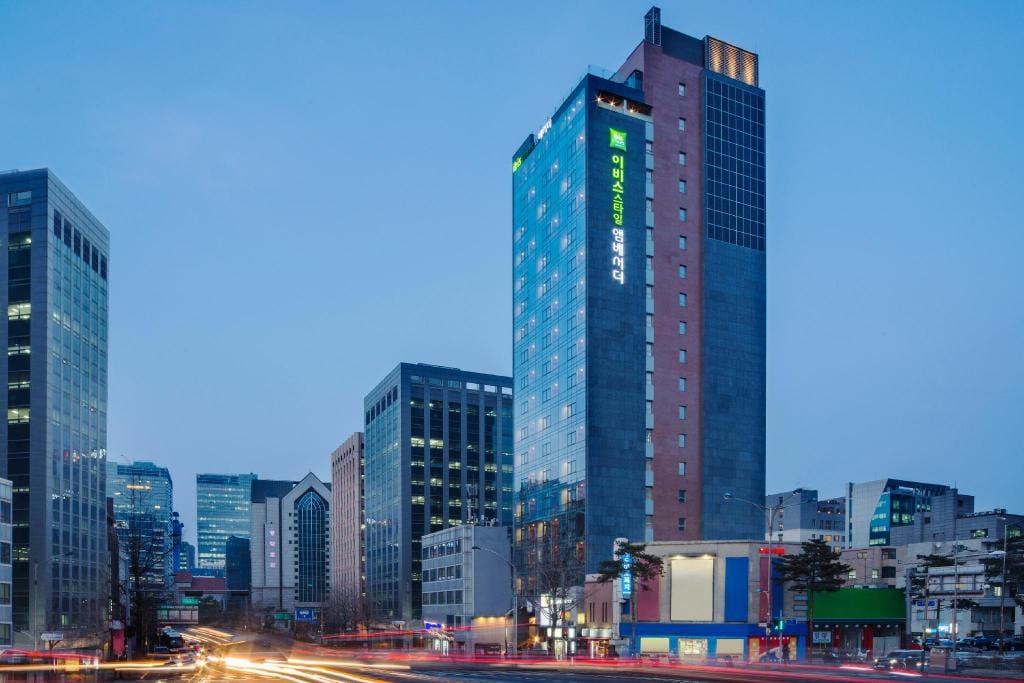
- ibis Styles Ambassador Seoul Myeongdong🏨 — Sits between Myeongdong and Chungmuro stations, so both Line 4 and Line 3 are close. Namsan and the shopping streets are within walking distance.
- Lotte City Hotel Myeongdong🏨 — Inside the shopping district itself, with restaurants right next door and both Euljiro 3-ga and Myeongdong stations nearby.
Hongdae — Best for Nightlife & Budget
Hongdae is Seoul’s student and creative quarter — indie shops, street performers, themed cafés, and a nightlife scene that runs until sunrise. It’s younger, louder, and generally cheaper than Myeongdong, and it has a direct airport-train connection that makes arrival and departure painless. The big, walkable commercial area also makes it a surprisingly practical base for sightseeing.
It’s the obvious pick if going out is part of your plan, and our full guide to Hongdae digs into its cafés, shops, and after-dark scene. Light sleepers should book a room a few streets back from the main drag, where it’s calmer. For the full range of hotels at every budget, see our dedicated guide to where to stay in Hongdae.
Where to stay in Hongdae:
- L7 Hongdae🏨 — Right by Exit 1 of Hongik University Station. The rooftop pool and bar are a great way to end the evening.
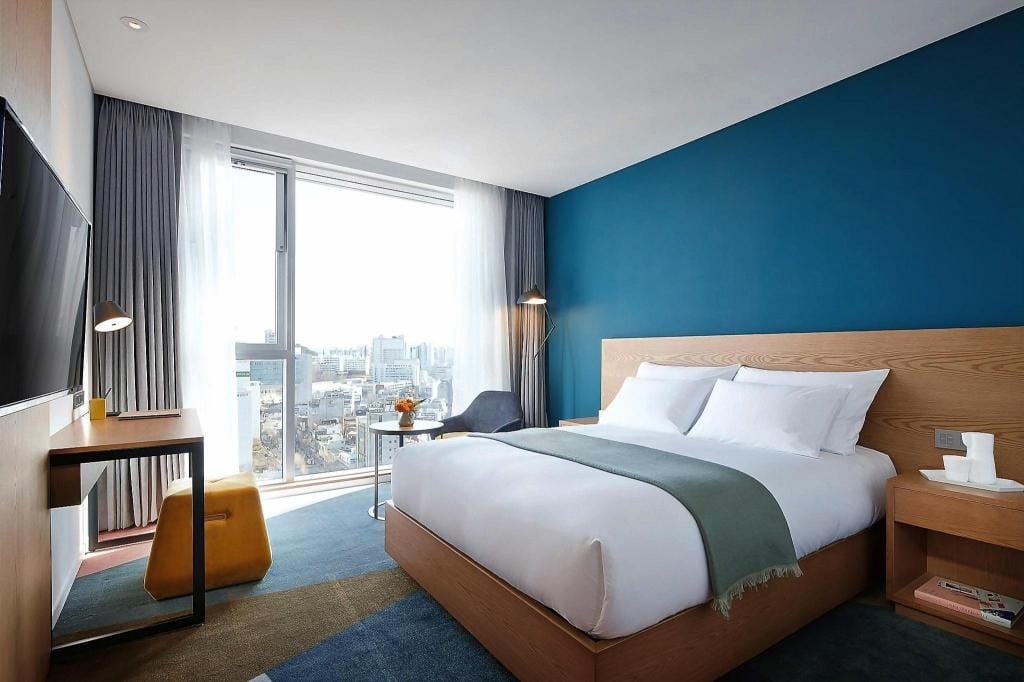
- Mercure Ambassador Seoul Hongdae🏨 — Walkable to Hongik University Station and the airport railroad. A newer building, so rooms feel fresh and it’s good value.
- RYSE, Autograph Collection🏨 — A few minutes from Exit 9 of Hongik University Station. A design-forward four-star with a stylish interior.
Seoul Station — Best for Easy Transit
If you’re arriving by KTX, catching an early train out, or just want to keep transfers short, base yourself around Seoul Station. The airport railroad, the high-speed KTX, and several subway lines all meet here, so a hotel in this pocket saves you time on every trip. It’s functional rather than charming — but Namdaemun Market and Myeongdong are both within easy reach. It’s also the handiest base for day trips from Seoul, since the high-speed KTX leaves from right here.
Where to stay near Seoul Station:
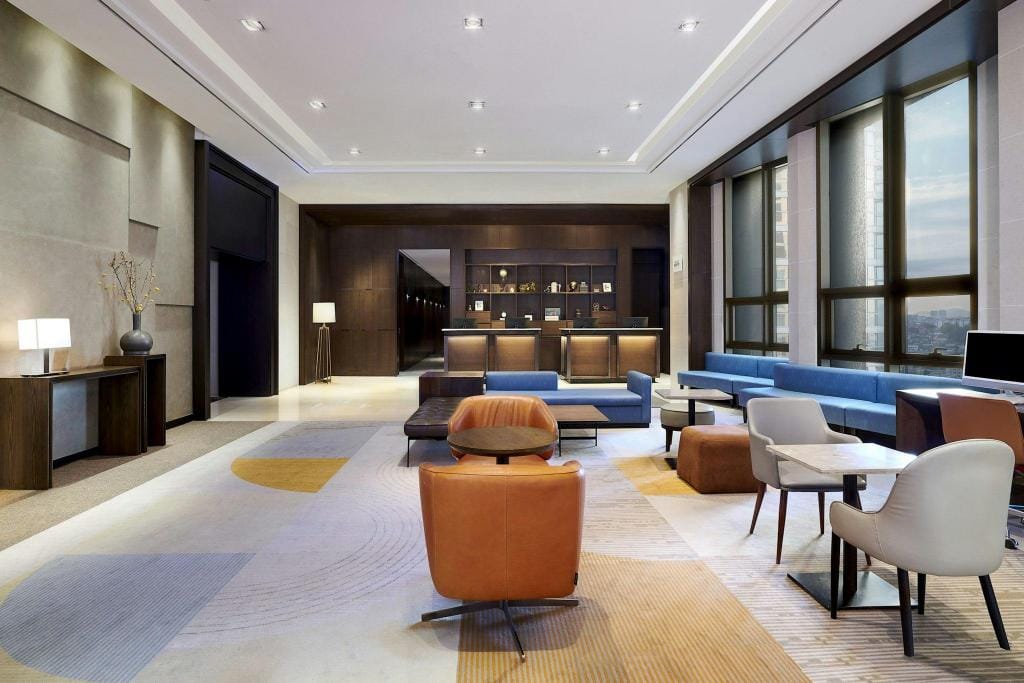
- Four Points by Sheraton Josun, Seoul Station🏨 — Linked to Seoul Station Exit 12 by an underground passage, so you reach the KTX and airport railroad without stepping outside. Ideal for a short stay or a stopover.
- Hotel Manu Seoul🏨 — About 200m from Seoul Station, so it’s easy with luggage and handy for the airport railroad. Namdaemun Market is a 4-minute walk, and Myeongdong is close.
- K-POP Hotel Seoul Station🏨 — A 2-minute walk from Exit 10 of Seoul Station (Lines 1 and 4), so transfers are quick. Rooftop terrace, a shared café, and good value.
Itaewon — Best for International Vibe
Itaewon is Seoul’s most international neighborhood — the best place in the city for global food and a diverse bar scene. Itaewon and Hangangjin stations (Line 6) sit close together, and the area flows on foot into Gyeongnidan-gil, Hannam-dong, and Haebangchon, so with the right base you can wander from alley cafés to night views without ever getting in a car. It’s a little farther from the main historic sights, but it’s a fun, varied place to come home to — our guide to Itaewon maps out its food, bars, and the lanes around it.
Where to stay in Itaewon:
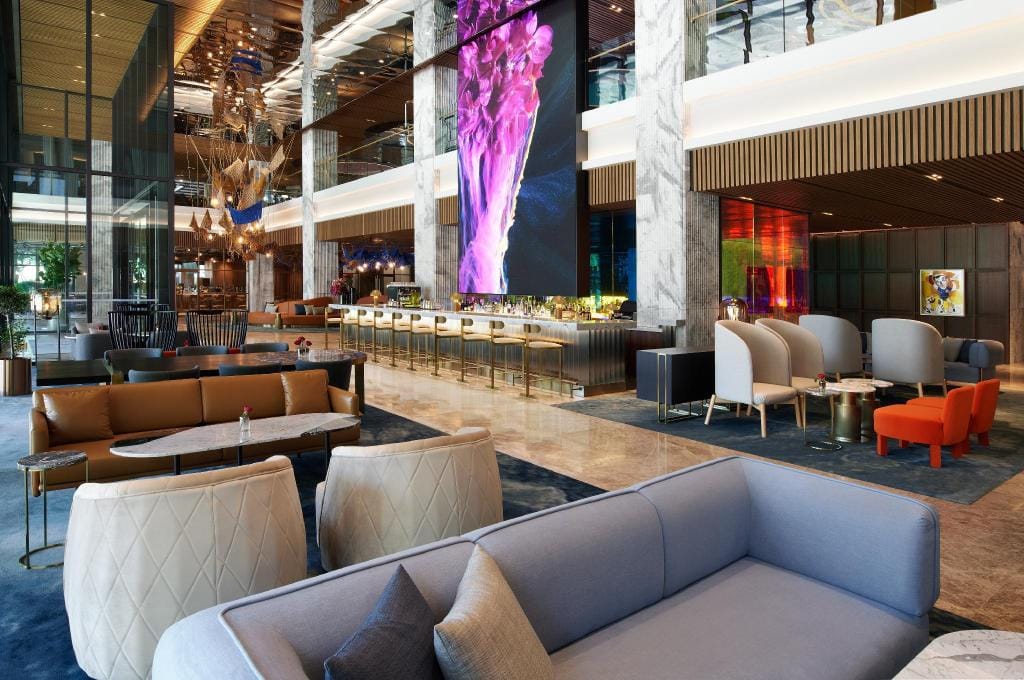
- Mondrian Seoul Itaewon🏨 — A five-star in Yongsan set slightly back from the party streets, so it stays quiet while keeping the city close. Rooftop pool, indoor pool, and a lounge bar all in one building.
- Hamilton Hotel Itaewon🏨 — Close to Itaewon Station (Line 6) and a single ride from the airport railroad via Gongdeok. Restaurants, convenience stores, and the nightlife strip are all right there.
- Imperial Palace Boutique Hotel Itaewon🏨 — Between Hangangjin and Itaewon stations, within walking distance of Hannam-dong, Gyeongnidan-gil, and Usadan-gil, with Namsan Tower close by.
For the full breakdown of which street to book near and more picks at every budget, see our guide to where to stay in Itaewon.
Insadong & Bukchon — Best for Traditional Atmosphere
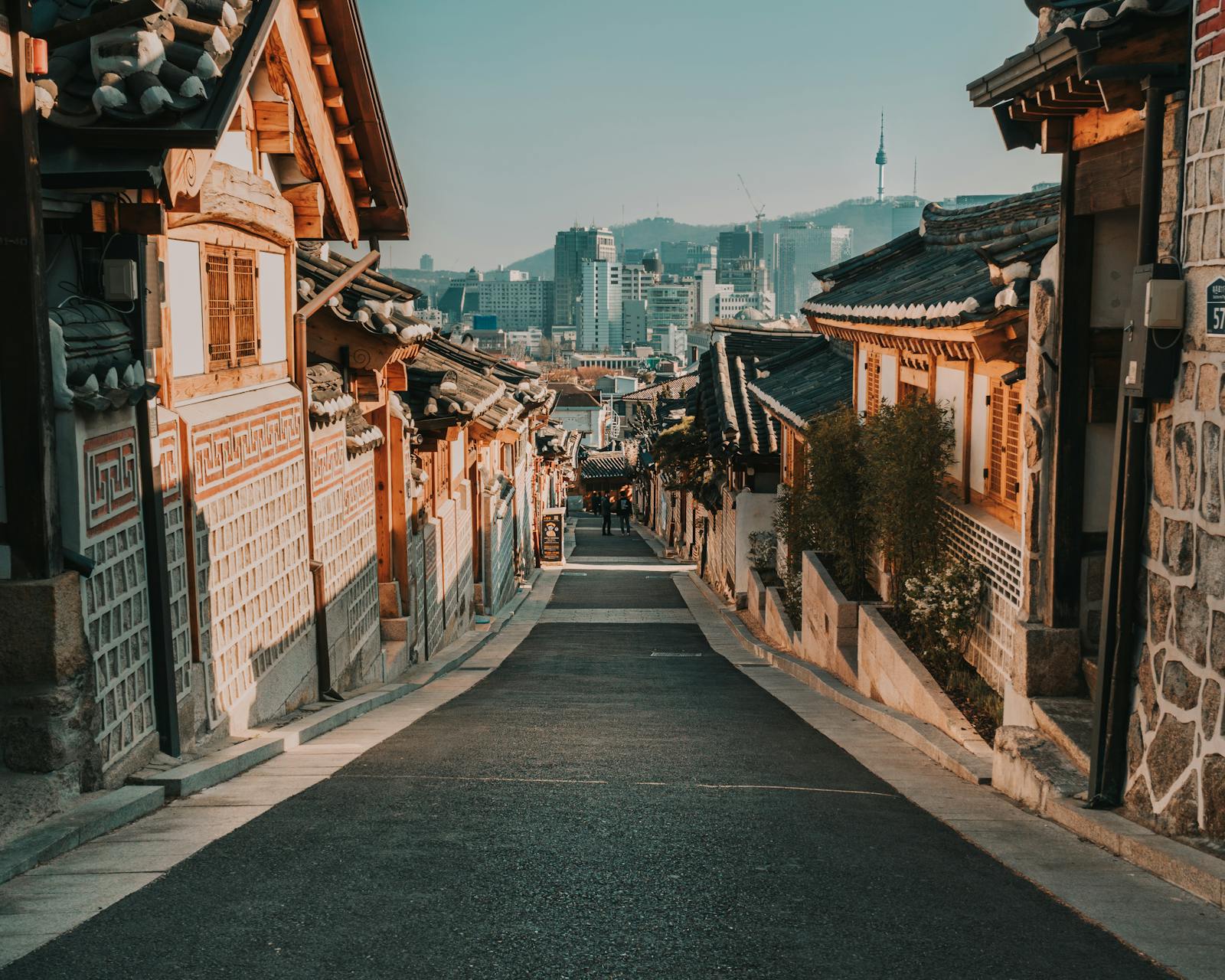
For something quieter and more atmospheric, base yourself around Insadong and Bukchon Hanok Village. You’ll be staying among preserved traditional houses, tea shops, and galleries, within walking distance of the main palaces. Mornings here are calm in a way the rest of central Seoul rarely is — our guide to Bukchon and Insadong covers the lanes, the hanok streets, and the timing to beat the crowds.
The trade-off is fewer budget options and a slightly less convenient subway position. But if atmosphere matters to you, the boutique hanok stays and small guesthouses around Bukchon are some of the most memorable places to sleep in the city. If you want a regular hotel with the same walkability, Nine Tree by Parnas Seoul Insadong🏨 sits in the middle of Insadong near Anguk Station, with Gyeongbokgung, Bukchon, and Gwanghwamun all on foot — and it is the closest hotel base to the Do Ho Suh exhibition at MMCA Seoul. For a deeper traditional immersion, our guide to temple stays and hanok stays in Korea covers overnight programs and traditional guesthouses in and around the city.
Gangnam — Best for Modern Seoul & Shopping
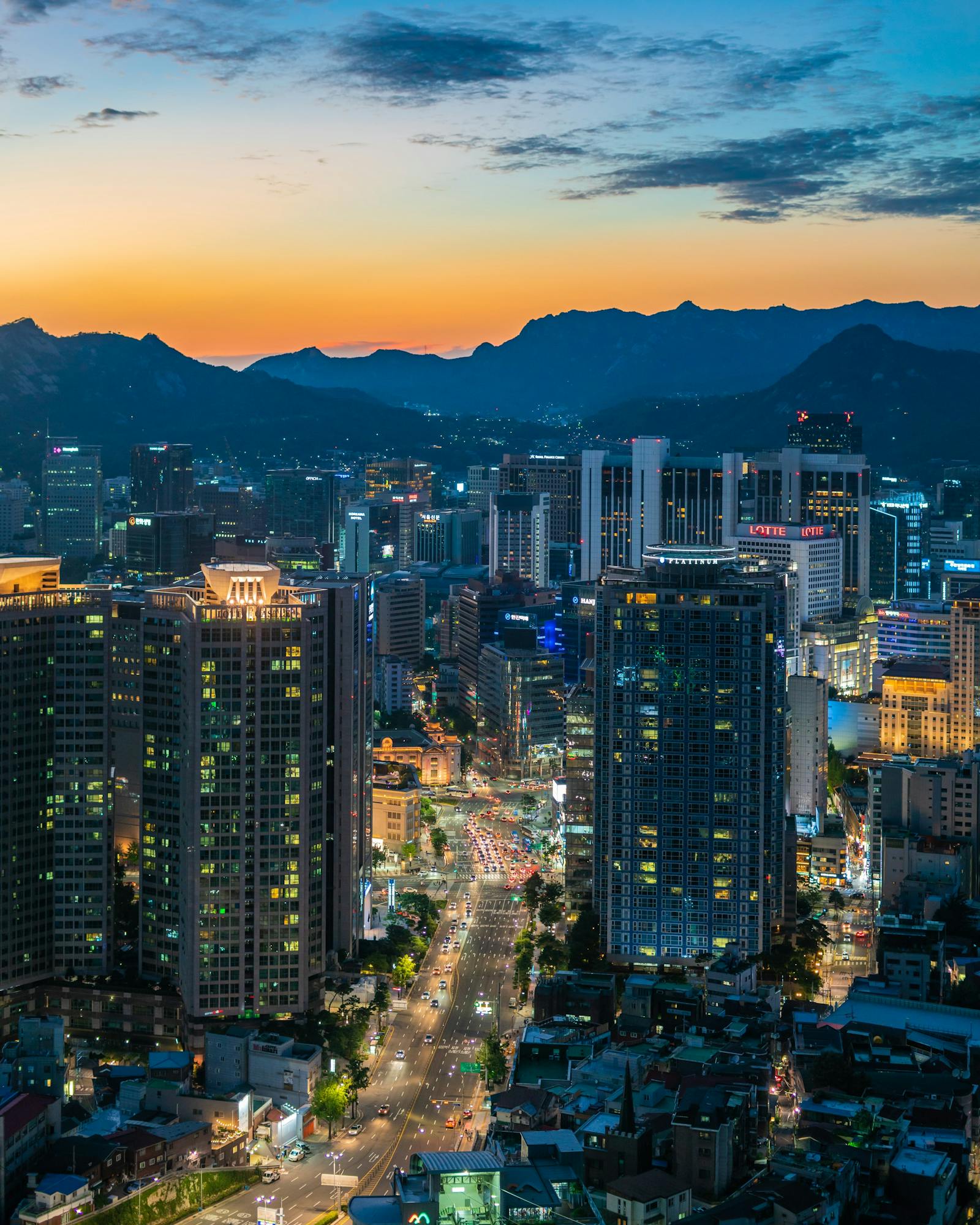
South of the Han River, Gangnam is the polished, modern side of Seoul — glass towers, department stores, concept cafés, and a more spread-out, business-district feel. It’s pricier and less atmospheric than the historic north, but it’s spotless, well-connected, and great if shopping and contemporary Seoul are what you came for — see our guide to Gangnam for what to do south of the river.
It suits travelers who don’t mind being a little farther from the palaces in exchange for newer rooms and easy access to the city’s most modern districts. You’ll find the widest choice of upscale hotels south of the river here, and it’s an easy area to bundle with onward travel. For a closer look at Gangnam’s sub-areas, hotels at every budget, and nightly prices, see our full guide to where to stay in Gangnam.
How Long Does It Take From Each Base to the Palaces and the Airport?
The neighborhood labels above only tell half the story; what you feel every day is the ride. These are typical door-to-platform subway times in normal daytime traffic — allow extra at rush hour (roughly 8–9 AM and 6–7 PM), when transfers slow down and carriages fill up.
| Base | To Gyeongbokgung Palace | To Incheon Airport | Worth knowing |
|---|---|---|---|
| Myeongdong | About 15 min (Line 4 to Chungmuro, then Line 3 with no further change) | About 60–80 min by airport limousine bus, no transfers | Line 3 from Chungmuro also runs straight to Anguk for Bukchon |
| Hongdae | About 30 min (Line 2 plus one transfer) | About 50 min on the all-stop airport railroad from the same station | Stations get very crowded on Friday and Saturday nights |
| Seoul Station | About 20 min (Line 4, then Line 3, or a short taxi) | About 45 min on the nonstop express train | KTX departures for Busan and Gyeongju leave from here |
| Itaewon | About 30 min (Line 6 plus one transfer) | About 70–90 min by bus or via Seoul Station | Hills: check how far uphill your hotel sits |
| Insadong & Bukchon | 10–15 min on foot | About 70–90 min by limousine bus | Evening palace openings are a walk home |
| Gangnam | About 35–45 min (Line 3 from Sinsa or one transfer) | About 70–90 min by limousine bus | Best if COEX, the Han River parks, or Jamsil are on the list |
Two patterns fall out of that table. First, if most of your days are palaces, markets, and Namsan, Myeongdong and Insadong save you roughly an hour of riding a day compared with Gangnam. Second, the airport leg is where bases differ most: Hongdae and Seoul Station are on the airport railroad, while every other area depends on a bus that can crawl in traffic. If your flight leaves early morning, spend the last night near Seoul Station even if you stayed elsewhere.
Which Area Is Best for You?
The best area depends on your priority: Myeongdong for an easy first trip, Hongdae for nightlife and budget, Seoul Station for early trains or a short stopover, Itaewon for international food and bars, Bukchon and Insadong for atmosphere and quiet, and Gangnam for shopping and modern Seoul. Match the area to what matters most:
- First trip, want it easy: Myeongdong — central and beginner-friendly.
- Nightlife and a younger crowd: Hongdae.
- Budget: Hongdae, or a guesthouse near Seoul Station.
- Early trains or a short stopover: Seoul Station.
- International food and bars: Itaewon.
- Atmosphere and quiet: Bukchon & Insadong.
- Shopping and modern Seoul: Gangnam.
- Late-night shopping and the DDP: our guide to where to stay in Dongdaemun.
- Design, cafés, and a local feel: Seongsu-dong.
- Solo traveler: Seoul is one of the world’s safest cities for solo travel — our guide to solo travel in Seoul covers the safest bases, eating alone, and practical tips.
Whichever you choose, you won’t be far from the action — Seoul’s subway ties all of these together, and most journeys between them take under 30 minutes.
Practical Tips for Booking
- Stay near a subway station. In Seoul, a room two minutes from a station beats a nicer room ten minutes away. Check the walking time before you book.
- Pick a line that goes where you’re headed. Lines 2 and 4 cover most first-timer sights; the airport railroad (AREX) connects directly to Incheon Airport. Our guide to getting around Seoul breaks down the subway and buses, and our Incheon Airport to Seoul guide compares every way into the city.
- Book early for spring and autumn. Cherry-blossom season (late March–April) and the autumn foliage (October–November) are peak; rooms in central areas sell out and prices climb. Our best time to visit Seoul guide breaks down weather and crowds month by month if you’re still picking dates.
- Rooms are small. Seoul hotel rooms run compact by Western standards. Read recent reviews and look at photos rather than relying on the star rating alone.
- Consider a city pass. If you plan to visit several paid attractions — palaces, observation decks, museums — a multi-day sightseeing pass can bundle entry and a free airport-train ride into one card.
- Match your base to your itinerary. If you’re following a 4-day Seoul itinerary, a central area like Myeongdong keeps every day short on transit.
Book Your Trip
Book Accommodation. Once your dates are fixed around the long-haul flight into Incheon✈️, decide on a neighborhood, then compare rooms. Start from the hotel picks in the section for your chosen area, and compare the same hotel on two booking sites before you commit — rates for identical rooms often differ by 10% or more.
Book Tours & Activities. Once you know where you’re based, most of Seoul’s tours, passes, and airport transfers can be arranged online in advance, which saves time on arrival.
Plan the days. Pair your base with our 4-day Seoul itinerary to keep your route tight and your subway time low.
Disclosure: This post contains affiliate links. If you book through these links, I may earn a small commission at no extra cost to you. I only recommend services I’d use myself.