
Last Updated: June 2026
Quick answer: Bukchon Hanok Village is a residential neighborhood of around 900 preserved traditional houses between Seoul’s main palaces, with neighboring Insadong’s tea houses and craft shops. Start at Anguk Station (Line 3), go early, keep quiet (people live there), and pair it with a hanbok and the palaces.
If you want to feel old Seoul, go to Bukchon and Insadong. Wedged between the grand palaces in the historic north of the city, Bukchon Hanok Village is a hillside neighborhood of preserved traditional houses — tiled roofs, wooden gates, narrow stone lanes — where people still live, while neighboring Insadong is the city’s arts-and-crafts quarter of galleries, tea houses, and antique shops. Together they’re the most atmospheric corner of the capital, and the heart of any history-minded first trip.
This guide covers what to see, how to visit respectfully (it’s a real neighborhood, not a theme park), the best photo spots, and how to spend a relaxed day across both.
Table of Contents
- What Is Bukchon Hanok Village?
- How to Get There
- Things to Do in Bukchon
- Things to Do in Insadong
- Hanbok & the Palaces Nearby
- How to Visit Respectfully
- What Time Is Best to Visit Bukchon?
- Is Bukchon Hanok Village Free to Visit?
- Tips for Your Visit
- Plan Your Trip
What Is Bukchon Hanok Village?
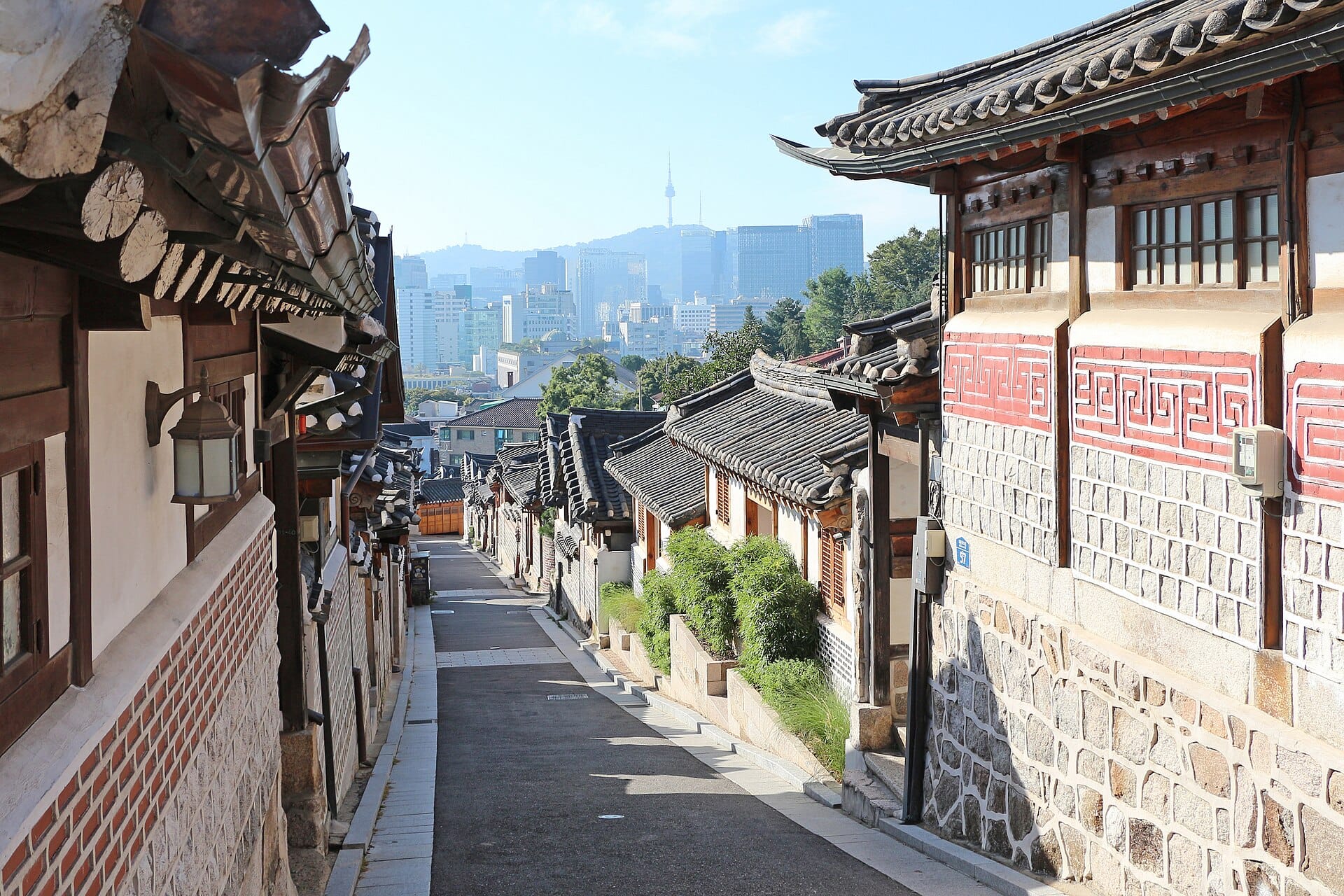
Bukchon Hanok Village is a residential neighborhood of around 900 preserved hanok — traditional Korean houses — set on the slopes between Gyeongbokgung and Changdeokgung palaces. It dates back to the Joseon dynasty, when it housed aristocrats and officials, and today it’s the best-preserved cluster of old houses in central Seoul. The village is recognized as a protected cultural heritage area by the city, with strict preservation rules keeping the old rooflines intact. Wandering its quiet, sloping lanes, with the modern skyline rising beyond the tiled rooftops, is one of the city’s signature experiences.
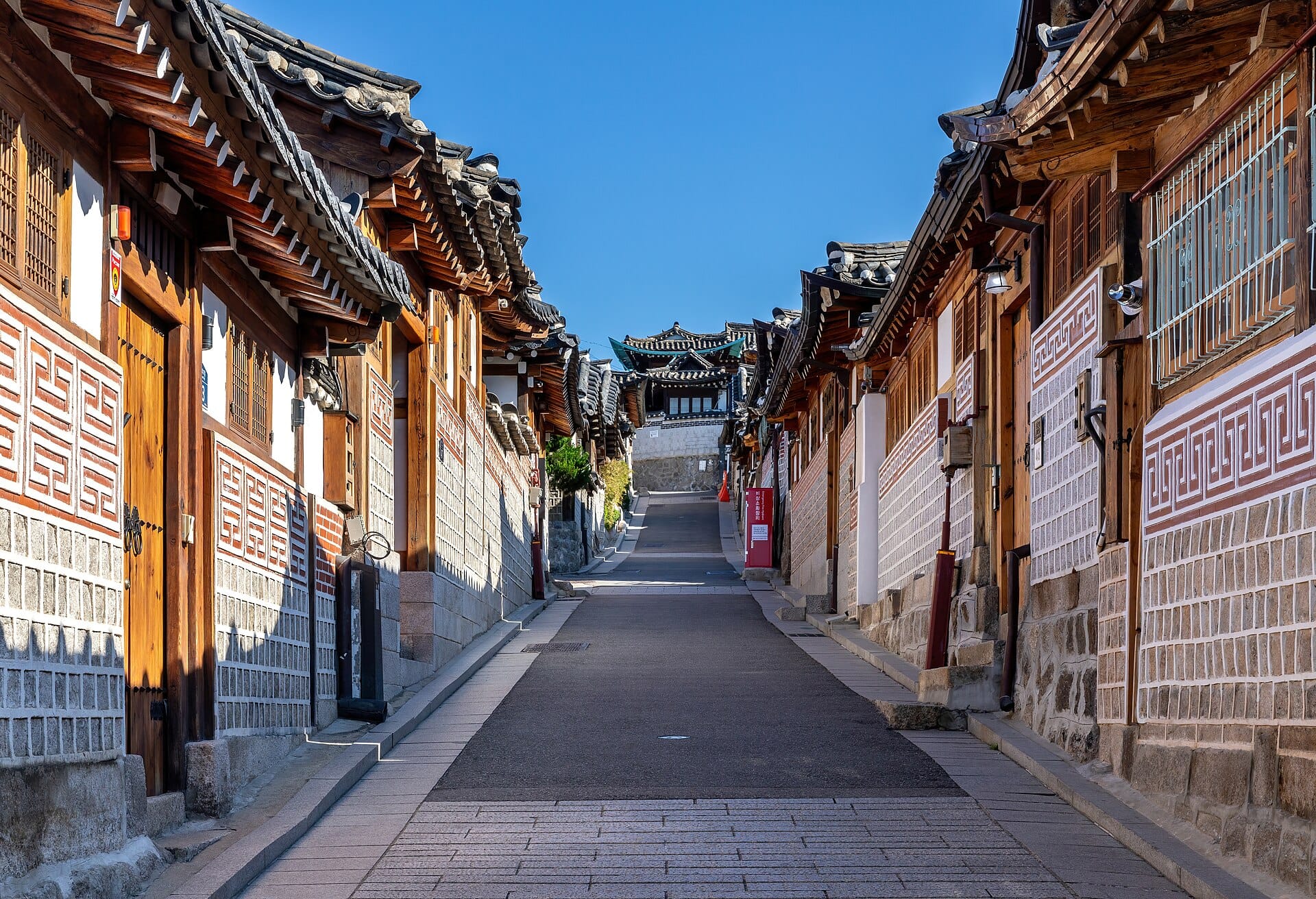
Crucially, people actually live here — many of the hanok are private homes — which gives the area its lived-in authenticity and also means visitors are asked to keep the noise down.
How to Get There
The area is easy to reach in the historic north. Anguk Station (Line 3) sits right between Bukchon and Insadong and is the best starting point — Exit 2 for Insadong, Exit 3 for Bukchon’s lanes. It’s also walkable from Gyeongbokgung and the other palaces, so it slots naturally into a day of historic sightseeing. Our guide to getting around Seoul covers the subway and the maps apps that help with the hillier streets.
Things to Do in Bukchon
Bukchon is for wandering, but a few things anchor a visit:
- Walk the eight viewpoints. The “Bukchon 8 Gyeong” are eight marked photo spots that frame the rooftops and skyline best.
- Wander the side alleys. The main lanes get busy; the quieter offshoots are where the atmosphere lives.
- Visit a craft workshop or museum. Small museums and studios for knots, embroidery, and crafts dot the neighborhood.
- Try a hanok café or tea house. Several traditional houses have opened as cafés where you can rest with a view.
Set aside an hour or two just to drift — the real joy of Bukchon is turning a corner to find another perfect frame of curved roofs against the modern skyline. The whole village is compact and free to walk, so there’s no ticket and no fixed route; follow the lanes uphill, pause at the marked viewpoints, and let the best angles reveal themselves.
Things to Do in Insadong
Just downhill, Insadong is Seoul’s traditional arts-and-crafts district — a main street and a web of alleys packed with galleries, antique shops, calligraphy and paper stores, tea houses, and traditional restaurants. It’s the place to browse for souvenirs with substance, sip Korean tea in a centuries-old setting, or try traditional sweets like the honey-and-thread kkultarae made by performing vendors. The Ssamzigil complex, a spiraling mall of small craft shops, is a fun anchor.
It’s touristy, yes, but it’s also one of the few places that keeps Seoul’s traditional crafts and tea culture front and center — a gentle, browsable counterpoint to the hanok lanes uphill.
For a different flavor of hanok, walk about 15 minutes east to Ikseondong, a denser 1920s hanok district that’s traded quiet residential lanes for dessert cafés, makgeolli bars, and vintage-style hanbok shops — see our guide to Ikseondong Hanok Village for what makes it worth the detour.
Insadong is also a lovely place to eat and slow down. Traditional tea houses tucked down its alleys serve Korean teas — citron, ginger, the ruby-red omija — alongside rice-cake sweets, while old-school restaurants do hearty Korean set meals and temple-style vegetarian food. It makes an easy, atmospheric lunch between the galleries and craft shops, and a welcome rest before heading back uphill. On weekends the main street is pedestrianized and fills with performers and the smell of freshly griddled hotteok; weekday mornings are calmer if you’d rather browse the antique stores and paper shops in peace.
Hanbok & the Palaces Nearby
This is the heart of palace country, and the classic move is to wear traditional dress while you explore. Hanbok rental shops cluster around here and near Gyeongbokgung, and wearing one gets you free entry to the palaces while making the hanok lanes an even better backdrop. Our hanbok rental guide covers where to rent and what it costs — or you can book a hanbok experience or a guided tour🎫 of the old quarter — and the area pairs naturally with a palace morning from our 4-day Seoul itinerary.
What Time Is Best to Visit Bukchon Hanok Village?
Early morning — before 9 AM if you can manage it. By mid-morning, tour groups arrive and the most photographed lanes fill quickly. In the early hours you’ll often have the iconic viewpoints almost to yourself, with the best soft light of the day. Weekdays are quieter than weekends. The neighborhood also has designated quiet hours and noise-reduction signs that locals take seriously, so an early visit is both better for photos and more respectful of the people who live there. Head to Insadong afterwards for a tea and late breakfast once the village starts to wake up.
Is Bukchon Hanok Village Free to Visit?
Yes — the public lanes and viewpoints are completely free to walk. There’s no entrance ticket or gate. Individual museums, traditional craft workshops, and hanok cafés inside the village charge their own fees, but simply wandering the streets costs nothing. The same is true of Insadong: the alleys and the main street are free, with charges only at specific galleries, tea rooms, and shops. A Bukchon and Insadong morning is one of the best-value hours in Seoul — genuinely atmospheric, historically rich, and almost entirely at your own pace and price.
How to Visit Respectfully
Because Bukchon is a living neighborhood, it asks a little courtesy. Residents have dealt with years of over-tourism, so there are quiet hours and signs requesting low voices, especially in the morning and evening. Keep your voice down, don’t enter private gates or peer into windows, take photos of the architecture rather than people’s doorways, and stick to the public lanes. A respectful visit keeps the village open and pleasant for everyone — and it’s genuinely nicer when it’s calm.
Ten minutes west of Insadong, MMCA Seoul sits beside Gyeongbokgung and makes an easy indoor pairing with a hanok morning — Do Ho Suh’s largest-ever solo show runs there from August 2026 into February 2027.
Tips for Your Visit
- Go early. Mornings are quietest and best-lit, before tour groups and the midday crowds arrive.
- Wear comfortable shoes. Bukchon is hilly and the lanes are stone and slope.
- Keep the noise down. People live here — respect the quiet-hours signs.
- Combine with the palaces. Gyeongbokgung and Changdeokgung are a short walk on either side.
- Rent a hanbok. Free palace entry plus the best photos make it an easy win in this area.
Plan Your Trip
Start by booking your flights to Seoul✈️. Once your dates are set, here’s how to plan the rest.
Build a historic day. Pair Bukchon and Insadong with the palaces in our 4-day Seoul itinerary, and add traditional dress with our hanbok rental guide.
Sort the basics. Stay central with our guide to where to stay in Seoul, and see the rest of the city with our guide to things to do in Seoul. To make the neighborhood your own, you can rent a traditional hanok or apartment🏨 nearby.
Disclosure: This post contains affiliate links. If you book through these links, I may earn a small commission at no extra cost to you. I only recommend services I’d use myself.