
Last Updated: July 2026
Quick answer: Where to stay in Sokcho depends on whether you came for the mountain or the sea. Hikers heading into Seoraksan National Park should stay in Daepohang, the harbor south of downtown, which has the oceanfront resorts and the shortest drive to the park entrance. If you’d rather walk to the market, the beach and the Abai Village ferry, stay in downtown Sokcho — also the easiest base if you’re arriving by express bus, since there’s still no train. And couples wanting a rooftop pool with lake-and-sea views should look at the towers around Cheongchoho Lake, the lagoon that splits the city. Ten verified hotels across all three are below.
Sokcho is a small port city in Gangwon Province, wedged between the East Sea and the granite peaks of Seoraksan National Park — Korea’s most-visited national park and a UNESCO Biosphere Reserve. That combination of beach and mountain in one small city is what makes it a popular overnight or weekend trip out of Seoul, especially for hiking, autumn foliage and fresh seafood — and it’s also why the choice of base matters more here than in most small cities.
Table of Contents
- Mountain First or Sea First? How Seoraksan Decides Your Sokcho Base
- Hiking Seoraksan: Which Hotels Near Daepohang Get You to the Trail Fastest?
- No Train to Sokcho Yet — How Do You Get There From Seoul?
- Want to Walk to Abai Village and the Fish Market? Where to Sleep Downtown
- Is a Cheongchoho Lake Room Worth It for Couples?
- Autumn Foliage Weekends: How Early Should You Book?
- What Does a Two-Night Sokcho Trip Look Like?
Mountain First or Sea First? How Seoraksan Decides Your Sokcho Base
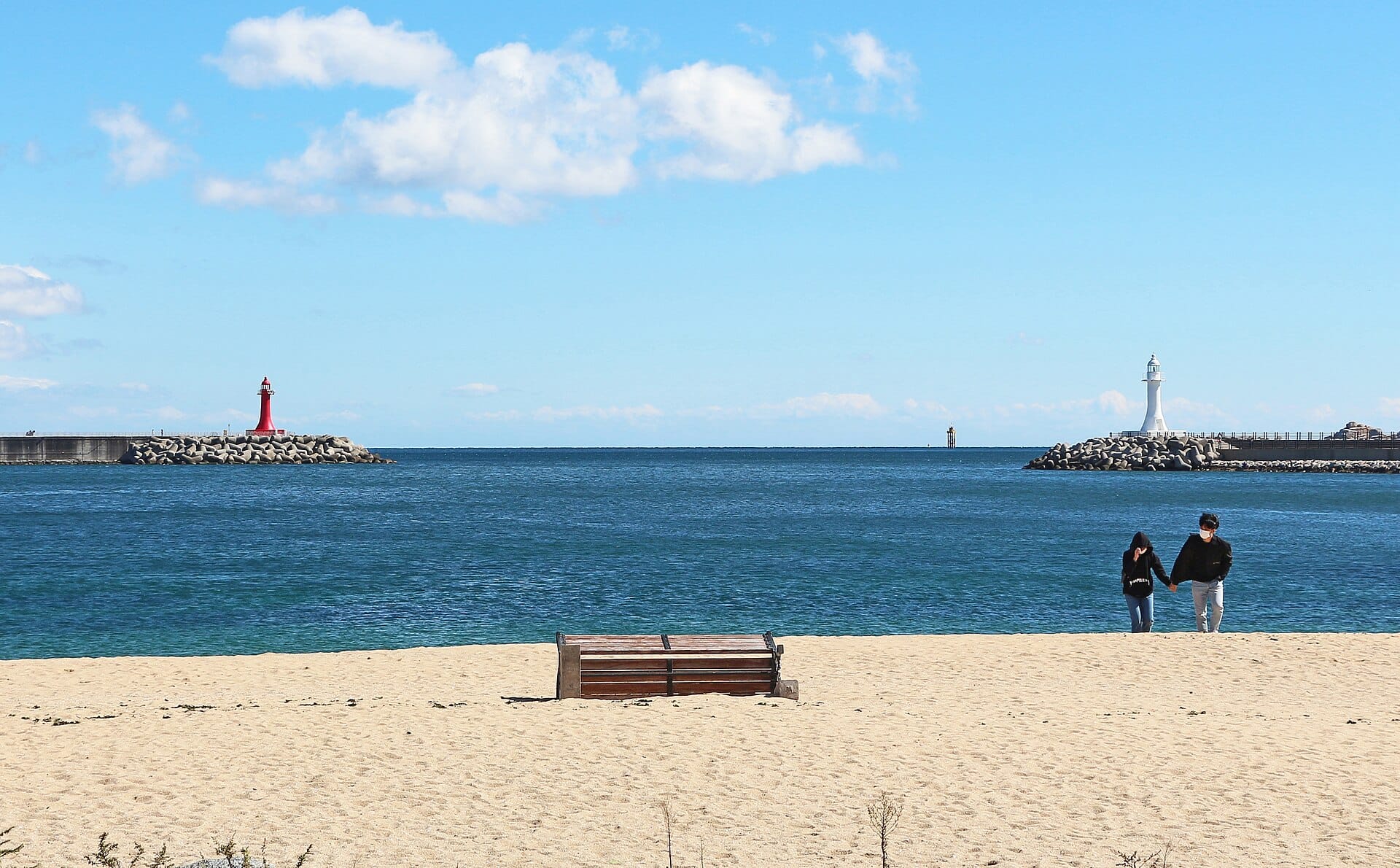
If Seoraksan is the main reason for the trip, stay in Daepohang; if the market, beach and seafood are, stay downtown; if the room itself is part of the holiday, stay on Cheongchoho Lake. Sokcho is compact, but its harbor, downtown and lake sit far enough apart that the base changes how the trip feels:
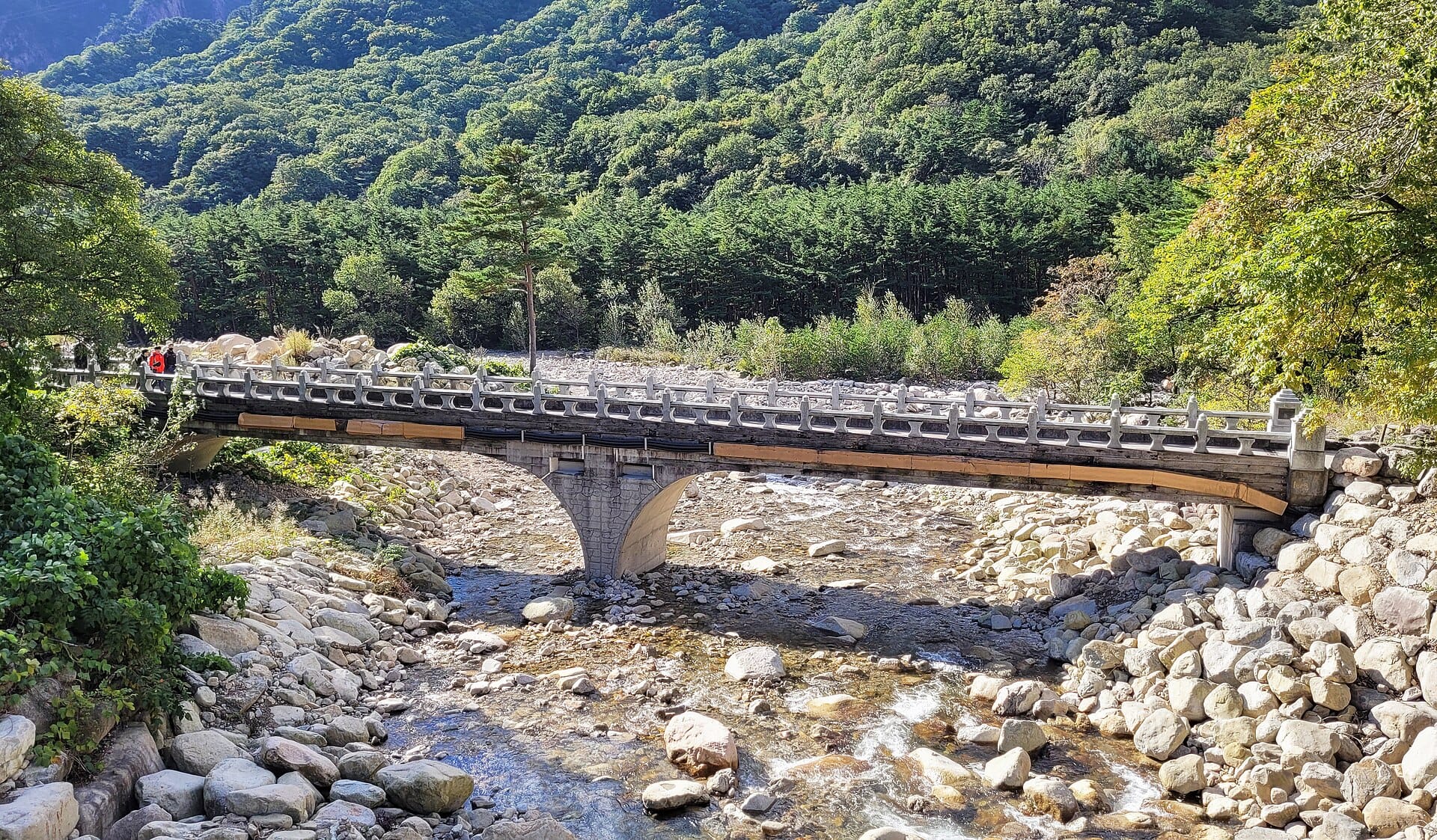
- Daepohang (Daepo Harbor). A working fishing port south of downtown, lined with seafood restaurants and a cluster of oceanfront resort hotels. It’s the closest base to the Seoraksan Seorakdong entrance, roughly a 15–20 minute drive away — the pick for hikers and families who want a resort pool to come back to.
- Downtown Sokcho (Sokcho Beach & Abai Village). The walkable core, around Sokcho Beach, the Abai Village ferry crossing and Sokcho Tourist Fish Market. For travelers who want to explore on foot and eat their way through the market with little taxi time.
- Cheongchoho Lake. A lagoon connected to the sea that splits the city in two, ringed by newer towers with rooftop pools and simultaneous lake-and-ocean views. Quieter and more scenic, yet still within walking distance of downtown.
| Area | Best for | Vibe | Typical nightly rate |
|---|---|---|---|
| Daepohang | Hikers, families, resort pools | Oceanfront, resort-style, near Seoraksan | ₩120,000–350,000+ |
| Downtown | Walkable market & ferry access | Everyday city, beach nearby | ₩70,000–150,000 |
| Cheongchoho Lake | Couples, scenic rooftop pools | Quiet, lake-and-sea views | ₩90,000–200,000 |
How much time does Daepohang actually save on a Seoraksan day?
About 10–15 minutes each way to the park entrance compared with downtown. That’s worth it if you want to be at the cable car early on a busy weekend, or if you’d like a resort pool and harborside seafood waiting at the end of a long hike. If you’re only doing the cable car and a short walk, the saving is small, and downtown’s walkability may matter more. The two areas are about 10–15 minutes apart by taxi either way.
Hiking Seoraksan: Which Hotels Near Daepohang Get You to the Trail Fastest?
These three cluster around Daepo Harbor, the shortest base for reaching the Seoraksan Seorakdong entrance and its cable car, and a fourth by Sokcho Beach suits self-catering families. Most Daepohang hotels run a shuttle or sit an easy taxi ride from the park entrance, so a car isn’t required — you’ll just lean on that shuttle or a taxi more than you would downtown.
Cassia Sokcho — pools and a kids’ lounge
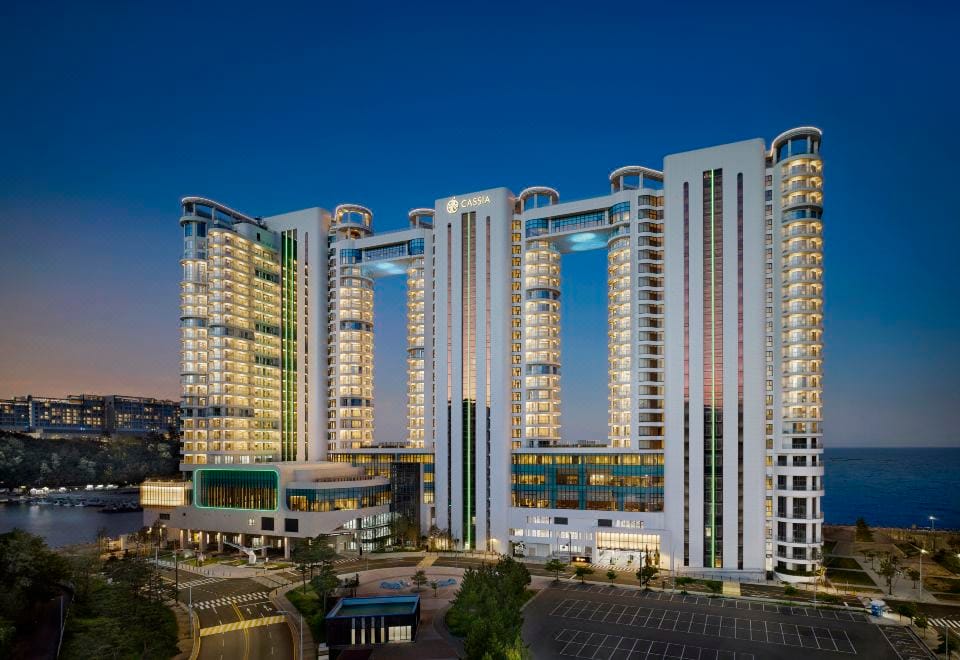
Cassia Sokcho🏨 is close to Daepohang, with ocean views from every room and both indoor and outdoor pools, including an infinity pool. Family suites and a kids’ lounge make it the easiest family pick in this area — somewhere for children to burn off energy before or after a hike.
Ramada Sokcho Hotel — balcony views, dinner on site
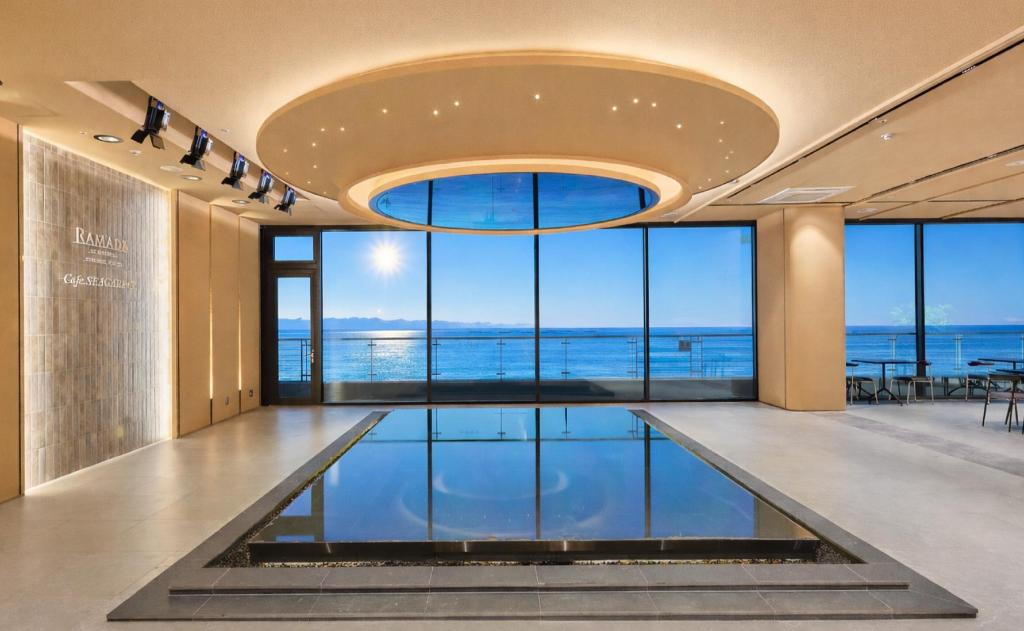
Ramada Sokcho Hotel🏨 is near Daepohang, with private balconies that open onto a panoramic ocean view. There’s dining on site, so after a full day on the mountain you can settle in for the evening without heading back out.
Hotel Maremons — halfway between beach and mountain
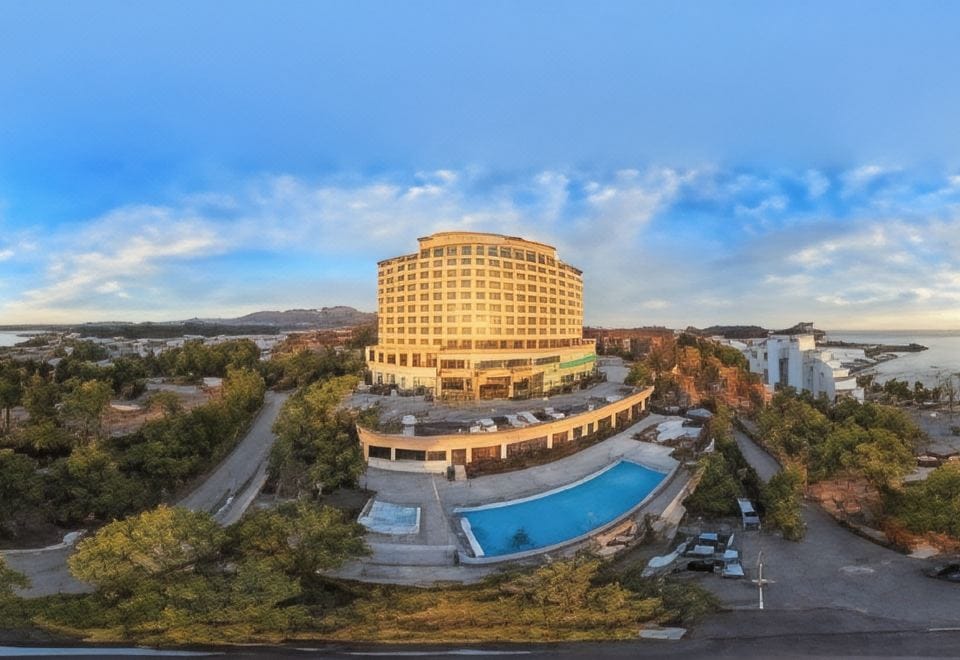
Hotel Maremons🏨 sits up on a hillside in Daepo-dong, so the ocean view looks down over the coast. Sokcho Beach is an easy walk for evenings and Seoraksan is a short drive — a rare base that covers both halves of a Sokcho trip equally well.
Kensington Resort Seorak Beach — cook your own meals
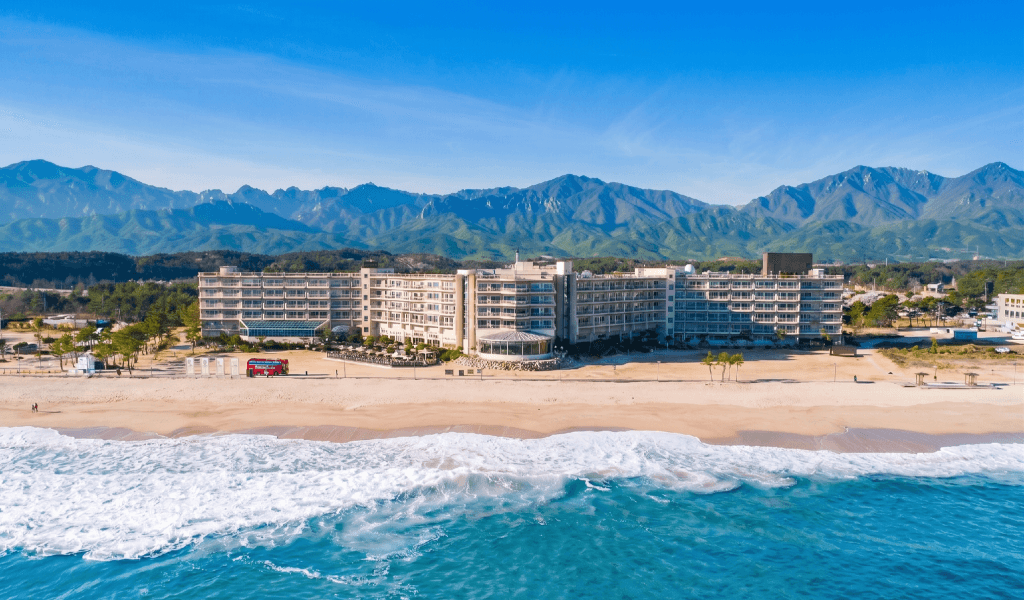
Kensington Resort Seorak Beach🏨 sits close to Sokcho Beach, with rooms fitted with a rice cooker, induction stove and microwave. That’s genuinely useful for families cooking for kids, or for hikers who’d rather keep dinner simple after a day on the trails than go out again.
No Train to Sokcho Yet — How Do You Get There From Seoul?
By express bus. There’s no direct train to Sokcho yet — the planned Seoul–Sokcho rail line isn’t due to open until 2029 — so the bus is the fastest, simplest way in. Direct buses run from Seoul’s Express Bus Terminal and East Seoul Terminal roughly every 20–30 minutes through the day, taking about 2 hours 10 minutes to 2 hours 20 minutes and costing around ₩17,000–25,000 depending on seat class. They fill up fast around Korean holidays and peak foliage weekends, so reserve a seat a day or two ahead.
This is the practical case for a downtown or lakeside base: the Sokcho Express Bus Terminal sits close to downtown, so you can walk from the bus to your hotel, while Daepohang is a short taxi ride away. Arriving from overseas, sort flights into Seoul✈️ first, then book the bus once your Korea dates are set — and check our Korea entry requirements guide before you fly, since most visitors still need to file the free e-Arrival Card.
Do you need a car once you’re in Sokcho?
Not for a two- or three-night visit. Local buses connect downtown, Daepohang and the Seoraksan entrance, and taxis are inexpensive for short hops between them. A car only helps if you’re planning multiple hikes or side trips along the coast.
Want to Walk to Abai Village and the Fish Market? Where to Sleep Downtown
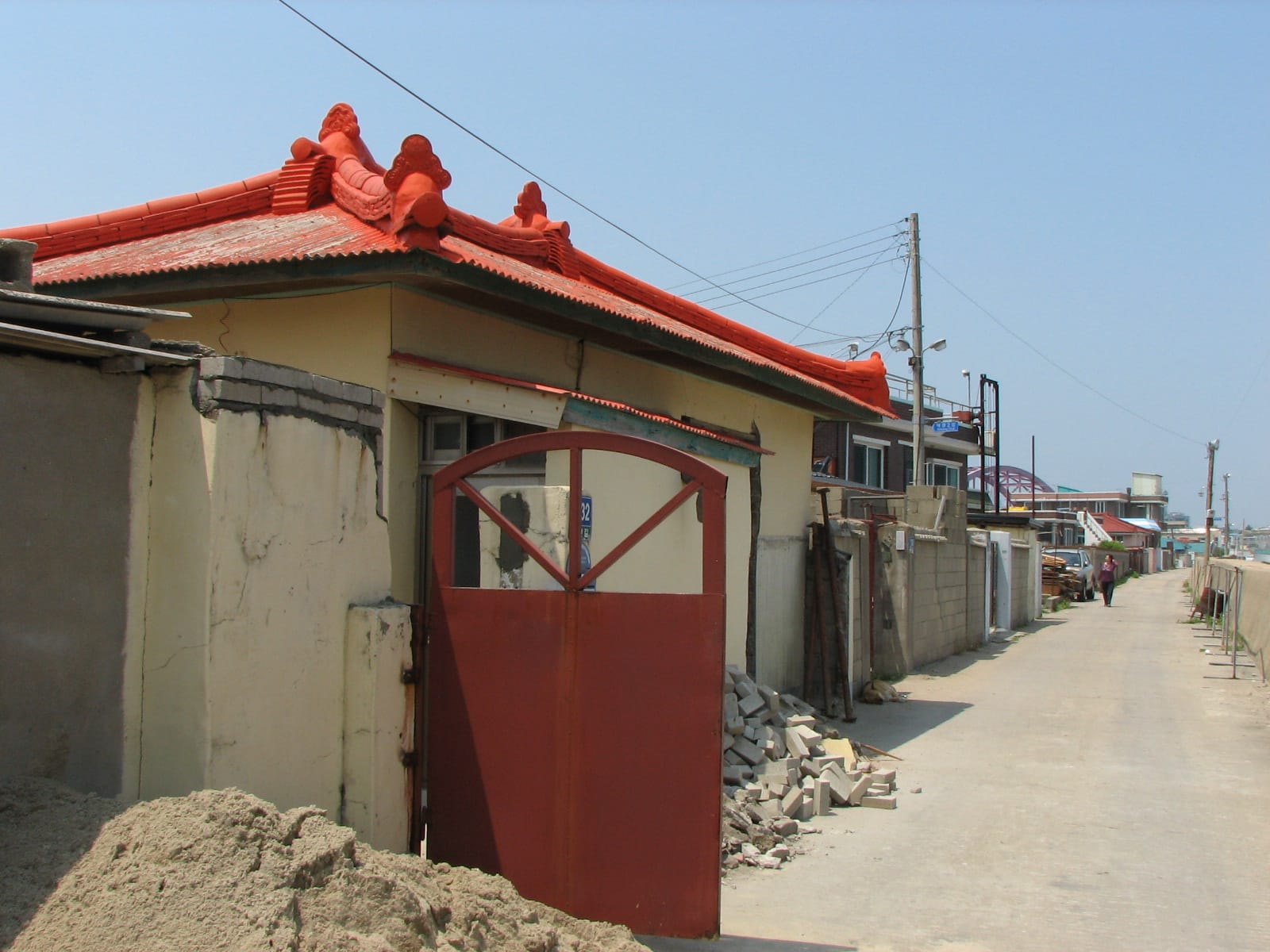
Downtown is the value play and the car-free play at once. Hotels here generally run ₩70,000–150,000 a night — well below Daepohang and Cheongchoho for a comparable standard of room — and Sokcho Beach, Abai Village, the fish market and the bus terminal are all on foot.
Sunrise Hotel Sokcho — the most central
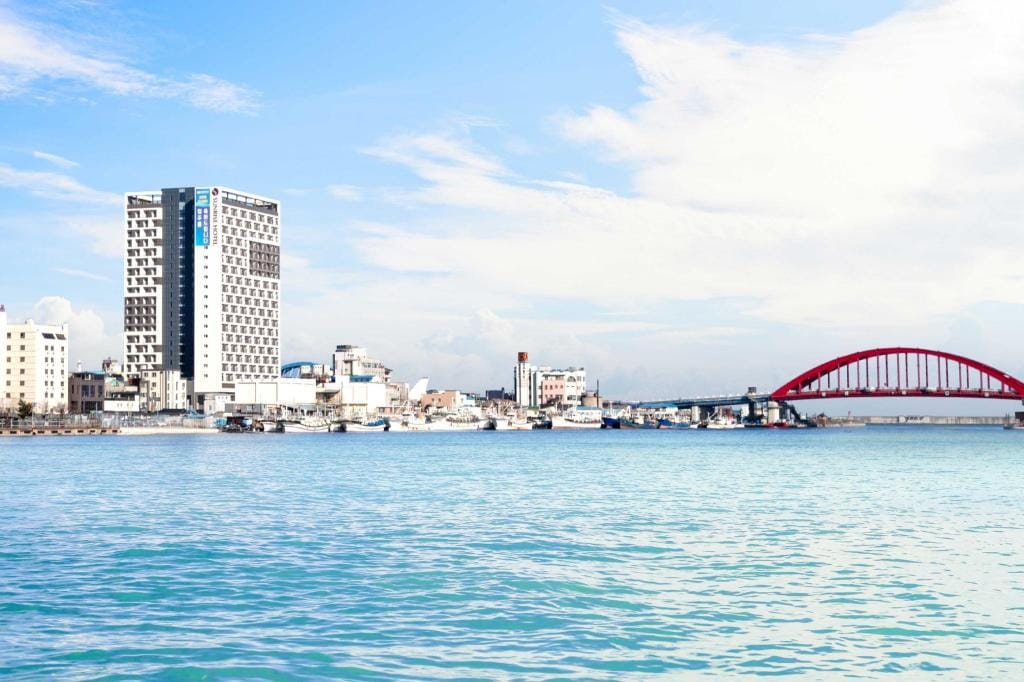
Sunrise Hotel Sokcho🏨 sits in the middle of the city, close enough to walk to the Abai Village ferry crossing and Sokcho Tourist Fish Market. The balcony views hold up, and rates are reasonable for such a central location.
The Hotel Sokcho — straight off the bus
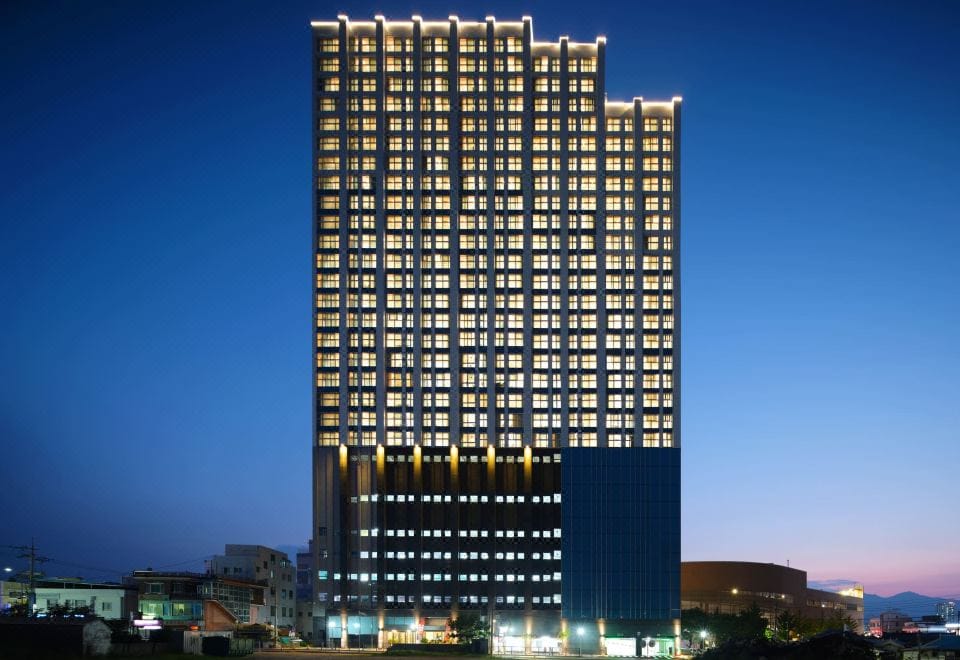
The Hotel Sokcho🏨 puts Emart, Cheongchoho Lake and the bus terminal all within walking distance, and rooms look out over the sea, the lake or Ulsanbawi Rock depending on the side. Smart check-in and the central location make it the easiest base for bus travelers covering the main sights without a car.
Sokcho Marina Bay Hotel — downtown on the lake
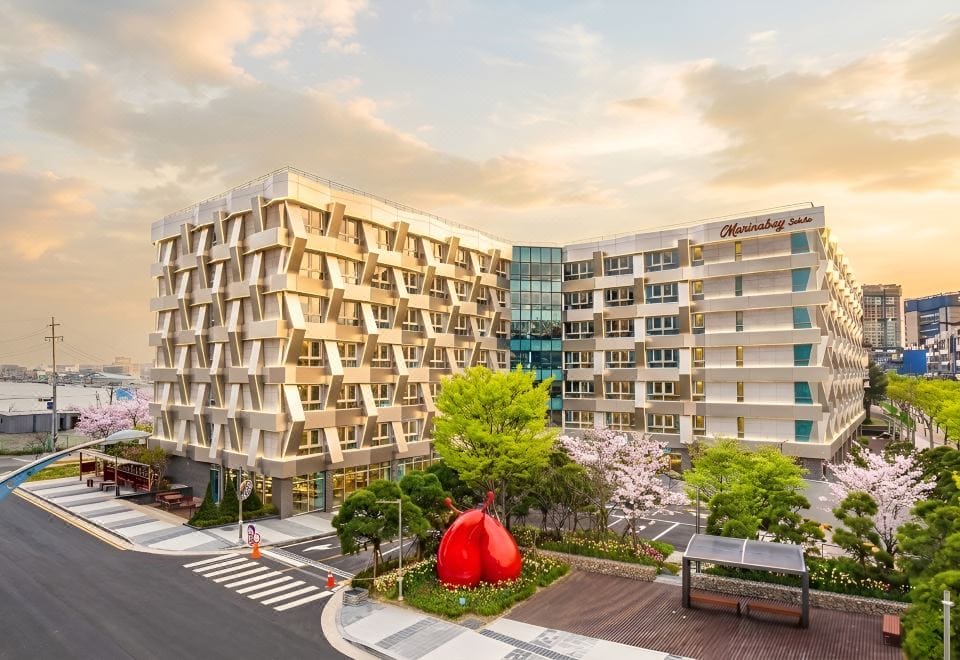
Sokcho Marina Bay Hotel🏨 faces Cheongchoho Lake directly from downtown, with yacht tours available on the water out front. Sokcho Beach, Emart and Jungang Market are all close by — a good compromise if you want a lake view without giving up downtown’s walkability.
Hotel The Blue Terra — a sea terrace in every room
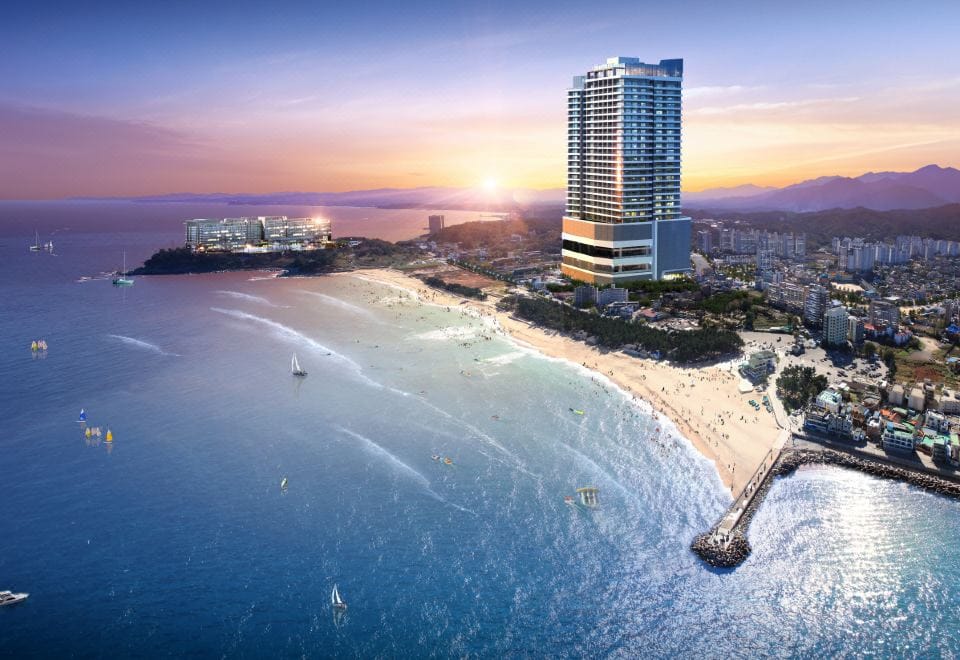
Hotel The Blue Terra🏨 gives every room its own terrace facing the sea, with a seasonal infinity pool in summer. It’s close to both downtown and the beach, so getting around on foot is easy.
Is a Cheongchoho Lake Room Worth It for Couples?
For a couple’s trip, yes — the lakeside towers cost less than the Daepohang resorts (roughly ₩90,000–200,000 a night) but deliver rooftop pools and lake-and-sea views in a quieter, more romantic setting than the harbor or downtown. These two are the standouts.
Homm Marina Sokcho — rooftop infinity pool
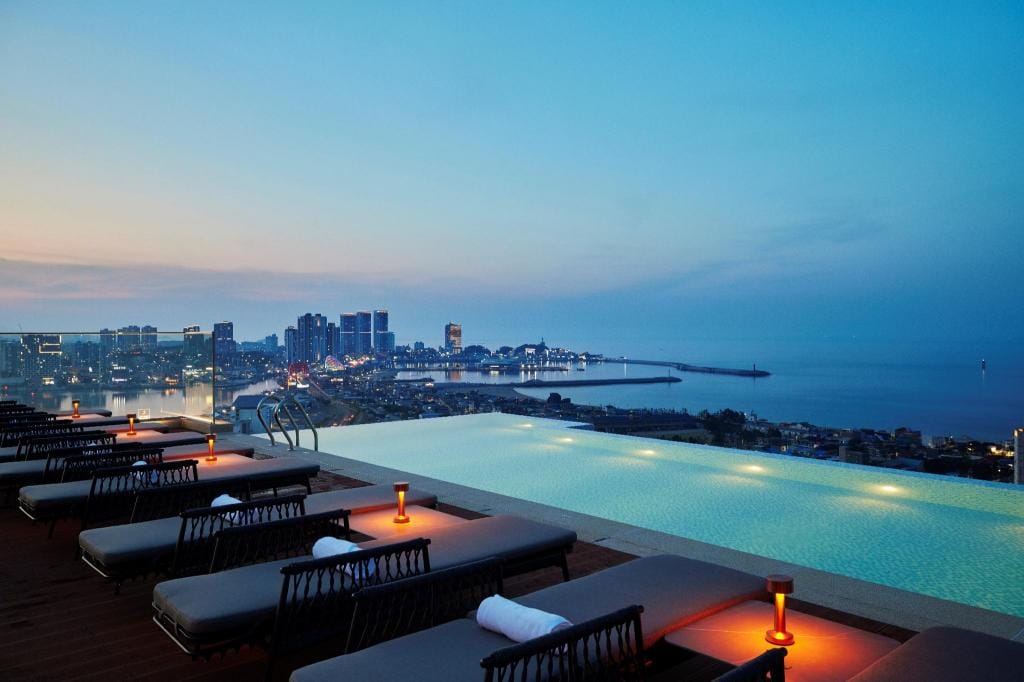
Homm Marina Sokcho🏨 is near Sokcho Port, with a rooftop infinity pool and bar looking out over the East Sea. It’s a newer build with clean, stylish interiors, and it suits a couple’s trip well.
Sea Cruise Hotel Sokcho — jacuzzi suites
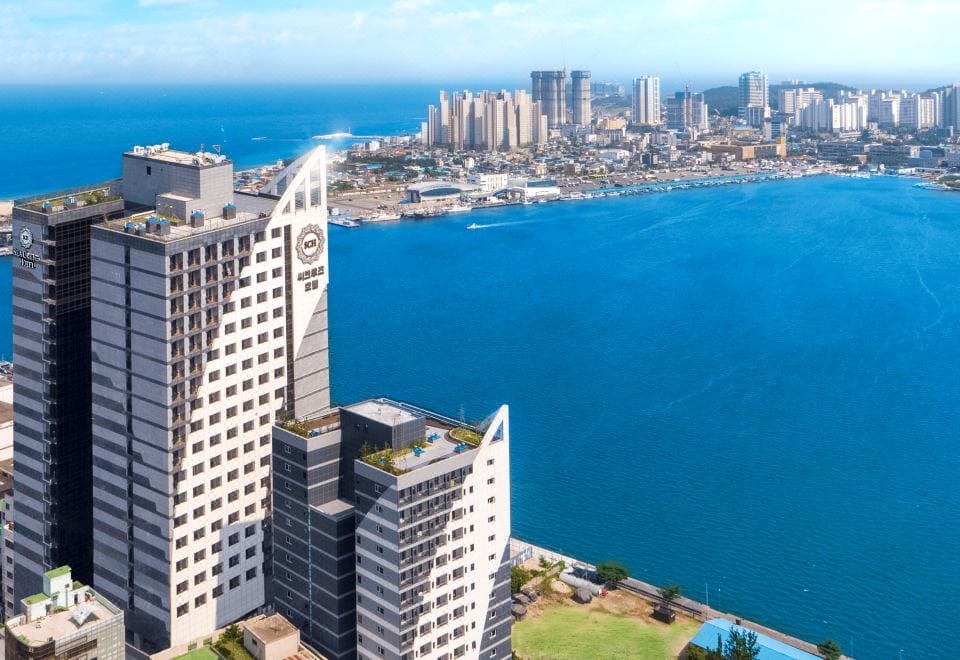
Sea Cruise Hotel Sokcho🏨 faces Cheongchoho Lake directly, with simultaneous views of the lake and the sea from the upper floors. Suite rooms with a jacuzzi suit couples especially well, and Abai Village and downtown are both close by.
Autumn Foliage Weekends: How Early Should You Book?
As early as your dates are fixed. Rates climb around Korean holidays and during autumn foliage season, when Seoraksan draws its heaviest crowds — and it’s usually the first spot in Korea to turn, so the rush starts early. Ocean-view rooms and family suites in Daepohang sell out first; the Daepohang resorts span the widest price range, from reasonably priced options up to ₩350,000 and more for family suites and full-service resorts. Downtown stays the cheapest fallback if the resorts are full.
One thing you can’t book ahead is the Seoraksan Cable Car: it sells round-trip tickets only, with no advance booking, so plan to queue or arrive early on busy weekends. What you can book ahead is the bus seat from Seoul — do it a day or two out on foliage weekends. Our guide to autumn foliage season covers timing if you’re chasing fall colors.
What Does a Two-Night Sokcho Trip Look Like?
Two nights covers the essentials: a full day for Seoraksan (cable car plus a short hike) and a half-day for downtown, Abai Village and the fish market. Add a third night for a longer hike into the park or a slower morning on Sokcho Beach.
Seoraksan National Park is the headline draw — the Seoraksan Cable Car climbs to Gwongeumseong Fortress in about seven minutes. Abai Village sits across a narrow channel of Cheongchoho Lake from downtown, reached by a hand-pulled ferry (gaetbae) and known for squid sausage and other dishes that trace back to displaced families from the North. Sokcho Tourist Fish Market, right downtown, is the spot for fresh seafood and street food between sights.
A simple split: day one on the mountain from a Daepohang or Maremons base, day two on foot downtown — ferry to Abai Village, lunch at the market, an evening on the beach. If you’re only passing through Gangwon for a day rather than staying, our guide to day trips from Seoul covers the alternatives.
Disclosure: This post contains affiliate links. If you book through these links, I may earn a small commission at no extra cost to you. I only recommend services I’d use myself.