Last Updated: October 2026
Quick answer: The best Korea winter festivals take place in January and early February in Gangwon Province, two to four hours east of Seoul. The big three are the Hwacheon Sancheoneo Ice Festival (ice fishing for mountain trout on a frozen stream, tentatively January 9–31, 2027), the Pyeongchang Trout Festival (ice fishing near the ski resorts, usually early January to early February) and the Taebaeksan Snow Festival (giant snow sculptures in a national park, usually late January to early February). All three can be done as a day trip from Seoul, but they depend on the ice — so always check the official site the week you go.
This guide explains what each festival is actually like, which one suits which kind of traveler, how to get there by bus, train or tour, and what to wear when you spend a morning sitting on a frozen river. Dates for the 2027 season are not all confirmed yet; where only last season’s dates are known, we say so.
Table of Contents
- When Is Winter Festival Season in Korea?
- What Is the Hwacheon Sancheoneo Ice Festival?
- Is the Pyeongchang Trout Festival Worth It?
- What Can You See at the Taebaeksan Snow Festival?
- Are There Winter Festivals in Seoul Itself?
- Which Winter Festival Should You Pick?
- Day Trip, Tour or Overnight?
- What Should You Wear for Ice Fishing?
- Plan Your Trip
When Is Winter Festival Season in Korea?
Korea’s winter festival season runs from late December to mid-February, with the peak in January, when the rivers of Gangwon Province freeze thick enough to hold thousands of people. The festivals are built around that ice, which makes them different from the Christmas markets and light shows you find in cities: you are outdoors, on a frozen stream or a snowfield, for most of the day.
The ice also makes them unpredictable. Organizers measure the thickness before opening each zone, and a warm spell can delay an opening day, close the fishing holes or shorten the season. It can go further than that: the Inje Icefish Festival, another well-known winter event, was cancelled for the 2024 season because the water level at the Soyang Dam was too high for the reservoir to be prepared and freeze properly. The practical rule is simple — plan around the festivals, but confirm the week before, and keep a backup plan such as a hot spring day near Seoul if the weather turns.
Winter festival season also overlaps with the Lunar New Year. In 2027 Seollal falls on February 7, with the national holiday running February 6–9; buses and trains out of Seoul sell out around those dates, so our Seollal 2027 guide is worth reading before you lock in a weekend.
What Is the Hwacheon Sancheoneo Ice Festival?
The Hwacheon Sancheoneo Ice Festival is Korea’s largest winter festival, held each January on the frozen Hwacheon Stream in northern Gangwon Province. Visitors fish for sancheoneo — mountain trout — through holes drilled in the ice, and then have their catch grilled on the spot. It began in 2003, was named one of the “Seven Wonders of Winter” by CNN in 2011, and draws well over a million visitors a season; organizers counted about 1.86 million in 2025, including more than 120,000 foreign visitors.
The 2026 edition ran from January 10 to February 1. The Korea Tourism Organization’s Hwacheon festival page lists the 2027 festival as January 9–31, but treat those as provisional until the organizers confirm them closer to the date.
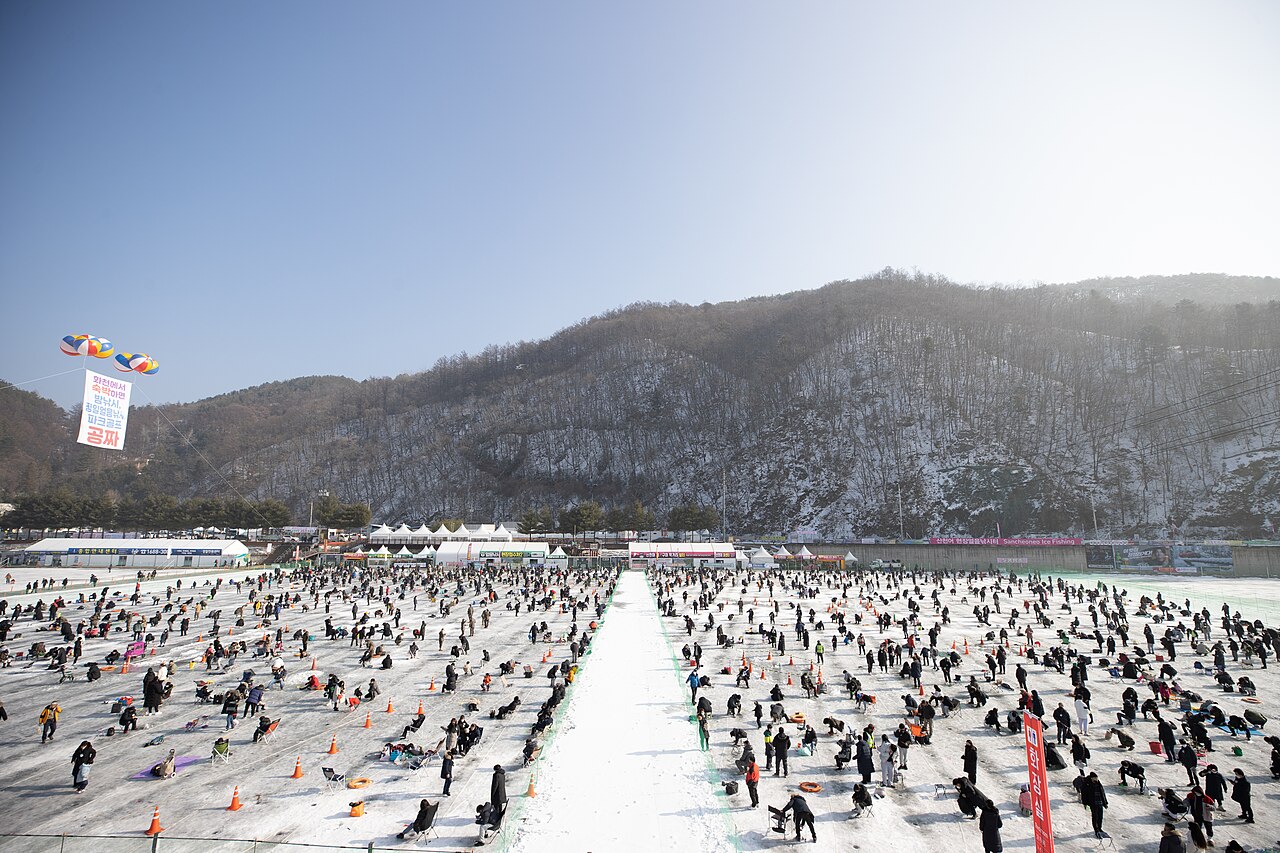
What a day looks like:
- Ice fishing. The main event. You sit on a stool over a pre-drilled hole with a short rod and jig a lure until a trout bites. Fishing sessions are ticketed, and the reserved slots for weekends go first.
- Bare-handed trout catching. Volunteers wade into an ice-cold pool in festival T-shirts and grab fish by hand. It is as chaotic and cold as it sounds — and very popular with spectators.
- Grill your catch. Cooking stations near the fishing grounds will grill or prepare the trout you catch, so lunch is sorted.
- Sledding and ice games. Snow and ice sledding, ice football and other games run alongside the fishing, which makes it workable for families.
- Night fishing. Some seasons add an evening fishing session under lights, but the timetable changes year to year.
Getting there: Intercity buses run from Dong Seoul Bus Terminal (Gangbyeon Station, Line 2) to Hwacheon in roughly two hours, and the festival grounds are within walking distance of the town’s bus terminal. Many visitors find it easier to book a Hwacheon ice festival day tour from Seoul🎫, which bundles the round-trip coach with an ice fishing ticket — useful on weekends, when public buses fill up.
Is the Pyeongchang Trout Festival Worth It?
Yes — the Pyeongchang Trout Festival is the better choice if you want ice fishing with a smaller crowd and a ski resort nearby. It is held on the frozen Odaecheon Stream in Jinbu, a short ride from the Yongpyong and Alpensia ski areas that hosted the 2018 Winter Olympics, and it marked its 20th edition in the 2026 season. It usually runs from early January into early February.
The format is similar to Hwacheon: ice fishing through holes in the stream, bare-handed trout catching, sledding, and food stalls that will grill your fish. Because some fishing is also offered in covered areas, it is a little more forgiving on a bitterly cold or windy day.
Getting there: This is the easiest of the three by public transport. KTX trains on the Gangneung line reach Jinbu Station in about an hour and forty minutes from Cheongnyangni, and festival shuttle buses have run from the station to the venue in recent seasons. You can reserve KTX seats to Jinbu ahead of time🚄 — worth doing for weekends. Combine it with a ski day: our ski resorts near Seoul guide covers Yongpyong and the other slopes in the area.
What Can You See at the Taebaeksan Snow Festival?
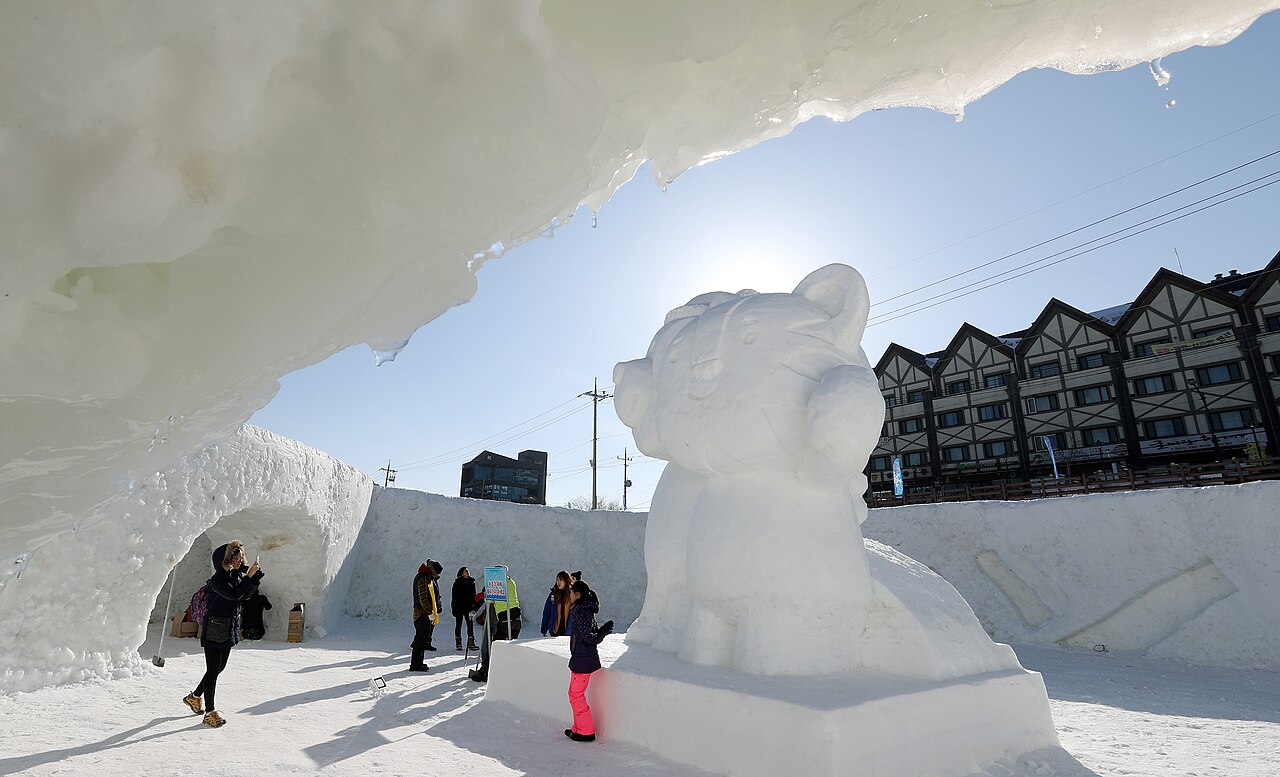
The Taebaeksan Snow Festival is the one to choose if you would rather look at snow than sit on ice. Held at the foot of Taebaeksan National Park in the mountain city of Taebaek, it is known for large snow and ice sculptures, a big sledding hill, an outdoor skating rink and winter hikes up the mountain. The 33rd edition ran from January 31 to February 8, 2026; the 2027 dates had not been announced at the time of writing, so check the Taebaek City website as winter approaches.
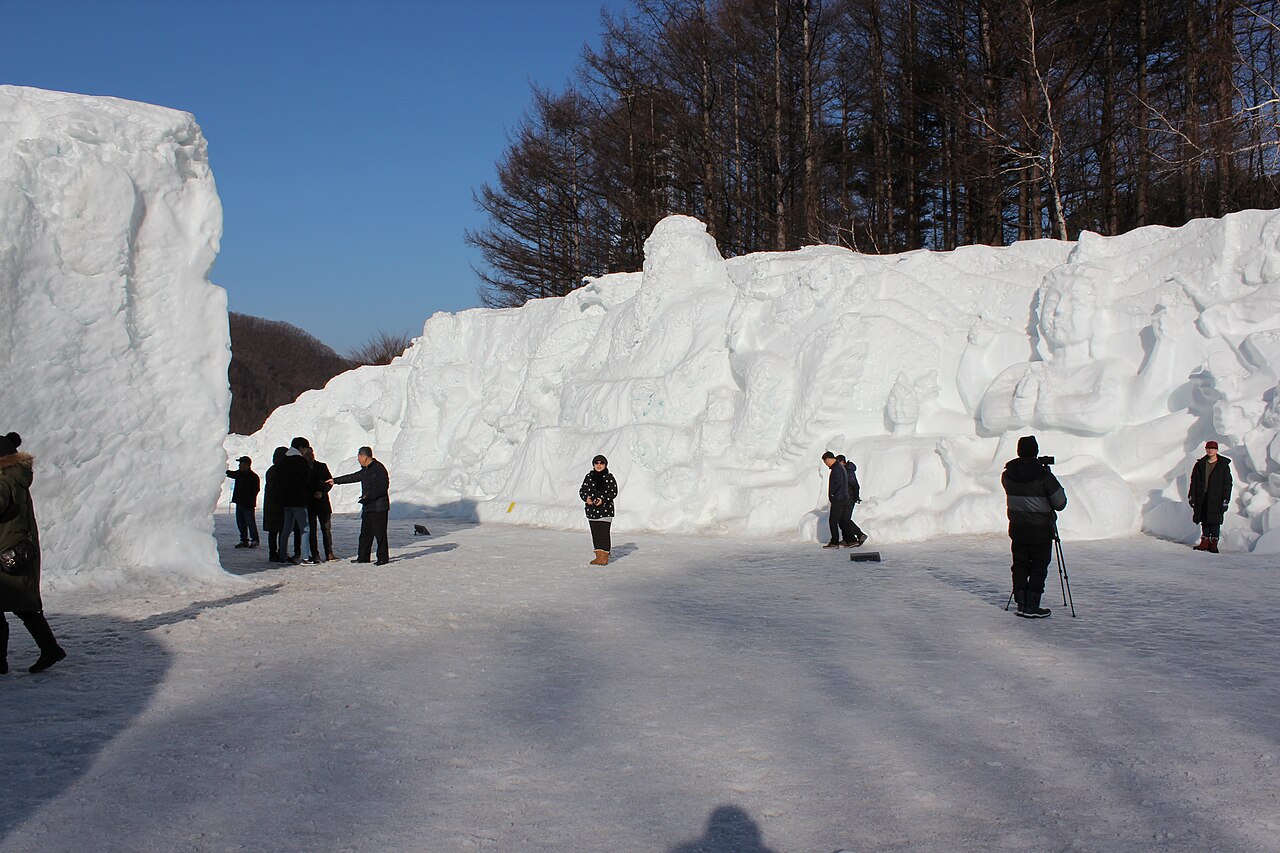
Taebaek sits high in the Baekdudaegan range, so it is one of the snowiest and coldest towns in South Korea — which is exactly why the sculptures hold up. The national park’s snowy ridgeline trail is a classic winter hike for Koreans, and the festival runs a snow-climbing event on the mountain. If you plan to hike, bring crampon-style microspikes and start early; daylight is short.
Getting there: Taebaek is the farthest of the three: trains from Cheongnyangni and intercity buses from Dong Seoul each take roughly three to four hours. It works as a long day trip, but an overnight stay makes for a far more relaxed visit and lets you see the sculptures lit up after dark.
Are There Winter Festivals in Seoul Itself?
Yes, but they are a different kind of festival. Seoul’s winter events are lights, markets and seasonal rinks rather than ice fishing: illuminations and lantern displays along Cheonggyecheon Stream, a holiday market at Gwanghwamun Square, and the New Year’s Eve bell-ringing at Bosingak. They are great for an evening, not a full day. Our Christmas and New Year’s Eve in Seoul guide covers the dates and where to go, and the winter in Seoul guide covers the weather and indoor ideas for the coldest days.
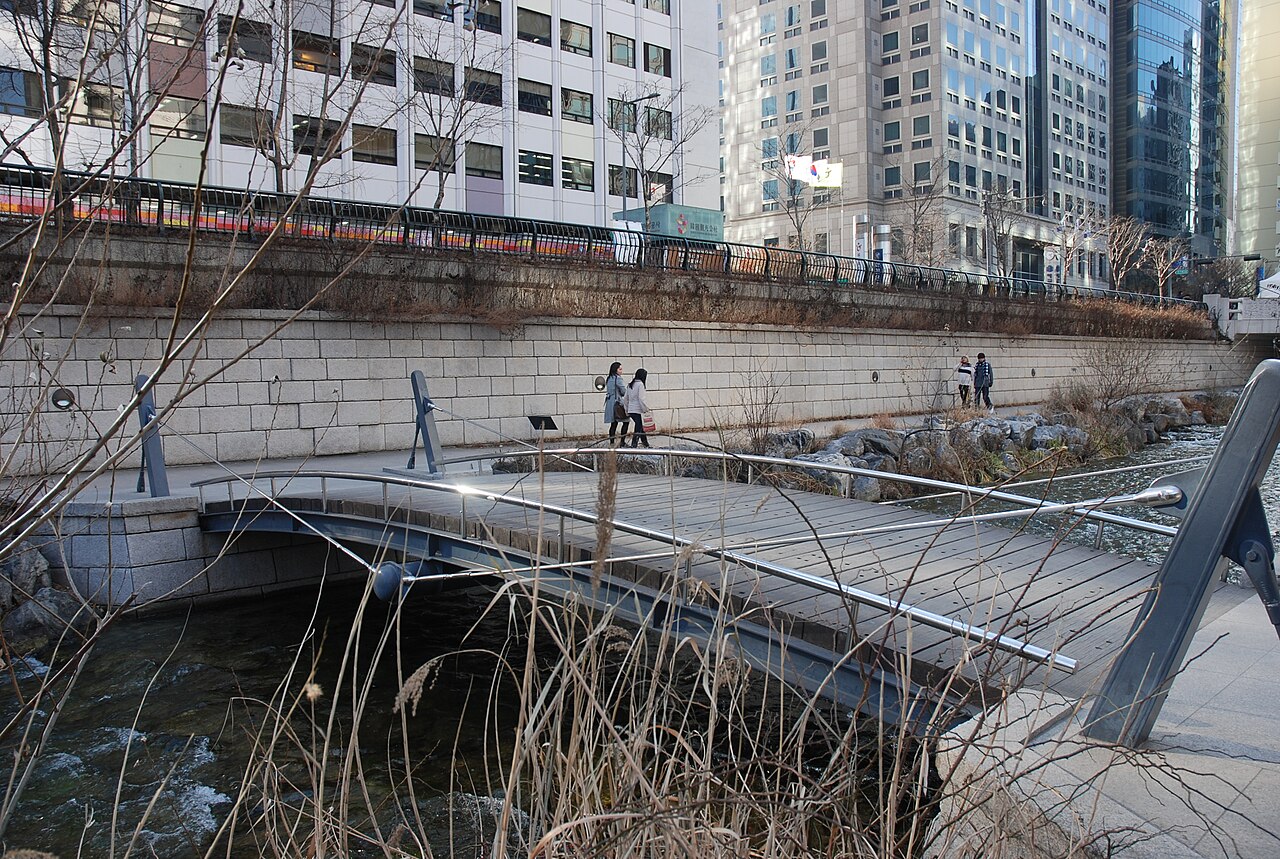
A good winter plan is to base yourself in Seoul for the city events and take one or two days out to Gangwon for the ice and snow festivals. The VisitKorea guide to winter festivals lists smaller regional events if you want to go further afield.
Which Winter Festival Should You Pick?
Pick Hwacheon for the full-scale spectacle, Pyeongchang for the easiest train trip and a ski combination, and Taebaek for snow scenery and hiking. Here is how they compare:
| Festival | Best for | Usual timing | From Seoul |
|---|---|---|---|
| Hwacheon Sancheoneo Ice Festival | The classic ice-fishing experience, big crowds and atmosphere | January (2027: Jan 9–31, provisional) | About 2 hours by bus |
| Pyeongchang Trout Festival | Easy KTX access, smaller crowds, pairing with skiing | Early January to early February | About 1 hour 40 minutes by KTX |
| Taebaeksan Snow Festival | Snow sculptures, sledding, winter hiking | Late January to early February | About 3–4 hours by train or bus |
If you only have one free day and have never tried ice fishing, Hwacheon is the one people talk about. If the weekend you have is busy or you are traveling with children who will want to stop and warm up often, Pyeongchang is calmer.
Day Trip, Tour or Overnight?
For Hwacheon and Pyeongchang, a day trip from Seoul is the norm. You can go independently by bus or KTX, or join a coach tour; the tours cost more than public transport but take care of the two things that trip up first-timers — getting a weekend fishing slot and finding the return bus in the dark. Most tours leave central Seoul around 7–8 a.m. and return in the evening.
Some tours also combine a festival with a second stop, such as Nami Island or a ski resort. If you go with that plan, our Nami Island day trip guide and the wider day trips from Seoul guide help you judge whether the second stop is worth the extra hours on the coach.
For Taebaek — or if you want to see a festival at night — staying over makes more sense. The Gangwon coast is close: from Pyeongchang it is a short hop to Gangneung, where you can watch the winter sunrise over the East Sea the next morning.
What Should You Wear for Ice Fishing?
Wear far more than you think you need. January temperatures in inland Gangwon regularly drop well below freezing, and the cold comes up from the ice while you sit still. The Korea Meteorological Administration forecast is the one to check the day before.
- Layers. A thermal base layer, a fleece or wool mid-layer and a long padded coat — the knee-length “long padding” jackets Koreans wear in winter exist for exactly this.
- Waterproof, insulated boots. The ice surface gets slushy around the holes. Wool socks, and a spare pair in your bag.
- Hat, neck warmer and gloves. Thin gloves let you handle the line; mittens over them keep your hands alive between bites.
- Hand warmers. Disposable heat packs are sold at every convenience store — our Korean convenience store guide covers what else to stock up on.
- Gear. You do not need to bring fishing equipment; rods and lures are sold or rented at the venues, and some tickets include them.
- Cash and a fully charged phone. Cold drains batteries fast, and small stalls may prefer cash. The money in Korea guide explains cards and ATMs.
Plan Your Trip
January is a quiet, good-value month to visit Korea outside the Seollal holiday, and the winter festivals are a highlight that few first-time visitors know about. If you are still choosing your dates, it is worth taking a moment to compare winter fares to Seoul✈️ before you book.
For the rest of your trip, our Seoul travel guide and 7-day Korea itinerary show how to fit a Gangwon day around the city — and the jjimjilbang guide explains the best way to thaw out when you get back to Seoul.
Disclosure: This post contains affiliate links. If you book through these links, I may earn a small commission at no extra cost to you. I only recommend services I’d use myself.