
Last Updated: July 2026
Quick answer: A jjimjilbang is a 24-hour Korean bathhouse and sauna complex — gender-separated hot-spring baths plus a unisex floor of heated kiln saunas, sleeping mats, and snack counters. Entry runs about ₩10,000–15,000 for unlimited hours, towels and a uniform are included, and full nudity is expected in the bathing area. It’s one of the cheapest, most memorable things to do in Seoul, and a genuinely useful place to nap before an early flight.
A jjimjilbang (찜질방, literally “heated room”) is where Koreans of every age go to soak, sweat, sleep, and hang out — sometimes for a couple of hours, sometimes overnight. It’s part bathhouse, part sauna, part 24-hour living room, and it’s unlike any spa most first-time visitors have tried. The mix of public nudity, kiln-hot sauna rooms, and communal sleeping floors can feel intimidating from the outside, but the actual routine is simple once you know it.
This guide covers what a jjimjilbang actually is, what happens step by step when you visit, what to bring, the etiquette that keeps things running smoothly, and which jjimjilbangs in Seoul are worth your time.
Table of Contents
- What Is a Jjimjilbang?
- What Happens When You Visit?
- What Should You Bring?
- What Are the Etiquette Rules?
- Where Are the Best Jjimjilbangs in Seoul?
- How Much Does a Jjimjilbang Cost?
- Is a Jjimjilbang Worth It for Tourists?
- Plan Your Trip
What Is a Jjimjilbang?
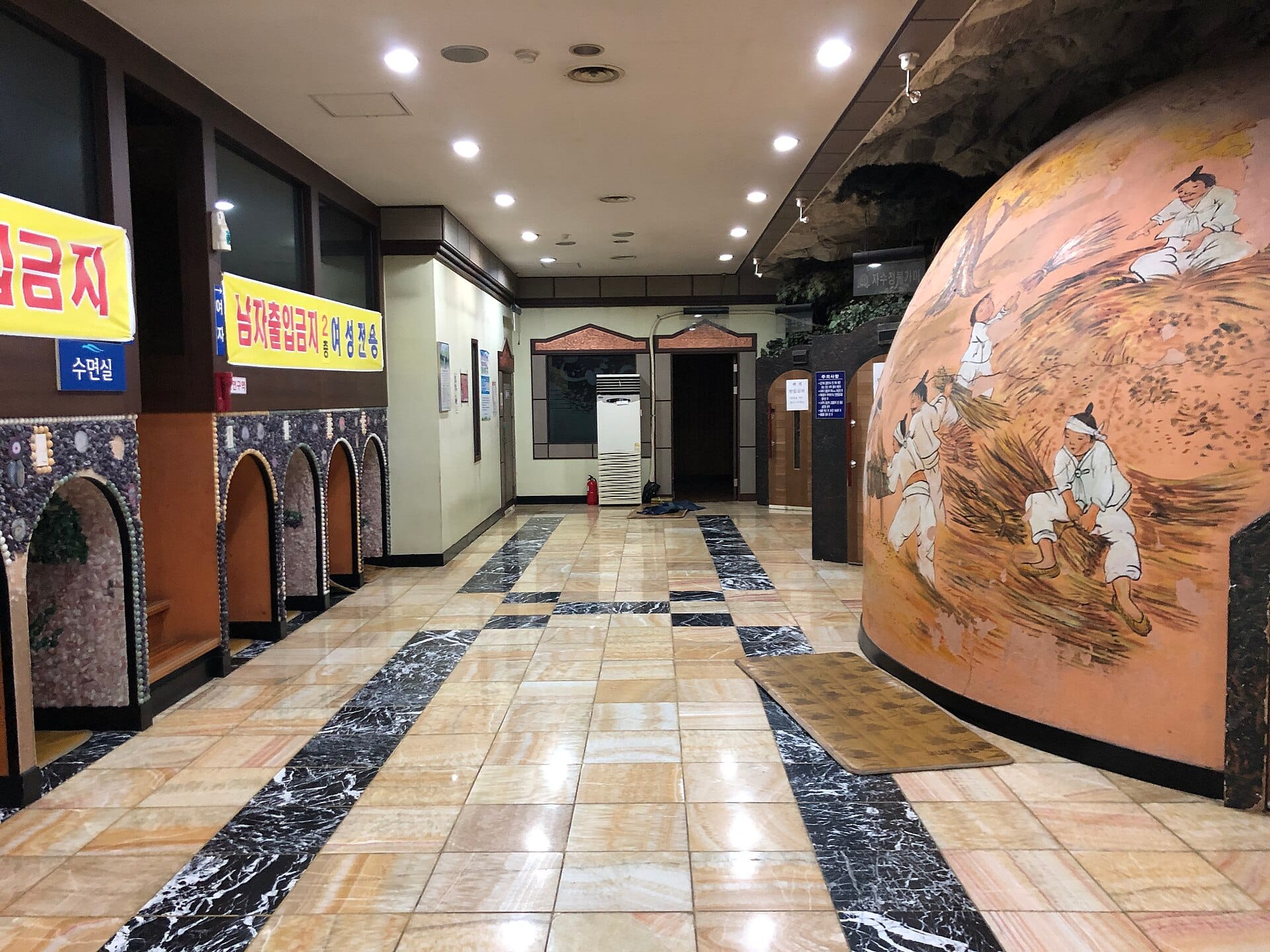
A jjimjilbang combines two older Korean traditions in one building: the public bathhouse (mokyoktang) and the hanjeungmak, a domed clay or stone kiln sauna heated by wood fire that dates back centuries. Modern jjimjilbangs took off from the 1990s onward as all-in-one leisure complexes, adding themed sauna rooms, food counters, and communal floors where families and friend groups spend an entire afternoon or evening together.
Every jjimjilbang has two distinct zones. The bathing area is same-sex only and fully nude — hot and cold soaking pools, showers, and often a scrub/massage counter. The sauna and lounge floor is unisex and clothed (a uniform is provided) — this is where you’ll find the heated kiln rooms, ice rooms, salt and jade rooms, communal sleeping mats, a TV lounge, and a small restaurant serving Korean sauna staples like sikhye (sweet rice drink) and boiled eggs.
What Happens When You Visit?
The routine is the same at almost every jjimjilbang in Korea, so once you’ve done it once, it clicks:
- Pay at the counter and get a locker key. It’s usually a wristband with a number, which also acts as a tab for food and drinks you buy inside — you settle up when you leave.
- Take off your shoes at the door and swap them for a locker in the shoe rack near the entrance.
- Split by gender into separate locker rooms, undress completely, and shower thoroughly before getting into any bath — this is the one rule nobody skips.
- Soak, sweat, and repeat. Move between the hot and cold pools and any kiln sauna rooms on the bathing floor at your own pace.
- Change into the provided uniform (usually a plain t-shirt and shorts) to head up to the unisex floor, where you can nap, eat, watch TV, or try the themed sauna rooms together with the rest of your group.
What Should You Bring?
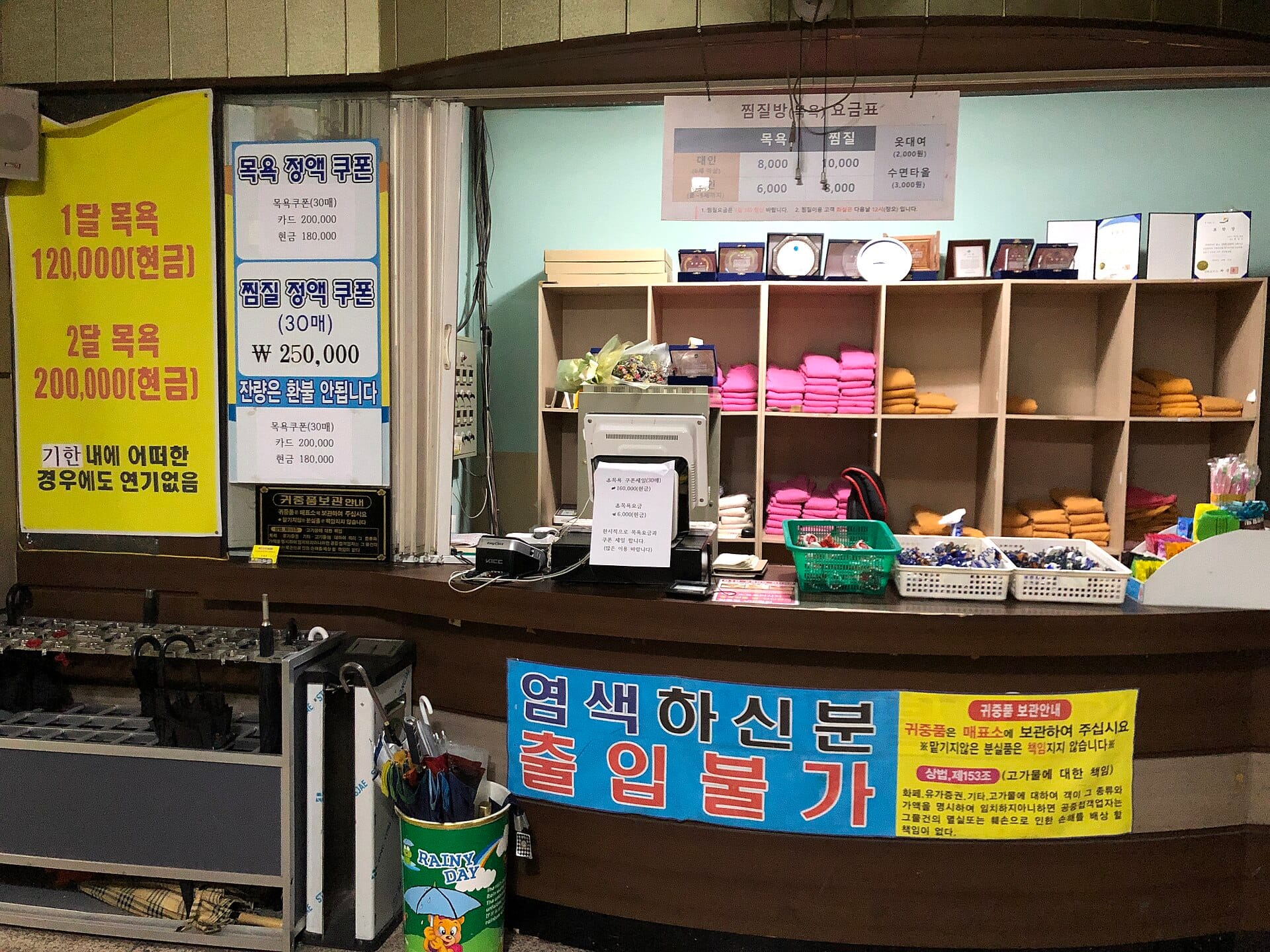
Most jjimjilbangs supply a small towel, a uniform for the communal floor, and basic soap, but pack a few things of your own:
- Your own shampoo and skincare — bar soap is usually provided, but shampoo, conditioner, and a face wash you actually like often aren’t.
- Cash or a Korean card. Bigger 24-hour spas take card, but smaller neighborhood jjimjilbangs can be cash-only.
- A hair tie if you have long hair, and a phone charger if you’re staying for several hours or overnight.
- A water bottle. The kiln rooms run hot, and it’s easy to lose track of how long you’ve been sweating.
Unlike a Japanese onsen, tattoos are not a barrier to entry at the vast majority of Korean jjimjilbangs — you’ll see plenty of visible ink on the bathing floor without any issue.
What Are the Etiquette Rules?
The rules are mostly about hygiene and shared space, and locals will gently correct you if you miss one:
- Shower before you soak — every time, no exceptions. There’s no swimwear in the bathing pools; it’s fully nude and same-sex only.
- Keep your towel out of the water. On the unisex sauna floor, folding the small towel into a triangle and wearing it on your head is a well-known local habit — it’s not required, but it’s part of the fun.
- Lower your voice in the sleeping and lounge areas — people are genuinely napping.
- No phones or cameras in the bathing area, for obvious reasons.
- Rinse the kiln room mats and pool edges after you use them, and don’t hog a bench if others are waiting.
Where Are the Best Jjimjilbangs in Seoul?
A quick note first: the long-famous Dragon Hill Spa in Yongsan, which used to top every “Seoul jjimjilbang” list, permanently closed in 2024 — skip any older blog post that still recommends it. These are the ones actually worth your time now.
| Jjimjilbang | Neighborhood | Hours | Good For |
|---|---|---|---|
| Siloam Sauna | Near Seoul Station | 24 hours | First-timers, layovers, germanium hot-spring water |
| SPAREX Dongdaemun | Dongdaemun | 24 hours | Late-night shopping trips, largest jjimjilbang in Seoul |
| Spa Lei | Gangnam | 24 hours | A more upscale, spa-style visit |
| Hongdae Bulgama Sauna | Hongdae | 24 hours | Combining with a night out in the neighborhood |
Siloam Sauna, a short walk from Seoul Station, draws its bathing water from 300 meters underground and is one of the most tourist-friendly options in the city thanks to its size and central location. You can book a Siloam Spa session in advance🎫 rather than risk a queue at the counter.
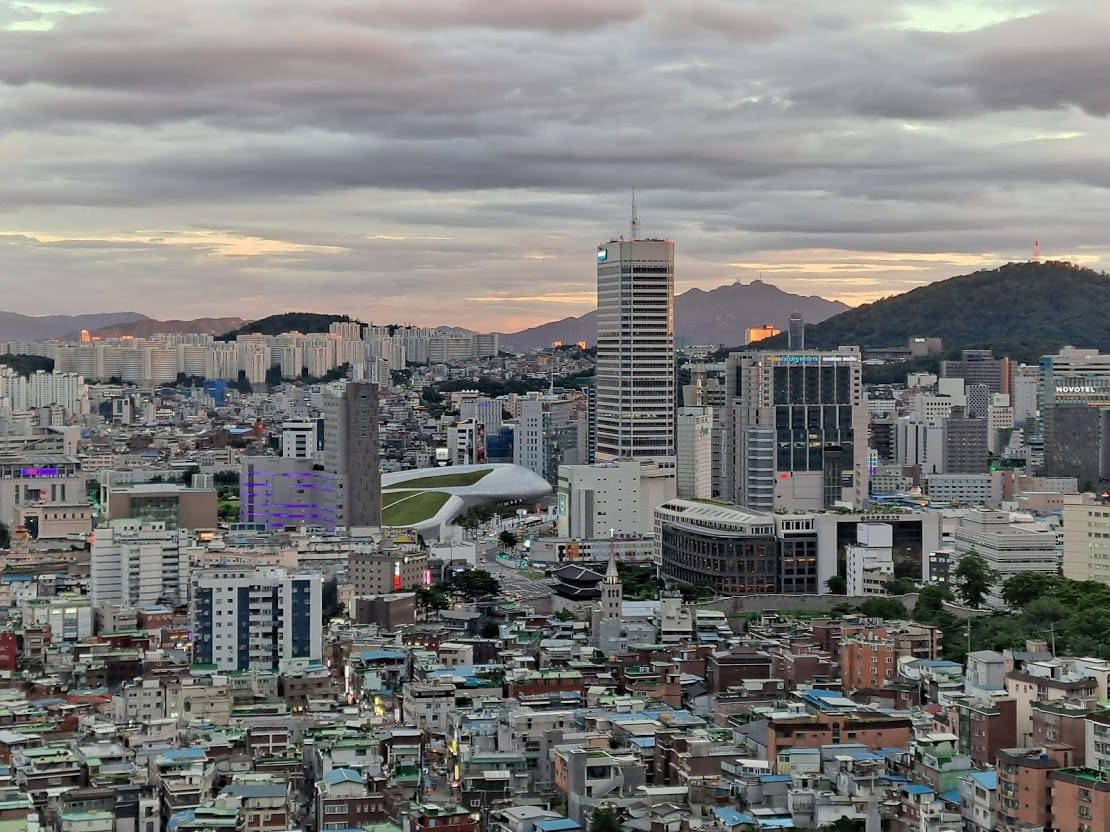
In Dongdaemun, the round-the-clock SPAREX complex is the largest jjimjilbang in Seoul and pairs naturally with a late-night shopping trip through the district’s 24-hour markets — you can also buy a SPAREX admission ticket ahead of time🎫 to skip the front-desk line.
Over in Gangnam, Spa Lei leans more upscale, with a European-spa layout built around Korean staples like the bulgama kiln room and a charcoal-and-salt sauna. And in Hongdae, the neighborhood’s 24-hour Bulgama Sauna is an easy, cheap way to end (or sleep off) a night out without booking a hotel room.
How Much Does a Jjimjilbang Cost?
Basic admission — unlimited access to the baths, saunas, and sleeping floor for a stretch of roughly 12 hours — typically runs ₩10,000 to ₩15,000 at the jjimjilbangs listed above, with towel and uniform rental included. Extras like a body scrub, massage, or private sleeping pod cost more on top, usually paid at the counter as you go. For context, that’s a fraction of what a night in even a budget Seoul hotel room🏨 costs — which is exactly why some travelers use a jjimjilbang as a cheap overnight option rather than just a spa visit.
Is a Jjimjilbang Worth It for Tourists?
Yes — it’s one of the best-value, most distinctly Korean things you can do in Seoul, and it doesn’t require booking ahead or speaking Korean. Beyond the novelty, it’s genuinely practical: Siloam Sauna’s location near Seoul Station makes it a legitimate budget option for a very early or very late Incheon Airport connection, when a full hotel night doesn’t make sense but a proper shower and a few hours of sleep do.
Go in with the two ground rules — shower first, and full nudity is normal in the bathing area — and the rest of the experience takes care of itself.
Plan Your Trip
Start by looking at flights to Seoul✈️ — if your schedule has an odd-hours layover, a jjimjilbang near Seoul Station is worth keeping in mind. For everything else, our guide to where to stay in Seoul covers the neighborhoods, and the full guide to things to do in Seoul fits a jjimjilbang visit in alongside the rest of your itinerary.
For more on the tradition itself, the Wikipedia entry on jjimjilbang has a fuller history of how the modern bathhouse-sauna format developed.
Disclosure: This post contains affiliate links. If you book through these links, I may earn a small commission at no extra cost to you. I only recommend services I’d use myself.