
Last Updated: August 2026
Quick answer: A Suwon Hwaseong Fortress day trip from Seoul takes about an hour each way by subway (Line 1 to Suwon Station, no reservation needed) or a little less by KTX/ITX. Once there, walk all or part of the 5.7 km UNESCO-listed wall, pass through gates like Paldalmun, and step inside Hwaseong Haenggung Palace at the center of the old town. It’s an easy half-day out — two to four hours is enough to see the highlights — and pairs naturally with a bowl of Suwon’s famous grilled-rib galbi for lunch.
Of all the easy escapes from the capital, Suwon is the one that asks the least of you: no tour booking, no train reservation, just a subway card and a morning. What you get in return is a genuinely impressive 18th-century walled city — one of Korea’s best-preserved fortresses and a UNESCO World Heritage Site — wrapped around a still-functioning old town of markets, cafés, and galbi restaurants. If you’re weighing it against the capital’s other easy outings, see our wider guide to day trips from Seoul for how it compares.
This guide covers exactly how to plan the day: getting there, what to see on and inside the wall, how it’s different from festival week, when to go, what it costs, and where to base yourself.
Table of Contents
- What Is Hwaseong Fortress and Why Visit?
- How Do You Get to Suwon from Seoul?
- What Should You See Inside the Fortress?
- What Is Hwaseong Haenggung Palace?
- Is This the Same as the Suwon Hwaseong Cultural Festival?
- What Should You Eat Near the Fortress?
- When Is the Best Time to Visit?
- How Much Does a Suwon Hwaseong Fortress Day Trip Cost?
- Where Should You Stay?
- Plan Your Trip
What Is Hwaseong Fortress and Why Visit?
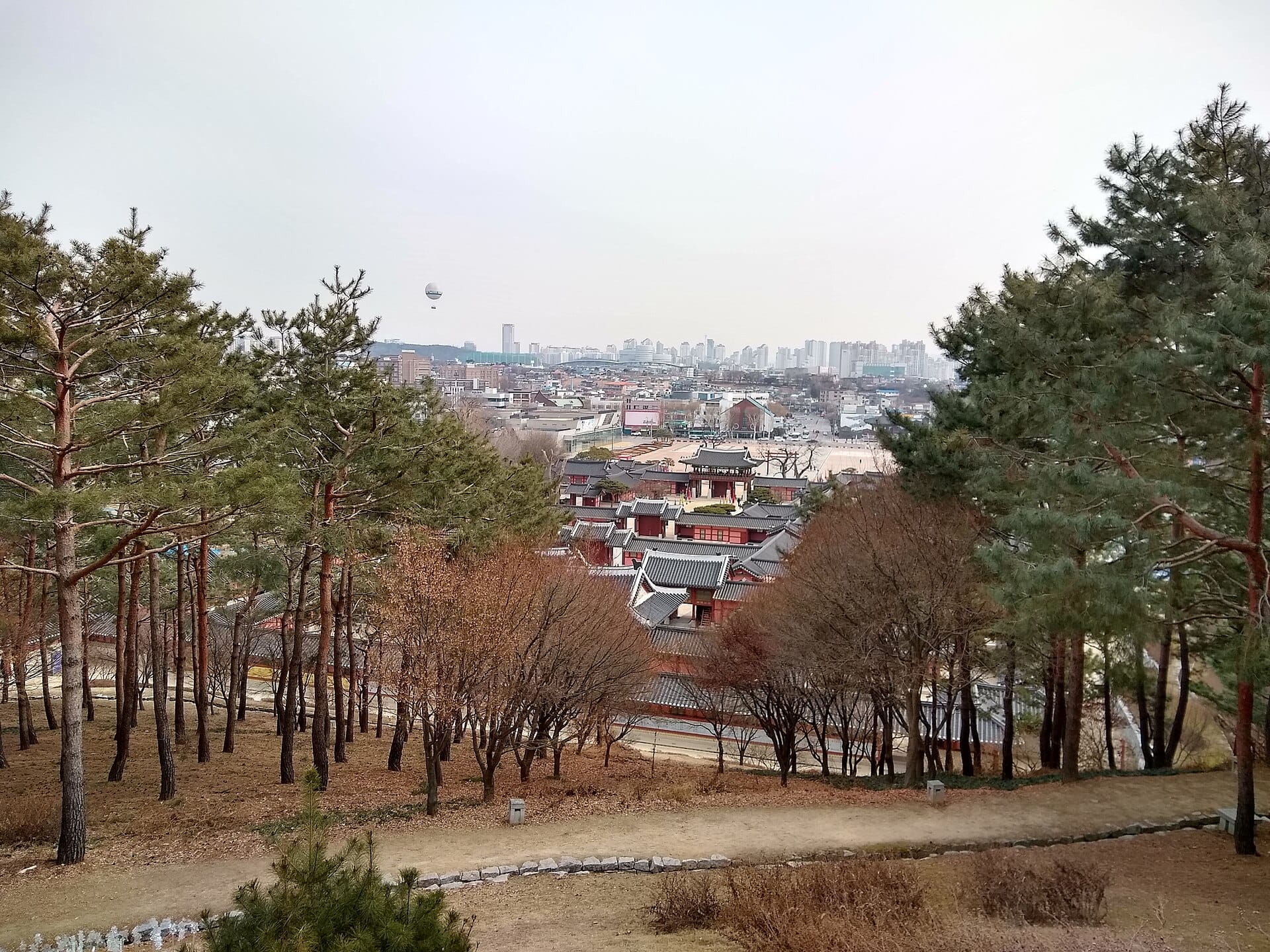
Hwaseong Fortress is an 18th-century walled city that King Jeongjo of the Joseon dynasty built between 1794 and 1796 to house his father’s relocated tomb and project royal authority outside the capital. According to Wikipedia’s entry on Hwaseong Fortress, its design combined traditional Korean fortress-building with newer Chinese and Western military engineering, making it one of the most technically advanced fortifications of its era in East Asia. It was inscribed as a UNESCO World Heritage Site in 1997.
Why visit? Because it’s a rare chance to walk an intact, nearly six-kilometer city wall — gates, guard towers, command posts, and archery platforms included — without leaving the greater Seoul area. Unlike a palace you tour in an hour, Hwaseong is a living old town: locals still shop and eat inside the walls, so the history doesn’t feel roped off. It’s also flat and well-signed enough to do independently, which is why it’s become one of the most popular day trips from Seoul for travelers who want culture without a tour bus.
How Do You Get to Suwon from Seoul?
Suwon sits on Seoul’s own subway network, so a Suwon Hwaseong Fortress day trip needs no advance ticket. Take Line 1 to Suwon Station — from central Seoul the ride takes roughly 55–75 minutes depending on where you board, using the same T-money card covered in our guide to getting around Seoul. From Suwon Station, the fortress’s main gate, Paldalmun, is about a 15-minute walk north, or a short bus or taxi ride (around ₩4,000–5,000) if you’d rather save your legs for the wall.
If you’d rather cut the ride down, the KTX or ITX from Seoul Station or Yongsan reaches Suwon in about 20–30 minutes, though the time saved is modest given how short the trip already is — most travelers just take the subway. If you do want the faster train, it’s easy to book a Korea train ticket to Suwon🚄 ahead of time. Either way, plan to arrive by mid-morning — the wall has almost no shade, so an early start beats the midday sun in summer.
What Should You See Inside the Fortress?
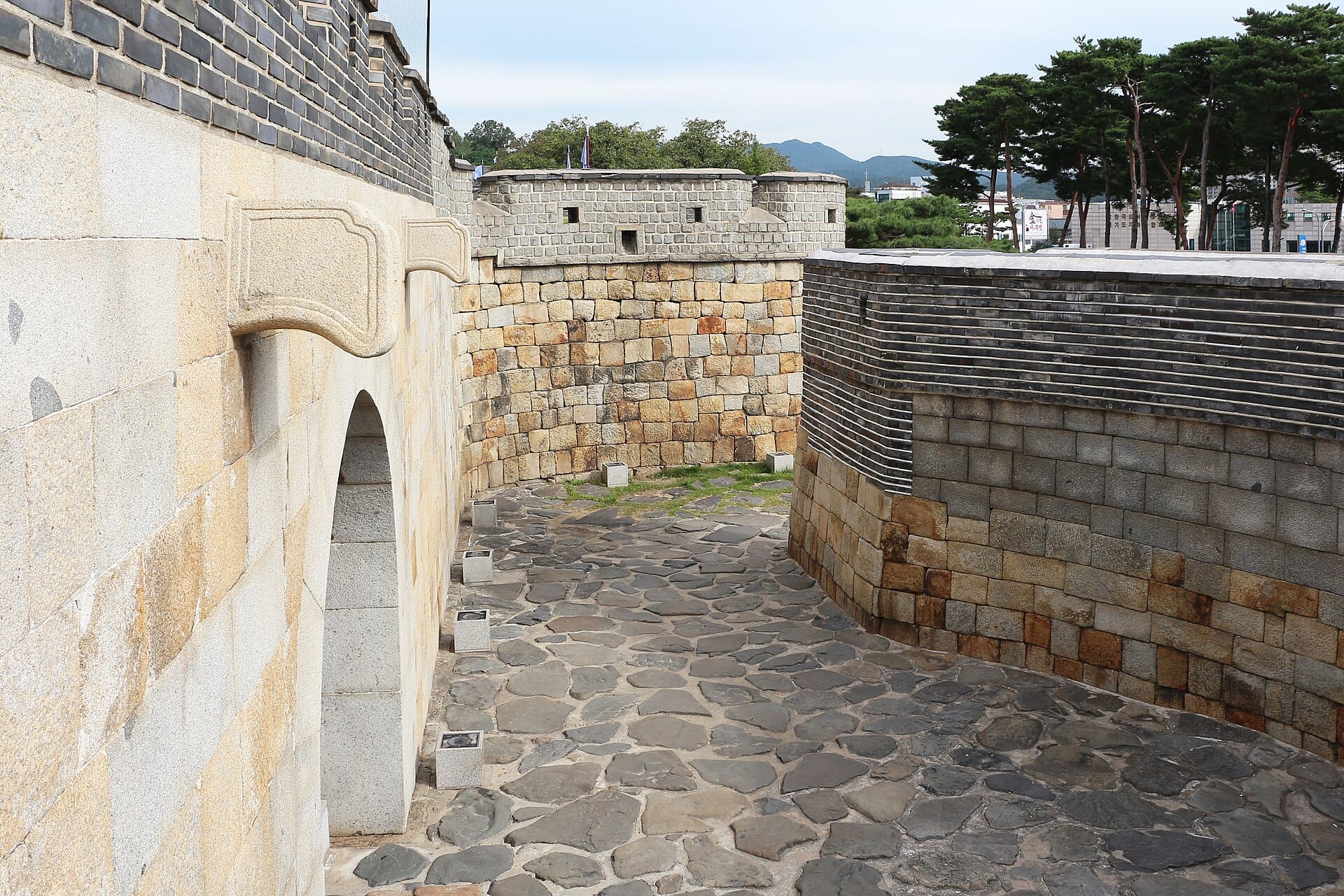
The main activity is simply walking the wall. The full loop covers 5.7 km and takes 2–3 hours at a relaxed pace, passing 48 structures in total — gates, watchtowers, command posts, and beacon-fire facilities built into the rampart itself. You don’t need to walk the whole thing to get the payoff: the stretch between Janganmun (the north gate) and the hillside command post above the old town packs in most of the best views over Suwon’s rooftops.
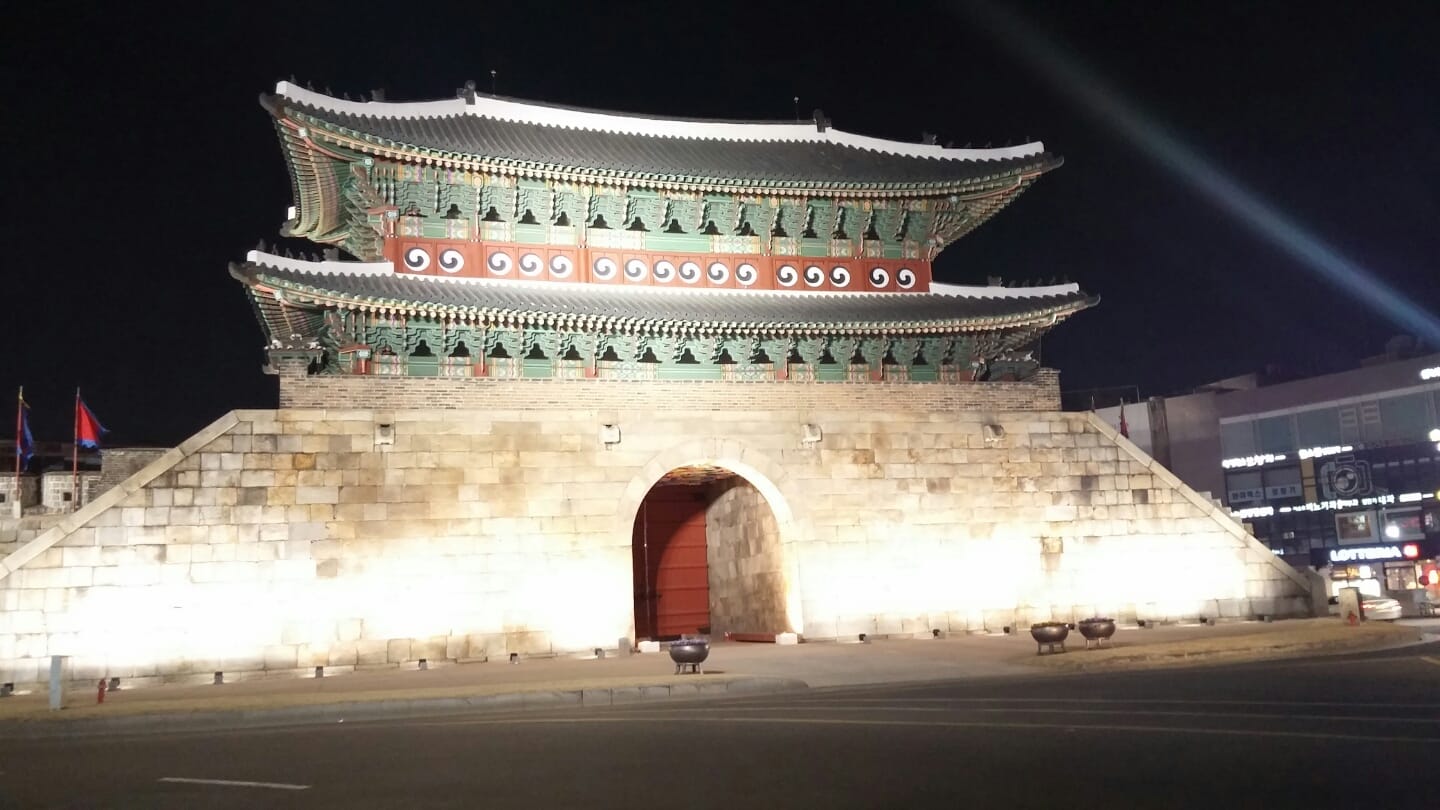
The fortress has four main gates, and Paldalmun, the southern gate, is the one most visitors start or finish at — it sits at the edge of the old town’s market streets, so it doubles as your entry point into the city’s everyday life. The other three, Janganmun (north), Hwaseomun (west), and Changnyongmun (east), are quieter and better for photos without the crowds. A local sightseeing tram loops around the wall’s perimeter if you’d rather skip a section on foot, useful with kids or in hot weather.
What Is Hwaseong Haenggung Palace?
Hwaseong Haenggung is the largest of Korea’s surviving temporary palaces — the residence King Jeongjo used inside the fortress walls whenever he visited his father’s tomb. It sits roughly at the center of the old town, a short walk from Paldalmun, and its courtyards and halls give a much more immersive sense of Joseon-era royal life than the open-air wall walk alone. On weekends, the palace grounds often host changing-of-the-guard ceremonies and traditional performances, so it’s worth timing your visit around midday if you want to catch one.
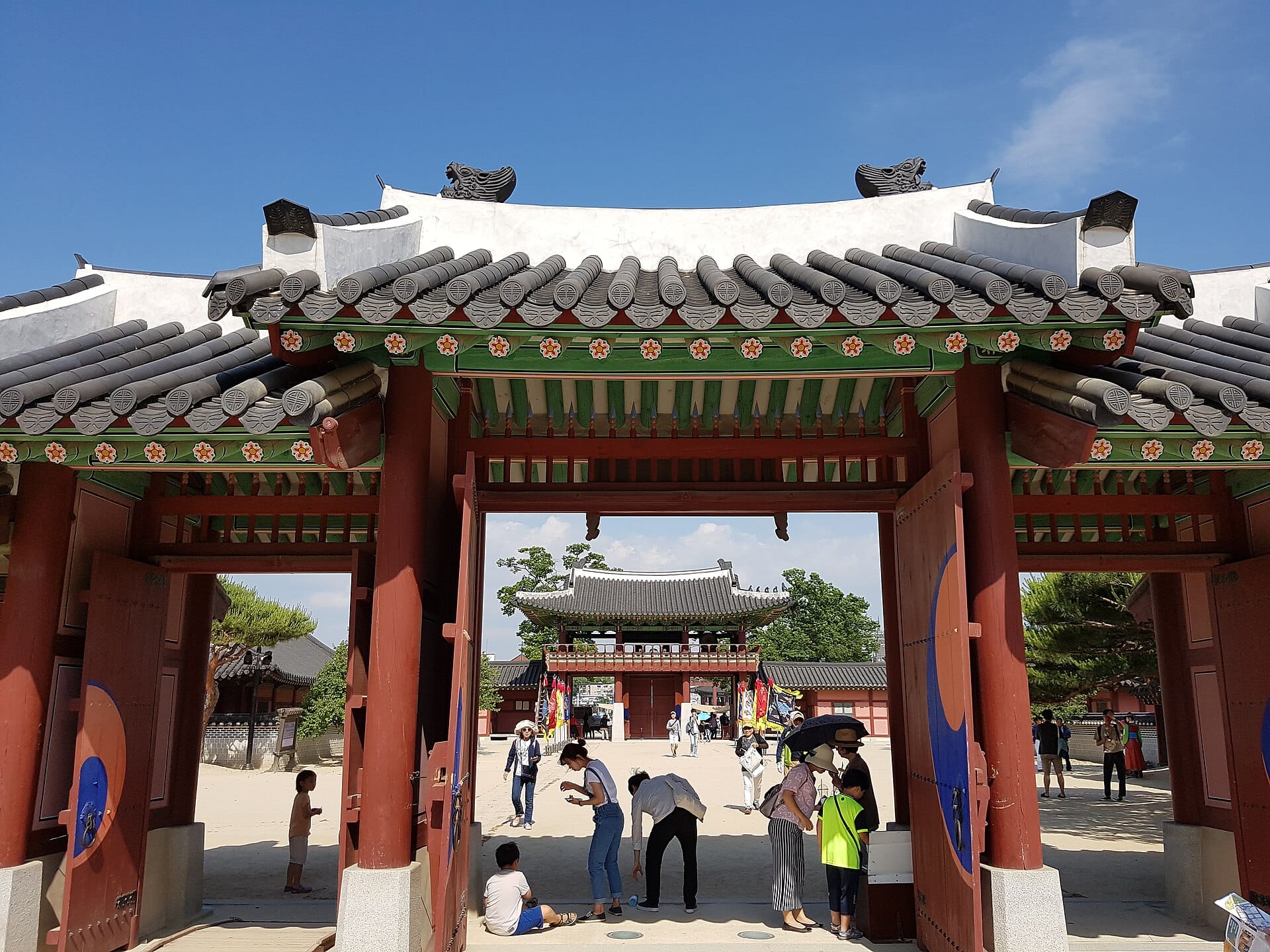
Entry to the palace is a separate small ticket from the general fortress wall (which is free and open at all times), and a combined ticket covering the palace and several fortress facilities is available at the gate — worth it if you plan to linger rather than just walk past.
Is This the Same as the Suwon Hwaseong Cultural Festival?
No — a regular Hwaseong Fortress day trip is available year-round, while the Suwon Hwaseong Cultural Festival is a single annual event layered on top of it. Our guide to the 2026 Suwon Hwaseong Cultural Festival covers that week in full — it runs September 27–October 4, 2026, and centers on a reenactment of King Jeongjo’s royal procession with roughly 4,000 costumed participants, plus night-time light displays and craft markets around the old town.
Outside that one week, the fortress and palace are exactly as described above: open daily, free to walk, and far quieter. If your dates don’t line up with the festival, don’t worry — you’re not missing the fortress itself, just the extra performances on top of it. If your trip does land in late September or early October, it’s worth building the festival into this same day trip rather than treating them as separate outings.
What Should You Eat Near the Fortress?
Suwon is one of Korea’s most recognized food cities for one dish: Suwon galbi, thick-cut grilled beef short ribs, marinated and cooked over charcoal at long-running restaurants inside and around the old town. The tradition dates back generations, and locals will tell you Suwon’s version set the standard the rest of the country followed. It’s the natural lunch stop between the wall walk and the palace — for the wider rundown on Korean barbecue and how to order it, see our Korean BBQ guide.
Around Paldalmun, the traditional market streets also sell street food and produce if you’d rather graze than sit down for a full meal — a good option if you’re squeezing the fortress into a half-day and want to keep moving.
When Is the Best Time to Visit?
Spring (April–May) and autumn (late September–November) are the best times for a Suwon Hwaseong Fortress day trip — mild temperatures make the shadeless wall walk comfortable, and the surrounding hillsides add color without the summer haze. Early autumn also has the bonus of potentially overlapping with the cultural festival (see above). Summer is workable but hot and humid with little shade on the ramparts, so go early morning or late afternoon and carry water; winter is cold but crisp, with far fewer crowds and clear long-distance views from the command posts.
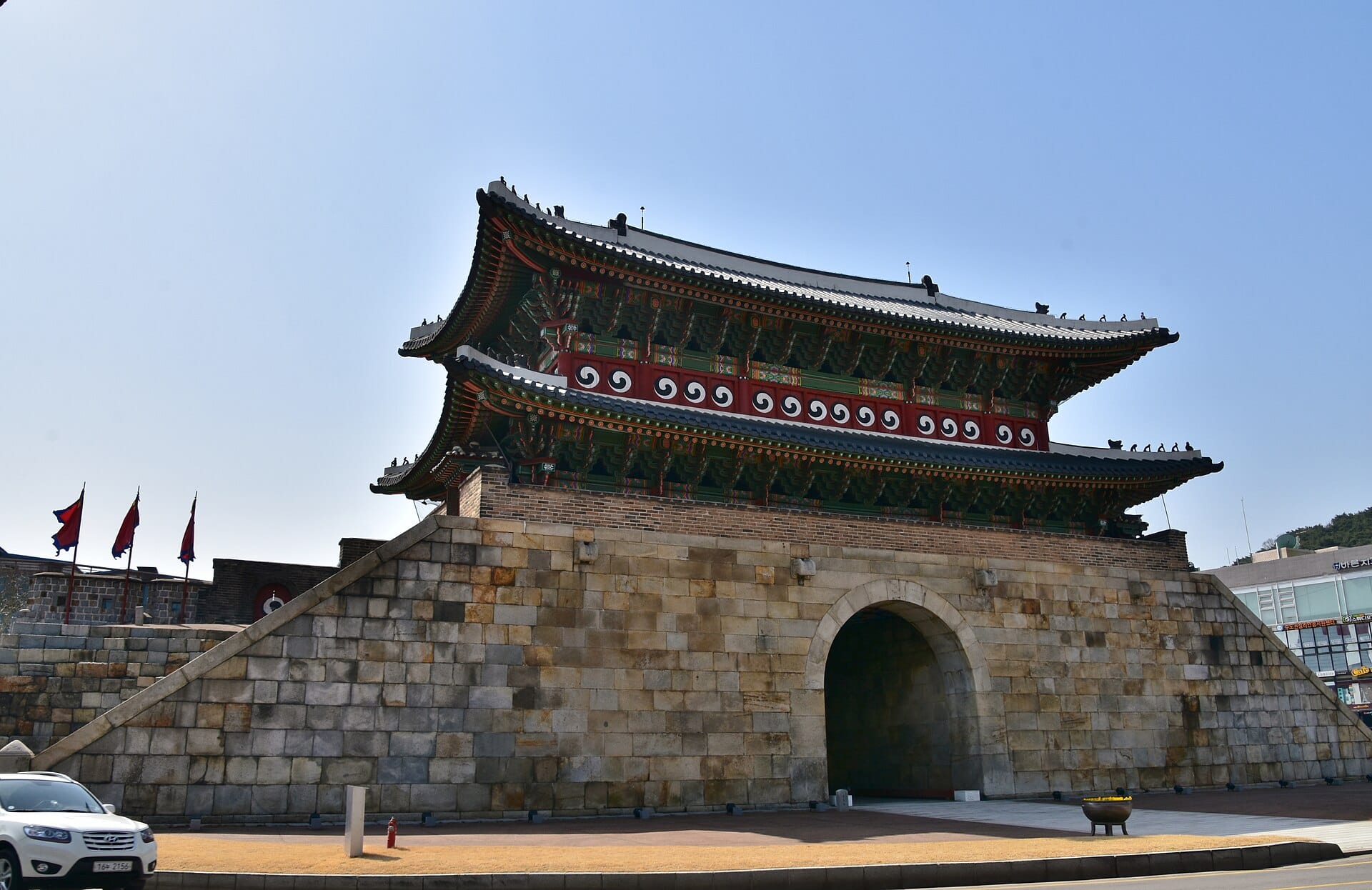
Whatever the season, weekday mornings beat weekend afternoons — Hwaseong is a popular domestic destination, and the old-town streets around Paldalmun get genuinely crowded on weekend afternoons in good weather.
How Much Does a Suwon Hwaseong Fortress Day Trip Cost?
This is one of the cheapest day trips from Seoul — the wall itself is free, and the only real costs are transport and an optional palace ticket. Rough per-person figures:
| Item | Approx. cost (adult) |
|---|---|
| Subway to Suwon Station (each way) | ~₩1,900–2,300 |
| KTX/ITX to Suwon (each way, optional) | ~₩5,000–8,000 |
| Station ↔ fortress (bus or taxi) | ~₩4,000–5,000 |
| Hwaseong Haenggung Palace entry | ~₩1,500–3,000 |
| Combined fortress-facilities ticket (optional) | ~₩3,500 |
| Suwon galbi lunch | ~₩25,000–40,000 |
All in, a subway-and-walking day with lunch runs roughly ₩35,000–50,000 per person — cheaper than almost any other day trip from Seoul, and with no tour or reservation to plan around.
Where Should You Stay?
Suwon works well as a half-day or full-day outing rather than an overnight stop, so most travelers base themselves in Seoul and travel out for the fortress. It’s worth comparing Seoul hotel rates🏨 or browsing Seoul hotel listings🏨 near a station on Line 1, which puts you on a direct, transfer-free ride to Suwon. Our guide to where to stay in Seoul breaks down which neighborhoods suit that kind of day-trip-friendly base.
Plan Your Trip
Start by booking your flights to Seoul✈️. Once your dates are set, a Suwon Hwaseong Fortress day trip is one of the easiest days to slot in — no advance booking required, so you can decide the morning of based on the weather.
Prefer not to plan the transfers yourself? A guided day tour bundles Suwon with transport and a local guide who can point out details you’d otherwise miss on the wall. You can compare Suwon and Hwaseong Fortress day tours from Seoul🎫 and pick one that matches your pace.
Fit it into your trip. See our guide to day trips from Seoul for how Suwon compares with the DMZ, Nami Island, and Everland, and if your dates land in late September, check whether the Suwon Hwaseong Cultural Festival is running during your stay.
Disclosure: This post contains affiliate links. If you book through these links, I may earn a small commission at no extra cost to you. I only recommend services I’d use myself.