
Last updated: June 2026
Quick answer: Korea’s 2026 rainy season — the jangma (장마) — reached the Seoul capital area on June 25–27, according to the Korea Meteorological Administration‘s seasonal outlook. The forecast end window for Seoul is July 26 to the end of July, giving a roughly four-to-five-week monsoon period. It is not constant rain: jangma brings bursts of heavy downpours alternating with breaks of sun and cloud, with humidity sitting above 80 percent throughout. Accommodation prices dip during this window, the city’s indoor offerings are outstanding, and the big summer festivals run straight through it.
What Is Jangma?
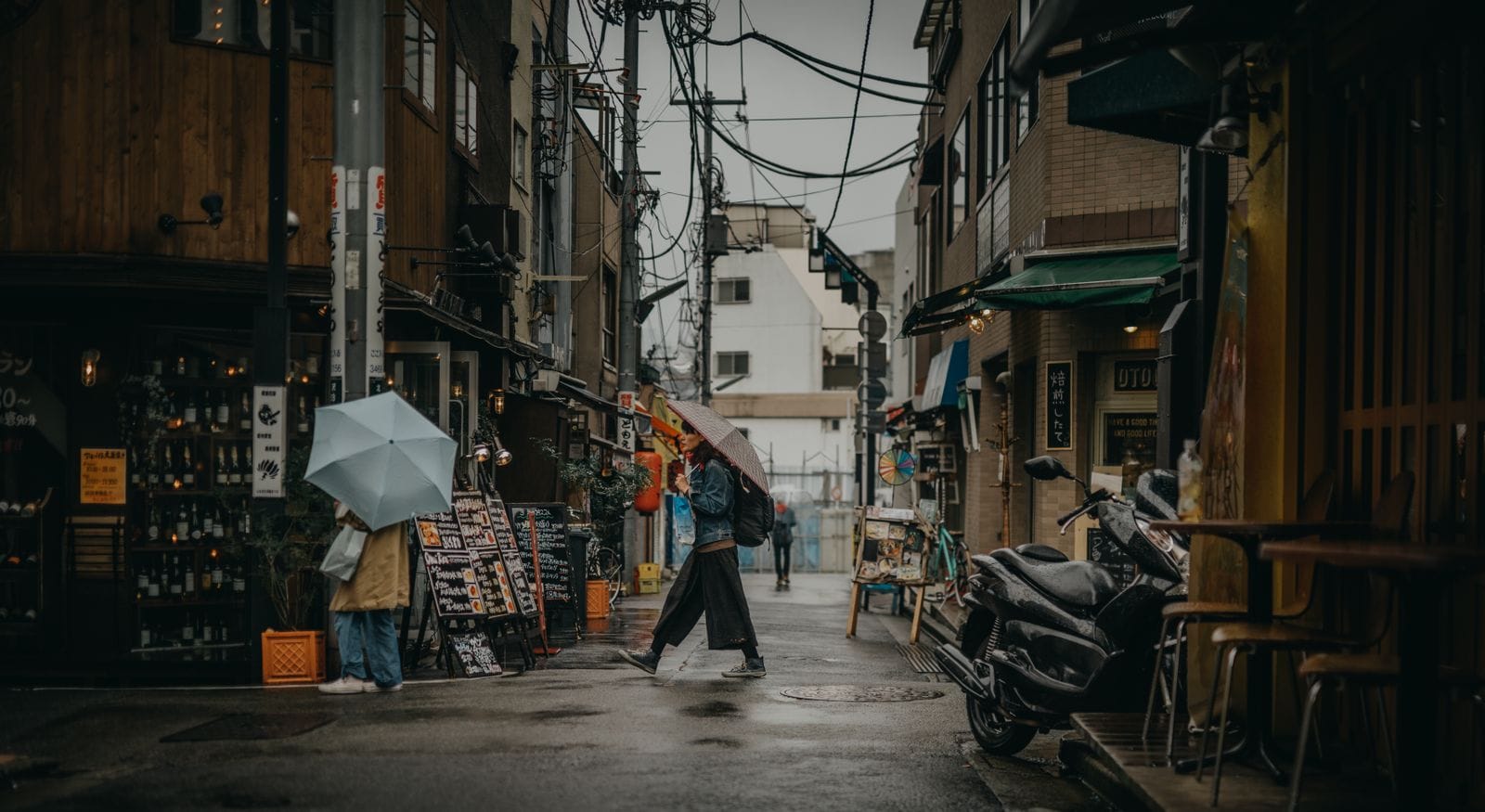
Jangma is the East Asian monsoon front that sweeps up the Korean Peninsula from late June each year. It differs from a tropical monsoon: rather than near-continuous rain, it brings alternating fronts of intense rainfall and brief dry periods, often within the same day. Daytime temperatures hover between 24 °C and 29 °C (75–84 °F), but the “real-feel” is significantly higher once humidity factors in. Seoul’s average July rainfall is around 390 mm — the wettest month by far — and most of that falls within the jangma window. Once the front clears in late July, sporadic “guerrilla rain” (intense, short-lived downpours) can still occur into early August even after the season officially ends.
The short version for trip-planning: pack for intermittent heavy rain, not for an entire washed-out holiday. A morning downpour in Seoul often clears by early afternoon.
2026 Jangma Forecast: Start and End Dates
The Korea Meteorological Administration’s seasonal outlook, reported by Aju Press in May 2026, projects the following regional schedule:
| Region | Expected start | Expected end |
|---|---|---|
| Jeju Island | June 19–21 | Around July 20 |
| Southern region (Busan, Gyeongnam) | June 23–25 | July 24–25 |
| Central region (Seoul, Gyeonggi) | June 25–27 | July 26 – end of July |
These dates are based on statistical averages from 30 years of KMA data and actual conditions can vary. Monitor the KMA’s short-term forecasts as the end date approaches — the front can linger or clear earlier than projected.
If you are already in Seoul, the rainy season is underway. If you are arriving in mid-to-late July, the tail end of jangma is likely: expect a mix of heavy rain days and clear days. August arrivals will miss the main monsoon season but may catch residual guerrilla rain in the first week or two.
How Jangma Affects Your Trip
Prices drop. The rainy season is Seoul’s low-season shoulder period: fewer international visitors arrive, which pushes hotel rates and flight fares below their spring and autumn peaks. If your travel dates are flexible, jangma timing can mean meaningful savings on Seoul accommodation🏨 compared to cherry-blossom or autumn-foliage season. The Seoul neighbourhood guide covers which areas work best by budget and transport access.
Outdoor palaces are still open. Gyeongbokgung, Changdeokgung, and other royal palace complexes operate through the rainy season. The covered corridors and tiled pavilions make even a wet visit navigable, and visitor numbers are lower than in spring or autumn. Check the Gyeongbokgung guide for opening hours and ticket tips.
Summer festivals run through it. The big July events — Boryeong Mud Festival (July 24–August 9) and Waterbomb Seoul (July 24–26) — are staged outdoors and proceed rain or shine. The Hangang River Festival (August 1–16) starts just as jangma is ending, giving you a free outdoor programme to step into once the skies clear.
What to Pack for Korea’s Rainy Season
- A sturdy umbrella — bought locally. Korean convenience stores (GS25, CU, 7-Eleven) stock high-quality compact umbrellas for ₩5,000–10,000 (roughly US$3–7). They handle jangma downpours far better than flimsy travel umbrellas, and you avoid checking one in at the airport.
- Quick-dry synthetic or linen clothing. Heavy denim takes hours to dry in Seoul’s humidity. Light fabrics — athletic shorts, linen shirts, moisture-wicking layers — dry quickly if you get caught out. Darker colours disguise sweat.
- Waterproof sandals or shoes. Open-toe quick-dry sandals are ideal. Leather shoes are slow to dry and can crack; waterproof trail runners work well if you prefer closed-toe.
- A small dry bag or waterproof pouch. For your phone, passport, and camera — downpours arrive fast and bag liners don’t always seal reliably.
Best Indoor Activities in Seoul During Jangma
Seoul’s indoor infrastructure is exceptional, which softens the blow of a rainy day considerably.
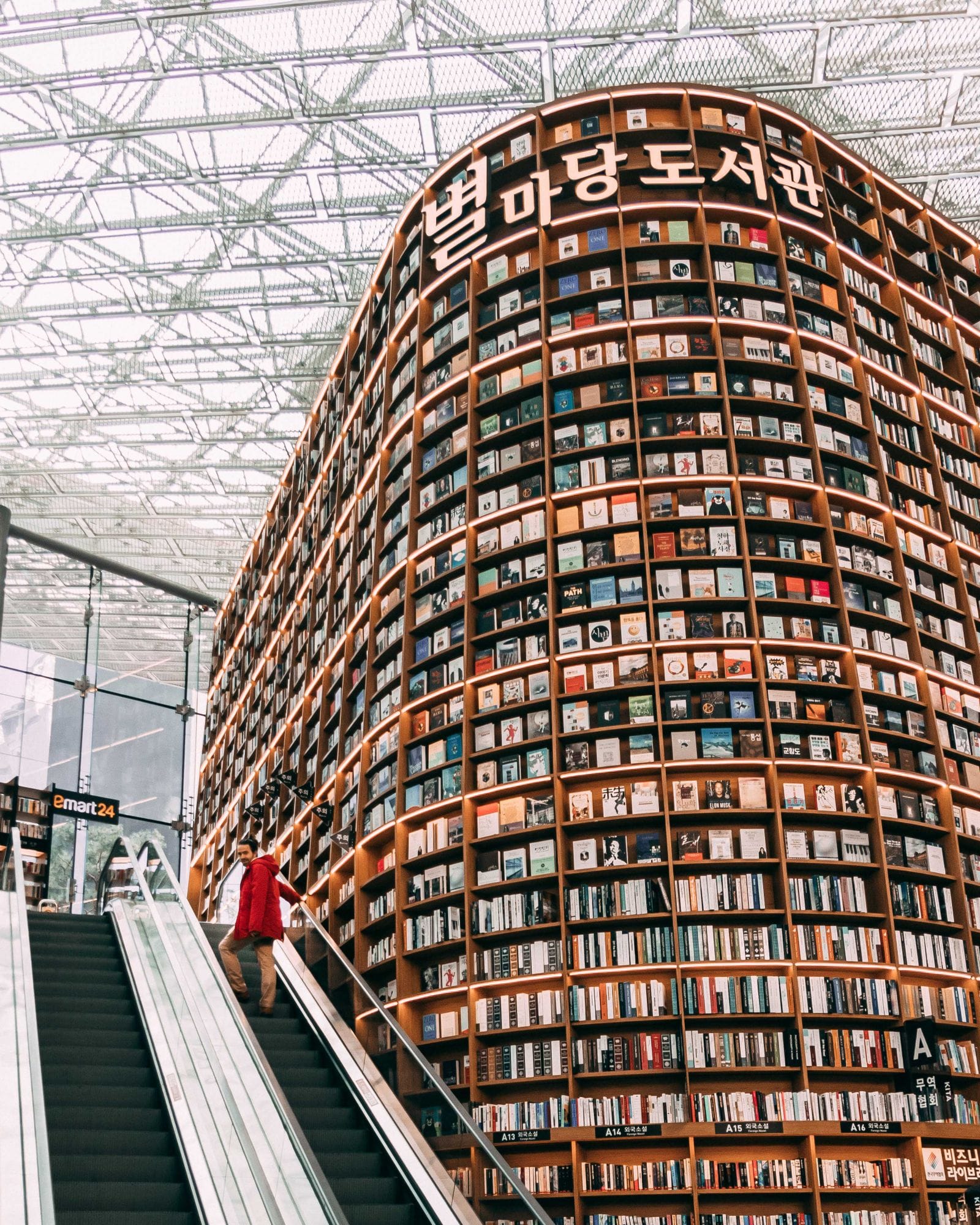
- COEX Mall (Samseong-dong, Gangnam). One of Asia’s largest underground malls, connected to Samseong station (Line 2). Home to the Starfield Library — a vast, multi-storey book installation that photographs well — plus the SEA LIFE aquarium, a cinema, and a full range of food-court options. A rainy afternoon here can absorb four or five hours.
- The Hyundai Seoul (Yeouido). A newer upscale mall with a striking glass-roofed indoor garden at its centre. Restaurants and concept stores fill five floors, and the food hall in the basement draws long queues even on dry days. Take Line 5 to Yeouinaru or Line 9 to Saetgang.
- National Museum of Korea (Yongsan). Korea’s largest museum, free to enter, with permanent collections covering 5,000 years of Korean history. Yongsan station (Jungang Line and Line 1) is directly connected. Budget two to three hours for the main galleries.
- Jjimjilbang (Korean bathhouse-spa). A 24-hour Korean communal spa is the local’s default response to a rainy day. You pay a flat entry fee (typically ₩12,000–15,000), change into the provided shorts and t-shirt, and spend as long as you like moving between hot and cold pools, dry saunas, and resting rooms. It is one of the most distinctly Korean leisure experiences available, and the humid heat inside pairs well with the grey weather outside. Options near the centre include Dragon Hill Spa in Yongsan and Aqua Field in Mapo.
- Noraebang (private karaoke). South Korea’s karaoke is done in private rooms by the hour — group or solo, no audience. Rooms cost roughly ₩15,000–25,000 per hour for a group and are found in every neighbourhood. If the rain pins you inside for two hours, this is a genuinely fun alternative to waiting at a café.
- Indoor tours and cooking classes. Indoor experiences including Korean cooking classes, palace tours with umbrella guides, and K-beauty workshops🎫 are bookable online and run regardless of weather. A hands-on kimchi or tteok-making class is two hours well spent on a downpour afternoon.
For a broader list of things to do in Seoul across all weather conditions, the Seoul experiences guide covers 15 of the best, including several that work indoors.
Rainy-Day Food Culture: Pajeon and Makgeolli
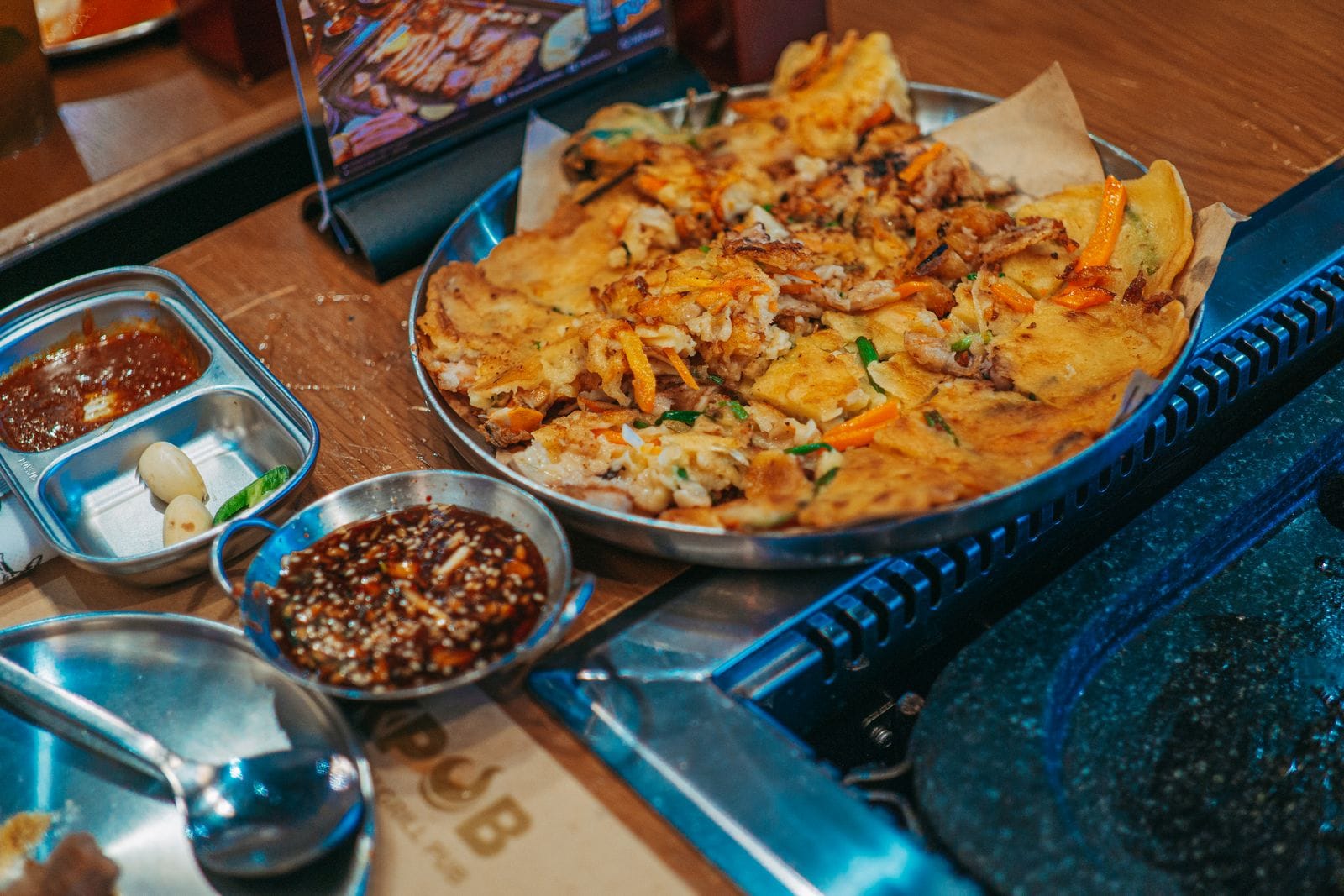
Korea has a specific food tradition tied to jangma: eating pajeon (파전 — savoury scallion pancakes, often with seafood or kimchi) while drinking makgeolli (막걸리 — lightly sparkling, milky rice wine) on rainy days. The theory is that the sound of rainfall resembles the sizzle of pajeon hitting the griddle. Whatever the origin, the combination is deeply embedded in Korean culture and easy to find during jangma season.
Pajeon is available at most traditional Korean restaurants and market stalls for ₩8,000–15,000. In Insadong and Bukchon, several sit-down restaurants specialise in it. Makgeolli is served cold in traditional bowls and is much lower in alcohol than soju — around 6–8 percent. A makgeolli set with pajeon for two, eaten while watching the rain fall, is a distinctly Korean way to wait out a downpour. Seoul’s café scene also comes into its own during jangma — the city’s themed and specialty cafés are indoor experiences in themselves.
Getting Around Seoul in the Rain
The subway is your best friend during jangma. Seoul’s metro network is extensive, climate-controlled, and connects underground to malls, department stores, and markets — meaning you can travel from your hotel to a shopping complex without setting foot outside. The underground walkway networks around Euljiro, Gangnam, and Yeouido allow you to move between stations and buildings via covered passages. The Seoul transport guide covers fares, the T-money card, and which line to take across the city.
Taxis become very difficult to hail during a downpour — every other pedestrian has the same idea. If you need a car, use the KakaoT app (the local equivalent of Uber) and book five to ten minutes ahead of when you need it. Surge pricing and 20-plus-minute waits are common during heavy rain. The subway avoids all of that.
Outdoor Sights That Still Work in the Rain
Not all of Seoul’s outdoor attractions are equally rain-sensitive. The following hold up well in light to moderate jangma rain:
- Gyeongbokgung Palace: Covered corridors, long overhangs on the pavilion roofs, and rain-slick stone courtyards that look genuinely atmospheric in wet weather. Fewer crowds than on fine days. Bring an umbrella for the open plaza around Gwanghwamun Gate.
- Gwangjang Market (Jongno-gu): A covered traditional market where the food stalls run regardless of weather. Order bindaetteok (mung bean pancakes) and take a seat at the communal benches under the canopy.
- N Seoul Tower (Namsan): The cable car runs in rain and the observation deck is fully enclosed. Views are limited on heavy-cloud days but the tower itself is a worthwhile indoor visit, and Namsan’s forested hillside smells extraordinary after a downpour.
- Underground Dongdaemun area: Dongdaemun Design Plaza (DDP) is partly indoor, and the surrounding underground shopping streets stay dry and busy through any weather.
If you’re planning around jangma, check flights to Seoul✈️ and weigh the timing against the forecast dates above. For full seasonal context — including which months are cheapest, when crowds peak, and what the weather looks like across all four seasons — the Seoul seasonal guide has a month-by-month breakdown.
Disclosure: this post contains affiliate links. If you book via a link on this page, trablind may earn a small commission at no extra cost to you. Recommendations are editorial — affiliate arrangements do not influence which activities or venues are featured.