
Last Updated: September 2026
Quick answer: Bukhansan National Park is a free, no-gate mountain park on the northern edge of Seoul, reachable by subway and local bus in 30–60 minutes from downtown. The classic hike is the Bukhansanseong Course to Baegundae Peak (836.5m) — about 3.4km one way, 2.5–3 hours, with a steep cable-assisted granite scramble at the top. Beginners can do the flat Uiryeong-gil trail instead, and the park’s granite peaks turn gold and red in late October, making autumn the single best time to go.
Bukhansan is the mountain most Seoul residents mean when they say they’re “going hiking” — a jagged wall of granite peaks that rings the city’s north side, close enough to reach on a subway card and rugged enough to feel like a real mountain the moment you’re on the trail. With around five million visitors a year it holds the Guinness World Record for the most-visited national park per unit area anywhere on Earth, yet most first-time visitors to Seoul never realize it’s there. This guide covers the trails by difficulty, how to actually get to the trailhead, when to go, and what to bring.
If you’re weighing this against Korea’s other big hikes, our Seoraksan National Park hiking guide covers the more dramatic (but much farther) mountain escape, and our wider roundup of things to do in Seoul puts Bukhansan in context with the city’s other highlights.
Table of Contents
- What Is Bukhansan National Park?
- Which Trail Should You Hike to Baegundae Peak?
- Is Bukhansan Beginner-Friendly?
- How Do You Get to Bukhansan from Seoul?
- Is There an Entrance Fee? What Are the Hours?
- When Is the Best Time to Hike Bukhansan?
- What Should You Bring?
- Plan Your Trip
What Is Bukhansan National Park?
Bukhansan (also called Samgaksan, “Triangle Mountain,” for its three main peaks) was designated Korea’s 15th national park in 1983 and covers about 79.9 square kilometers straddling Seoul and neighboring Gyeonggi-do. Uiryeong Pass splits the park roughly in half: Bukhansan proper to the south, and the separate Dobongsan peaks to the north. According to the official Seoul city tourism site, it’s the only national park inside the Seoul metropolitan area and holds more than 100 Buddhist temples and hermitages within its boundaries, alongside over 1,300 species of plants and animals.
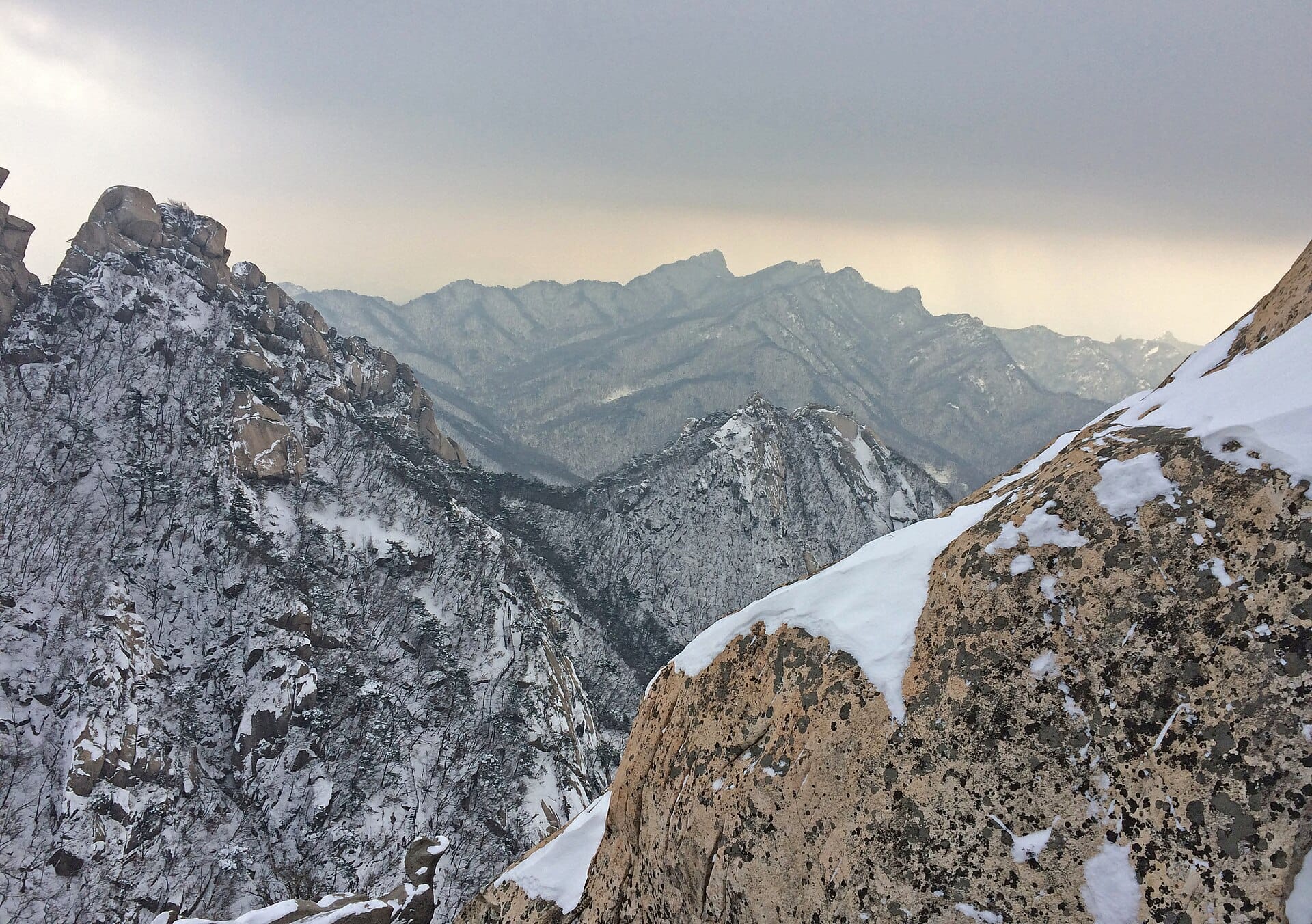
Three granite summits dominate the skyline: Baegundae (836.5m), the highest point and the goal of most day hikes; Insubong (810.5m), a sheer rock face popular with technical climbers rather than hikers; and Mangyeongdae (799.5m). Per Wikipedia’s entry on the park, its roughly five million annual visitors earned it a Guinness World Record as the most-visited national park per unit area in the world — a useful way to set expectations before you go: this is a genuinely busy trail system, not a quiet wilderness escape.
Which Trail Should You Hike to Baegundae Peak?
Two main routes get most hikers to the summit, plus a few extensions worth knowing about.
| Trail | Distance (one way) | Time | Difficulty |
|---|---|---|---|
| Bukhansanseong Course | ~3.4km | 2.5–3 hours | Moderate–hard |
| Gireum Gate route | ~3.2km | 2–3 hours | Moderate–hard |
| Uiryeong-gil (Dulle-gil) | ~6.4km loop | ~2 hours | Easy |
The Bukhansanseong Course, starting from the Bukhansanseong Park Information Center, is the most popular way up — a steady climb through forest and past sections of the old Bukhansanseong Fortress wall before the trail turns to bare granite. The Gireum Gate route is the other well-worn option, slightly shorter but no easier, reaching the same final approach to the summit.
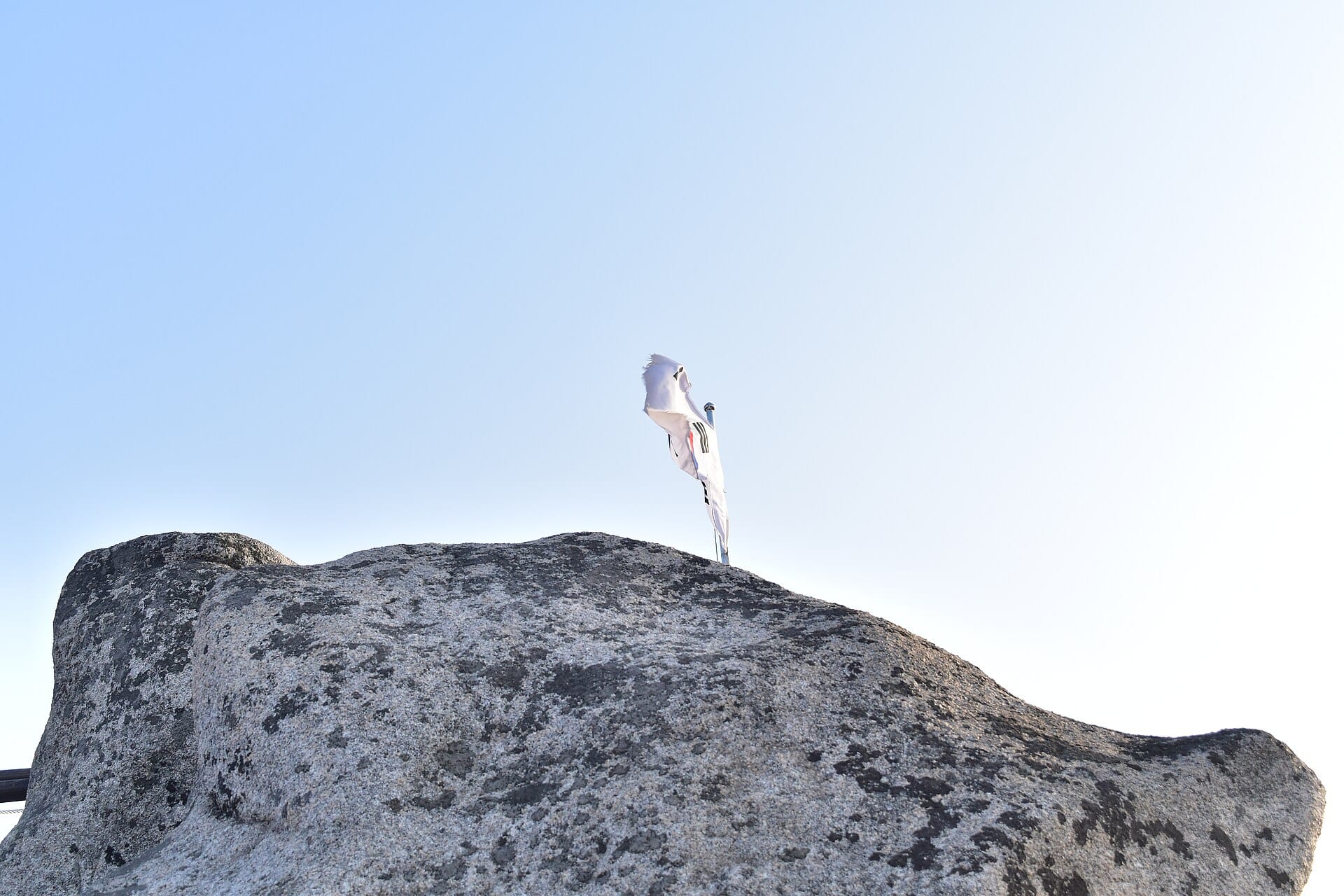
That final approach is the part to know about in advance: the last stretch to Baegundae is a near-vertical granite face with steel cables bolted into the rock and iron handrails, not a walking path. It’s manageable for anyone reasonably fit and comfortable with heights, but it isn’t a casual stroll — budget extra time here and expect a queue on busy weekends, since the summit area itself is small.
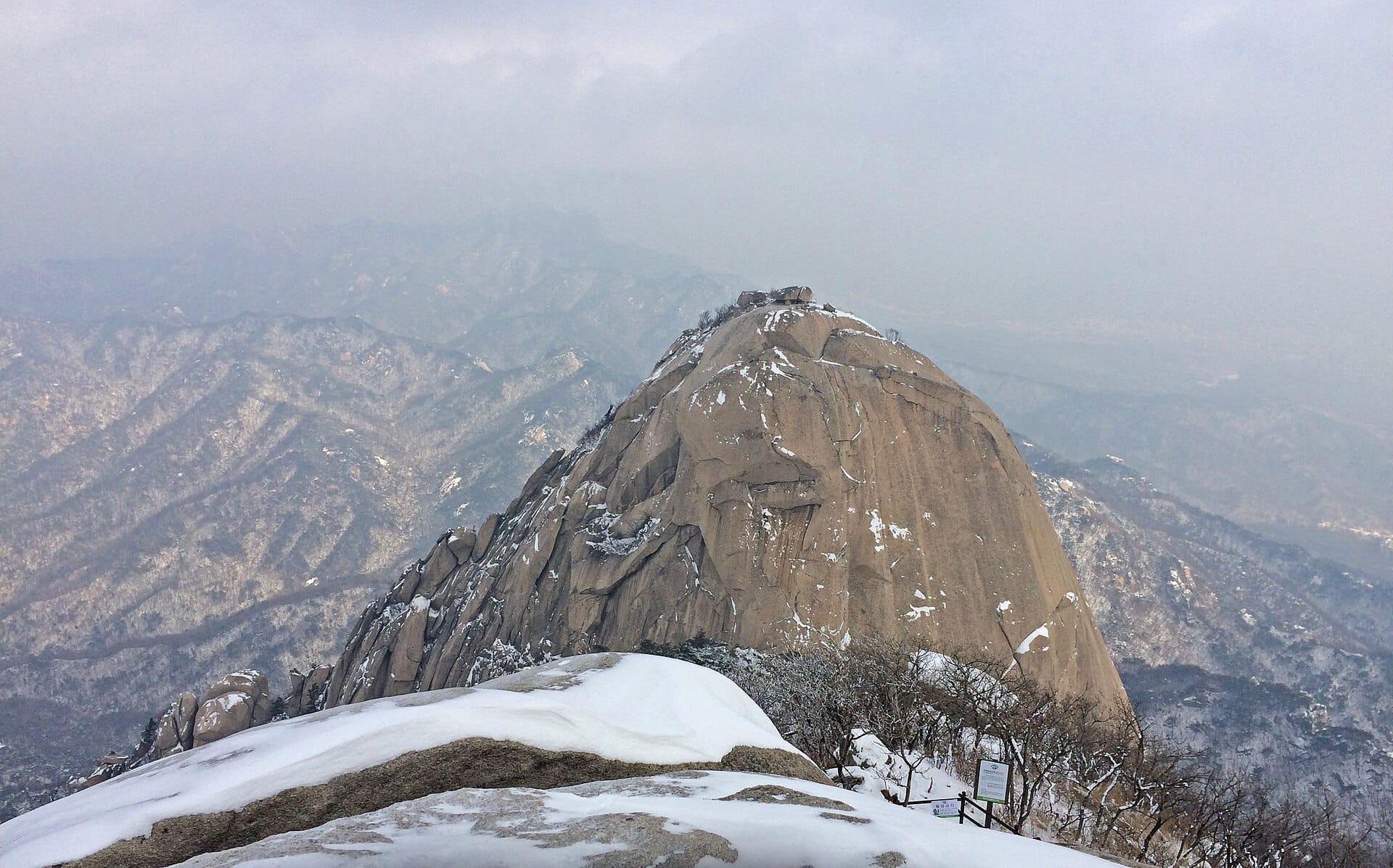
Once at the top, the reward is a 360-degree view over Seoul on one side and the folded granite ridgelines of the rest of the park on the other. If you’d rather skip the route-planning and let someone else handle the logistics, a guided Bukhansan hiking tour🎫 from Seoul bundles transport and a local guide into one booking, which is worth considering if it’s your only hike of the trip.
Is Bukhansan Beginner-Friendly?
Yes, if you pick the right trail. The Uiryeong-gil section of the Bukhansan Dulle-gil — the long perimeter walking trail that circles the whole park — runs along the pass between Bukhansan and Dobongsan with gentle grades, wooden decking, and no scrambling, making it the park’s easiest proper route. It’s the trail to choose if cable-assisted granite isn’t your idea of a good time, or if you’re hiking with kids or in ordinary sneakers rather than hiking boots.
Dobongsan, the separate peak cluster north of Uiryeong Pass, splits the difference — its main summit sits around 740m and the approach from Dobongsan Gate is less exposed than Baegundae’s final stretch, so it’s a reasonable next step up once Uiryeong-gil feels too easy. Either way, Bukhansan’s trail network is graded from easy valley walks to full ridge scrambles, so the mountain scales to whoever’s hiking it rather than forcing one difficulty on everyone.
How Do You Get to Bukhansan from Seoul?
Bukhansan is one of the easiest mountains in the world to reach from a major capital — no bus terminal, no intercity ticket, just the subway you’re already using to get around the city. There are two standard routes to the main southern trailheads:
- For the Bukhansanseong Course: take subway Line 3 to Gupabal Station (Exit 1), then bus 704 to the Bukhansanseong Fortress entrance stop.
- For the Gireum Gate route: take subway Line 4 to Gireum Station, then bus 110B or 143 to the end of the line.
Either way, plan for roughly 30 minutes to an hour door-to-trailhead from central areas like Myeongdong or Seoul Station, using the same T-money card you’d use on any subway or bus ride — our guide to getting around Seoul covers how the card and transfers work if this is your first time on the system. If you’d rather hike the northern side directly, the Seoul Hiking Tourism Center near Bukhansan-ui Station has English, Chinese, and Japanese trail information and staff who can point you to the right route for your fitness level.
Is There an Entrance Fee? What Are the Park Hours?
There’s no entrance fee — Bukhansan has been free to enter since Korea abolished national park admission charges. The park has no gates and technically operates from around 4am to 5pm, though in practice that’s a guideline for ranger services rather than a hard closing time; most hikers simply plan to be off the exposed summit sections well before dark, especially in autumn and winter when the sun drops early. If you’re driving rather than taking transit, parking lots near the main trailheads do charge a fee.
When Is the Best Time to Hike Bukhansan?
Autumn is the standout season — the granite peaks turn a striking mix of gold and red foliage from mid-to-late October into early November, and the clear, cool weather makes for the most comfortable climbing conditions of the year. It’s also, unsurprisingly, the most crowded window, so a weekday start well before mid-morning avoids the worst of the queues at the final Baegundae approach. Our guide to autumn foliage in Seoul covers how the citywide color timing lines up with the mountains.
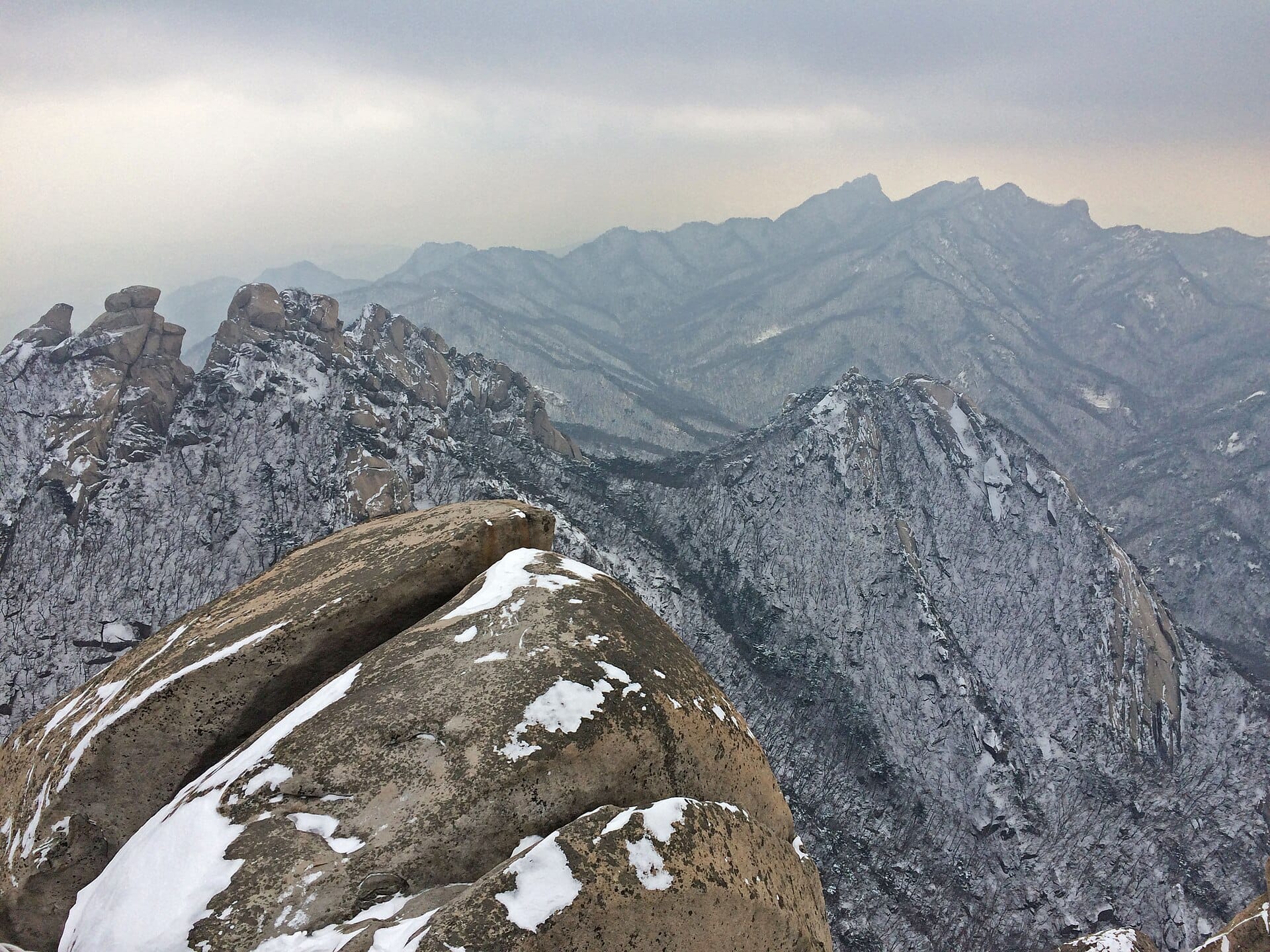
Spring brings its own draw, with azaleas and fresh green growth on the lower slopes and noticeably thinner crowds than autumn. Summer is lush but humid, with the monsoon season making the exposed granite sections slippery — check the forecast before committing to a summit attempt. Winter turns the peaks stark and beautiful but genuinely icy on the steel steps and cables, so proper traction gear matters more here than at almost any other time of year; some park authorities also rotate seasonal trail closures to let sections of the mountain recover from heavy foot traffic, so it’s worth a quick check before you set out regardless of season.
What Should You Bring?
- Real hiking shoes. The final approach to Baegundae is bare granite with steel steps and cables — sneakers with worn soles are genuinely risky here, not just uncomfortable.
- Water and a snack. There are few shops once you’re past the trailhead, and the climb runs 2.5–3 hours each way on the main routes.
- A T-money card. It covers the subway and the connecting local bus in one tap, and works the same as anywhere else in the city.
- Layers, even in autumn. Ridge-line wind at 800m runs noticeably colder than street level in Seoul.
- An early start. The park’s popularity means the last cable-assisted stretch to the summit can bottleneck badly on autumn weekends — arriving near opening beats a mid-morning start by hours.
Plan Your Trip
Start by booking your flights to Seoul✈️. Because Bukhansan is inside the city rather than a separate destination, you don’t need a special base to reach it — any well-connected Seoul neighborhood works, and our guide to where to stay in Seoul covers the best-connected areas if you haven’t picked one yet. Comparing rooms in central Seoul🏨 the night before an early trailhead start is worth it if your current base is a long ride from the northern subway lines.
Skip the route-planning. If you’d rather not manage the subway-and-local-bus chain yourself, a guided Bukhansan hike🎫 handles transport and pacing for you.
Fit it into your trip. Our guide to things to do in Seoul helps you slot a half-day hike alongside the city’s other highlights, and if the park’s temple culture caught your interest, our guide to temple stays in Korea covers how to go deeper into that side of it.
Disclosure: This post contains affiliate links. If you book through these links, I may earn a small commission at no extra cost to you. I only recommend services I’d use myself.