
Last Updated: November 2026
Quick answer: The best Busan itinerary for a first visit is three days split by area: Day 1 in the old harbor district (Gamcheon Culture Village, Jagalchi Market, BIFF Square and Gukje Market), Day 2 on Yeongdo island’s cliffs (Huinnyeoul Culture Village and Taejongdae) with Gwangalli Beach at night, and Day 3 on the east coast (Haedong Yonggungsa temple, the Blueline Park Sky Capsule and Haeundae Beach). Grouping sights this way saves hours, because Busan is long and spread out along the coast.
Busan looks compact on a map, but its highlights sit at opposite ends of a coastline that takes well over an hour to cross by subway. The most common mistake first-timers make is zig-zagging — Gamcheon in the morning, Haeundae at lunch, back to Jagalchi for dinner — and spending half the trip on trains. This 3-day Busan itinerary keeps each day in one part of the city, with realistic travel times, where to eat along the way, and what to swap in if the weather turns or you have a fourth day.
Table of Contents
- How Many Days Do You Need in Busan?
- What Does a 3-Day Busan Itinerary Look Like?
- Day 1: Gamcheon, Jagalchi and the Old Harbor
- Day 2: Yeongdo’s Cliffs and Gwangalli at Night
- Day 3: Haedong Yonggungsa and Haeundae
- Which Area Should You Stay In for This Itinerary?
- How Do You Get Around Busan?
- What If You Have a Fourth Day?
- Plan Your Busan Trip
How Many Days Do You Need in Busan?
Three days is the right amount of time for a first trip to Busan. It is enough to see the four areas most visitors care about — the old harbor, Yeongdo island, Gwangalli and Haeundae — without rushing, and to fit in a seafood market lunch, a beach evening and a temple by the sea. Two days works if you cut Yeongdo; one day is only realistic as a fast loop from Seoul, which our Busan travel guide covers along with the city’s beaches and background.
Busan is also a good place to slow down. It is Korea’s second-largest city and its biggest port, but the pace is noticeably easier than Seoul’s, and many travelers find the extra evening by the water is the part of the trip they remember most.
What Does a 3-Day Busan Itinerary Look Like?
Here is the whole plan at a glance. Each day stays in one part of the city, so most of your moving around is on foot or a short bus ride.
| Day | Area | Main stops | Evening |
|---|---|---|---|
| Day 1 | Old harbor (Jung-gu, Saha-gu) | Gamcheon Culture Village, Jagalchi Market, BIFF Square, Gukje Market, Yongdusan Park | Bupyeong Kkangtong night market |
| Day 2 | Yeongdo island + Suyeong | Huinnyeoul Culture Village, Taejongdae cliffs | Gwangalli Beach and Gwangan Bridge |
| Day 3 | East coast (Gijang, Haeundae) | Haedong Yonggungsa, Blueline Park Sky Capsule, Haeundae Beach, Dongbaekseom | Marine City skyline or an observation deck |
If you arrive by train on the morning of Day 1, the order works perfectly: Busan Station sits right next to the old harbor district. If you fly into Gimhae Airport, you can run the days in any order.
Day 1: Gamcheon, Jagalchi and the Old Harbor
Day 1 covers the oldest part of Busan, where the city’s port, markets and wartime history are concentrated. Everything is within a few subway stops on Line 1.
Morning: Gamcheon Culture Village
Start at Gamcheon Culture Village, the hillside neighborhood of pastel houses that grew out of a refugee settlement during the Korean War and was later transformed by an art project. Go early: by late morning the main lanes fill with tour groups. Busan’s city government recommends taking Line 1 to Toseong Station, leaving by exit 6, and riding village bus 1-1, 2 or 2-2 up the hill to the Gamjeong Elementary School stop. Buy the village map at the information center — it doubles as a stamp-trail — and give yourself about two hours, including a coffee on one of the rooftop terraces.
Lunch: Jagalchi Market
Head down to Jagalchi Market, a short taxi or bus ride away, for a raw-fish lunch. You pick seafood from the tanks downstairs, pay by weight, and eat it upstairs for a table fee — our guide to what to eat in Busan explains exactly how it works and what to order. If raw fish is not your thing, grilled fish and spicy fish stew are served in the same building.
Afternoon: BIFF Square, Gukje Market and Yongdusan Park
From Jagalchi it is a five-minute walk to BIFF Square, the street-food strip named after the film festival, where you should stop for a seed-stuffed ssiat hotteok. Next door, Gukje Market is a sprawling covered bazaar of clothes, kitchenware and snack stalls. Then climb (or take the outdoor escalators) up to Yongdusan Park and its tower, now branded Busan Diamond Tower, for a view back over the harbor you have just walked through.
Evening: Bupyeong Kkangtong Night Market
Finish at Bupyeong Kkangtong Market, a few minutes’ walk from Gukje Market, whose evening stalls sell fried snacks, skewers and dishes from across Asia. It is an easy, cheap dinner after a day on your feet, and you can graze rather than commit to one restaurant.
Day 2: Yeongdo’s Cliffs and Gwangalli at Night
Day 2 crosses the bridge to Yeongdo, the island just south of the old harbor, for coastal walks and sea views, then finishes on the other side of the city at Gwangalli Beach when Gwangan Bridge lights up.
Morning: Huinnyeoul Culture Village
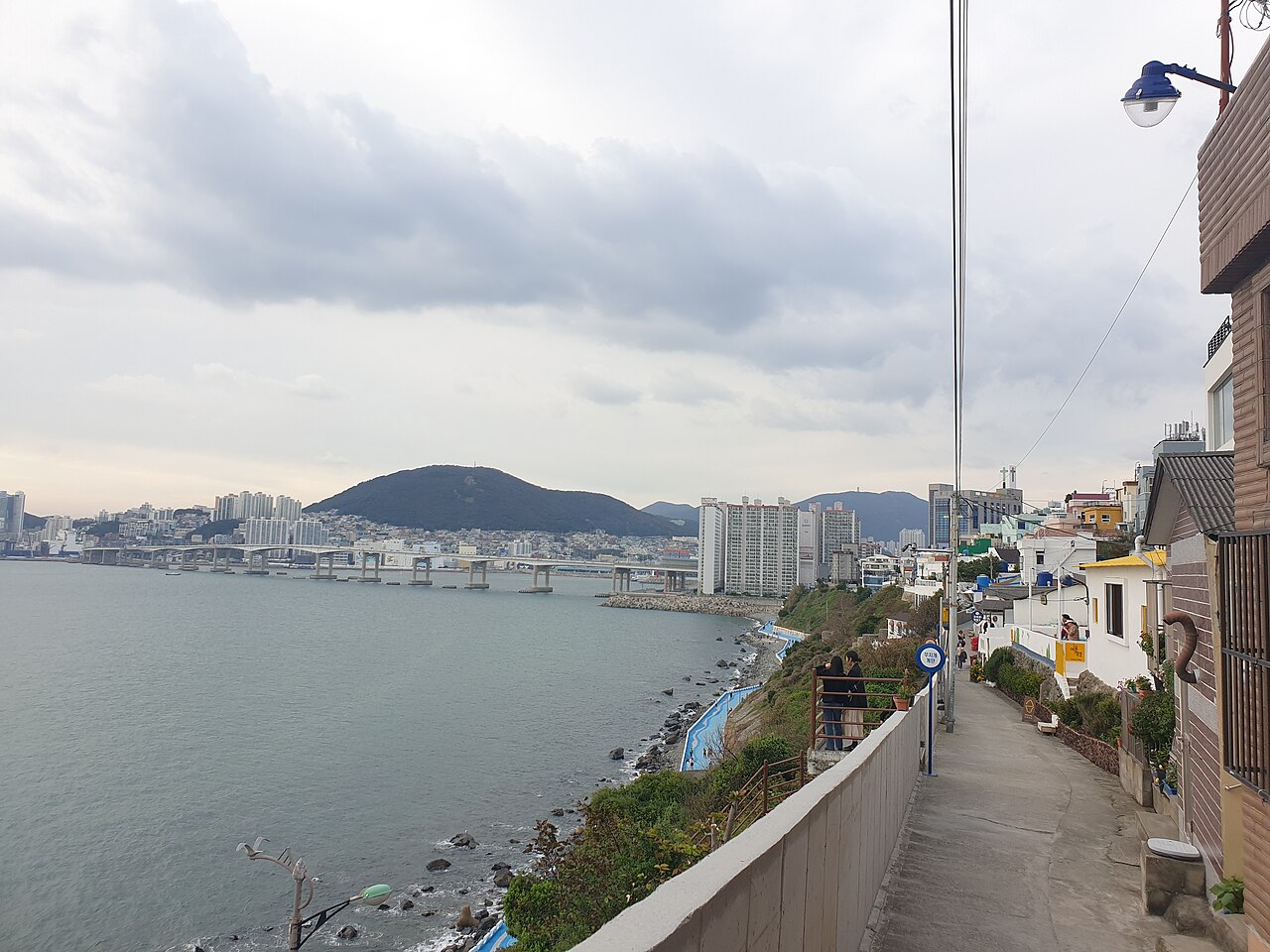
Huinnyeoul Culture Village is a strip of small white houses built along the cliffs of Yeongdo, facing the anchored cargo ships in the outer harbor. It is smaller and quieter than Gamcheon, and many visitors like it more. Walk the narrow lane along the top of the village, then take the stairs down to the coastal path at the bottom, which runs beside the water and through a short tunnel. It is a 10–15 minute bus or taxi ride from Nampo-dong.
Midday: Taejongdae
Continue to Taejongdae at the southern tip of Yeongdo, a park of pine forest and sheer rock cliffs above the open sea. The Danubi tourist train loops the park road with stops at the lighthouse and observation points, so you can ride part of the way and walk the rest. Wear proper shoes: the paths down to the rocks near the lighthouse are steep. Plan two to three hours, with lunch at the seafood stalls near the entrance or back in Nampo-dong.
Evening: Gwangalli Beach and Gwangan Bridge
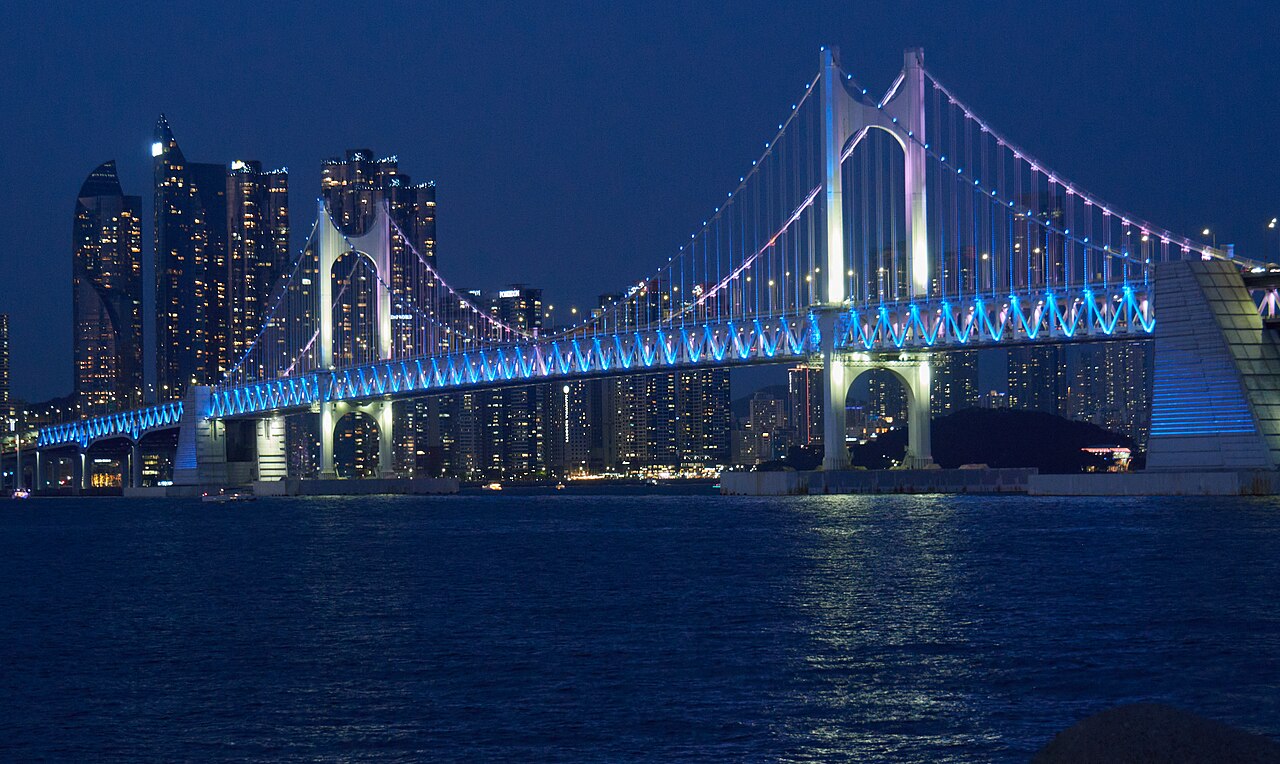
In the late afternoon, take the subway across the city to Gwangan or Geumnyeonsan Station on Line 2 and walk down to Gwangalli Beach. The beachfront is lined with cafés, bars and seafood restaurants facing Gwangan Bridge, the long suspension bridge that is lit up in changing colors after dark. Grab a table with a view, then walk the sand. On scheduled Saturday nights, the beach also hosts a free drone show over the bay — check our Gwangalli drone light show guide for the season’s dates and showtimes, and if your trip lands on one, swap Day 2 to that Saturday.
Day 3: Haedong Yonggungsa and Haeundae
Day 3 is the east coast, where Busan’s resort side is. Start at the temple, work your way back toward Haeundae along the seaside rail line, and end the trip on the city’s most famous beach.
Morning: Haedong Yonggungsa Temple
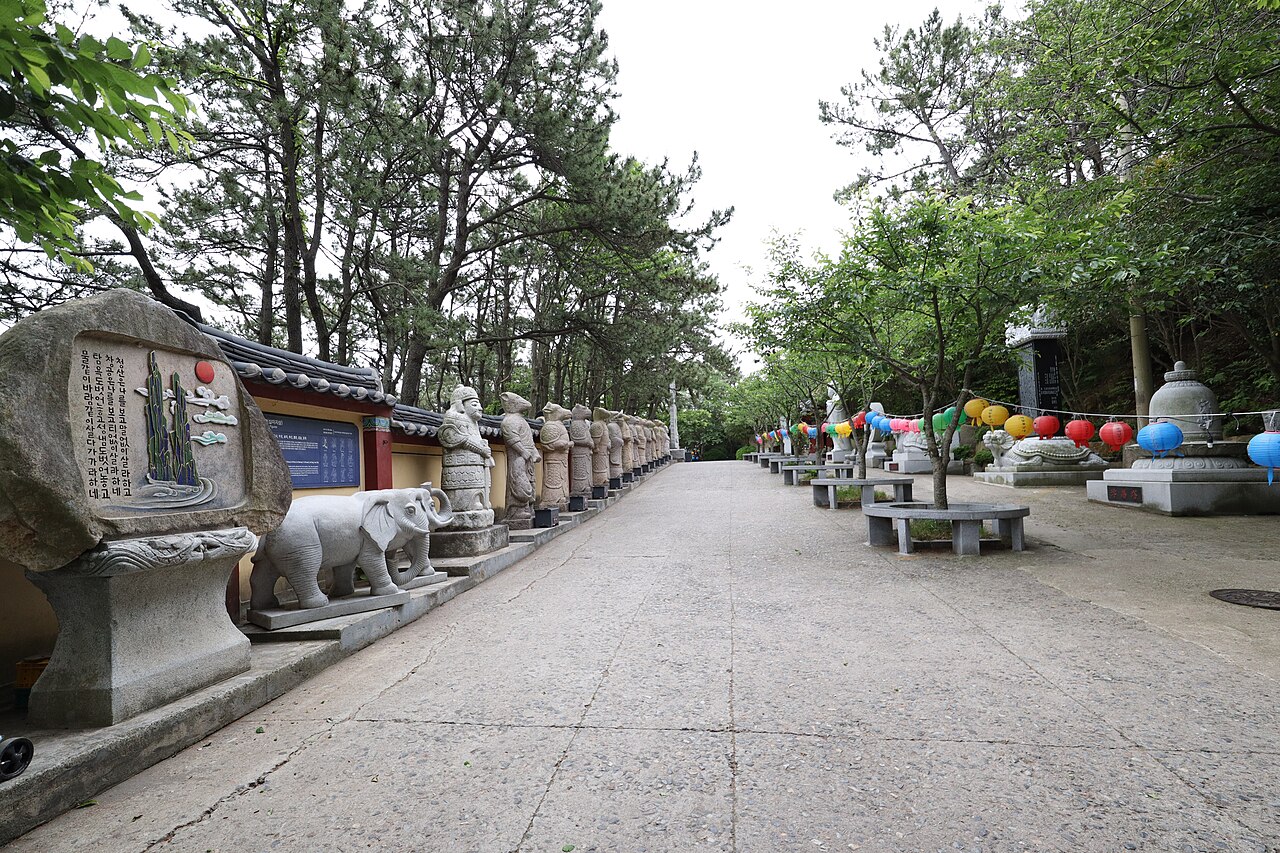
Haedong Yonggungsa is one of the few Korean Buddhist temples built right on the seashore, its halls and pagodas set on the rocks above crashing waves. It first dates back to the 14th century, and it is at its most atmospheric early in the morning, before the crowds arrive — it is especially busy around sunrise on New Year’s Day and on Buddha’s Birthday. The easiest route is the Donghae Line to Osiria Station, then a short bus ride (routes 1001 and 139 stop nearby) followed by a walk down a lane of food stalls to the temple steps.
Late morning: Blueline Park Sky Capsule
Next, ride the Haeundae Blueline Park, a restored coastal railway with two ways to travel: a slow beach train along the old track between Mipo (at the end of Haeundae Beach), Cheongsapo and Songjeong, and the elevated Sky Capsule, small colored pods for up to four people that creep along the cliffs between Mipo and Cheongsapo. Riding the capsule from Cheongsapo toward Mipo drops you at Haeundae Beach, which fits this day perfectly. Capsule slots sell out on weekends and at sunset, so it is worth reserving Sky Capsule tickets in advance🎟️. Cheongsapo itself is a small fishing harbor with grilled-clam restaurants and a sea-view skywalk — an easy lunch stop.
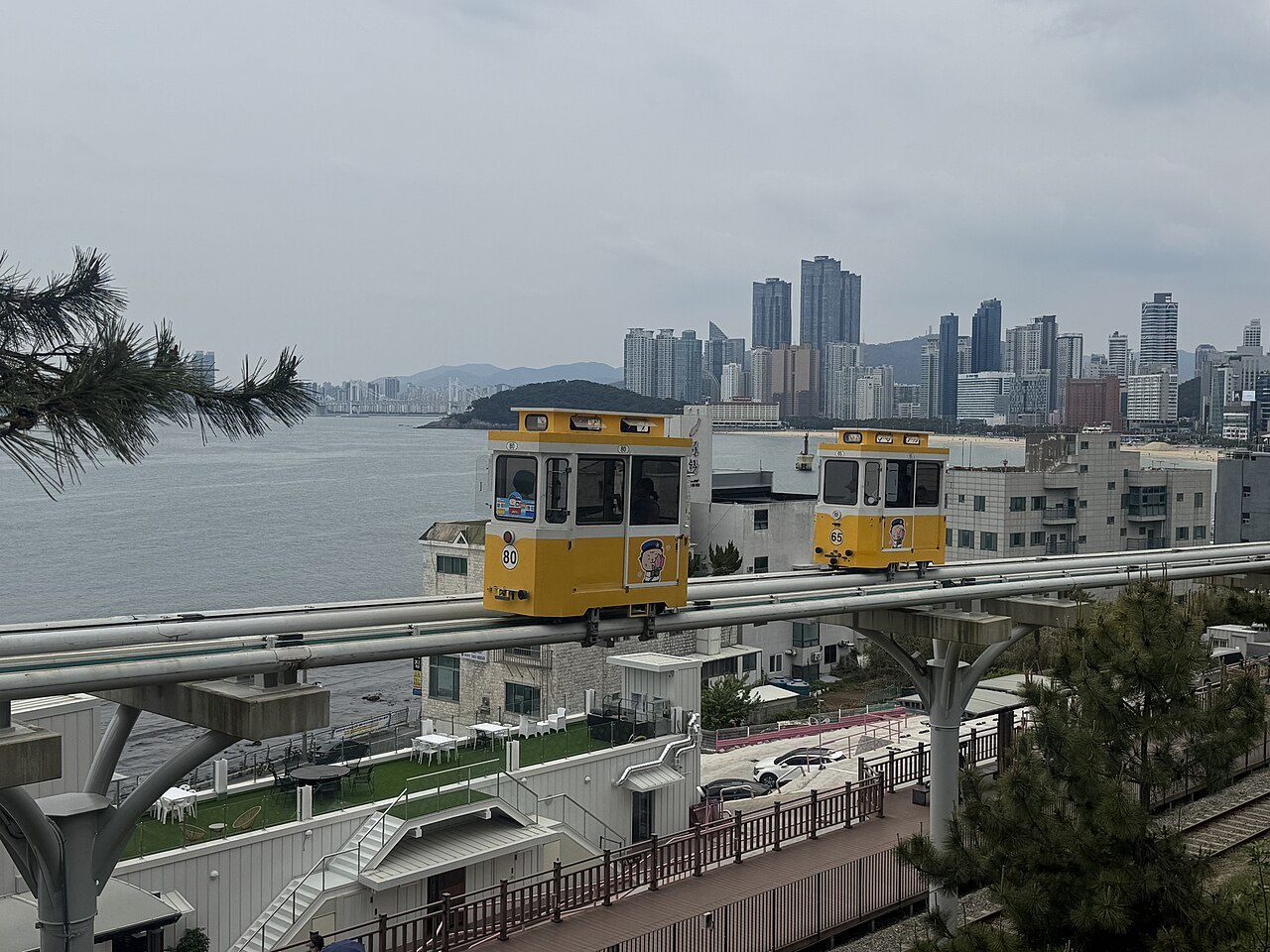
Afternoon: Haeundae Beach and Dongbaekseom
Spend the afternoon on Haeundae Beach, Busan’s long, hotel-lined stretch of sand. At its western end, a coastal boardwalk circles Dongbaekseom, a small wooded headland with sea views back along the beach and the Nurimaru APEC House, built for the 2005 APEC summit. Haeundae Market, a block back from the beach, is good for a snack of fish cake or tteokbokki.
Evening: Marine City or an observation deck
For your final evening, walk around the Marine City waterfront, where the skyscrapers across the water from The Bay 101 make Busan’s best-known night photo. Alternatively, go up to Busan X the Sky, the observation deck near the top of the LCT Landmark Tower beside Haeundae Beach, for a view over the whole coast. Finish with a seafood dinner — or, if it is crab season, make the short trip north to Gijang for steamed snow crab.
Which Area Should You Stay In for This Itinerary?
For this itinerary, stay in Seomyeon or Haeundae. Seomyeon is the city’s central transfer hub where Lines 1 and 2 cross, so it is roughly equal distance to every day of the plan, with plenty of mid-range hotels and late-night food. Haeundae is better if the beach matters more to you than convenience — Day 3 starts on your doorstep, and Days 1 and 2 are a longer subway ride. Nampo-dong is the cheapest option and makes Day 1 effortless, but leaves you far from the east coast.
| Base | Best for | Trade-off |
|---|---|---|
| Seomyeon | Balanced access, nightlife, budget to mid-range | No sea view |
| Haeundae | Beach, resort hotels, Day 3 sights | Long ride to the old harbor |
| Nampo-dong | Markets, lowest prices, train arrivals | Far from the east coast |
If you want the sand right outside, Paradise Hotel Busan🏨 sits directly on Haeundae Beach and has an outdoor hot-spring spa. For more choice, you can compare hotels in Seomyeon and Haeundae🏨 for your dates, and our guide to where to stay in Busan compares each neighborhood with specific hotels at every budget.
How Do You Get Around Busan?
The subway is the easiest way to get around Busan. The city has four metro lines with English signage, plus the Donghae Line commuter rail that runs up the east coast to Osiria and Gijang. Use a rechargeable transit card such as T-money for subways, buses and many taxis — it works in Busan exactly as it does in Seoul. For the hills (Gamcheon) and Yeongdo, buses or a short taxi ride are faster than walking from a station.
- From Seoul: the KTX runs from Seoul Station to Busan Station in about two and a half hours. Weekend and holiday seats go fast, so book your high-speed rail ticket🚄 once your dates are set. Our Seoul to Busan guide compares the train with buses and flights.
- From Gimhae Airport: the Busan–Gimhae Light Rail connects the airport with Sasang Station on Line 2 in a few minutes, and airport limousine buses run to Haeundae and Seomyeon.
- Attraction passes: if you plan to ride the Sky Capsule, cable cars and several paid sights, a Visit Busan Pass🎟️ can bundle entry. Add up the attractions you will actually visit before buying — on a market-and-beach trip it may not pay off.
- Data: a working map app (Naver Map or Kakao Map) matters more in Busan than in Seoul, because bus routes do much of the work. Our Korea SIM and eSIM guide covers the options.
What If You Have a Fourth Day?
With a fourth day, take a day trip to Gyeongju, Korea’s ancient Silla capital, which is under an hour away by KTX from Busan Station and full of royal tombs, temples and a beautiful lakeside palace site — see our Gyeongju travel guide. If you would rather stay in the city, three good options are:
- Beomeosa Temple — a large mountain temple in the forest north of the city, reached by subway and a short bus ride, and a calm contrast to Haedong Yonggungsa.
- Songdo Beach and cable car — Busan’s first public beach, with a cable car that crosses the bay; it pairs well with Day 1 if you have spare time there.
- Dongnae hot springs — the historic spa district in the north of the city, ideal on a cold or rainy day. Our Korean hot springs guide explains the etiquette.
If Busan is one stop on a longer trip, our 7-day Korea itinerary shows how to combine it with Seoul and Gyeongju.
Does this itinerary work in winter?
Yes. Busan is usually milder than Seoul in winter, and the coastal sights, markets and temples are open all year. The beaches are for walking rather than swimming from autumn to spring, and the sea wind on Taejongdae and the Sky Capsule can be sharp, so bring a windproof layer. Winter is also when Busan’s warming foods — pork-and-rice soup, fish-cake broth and crab — are at their best. In summer, start each day earlier to avoid the midday heat, and expect Haeundae to be very crowded in July and August.
Plan Your Busan Trip
Before you go, check opening days for markets and temples on the official Visit Busan tourism site, and browse VisitKorea for seasonal events that might coincide with your dates. Lock in your train or flight and your first night’s hotel early, especially for weekends.
Busan has its own international airport, so if you are coming from overseas and Busan is your main stop, it is worth taking a minute to compare fares to Busan✈️ rather than routing through Seoul. And for the practical basics — cards, cash and ATMs — our money in Korea guide has you covered.
Disclosure: This post contains affiliate links. If you book through these links, I may earn a small commission at no extra cost to you. I only recommend services I’d use myself.