
Last Updated: November 2026
Quick answer: If you are wondering what to eat in Busan, start with the three dishes the city calls its own: dwaeji gukbap (milky pork-and-rice soup), milmyeon (cold wheat noodles born during the Korean War) and ssiat hotteok (a sweet pancake stuffed with seeds). Then add a raw-fish meal at Jagalchi Market, a few skewers of Busan eomuk fish cake, and a pot of spicy nakgopsae. Most of these are cheap, filling and easiest to find around Nampo-dong and Seomyeon.
Busan does not eat like Seoul. It is a port city that took in huge numbers of refugees during the Korean War, and a surprising share of its best-known food grew out of that period: cheap, hearty dishes made from whatever was available. Add the seafood that comes in every morning, and you get a food scene that is saltier, simpler and more local than the capital’s. This guide covers the ten dishes worth planning around, what each one actually is, and where in the city to eat it.
Table of Contents
- What Food Is Busan Famous For?
- What Is Dwaeji Gukbap?
- Why Is Milmyeon a Busan Dish?
- Where Can You Get Ssiat Hotteok?
- How Do You Eat Raw Fish at Jagalchi Market?
- Is Busan Fish Cake Really Better?
- Which Other Busan Dishes Are Worth Trying?
- Where Should You Eat in Busan?
- Practical Tips for Eating in Busan
- Plan Your Busan Food Trip
What Food Is Busan Famous For?
Busan is famous for seafood and for a handful of humble dishes that started as wartime survival food. The table below is a quick cheat sheet — what to order, what it tastes like, and the area where it is easiest to find.
| Dish | What it is | Best area to try it |
|---|---|---|
| Dwaeji gukbap | Pork bone broth with sliced pork and rice | Seomyeon, near Busan Station |
| Milmyeon | Cold wheat noodles in icy broth or spicy sauce | Nam-gu, Seomyeon, citywide |
| Ssiat hotteok | Fried sweet pancake filled with seeds and brown sugar | BIFF Square, Nampo-dong |
| Hoe (raw fish) | Fish you pick from a tank, sliced to order | Jagalchi Market |
| Eomuk | Fish cake on skewers or fried in shapes | Nampo-dong, Busan Station |
| Nakgopsae | Spicy hotpot of octopus, beef tripe and shrimp | Seomyeon, Haeundae |
| Kkomjangeo | Grilled, spicy hagfish (“sea eel”) | Jagalchi area |
| Dongnae pajeon | Thick green-onion and seafood pancake | Dongnae |
| Bibim dangmyeon | Glass noodles with vegetables and spicy sauce | Bupyeong and Gukje markets |
| Gijang crab | Steamed snow crab and king crab | Gijang, north of Haeundae |
You will see plenty of national favorites too — Korean barbecue, fried chicken and tteokbokki are everywhere. If you are new to Korean food in general, our what to eat in Seoul guide explains the basics; this guide focuses on what makes Busan different.
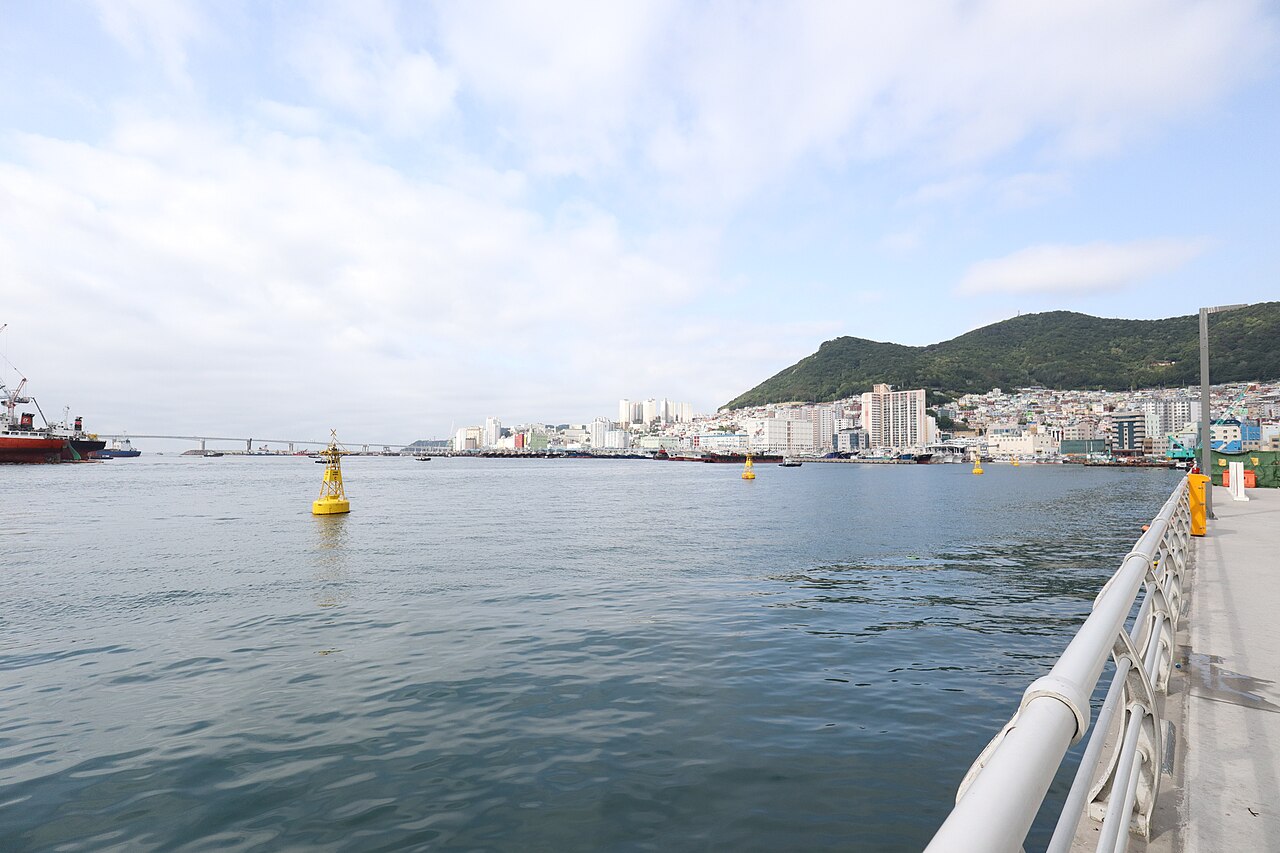
What Is Dwaeji Gukbap?
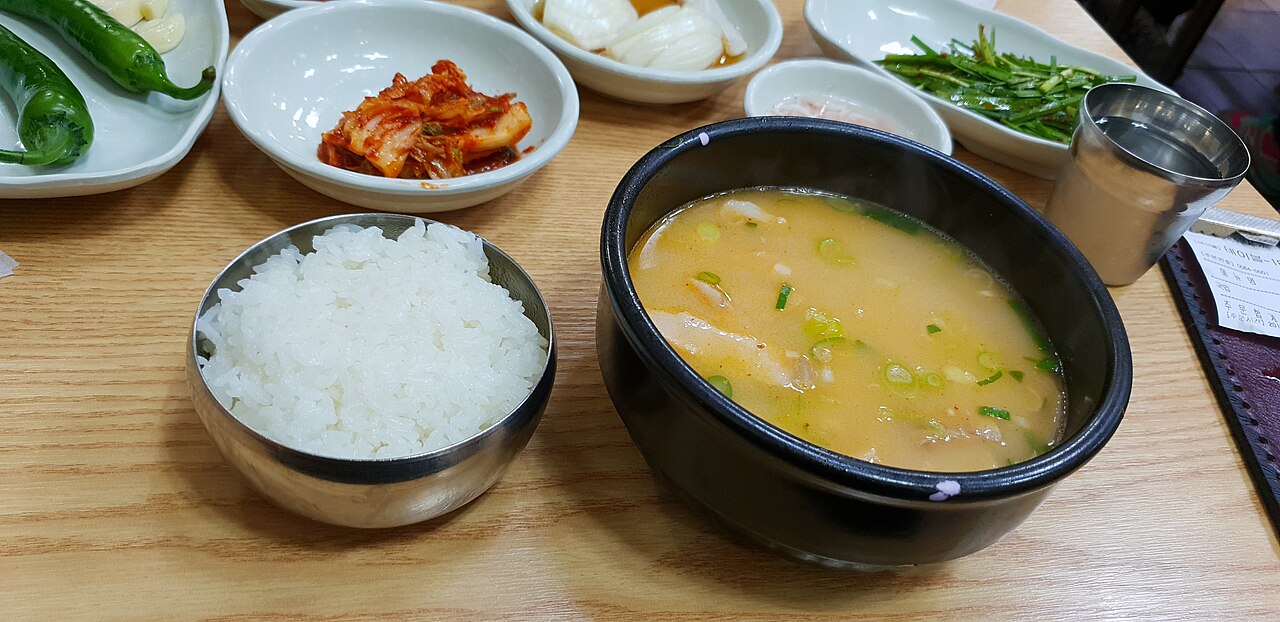
Dwaeji gukbap is a bowl of pork-bone broth, slow-simmered until it turns cloudy and rich, with thin slices of boiled pork and a bowl of rice on the side or already in the soup. It is the dish most Busan locals would name if you asked for one food that tastes like home, and it is often listed alongside milmyeon as a dish that spread through the city during the Korean War, when refugees crowded into Busan and cheap pork bones made a filling meal.
The broth arrives almost unseasoned, and that is on purpose. You season it yourself at the table:
- Saeujeot (salted fermented shrimp) — the main source of salt; add a little at a time.
- Dadaegi (red pepper paste) — for heat and color.
- Buchu (garlic chives) — dropped into the hot soup to wilt.
- Raw garlic, onion and green chili — eaten on the side, dipped in ssamjang.
Order dwaeji gukbap for the classic version, suyuk baekban if you would rather have the pork served separately on a plate, or sundae gukbap if you want blood sausage in the bowl too. Seomyeon has a well-known street of gukbap restaurants, and many places near Busan Station open early, which makes a bowl the ideal first meal after arriving by train. It is a breakfast, lunch and late-night food all at once.
Why Is Milmyeon a Busan Dish?
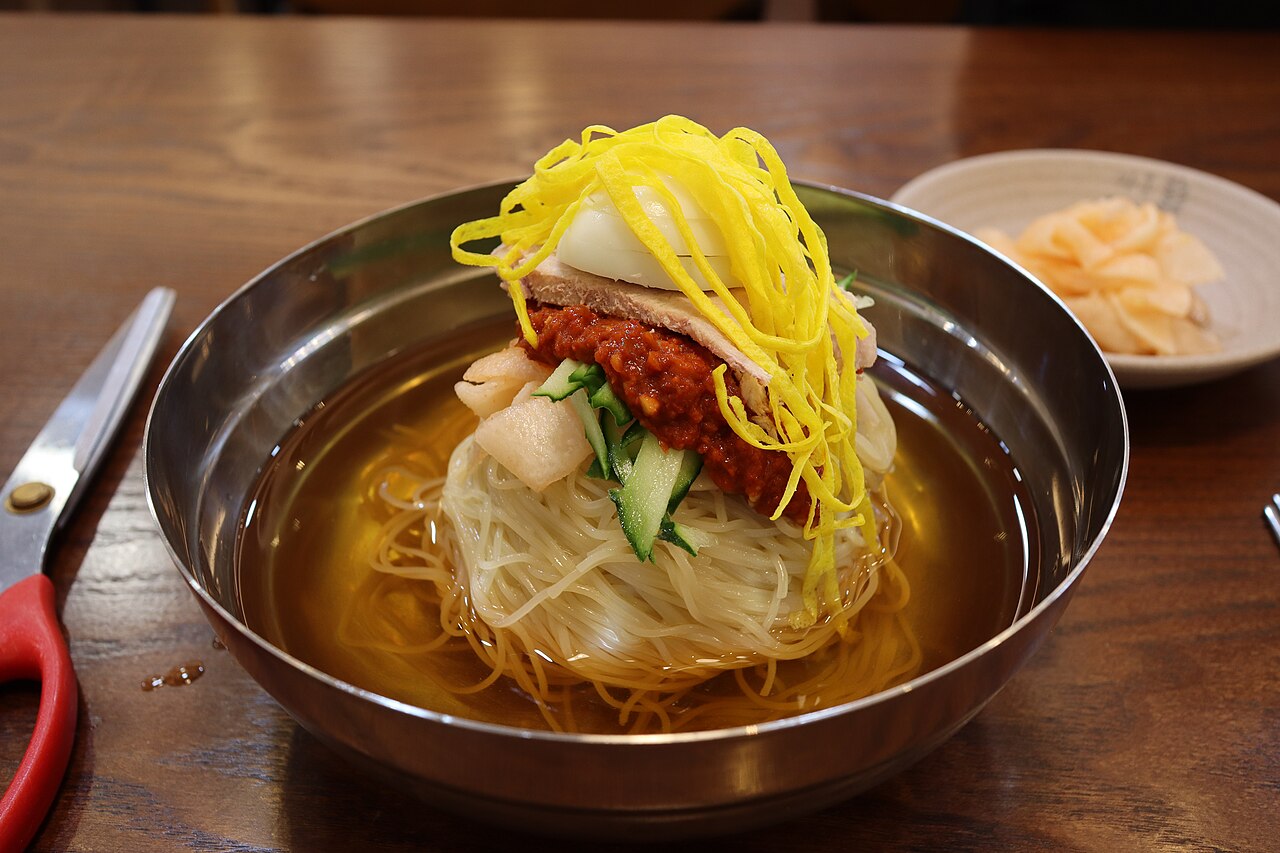
Milmyeon is a Busan dish because it was invented there, most likely by North Korean refugees during the Korean War. They missed the buckwheat cold noodles (naengmyeon) of the North, but buckwheat was scarce in the south, so they made the noodles with wheat flour from relief supplies instead — mil means wheat, myeon means noodles. The Korea Times traces the story of how these homesick noodles became a city specialty, and Busan Metropolitan City named milmyeon one of its representative local foods in 2009.
The noodles are chewier and paler than buckwheat naengmyeon, served in two styles:
- Mul milmyeon — in a cold, slushy beef-and-herb broth with a dab of red pepper sauce. The summer classic.
- Bibim milmyeon — with a sweet-spicy sauce and only a little broth. Better if you want stronger flavor.
Staff will often cut the long noodles with scissors before you start — say yes, it makes them much easier to eat. Many milmyeon shops also sell steamed dumplings (mandu), and an order of both is a classic Busan lunch. Among the city’s older names is Naeho Naengmyeon in Nam-gu, which refugee owners reopened in Busan in 1953 and which is widely seen as a milmyeon pioneer. Milmyeon is eaten all year, but it is at its best on a hot day.
Where Can You Get Ssiat Hotteok?
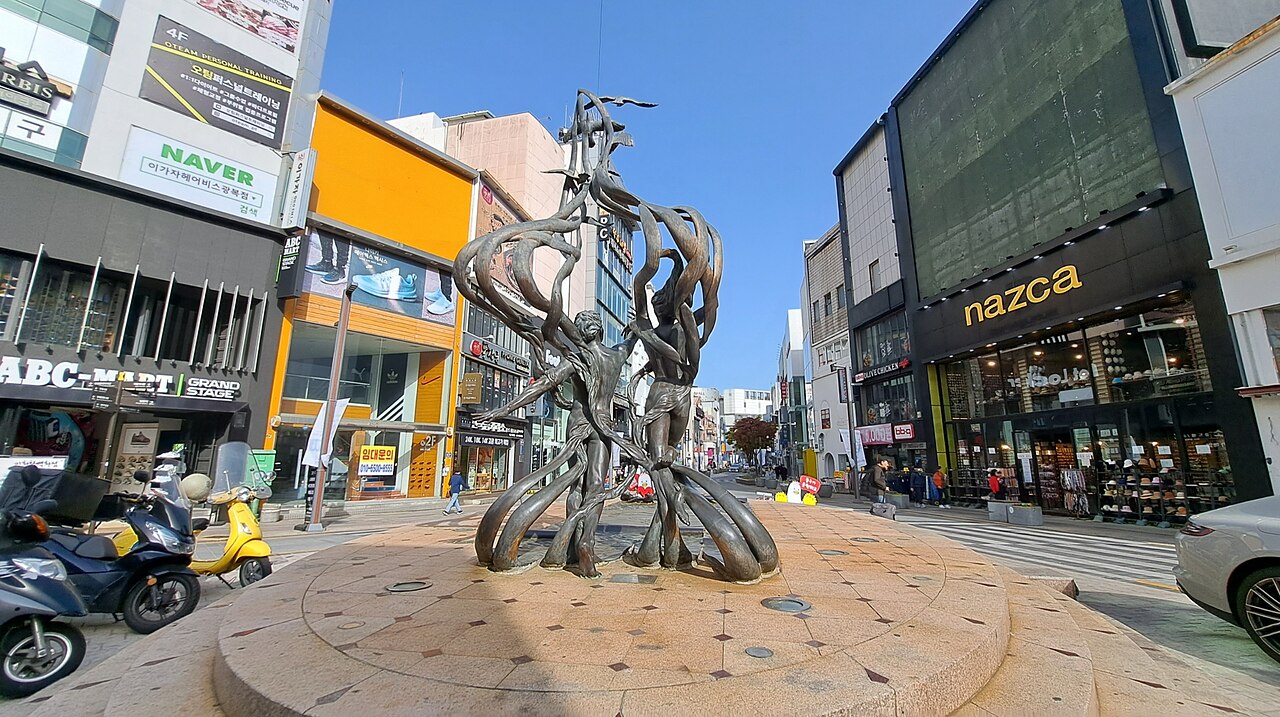
The best place to get ssiat hotteok is BIFF Square in Nampo-dong, the street-food strip named after the Busan International Film Festival. Hotteok are found all over Korea — a yeasted pancake fried on a griddle with a molten brown-sugar and cinnamon center — but in Busan the vendors cut the hot pancake open and pack it with a scoop of sunflower seeds, pumpkin seeds and peanuts. The result is crunchy, sticky and very sweet.
Eat it immediately, while it is hot, and hold the paper cup upright — the sugar syrup leaks. Lines form on weekend evenings, but they move quickly. BIFF Square is also where you will find the handprints of film stars set in the pavement, which is why the film festival crowd passes through every October; our Busan International Film Festival guide covers the festival itself.
How Do You Eat Raw Fish at Jagalchi Market?
At Jagalchi Market, you choose live seafood from a stall on the ground floor, pay by weight, and then eat it upstairs at a restaurant that slices or cooks it for a table fee. Jagalchi is often described as Korea’s largest seafood market, and its modern waterfront building is a short walk from Jagalchi Station on Busan Subway Line 1. The outdoor stalls along the harbor, run for generations largely by women traders known as the “Jagalchi ajimae”, are just as interesting as the indoor hall.
- Look before you buy. Walk a few stalls and compare prices; seafood is priced by weight and season.
- Ask for hoe. Popular choices are flatfish (gwangeo) and rockfish (ureok). Abalone, sea squirt and sea urchin are good add-ons.
- Keep the bones. Ask for the head and frame to be made into maeuntang, a spicy fish stew, to finish the meal.
- Pay the restaurant separately. Upstairs, you pay a per-person fee for side dishes, sauces and lettuce, plus drinks and any cooking.
The market keeps long hours, from early morning into the evening, but it closes on certain Tuesdays each month, and sources disagree on which ones — check the official Jagalchi Market site before you plan a trip around it. If you would rather have someone handle the ordering, a guided Busan food tour🎟️ usually includes Jagalchi and the Nampo-dong markets next door. For how the same system works in the capital, see our guide to the best markets in Seoul, which covers Noryangjin.
Is Busan Fish Cake Really Better?
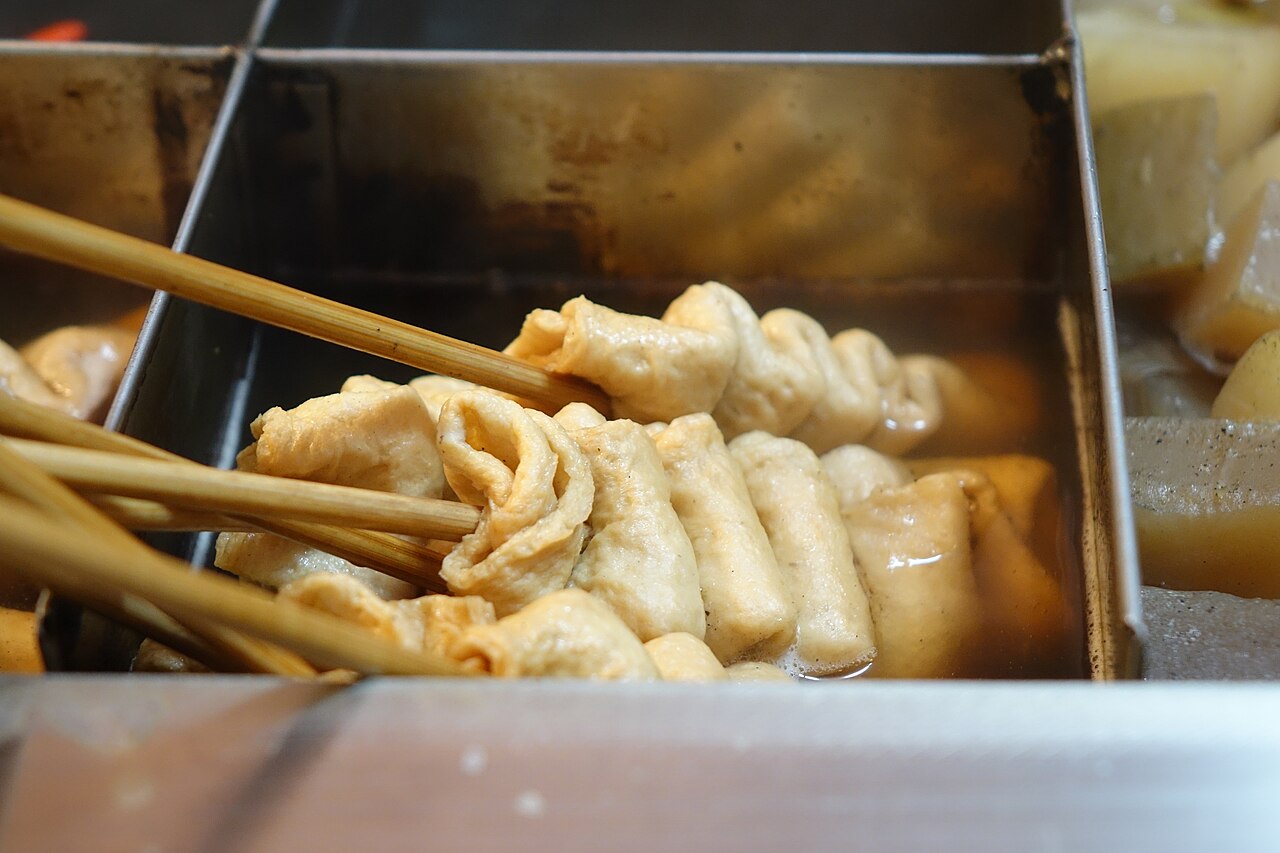
Busan fish cake (eomuk, also called odeng) has a real claim to fame: the port was where fish cake first took hold in Korea, and “Busan eomuk” is still the name Koreans associate with quality. Whether it actually tastes better is up to you, but the city takes it seriously. Instead of the thin sheets folded onto skewers that you see in Seoul, Busan shops sell fish cake in dozens of forms — stuffed with cheese, wrapped around sausages, mixed with shrimp or vegetables, and fried into fat croquettes.
The simplest way to try it is at a street stall, where skewers simmer in a dashi-style broth and you help yourself, paying by the number of empty sticks. You can drink the broth for free from a paper cup — on a cold day, it is one of the best things in the city. Several fish-cake brands also run large bakery-style shops around Nampo-dong and inside Busan Station, which are good for snacks to take on the train.
Which Other Busan Dishes Are Worth Trying?
Five more dishes round out a proper eating tour of Busan. None needs much planning; just keep an eye out for them.
Nakgopsae
Nakgopsae is a shallow red hotpot of small octopus (nakji), beef tripe (gopchang) and shrimp (saeu) — the name is simply the first syllables of all three. It is cooked at the table, spicy and rich, and you finish it by stirring rice into the leftover sauce. It is a group dinner dish, best with two or more people.
Kkomjangeo
Kkomjangeo is hagfish, usually sold in English as “sea eel”, grilled over charcoal with a spicy sauce or stir-fried with vegetables. It is chewy and strong-tasting, and older Busan drinkers swear by it with soju. The restaurants clustered around Jagalchi are the classic place to try it.
Dongnae Pajeon
Dongnae pajeon is a thick green-onion pancake from the Dongnae district in the north of the city, made with whole scallions, seafood and a batter that stays soft in the middle rather than crisp. It is traditionally eaten with makgeolli (rice wine), and Dongnae’s hot-spring area makes it an easy lunch stop.
Bibim Dangmyeon
Bibim dangmyeon is a market snack of chewy sweet-potato glass noodles tossed with fish cake, pickled radish, spinach and a spicy-sweet sauce. You eat it perched on a stool at the stalls of Gukje Market and Bupyeong Market, right beside BIFF Square. Bupyeong’s Kkangtong night market adds dozens of evening stalls selling fried snacks, grilled skewers and dishes from Southeast Asia.
Gijang Crab
Gijang, a seaside county just north of Haeundae, is where Busan goes for crab. The market there is lined with tanks of snow crab and king crab, steamed to order and served with fried rice made in the shell. It is a splurge, but it combines easily with a visit to Haeedong Yonggungsa, the seaside temple nearby.
Where Should You Eat in Busan?
Busan’s food is spread across the city, but four areas cover almost everything on this list:
- Nampo-dong and Jagalchi — the best single food area: Jagalchi raw fish, BIFF Square hotteok, Gukje and Bupyeong market snacks, and fish cake shops, all within a 15-minute walk.
- Seomyeon — the city center, with the dwaeji gukbap street, nakgopsae, and late-night barbecue and bars.
- Haeundae — beachfront seafood, Haeundae Market’s snack stalls, and nicer sit-down restaurants; Gijang is a short ride north.
- Busan Station and Choryang — early-opening gukbap, milmyeon and dumplings, ideal on arrival or before a train.
If eating is the main point of your trip, staying in Nampo-dong or Seomyeon puts you within walking distance of most of it, while Haeundae is better if you want the beach. Our where to stay in Busan guide compares the neighborhoods in detail, or you can browse hotels across Busan🏨 by area and price.
Practical Tips for Eating in Busan
Eating in Busan is easy, cheap and informal, but a few local habits help:
- Carry some cash. Most restaurants take cards, but market stalls and street vendors often prefer cash. Our money in Korea guide covers cards, ATMs and exchange.
- Check portion sizes. Gukbap, milmyeon and market snacks are fine alone; nakgopsae, barbecue and Jagalchi raw fish usually assume two or more people.
- Use a translation app. Busan’s older restaurants often have Korean-only menus, especially in markets.
- Know how the table works. Water and side dishes are free and refilled on request; you pay at the counter on the way out.
- Mind the season. Cold milmyeon tastes best in summer, while gukbap, fish cake broth and crab are winter comforts.
For the snacks you will meet at markets all over Korea, including tteokbokki and gimbap, our Korean street food guide is a handy reference.
Plan Your Busan Food Trip
Two days is enough to eat your way through Busan: one in Nampo-dong (Jagalchi lunch, BIFF Square hotteok, a Bupyeong night-market dinner) and one split between Seomyeon gukbap and a seafood dinner by the beach in Haeundae. Our Busan travel guide covers the sights to fit in between meals, and if you are in town in late November, G-STAR 2026 fills the hotels around BEXCO, so book early.
Most visitors arrive from Seoul; the KTX takes around two and a half hours, and you can book a high-speed rail ticket🚄 ahead of busy weekends — our Seoul to Busan guide compares the train, bus and plane. Busan also has its own international airport at Gimhae, so it is worth taking a minute to compare fares to Busan✈️ if you would rather fly in directly.
Disclosure: This post contains affiliate links. If you book through these links, I may earn a small commission at no extra cost to you. I only recommend services I’d use myself.