
Last Updated: October 2026
Quick answer: For most travelers, the best way to get from Seoul to Busan is the KTX high-speed train: roughly 2.5 hours station to station, departures several times an hour, and a standard-class fare of about ₩59,800 one way. Flying Gimpo to Gimhae takes under an hour in the air but usually ends up close to the train once you count airport time, and the express bus is the cheapest option but takes four hours or more.
Busan is Korea’s second city and the natural next stop after the capital, so this is one of the most common transport questions visitors ask. Below is how the three options really compare, how to book each, and which one fits your trip. If you’re still deciding whether Busan is worth the trip, start with our Busan travel guide.
Table of Contents
- What Is the Fastest Way From Seoul to Busan?
- How Does the KTX Work?
- Is Flying From Seoul to Busan Worth It?
- Should You Take the Express Bus?
- Is the KORAIL Pass Worth It?
- Can You Do Seoul to Busan as a Day Trip?
- Booking Tips That Save Time and Money
- Where to Stay When You Arrive
What Is the Fastest Way From Seoul to Busan?
The KTX is the fastest practical option once you count the whole journey, while a plane is fastest only in the air. The figures below are typical; check current timetables and fares before you travel.
| Option | Travel time | Typical one-way cost | Best for |
|---|---|---|---|
| KTX (Seoul Station → Busan Station) | About 2h 15m–2h 30m | About ₩59,800 standard; about ₩83,700 first class | Most travelers |
| Flight (Gimpo → Gimhae) | About 55 min in the air, around 3 hours door to door | Varies by airline and date | Cheap promo fares, or an onward flight from Gimhae |
| Express bus | About 4–4.5 hours with a rest stop | The lowest of the three | Tight budgets, flexible schedules |
Prices are indicative and change by date, class and how early you book.
How Does the KTX Work?
The KTX runs from Seoul Station to Busan Station in about two and a half hours, with trains from early morning until late evening. Both stations sit in the city center on the subway network, so you step off the train and straight onto a metro line with no airport transfer in between.
The operator, KORAIL, runs a sizeable fleet on the Gyeongbu line; the KTX’s background and network are well documented if you’re curious. For travelers the practical points are:
- Reserve ahead on weekends and holidays. Friday evening, Sunday afternoon and national holidays sell out; see how that played out in our Chuseok KTX ticket guide.
- Standard class is fine. Seats are wide, with outlets and luggage racks at the carriage ends; first class adds more legroom for a higher fare.
- Not every train is a KTX. Slower KORAIL services share the line and cost less, so check the train type before you buy.
- Gangnam side? The separate SRT high-speed service leaves from Suseo Station in southern Seoul, which can be closer if you’re staying around Gangnam.
You can book a high-speed rail ticket in advance🚄 in English, which avoids the language and payment hurdles that sometimes trip up first-time visitors on Korean ticketing apps. If you prefer to buy locally, our KORAIL and SR unified app guide explains the official route.
Is Flying From Seoul to Busan Worth It?
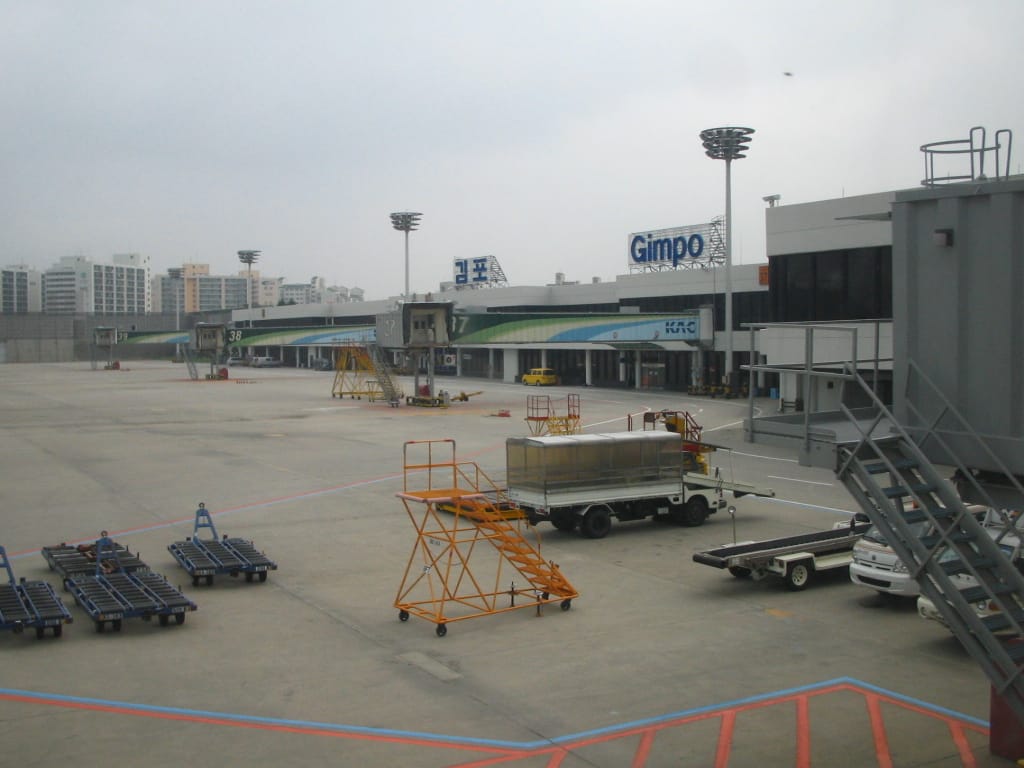
Usually not, unless you find a cheap promo fare or you’re connecting to another flight. The flight itself is about 55 minutes, but you add the trip to Gimpo, check-in and security at the start, then the ride from Gimhae Airport into central Busan. Door to door that lands near three hours, which is not far off the train.
Gimpo is the domestic hub on Seoul’s west side, reached by subway from the city; if you’re arriving internationally, our Incheon Airport to Seoul guide covers the first leg. Flying makes the most sense when you’re already at Gimpo, when you’re carrying heavy luggage that suits airline rules, or when an airline sale undercuts the train.
Should You Take the Express Bus?
Take the express bus if cost matters more than time. It is the cheapest of the three options and the seats are generally roomy, but the journey runs about four to four and a half hours with a rest-stop break, and traffic on holiday weekends can stretch it further.
Buses leave from the Seoul Express Bus Terminal and arrive at Busan’s terminals, which are a metro ride from the main sights. Overnight services exist, which can save a hotel night if you don’t mind sleeping on a coach, but for a short trip the extra hours usually cost more in sightseeing time than you save in fare.
Is the KORAIL Pass Worth It?
The KORAIL Pass pays off only if you plan several long train rides in a few days. It is sold to foreign visitors and covers unlimited standard-class travel on KORAIL services including the KTX, with extra discounts on first-class reservations; see the Korea Rail Pass overview for the current structure.
A simple test: add up the point-to-point fares of every train you’ll take. If Seoul to Busan and back is your only long trip, individual tickets are normally cheaper. If you’re also heading to Gyeongju, Jeonju or elsewhere, price both and compare. Our 7-day Korea itinerary is a good template for a route where a pass can make sense.
Can You Do Seoul to Busan as a Day Trip?
Yes, but it’s a long day. With the KTX you spend roughly five hours on trains round trip, leaving time for a couple of stops such as Gamcheon Culture Village and Jagalchi Market. A single night in Busan makes the trip far more relaxed, and two nights lets you add the beaches and the coastal temples.
If you’re building a longer loop, day trips from Seoul that don’t need a night away may be a better use of a short stay, and Gyeongju makes a natural stop on the way down or back.
Booking Tips That Save Time and Money
- Book early for peak dates. Weekend and holiday trains fill first; midweek is easy.
- Pick morning departures for a day trip. The first trains give you the longest time on the ground.
- Know your station. Seoul Station is the main KTX hub; Yongsan and some other stops serve other routes.
- Pack light. Racks are small, and Busan’s metro has plenty of stairs.
- Use the metro on arrival. Busan Station connects directly to the subway; our getting around Seoul guide explains the transit-card habits that carry over.
Where to Stay When You Arrive
Staying near Busan Station is the easiest for a one-night trip, while Haeundae and Gwangalli suit a beach stay. You can compare Busan hotels by area🏨 before booking, or read our where to stay in Busan guide for neighborhood-by-neighborhood picks.
Disclosure: This post contains affiliate links. If you book through these links, I may earn a small commission at no extra cost to you. I only recommend services I’d use myself.