
Last Updated: June 2026
Quick answer: Gyeongbokgung is the grandest of Seoul’s five royal palaces, built in 1395. Tickets are about ₩3,000 and it’s open daily except Tuesdays; entry is free if you wear a hanbok. Don’t miss the changing-of-the-guard ceremony at the main gate and the throne hall and pavilion inside.
Gyeongbokgung Palace is the heart of historic Seoul — the largest and most magnificent of the city’s five Joseon-dynasty palaces, with sweeping courtyards, a grand throne hall, and a pavilion set over a lotus pond, all framed by the mountains behind and the modern skyline beyond. For most first-timers it’s the single most rewarding sight in the city and the right place to begin understanding Korea’s royal past. This guide covers tickets and hours, the free-entry hanbok trick, the changing of the guard, what to see inside, and how to fit it into your day.
Below you’ll find everything you need to visit smoothly, plus how the palace links up with the historic neighborhoods right next door.
Table of Contents
- What Is Gyeongbokgung Palace?
- Tickets & Opening Hours
- How Do You Get In Free?
- The Changing of the Guard
- What to See Inside
- How to Get There
- When Is the Best Time to Visit?
- What’s Nearby?
- Plan Your Trip
What Is Gyeongbokgung Palace?
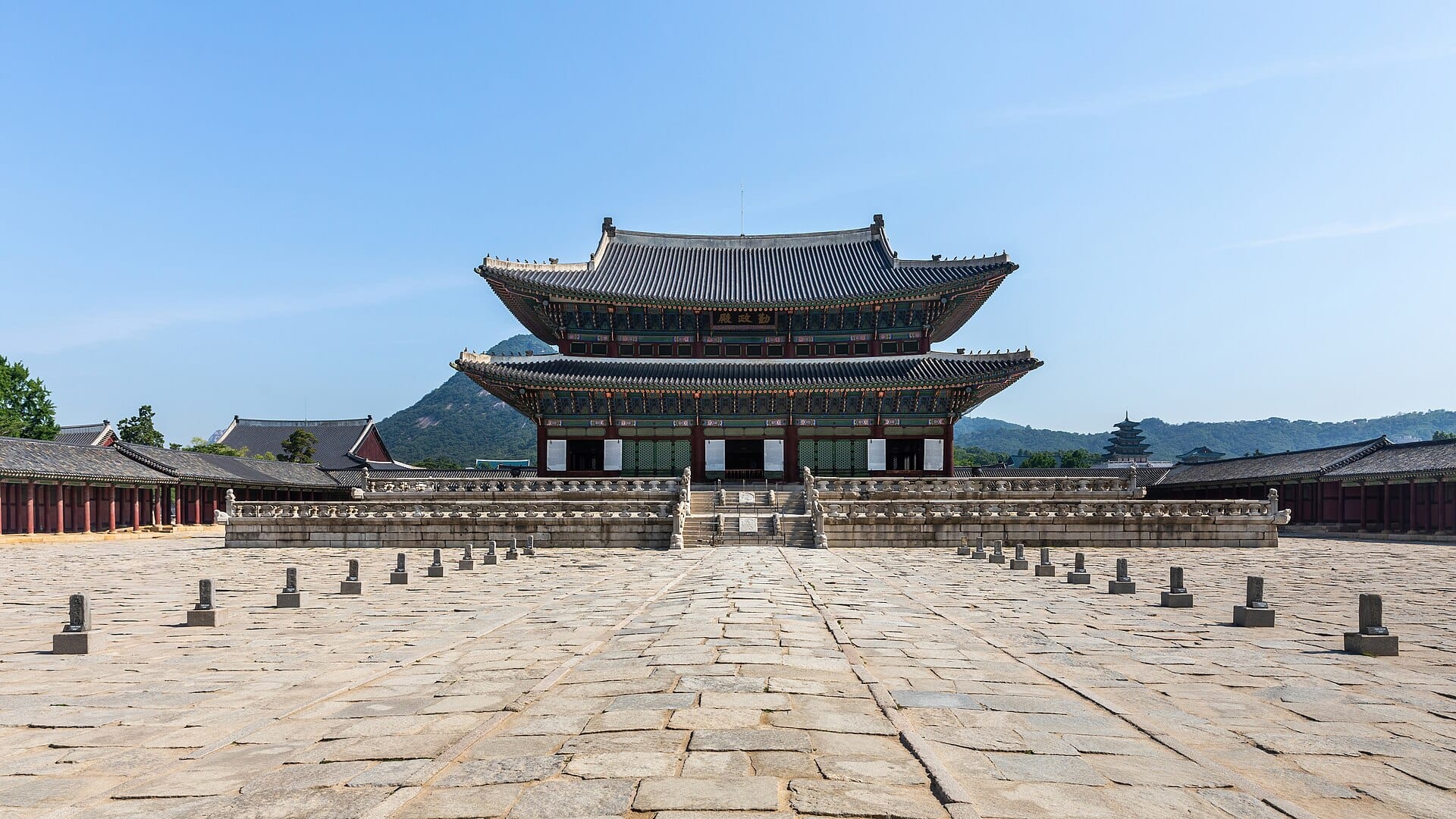
Gyeongbokgung was the main royal palace of the Joseon dynasty, first built in 1395 as the seat of the new kingdom. Its name means “Palace Greatly Blessed by Heaven,” and at its peak it held hundreds of buildings. Burned during the Japanese invasions of the 1590s and later partly demolished under colonial rule, it has been steadily restored over recent decades into the commanding complex you see today — the grandest expression of royal Korea, with the Gwanghwamun gate out front and Bugaksan mountain rising directly behind. Walking through its gates, with palace rooftops layered against the glass towers of downtown, is one of the defining images of Seoul.
Gyeongbokgung Tickets & Opening Hours
Admission is inexpensive — around ₩3,000 for adults, with discounts for children, and you buy a ticket at the gate or use a combined royal-palace pass if you plan to see several. The palace is open daily except Tuesdays, typically from 9 AM, with closing time shifting a little by season (later in summer, earlier in winter), and last admission about an hour before close. Always check the current hours before you go, as they adjust through the year.
A practical note: because Gyeongbokgung closes on Tuesdays, the nearby Changdeokgung and Deoksugung palaces close on Mondays instead, so you can always find a palace open on any given day. If you want context as you walk, free English-language guided tours run at set times daily, or you can book a guided palace tour or city pass🎫 that bundles entry with other sights.
How Do You Get Into Gyeongbokgung for Free?
Wear a hanbok. Anyone in traditional Korean dress gets free entry to all of Seoul’s royal palaces, which is why you’ll see the courtyards full of visitors in flowing silk. Rental shops cluster around the palace and nearby Bukchon, renting a full outfit for a few hours at a modest price — you pick a style, they help you dress, and you keep it for the day. It saves the ticket cost, makes for the trip’s best photos against the palace backdrop, and is genuinely fun. Our hanbok rental guide covers where to rent, what it costs, and how it works.
The Changing of the Guard Ceremony
One of the palace’s signature draws is the royal guard-changing ceremony at the main Gwanghwamun gate, a colorful re-enactment with guards in period uniforms, banners, and traditional music. It usually runs twice a day (commonly around 10 AM and 2 PM) and is free to watch from the gate plaza — you don’t even need a palace ticket. It’s cancelled in extreme weather and on the Tuesday closure, so time your visit to catch it if you can; arriving for the morning ceremony and then touring the palace afterward is a popular plan.
What to See Inside
The grounds are large, so give yourself an hour or two. The highlights anchor a visit:
- Geunjeongjeon — the grand throne hall, where kings held state affairs, set in a vast stone courtyard.
- Gyeonghoeru Pavilion — a stately banquet hall on stone pillars, reflected in its lotus pond; one of the most photographed spots. Normally viewed from outside, but a limited fall 2026 program opens its interior on select dates.
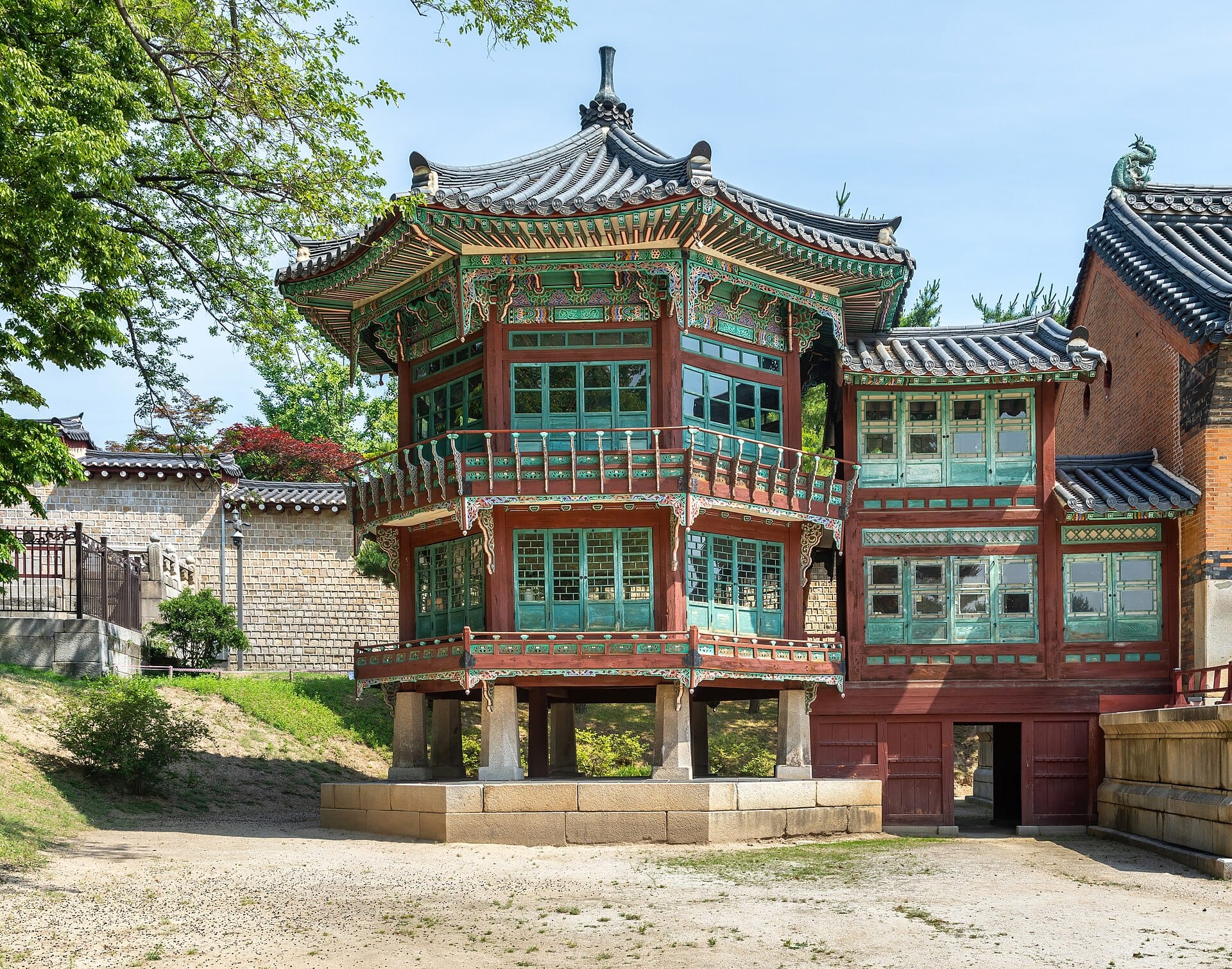
- Hyangwonjeong — a smaller, picture-perfect pavilion on an island, reached by a wooden bridge.
- The National Folk Museum — on the palace grounds and worth a look for everyday Korean history.
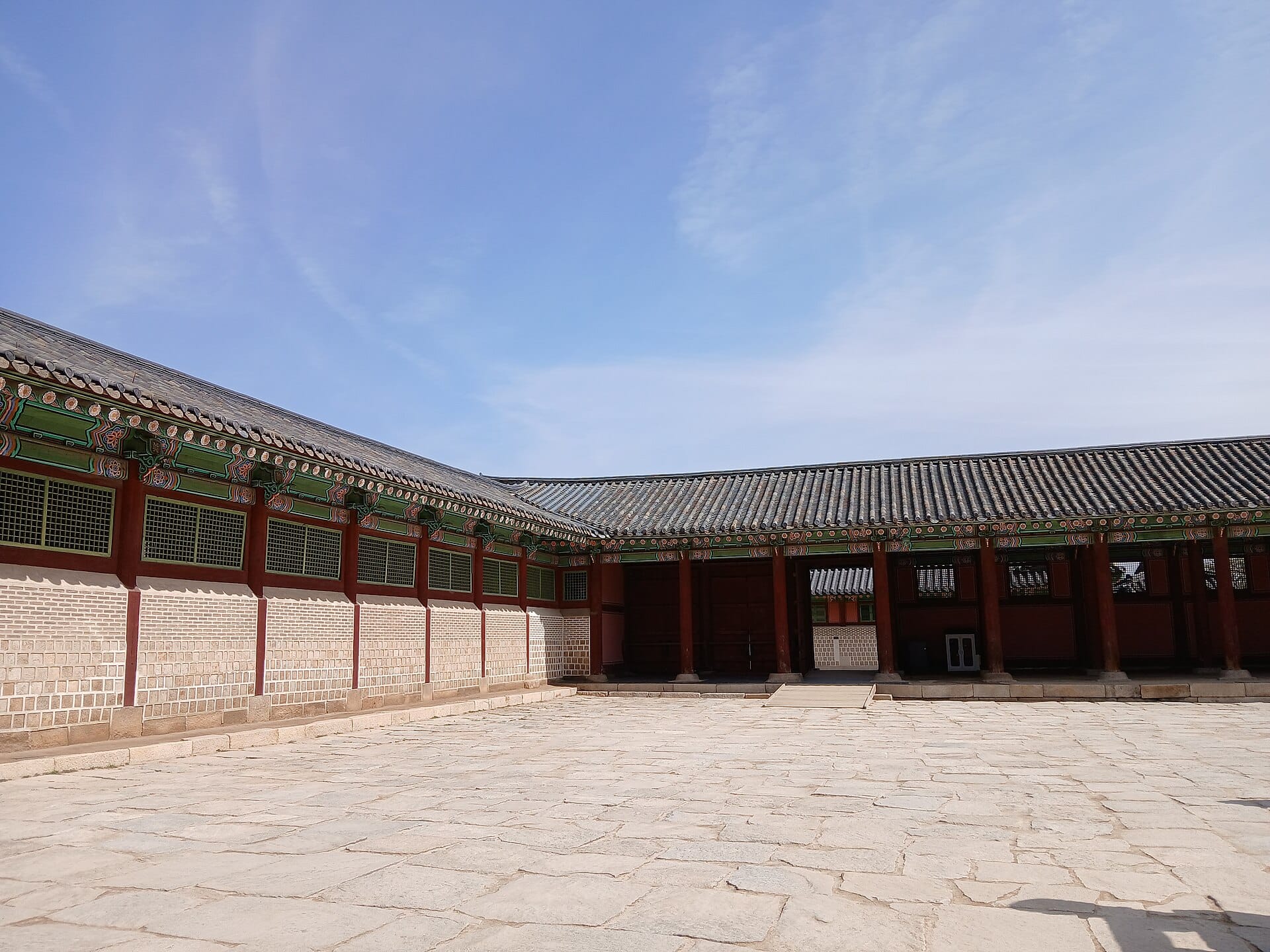
- The rear living quarters — quieter halls and gardens where the royal family lived, away from the ceremonial front.
How to Get There
The palace is dead simple to reach. Gyeongbokgung Station (Line 3, Exit 5) opens almost at the palace wall, and Gwanghwamun Station (Line 5) is a short walk to the front gate. It’s also walkable from Bukchon, Insadong, and much of the historic center. Our guide to getting around Seoul covers the subway and the T-money card that makes it effortless.
When Is the Best Time to Visit Gyeongbokgung?
Go early in the morning, right after opening, to beat the tour groups and catch the softest light on the rooftops — then stay for the 10 AM guard ceremony. Spring and autumn are the loveliest seasons, when the palace grounds bloom with cherry blossoms or blaze with foliage, while a fresh snowfall in winter turns it into a postcard. Avoid midday on weekends if you can, when the courtyards are busiest. Whatever the season, a clear morning gives you the palace at its most photogenic, with the mountains crisp behind the gates. If your visit lands in early-to-mid October, check whether it overlaps with the Royal Culture Festival, which adds extra programming here and across Seoul’s other palaces and Jongmyo Shrine.
What’s Nearby?
Gyeongbokgung sits at the center of historic Seoul, so it pairs naturally with the sights around it. The preserved lanes of Bukchon Hanok Village and Insadong are a short walk east, Changdeokgung and its Secret Garden are nearby, and the Cheonggyecheon stream and downtown are a quick stroll south. It’s easy — and rewarding — to build a whole day around the palace. For the wider city, our guide to things to do in Seoul sets out the rest of the highlights.
Plan Your Trip
Start by booking your flights to Seoul✈️. Once your dates are set, here’s how to plan the rest.
Build a historic day. Pair the palace with Bukchon and a hanbok in our 4-day Seoul itinerary, and rent traditional dress with our hanbok rental guide.
Sort the basics. Stay central with our guide to where to stay in Seoul — or book a palace tour or Seoul pass🎫 to bundle entry with the city’s other sights.
Disclosure: This post contains affiliate links. If you book through these links, I may earn a small commission at no extra cost to you. I only recommend services I’d use myself.