
Last Updated: June 2026
Quick answer: The Korean street food to try is tteokbokki, gimbap, hotteok, twigim, and fish-cake skewers, found cheapest and freshest at Gwangjang Market and the evening stalls of Myeongdong and Hongdae — most snacks cost ₩1,000–5,000 and stalls are usually cash-only.
Korean street food is one of the great joys of a trip to Seoul — cheap, fast, endlessly varied, and best eaten standing up from a steaming stall as the evening crowds flow past. From chewy rice cakes in fiery red sauce to fish-shaped pastries and sizzling pancakes, the city’s markets and night-time streets are a moveable feast that costs only a few thousand won to graze across. For many visitors, it’s the most memorable eating they do in Korea.
This guide covers the must-try snacks, the best places to find them, what things cost, and how to order with confidence.
Table of Contents
- What Is Korean Street Food?
- Must-Try Korean Street Food
- Where to Find the Best Street Food
- How Much Does It Cost?
- How to Order Like a Local
- Is Korean Street Food Safe to Eat?
- Tips for Eating Street Food
- Plan Your Trip
What Is Korean Street Food?
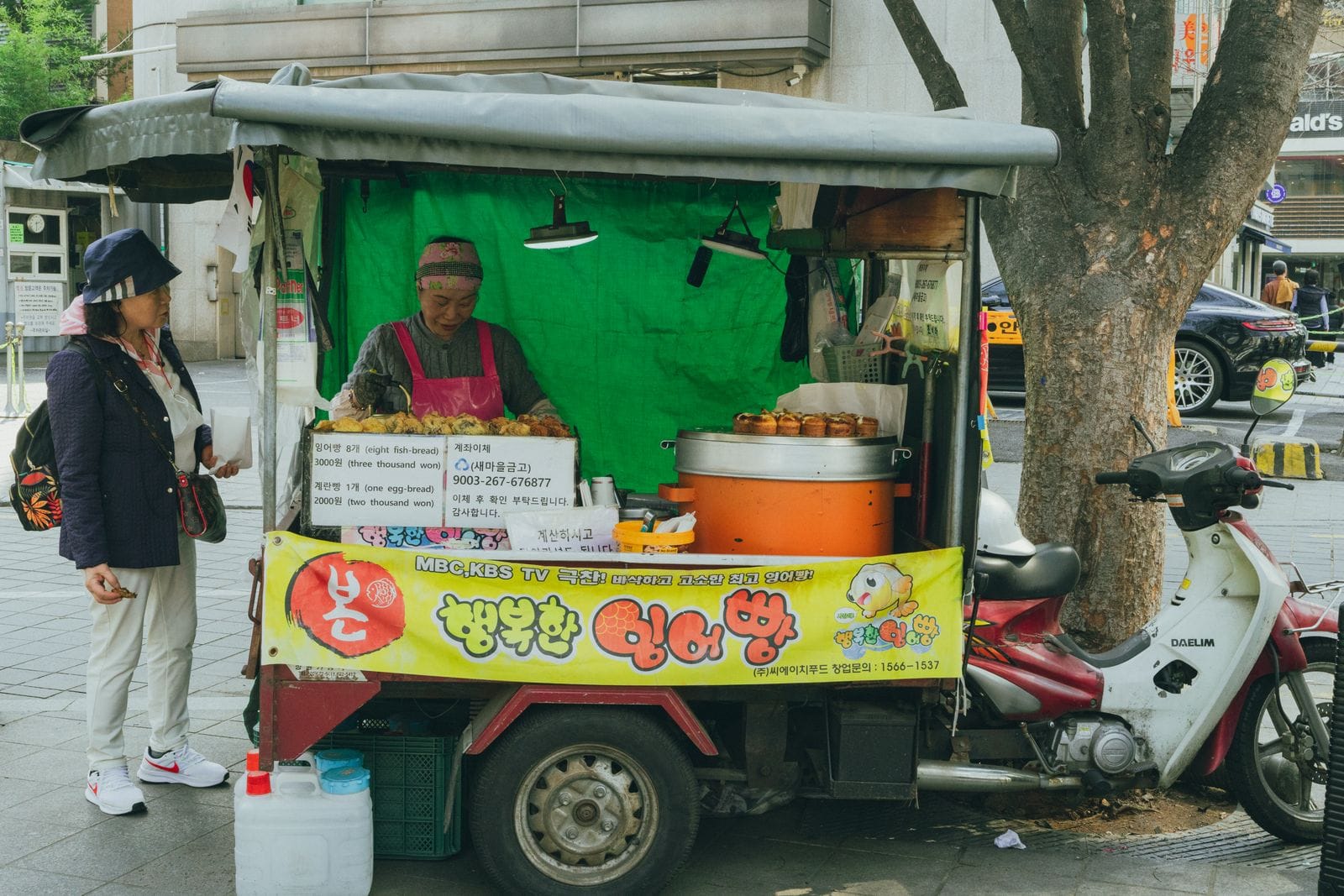
Korean street food is the world of cheap, ready-to-eat snacks sold from market stalls, food carts, and the orange-tented pojangmacha that pop up on city streets after dark. It runs from quick handheld snacks to small plates you eat on the spot, and it’s woven into daily life here — a between-meals bite, an after-work nibble with a drink, a market lunch. It’s also a brilliant entry point to Korean cuisine: nothing is fancy, everything is fresh, and you can try a dozen things in an afternoon for the price of one sit-down meal.
Must-Try Korean Street Food
The classics to seek out:
| Snack | What it is |
|---|---|
| Tteokbokki | Chewy rice cakes simmered in sweet-spicy red sauce — the headliner |
| Hotteok | A griddled pancake filled with melted brown sugar and nuts |
| Gimbap | Seaweed-and-rice rolls with various fillings |
| Twigim | Korean tempura — fried veg, squid, and dumplings |
| Eomuk / odeng | Fish-cake skewers in warm broth, perfect in winter |
| Gyeranppang | A sweet little bread baked with a whole egg inside |
| Bungeoppang | A fish-shaped pastry filled with red-bean paste |
| Bindaetteok | Crispy mung-bean pancakes, a Gwangjang Market specialty |
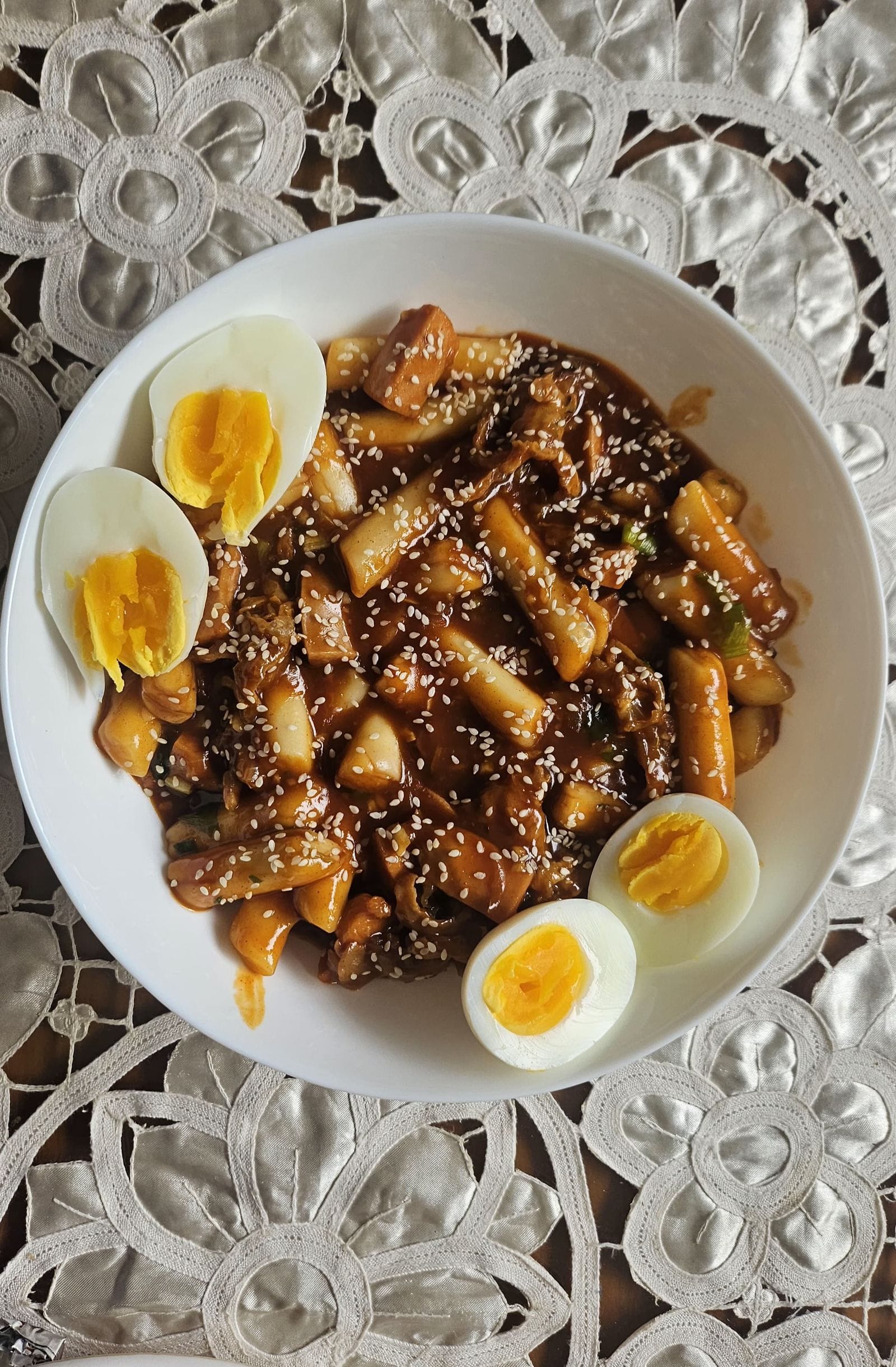
Don’t overthink it — point at what looks good and what the locals are queuing for. The best stalls are usually the busy ones.
Where to Find the Best Street Food
A few areas stand out for grazing:
- Gwangjang Market — the legendary traditional market, famous for bindaetteok, mayak gimbap, and raw beef; the most authentic stop. It is a short walk from the Dongdaemun hotel cluster, which our Dongdaemun stay guide covers.
- Myeongdong — the most visitor-friendly, with an evening row of stalls doing fried chicken skewers, tornado potatoes, and egg bread. Staying nearby turns it into a nightly stop; our guide to where to stay in Seoul compares it with other bases.
- Hongdae — younger, cheaper, and lively, with stalls feeding the night crowds.
- Namdaemun Market — a sprawling old market with hearty stall food and a working, local feel.
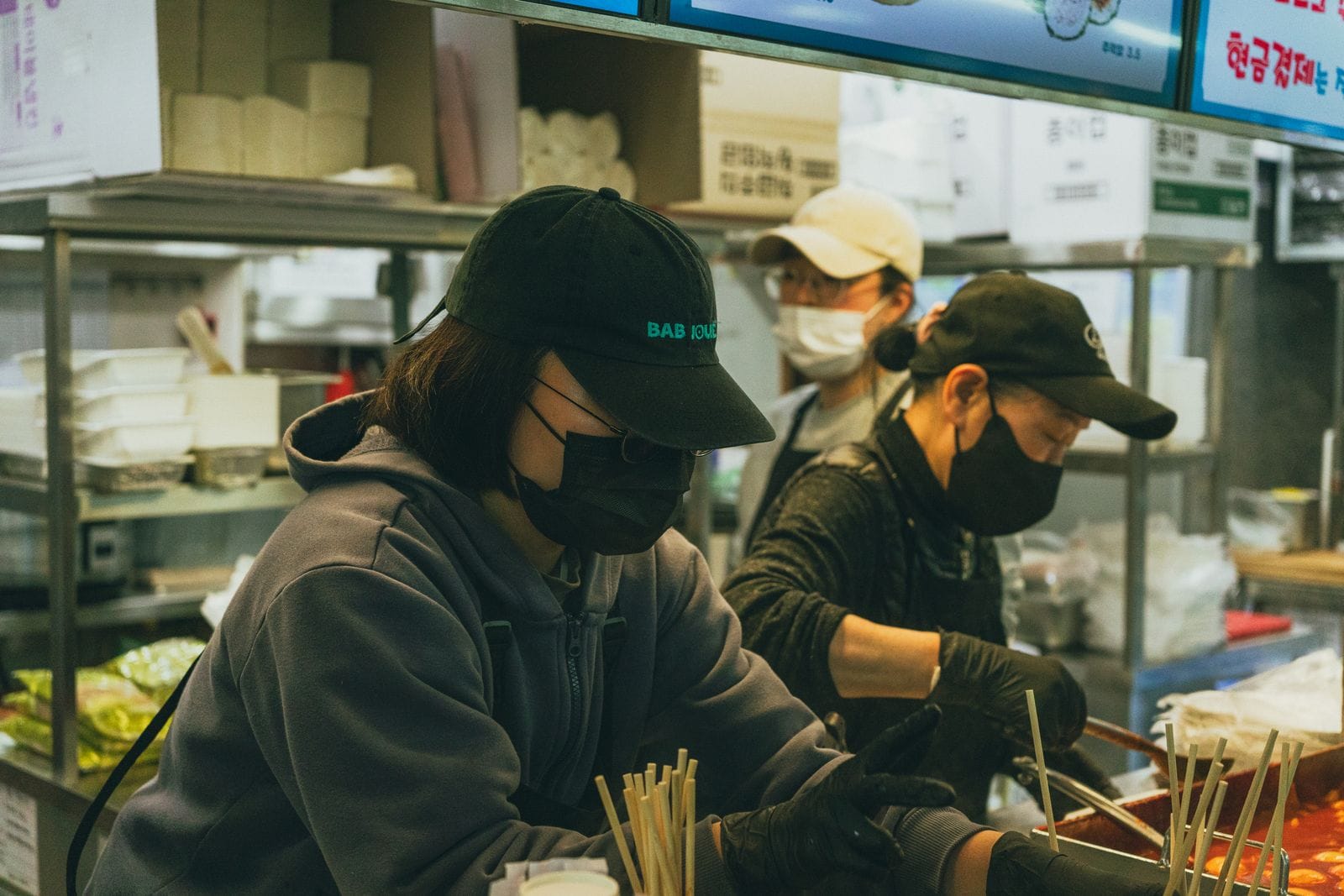
Timing matters as much as place. Many street-food rows are at their best in the evening, when the after-work and night crowds bring the stalls to life and the orange pojangmacha tents go up around the city. Traditional markets like Gwangjang, by contrast, are liveliest by day and into the early evening before they wind down. Whichever you pick, come with an appetite and a plan to graze rather than commit to one thing — the joy is trying a little of everything across several stalls, following your nose from one to the next.
For sit-down dishes to balance the snacking, our guide to what to eat in Seoul covers the BBQ, stews, and noodles worth a table.
How Much Does It Cost?
Street food is gloriously cheap. Most snacks run around ₩1,000–5,000 each — a cup of tteokbokki, a hotteok, or a few skewers costs little more than pocket change, and you can eat your fill across several stalls for under ₩15,000. It’s some of the best value eating anywhere in the city, which is part of what makes it such a draw for budget travelers; our guide to Seoul on a budget leans on exactly this.
How to Order Like a Local
Ordering is easy even without Korean. Point at what you want, hold up fingers for how many, and pay — many stalls are cash-only, so carry small bills. Some stalls have a standing counter where you eat on the spot; others hand you a paper cup or tray to take away. At shared-broth stalls (like fish cakes), you typically help yourself to a skewer and a cup of the free broth, then pay for what you ate. A smile and a “juseyo” (please) go a long way.
Is Korean Street Food Safe to Eat?
Generally, yes — Korean street food is safe, and travelers rarely run into trouble with it. Hygiene standards are high, the busy stalls have rapid turnover so food is fresh and hot, and markets are regulated. The usual sensible rules apply: favor stalls with a queue and a brisk pace, go for food that’s cooked or fried to order over things sitting out, and trust your nose. If you have a sensitive stomach, ease in rather than eating a dozen new things at once.
Spice is the more common surprise than safety. Some staples — tteokbokki above all, plus certain sauces — carry real heat, while plenty of others (gimbap, hotteok, twigim, egg bread) are mild. If you’re spice-shy, pair a fiery snack with a sweet or starchy one, and remember a cup of the free fish-cake broth or a drink cools things down fast.
Tips for Eating Street Food
- Carry small cash. Most stalls don’t take foreign cards.
- Follow the queues. Busy stalls mean fresh food and fast turnover.
- Come hungry in the evening. Many street-food rows come alive after dark.
- Mind the spice. Tteokbokki and some sauces pack heat — pair with a mild snack if you’re sensitive.
- Try a guided food tour. A local can take you to the stalls and dishes you’d never find alone.
Plan Your Trip
Start by booking your flights to Seoul✈️. Once your dates are set, here’s how to plan the rest.
Go deeper with a guide. You can join a Seoul street-food tour🎫 that walks you through the markets and orders the local favorites for you.
Build it into your days. Pair a market crawl with our 4-day Seoul itinerary, and use our guide to getting around Seoul to reach the markets.
Disclosure: This post contains affiliate links. If you book through these links, I may earn a small commission at no extra cost to you. I only recommend services I’d use myself.