
Last Updated: August 2026
Quick answer: Jeonju is Korea’s food capital and home to the country’s largest hanok village — around 700 traditional tiled-roof houses packed into a walkable old quarter. It’s about 1 hour 45 minutes from Seoul by KTX, and while it works as a long day trip, an overnight lets you rent a hanbok, wander the lanes after dark, and eat properly.
If Jeonju has a reputation outside Korea, it’s for one dish: this is the acknowledged birthplace of bibimbap, and in 2013 UNESCO named it Korea’s first Creative City of Gastronomy. But the food is really an extension of the setting — a historic quarter of low tiled roofs, quiet lanes, and traditional tea houses that has kept its shape while the rest of the country modernized around it. It’s smaller and slower than Gyeongju, easier to reach than Busan, and unlike almost anywhere else in Korea, you can sleep inside the sight itself, on a heated floor in a real hanok.
This guide covers what Jeonju is known for, how to get there from Seoul, the best things to do in and around the hanok village, what to eat, when to go, and where to stay, so you can decide whether it’s a day trip or an overnight on your Korea itinerary.
Table of Contents
- What Is Jeonju Known For?
- Is Jeonju Worth Visiting?
- How to Get to Jeonju from Seoul
- Best Things to Do in Jeonju Hanok Village
- When Is the Best Time to Visit Jeonju?
- What to Eat in Jeonju
- Where to Stay in Jeonju
- How Many Days Do You Need?
- Plan Your Trip
What Is Jeonju Known For?
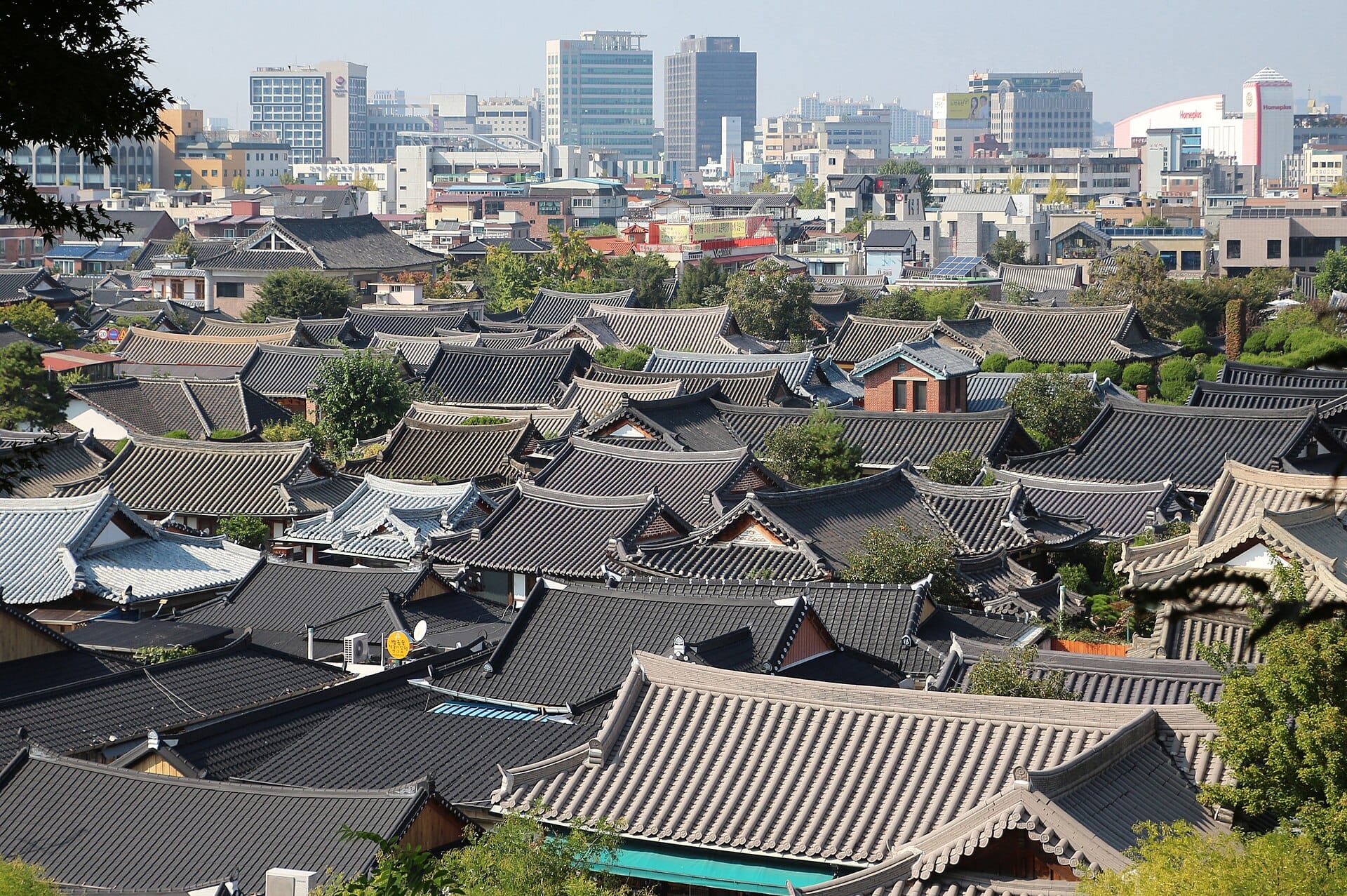
Jeonju Hanok Village is Korea’s largest and best-preserved traditional village — roughly 700 hanok houses clustered around Gyeonggijeon Shrine in the middle of an otherwise modern provincial capital in Jeollabuk-do, about 180 km south of Seoul. The village took its current shape in the early 1900s, when the yangban (aristocratic) families of the area built their homes here in the old style rather than adopt the Japanese-style architecture spreading through the city, and the neighborhood has been protected ever since. Beyond the architecture, Jeonju’s other claim to fame is food: it’s the birthplace of bibimbap, and in 2013 UNESCO designated it a Creative City of Gastronomy, the first Korean city and only the fourth in the world to receive the title. Between the tiled roofs and the table, Jeonju offers one of the most concentrated doses of traditional Korea in the country — without the crowds of Seoul or the long journey to Gyeongju.
Is Jeonju Worth Visiting?
Yes — for food and traditional architecture, Jeonju is one of the most rewarding stops outside Seoul. Nowhere else in Korea lets you eat the country’s most famous dish where it was invented and then sleep the night in a genuine hanok a few minutes’ walk away. It’s compact enough to see on a long day trip from Seoul, but it rewards slowing down: renting a hanbok, wandering the alleys after the day-trip crowds thin out, and having a proper multi-course meal rather than a quick bowl before the train back. If your itinerary already includes Gyeongju or Busan for history and coast, Jeonju is the natural third stop for culture and cooking.
How to Get to Jeonju from Seoul
The fastest way is the KTX high-speed train from Seoul’s Yongsan Station, which reaches Jeonju Station in about 1 hour 45 minutes on the Honam Line. From the station it’s roughly a 15-minute bus or taxi ride into the hanok village. An express bus from Seoul’s Central City or Nambu terminal is cheaper but slower, at around 2 hours 40 minutes to 3 hours. Trains fill up on weekends, so it’s worth reserving a seat ahead — Korail recently unified its KTX and SRT booking into a single app, which our guide to Korea’s unified train booking app walks through if you haven’t used it before. If you’re combining Jeonju with other cities, our guide to day trips from Seoul puts it alongside Gyeongju and Busan as one of the KTX-reachable options.
Best Things to Do in Jeonju Hanok Village
Almost everything worth seeing is within walking distance inside or just beside the hanok village. The essentials:
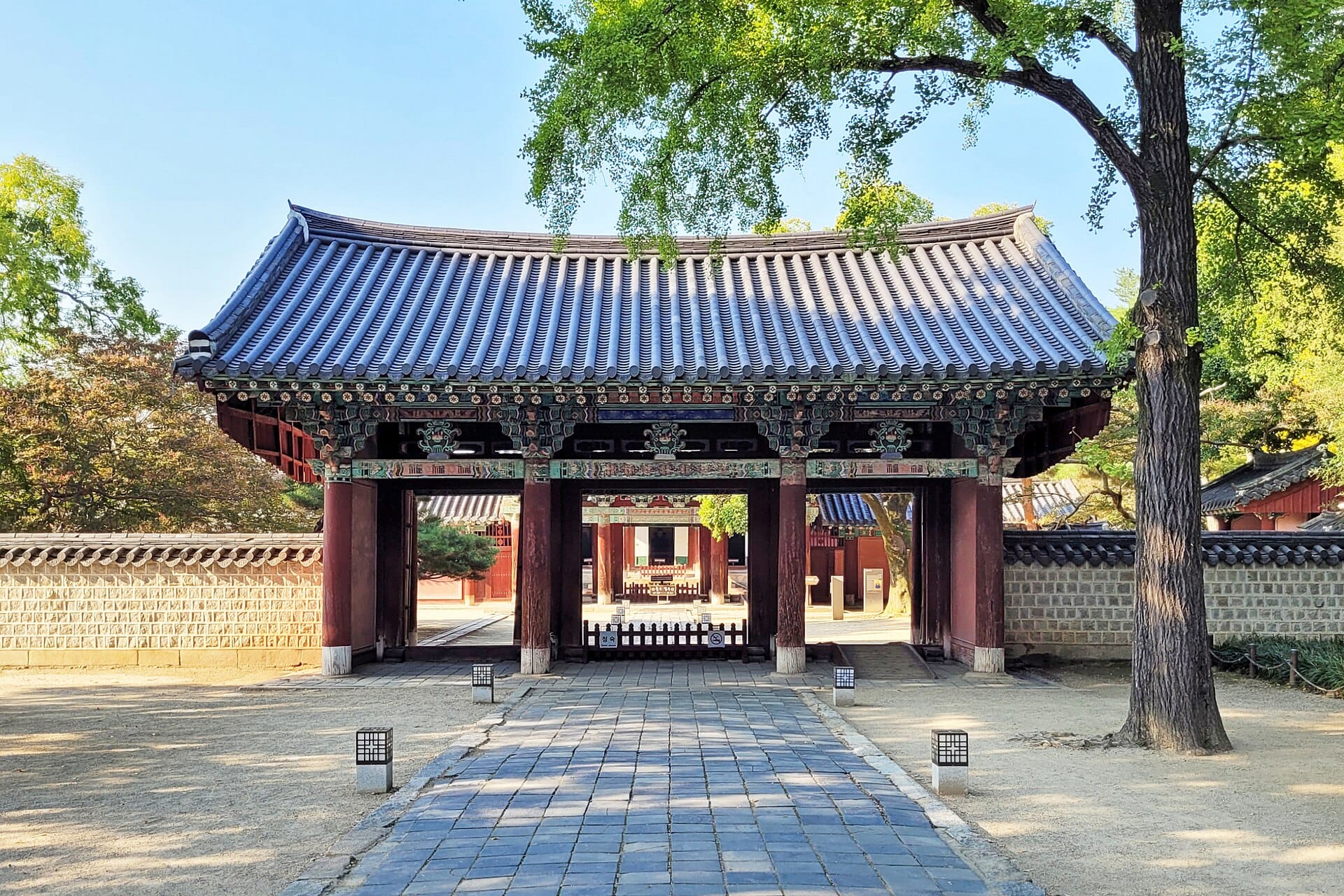
- Gyeonggijeon Shrine — the walled shrine at the heart of the village, built to house the portrait of King Taejo, founder of the Joseon Dynasty; its courtyards and pine trees are the classic Jeonju photo.
- Omokdae Pavilion — a hilltop pavilion just above the village where General Yi Seong-gye, the future King Taejo, is said to have celebrated a victory; it’s a short climb with rooftop views over the tiled roofs below.
- Jeonju Hyanggyo — a Confucian academy with a shaded courtyard of centuries-old gingko trees, one of the quietest corners of the village.
- Jaman Mural Village — a five-minute walk uphill from the hanok village, a hillside neighborhood whose steep alleys are covered in murals painted by local artists, with views back over the old town.
- Nambu Market — the city’s main traditional market, with produce and dried goods by day and a rooftop night-market food court that comes alive on Friday evenings.
Renting a hanbok for a few hours is practically the local custom — most shops in the village offer same-day rental, and wearing one gets you free or discounted entry to several of the paid sights. If you’d rather compare the experience in the capital first, our guide to hanbok rental in Seoul covers how it works, or you can book a hanbok rental in the hanok village itself🎫 ahead of time.
When Is the Best Time to Visit Jeonju?
The best times to visit Jeonju are spring (April) and autumn (October–November), when the weather is mild and the tiled roofs and gingko trees around the shrine and academy are at their most photogenic. Late October is also when the city hosts its own Jeonju Bibimbap Festival, a multi-day celebration of the city’s signature dish held in and around the hanok village. Summer is hot and humid, and winter is cold but quiet, with far fewer day-trippers than spring or fall — a reasonable trade if you don’t mind bundling up for the hanbok photos. Weekends and festival dates get crowded and hanok guesthouses book out, so reserve well ahead if your dates fall on one.
What to Eat in Jeonju
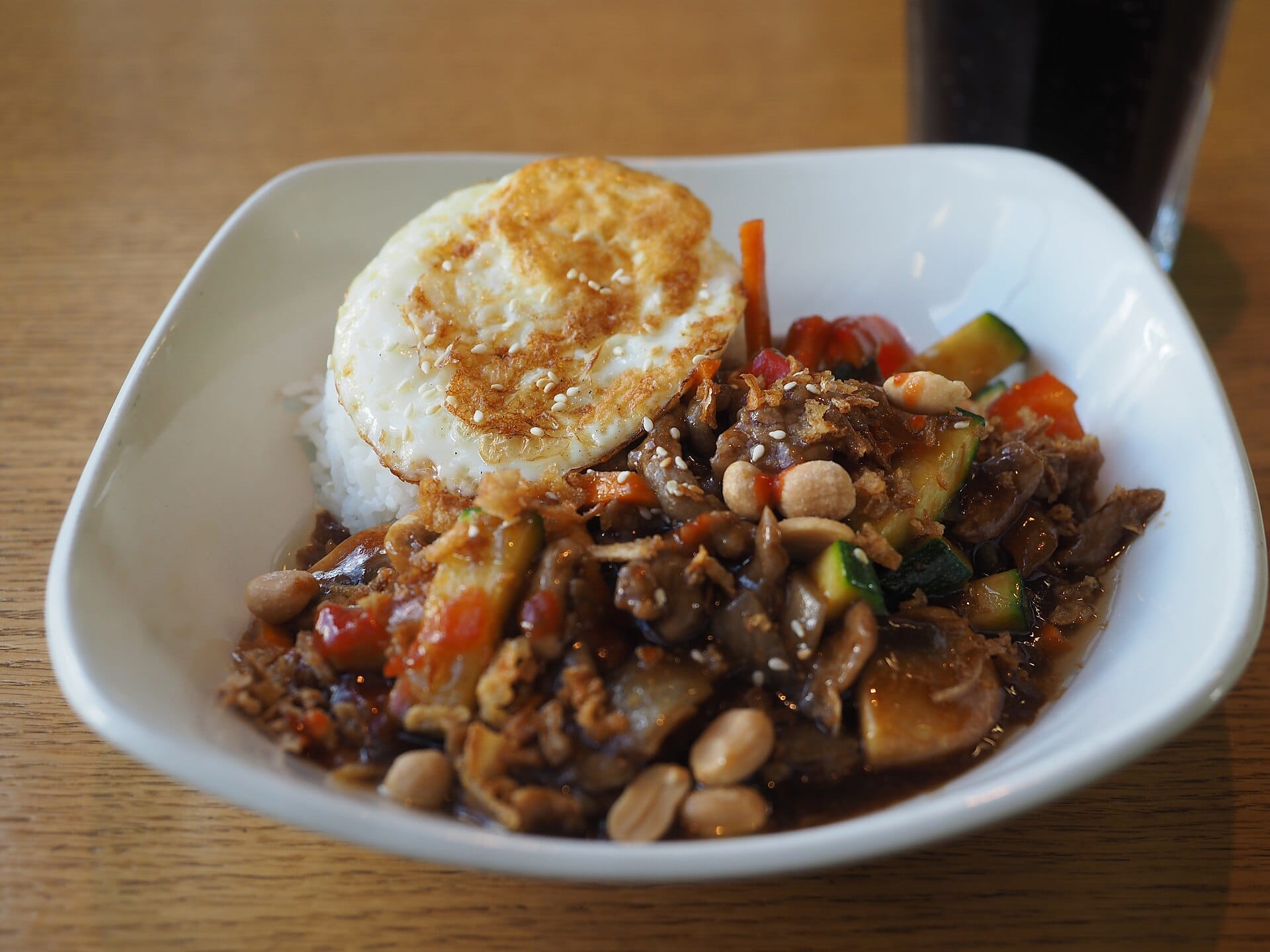
Jeonju is where bibimbap comes from, and the local version — rice, seasoned vegetables, beef, and a raw or fried egg mixed together with gochujang, traditionally served in a brass bowl — is the meal to have here, ideally at one of the long-running restaurants near Gyeonggijeon that have served it for generations. Beyond the signature dish, don’t miss makgeolli alley, where ordering a single kettle of the milky rice wine at one of the traditional taverns gets you a spread of side dishes that keeps arriving as long as you keep drinking — it’s one of the best-value meals in the country. Kongnamul gukbap (bean-sprout soup with rice) is the local hangover cure and breakfast staple, and Nambu Market’s night-market stalls are the place for a wider crawl of street food after dark. Our guide to what to eat in Seoul covers bibimbap’s dolsot (stone-pot) variation and the rest of the country’s essential dishes if you want the wider vocabulary before you travel.
Where to Stay in Jeonju
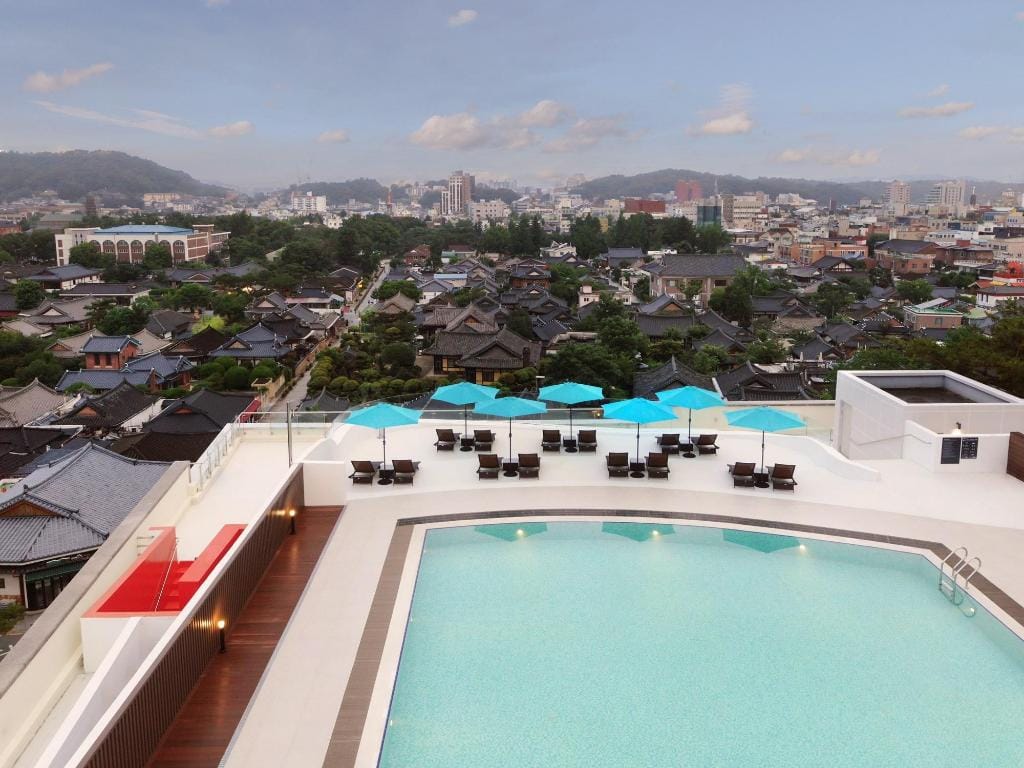
There are two ways to sleep in Jeonju, and they’re genuinely different experiences. A modern hotel right beside the hanok village gets you comfort and a normal bed within a few minutes’ walk of everything — a reliable option:
- Lahan Hotel Jeonju🏨 — A modern, comfortable base right beside the Hanok Village, so you can wander the lanes in the evening after the day-trippers have gone home.
For the fuller experience, a traditional hanok guesthouse inside the village itself puts you on a heated ondol floor behind a tiled roof, often with a small private courtyard — this is what most people picture when they imagine a night in Jeonju. It’s worth comparing hanok stays and hotels across Jeonju🏨 for your dates, since rooms in the old town are limited and go quickly around festivals and the autumn foliage season. For more on how a traditional stay compares to a temple stay elsewhere in the country, see our guide to templestays and hanok stays in Korea. For a full rundown of hanok guesthouses and hotels at every price point, see our guide to where to stay in Jeonju.
How Many Days Do You Need?
A single long day is enough to hit the highlights if you catch an early KTX: Gyeonggijeon, Omokdae, a bibimbap lunch, Jaman Mural Village, and a hanbok photo session before heading back. But Jeonju is one of the few places in Korea that’s genuinely better after dark and before the day-trippers arrive — the alleys empty out in the evening, and starting the next morning early gets you the village to yourself before the tour buses show up. With one night you can add a proper makgeolli-alley dinner and a relaxed morning; with two, work in Nambu Market’s Friday night market if your dates line up, or a slower loop through Jeonju Hyanggyo and the surrounding tea houses. Most travelers find one overnight the sweet spot.
Plan Your Trip
Start by comparing flights into Seoul✈️, since that’s the gateway for the KTX down to Jeonju. Once you’re there, reserve your train seat, book a hanbok rental🎫 if you want the photos, and lock in a room in or near the hanok village🏨 — especially around the Bibimbap Festival and foliage season.
Fit it into your trip. Jeonju slots naturally into a longer Korea itinerary alongside Seoul and a second city — see our 7-day Korea itinerary for how to divide the time, or our guide to day trips from Seoul for the shorter version.
Get your bearings first. If you’re new to Korea’s trains and transit cards, our guide to getting around Seoul covers the T-money card and KTX booking basics you’ll use here too.
Disclosure: This post contains affiliate links. If you book through these links, I may earn a small commission at no extra cost to you. I only recommend services I’d use myself.