
Last Updated: August 2026
Quick answer: Seoraksan National Park hiking starts in Sokcho, reached by a 2–2.5 hour intercity bus from Seoul’s Express Bus Terminal (no direct train yet). Inside the park, the easy 6km round-trip walk to Biseondae Rock and the cable car up to Gwongeumseong Fortress (₩16,000 round trip) suit most visitors, while the Ulsanbawi trail — 7.6km round trip with a steep final staircase — is the classic moderate hike. There’s no park entrance fee. Peak autumn foliage usually falls in mid-to-late October, Korea’s earliest and most dramatic color of the season.
Seoraksan National Park is Korea’s most-visited national park and its most dramatic mountain landscape — a knot of granite peaks, waterfalls, and old-growth forest on the Gangwon coast, about 2.5 hours northeast of Seoul. It’s also the country’s autumn foliage showpiece, the first place in Korea where the maples and oaks turn each year, drawing hikers from across Asia for a few weeks every October.
This guide covers the trails worth your time by difficulty, how the cable car works, how to actually get there from Seoul, when to go for foliage versus quieter trails, and what it costs. If you’re deciding between Seoraksan and Korea’s other easy escapes, our wider guide to day trips from Seoul compares the options.
Table of Contents
- Why Hike Seoraksan?
- Which Seoraksan Trail Should You Hike?
- How Does the Seoraksan Cable Car Work?
- How Do You Get to Seoraksan from Seoul?
- When Is the Best Time to Hike Seoraksan?
- How Much Does a Seoraksan Trip Cost?
- Practical Tips
- Plan Your Trip
Why Hike Seoraksan?
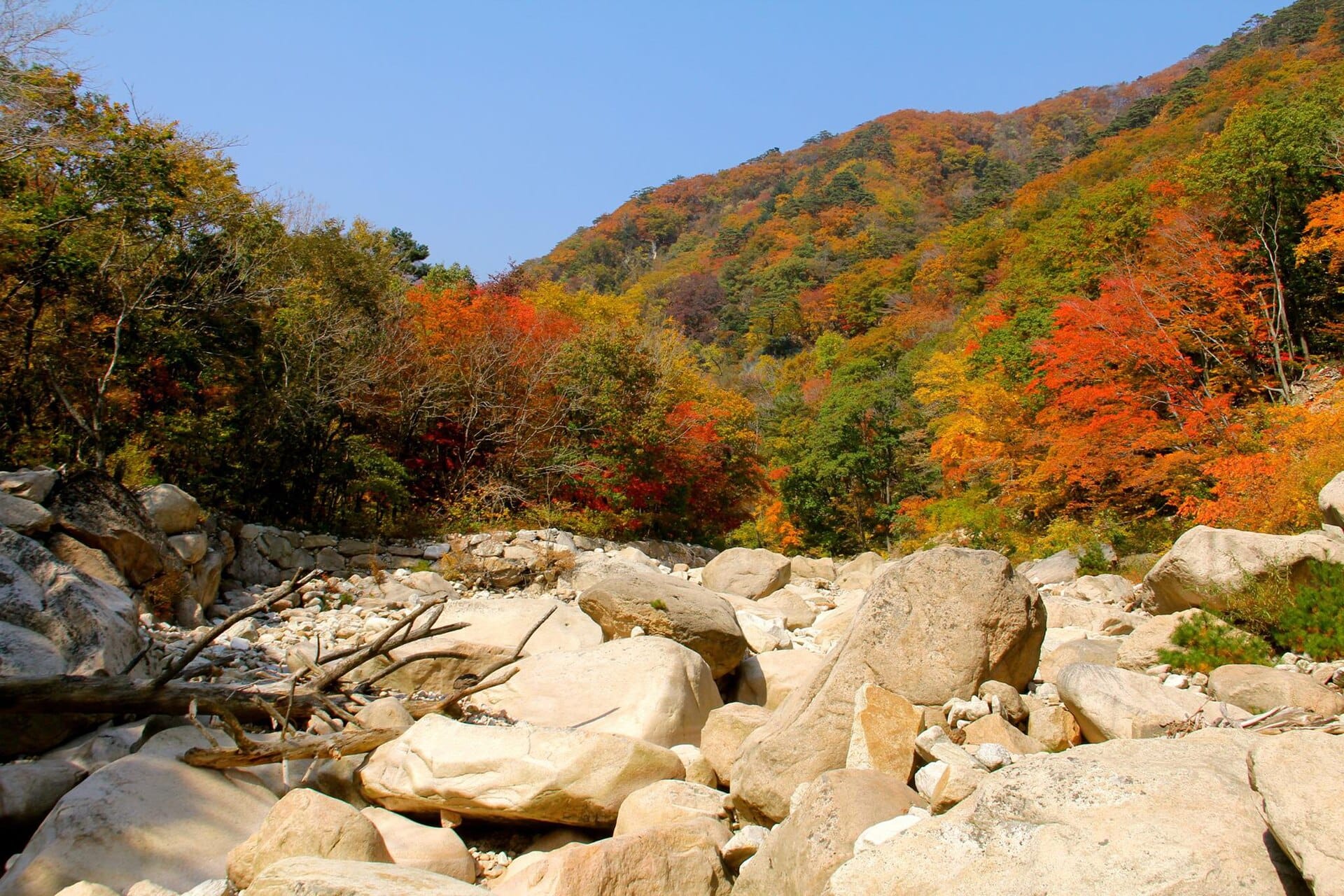
Seoraksan means “snowy crags mountain,” and the name fits — its granite summits stay dusted with snow well into spring and turn stark white against blue sky in winter. According to Wikipedia’s entry on the park, Seoraksan is Korea’s third-highest mountain range and a UNESCO Biosphere Reserve, protecting old-growth forest, rare wildlife, and some of the country’s most photographed rock formations. Outer Seorak, the section covered in this guide, is also the most accessible — a short drive from Sokcho with well-marked trails ranging from paved half-hour walks to full-day ridge scrambles.
What sets it apart from Korea’s other mountains is the payoff-to-effort ratio. You don’t need to be a serious hiker to see the park’s best views — a cable car and a couple of easy trails get most visitors to genuinely spectacular scenery within a few hours of arriving.
Which Seoraksan Trail Should You Hike?
Outer Seorak has three trails that cover almost everyone’s trip — pick by fitness level and how much time you have.
| Trail | Distance | Time | Difficulty |
|---|---|---|---|
| Biseondae Rock | ~6km round trip | 1.5–2 hours | Easy |
| Ulsanbawi Rock | ~7.6km round trip | 3–4 hours | Moderate–hard |
| Gwongeumseong (cable car) | ~350m walk at the top | 30–45 minutes | Easy |
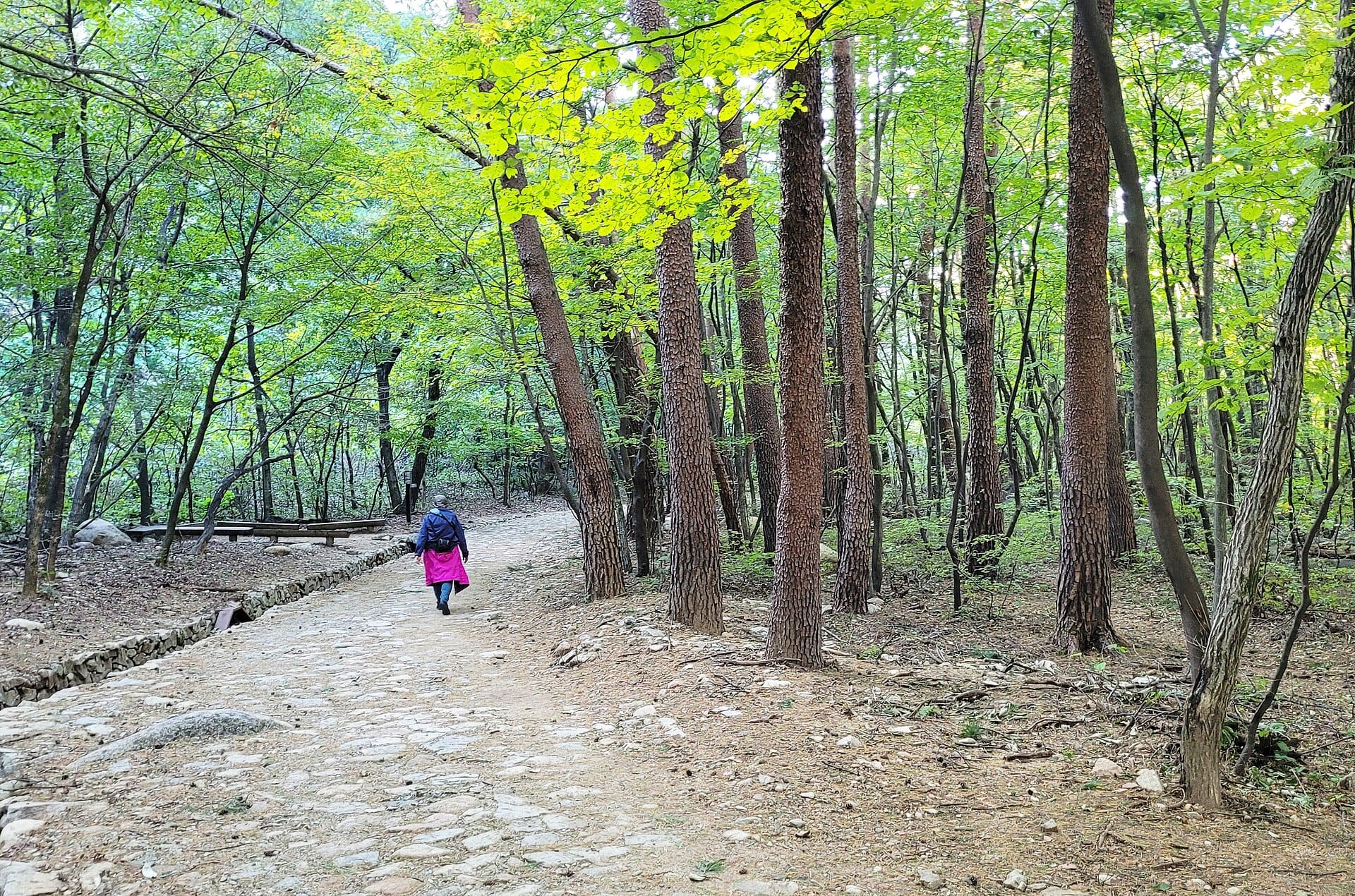
Biseondae Rock is the easiest proper hike in the park and the one most first-time visitors do — a flat, well-paved 6km round trip along a stream to a broad, smooth rock face that turns into a seasonal waterfall after rain. Families and casual walkers can comfortably do it in under two hours, and it’s a good option if you’re short on time or the weather turns.
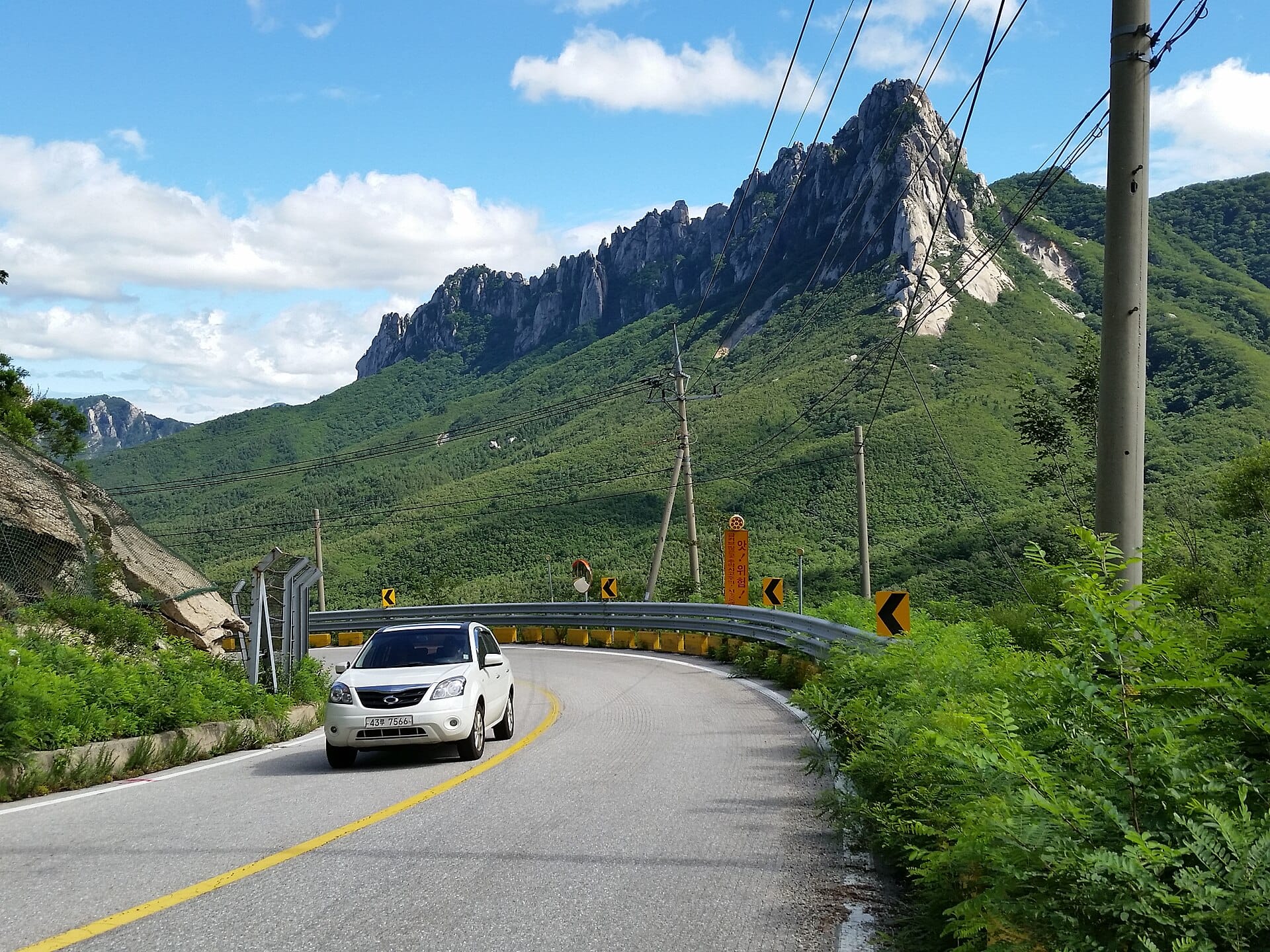
Ulsanbawi is the trail serious hikers come for — a granite ridge with six jagged peaks, reached via roughly 800 steel steps on the final steep approach. It’s a genuine leg-burner at 7.6km round trip with real elevation gain, but the summit view over the East Sea coastline and the park’s inner ridges is the best reward-per-kilometer hike in the park. Budget a half day and start early, since the last steps get crowded on autumn weekends.
Beyond these two, Biseondae connects onward to Geumganggul Cave (an extra 600m, steep) and the Yangpok shelter trail (2–3 hours round trip), both good next steps if Biseondae felt too short. Serious hikers aiming for Daecheongbong, the park’s 1,708m summit, should plan for a full 10–12 hour day or an overnight at a mountain shelter — it’s a different trip than the half-day options above and worth researching separately before you commit.
How Does the Seoraksan Cable Car Work?
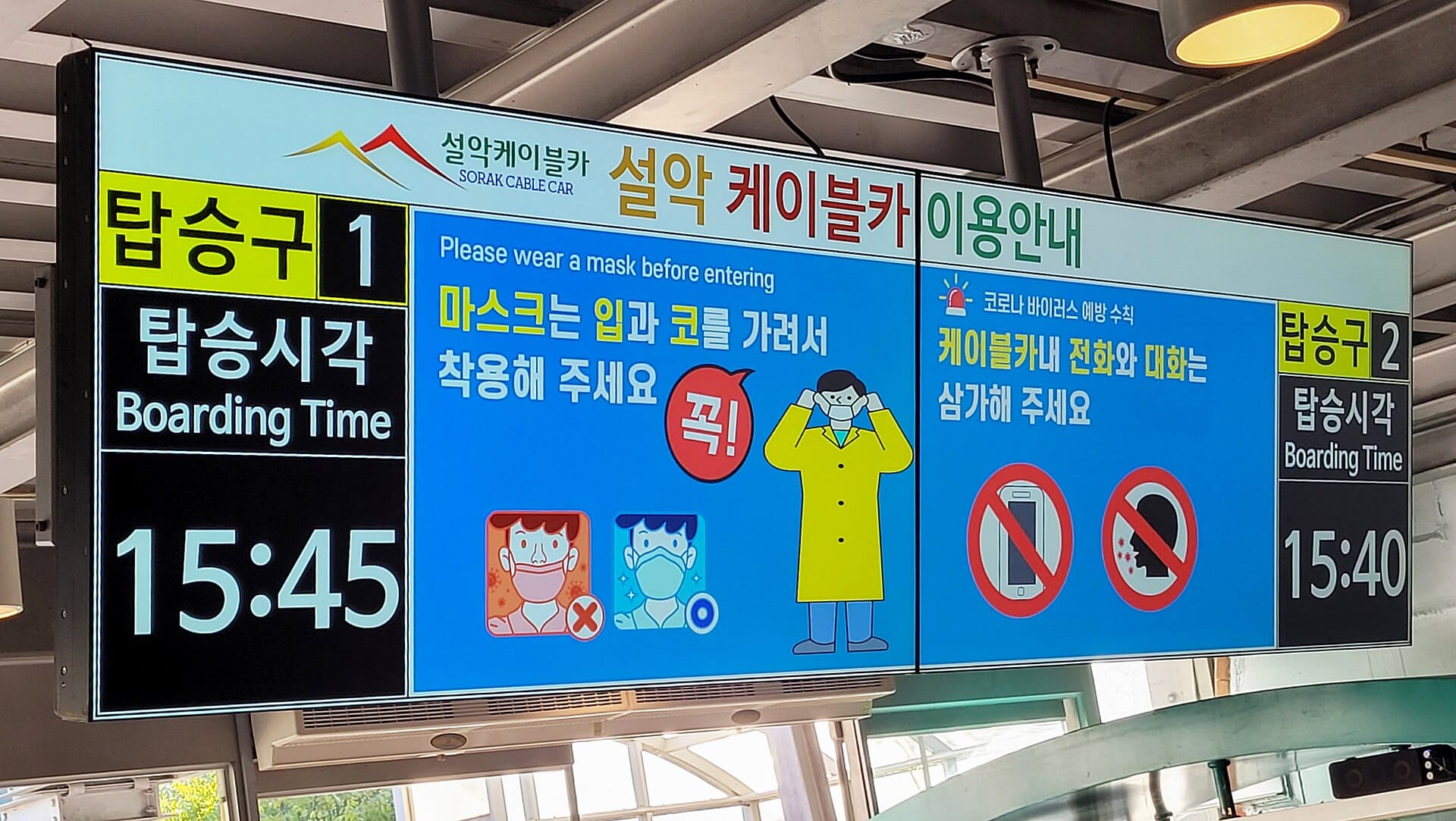
The Seoraksan Cable Car is the fastest way to the park’s views — an eight-minute ride up to Gwongeumseong, a small fortress site with a short (about 350m) walk to a 360-degree viewpoint over the granite peaks and, on a clear day, the coastline beyond Sokcho. It’s the best option if you want the payoff without the climb, or if you’re traveling with kids or limited mobility.
A round-trip adult ticket runs about ₩16,000, with discounted fares for children and seniors. The operator doesn’t take advance reservations — tickets are sold on the day, in person, because service depends on weather and wind conditions — so arrive early on weekends and during autumn foliage season, when lines can run over an hour. Cars typically run from roughly 8:30am, with the last car down by late afternoon; hours shift seasonally, so check the day-of schedule once you arrive.
How Do You Get to Seoraksan from Seoul?
There’s no direct train to Sokcho yet — a high-speed rail link between Chuncheon and Sokcho is under construction, but it isn’t expected to open before 2028. For now, the only practical options are bus or car.
The straightforward route is an intercity bus from Seoul Express Bus Terminal (Gangnam) or Dong Seoul Bus Terminal to Sokcho Express Bus Terminal, taking roughly 2 to 2.5 hours with buses departing every 30 minutes or so through the day. From Sokcho’s bus terminal, a local bus or a short taxi ride (about 15–20 minutes) covers the last leg to the Seoraksan Seorakdong entrance. If you’d rather not manage transfers, a pre-booked Seoraksan day tour from Seoul🎫 bundles round-trip transport with the cable car ticket, which is worth it if you’re only doing a single day and want zero logistics to think about.
Because the round trip alone eats up 4–5 hours, most experienced visitors treat Seoraksan as an overnight rather than a rushed day trip — it leaves time for both a proper hike and a slower morning without racing the last bus back. Our guide to where to stay in Sokcho covers the best bases near the park entrance if you’re adding a night or two.
When Is the Best Time to Hike Seoraksan?
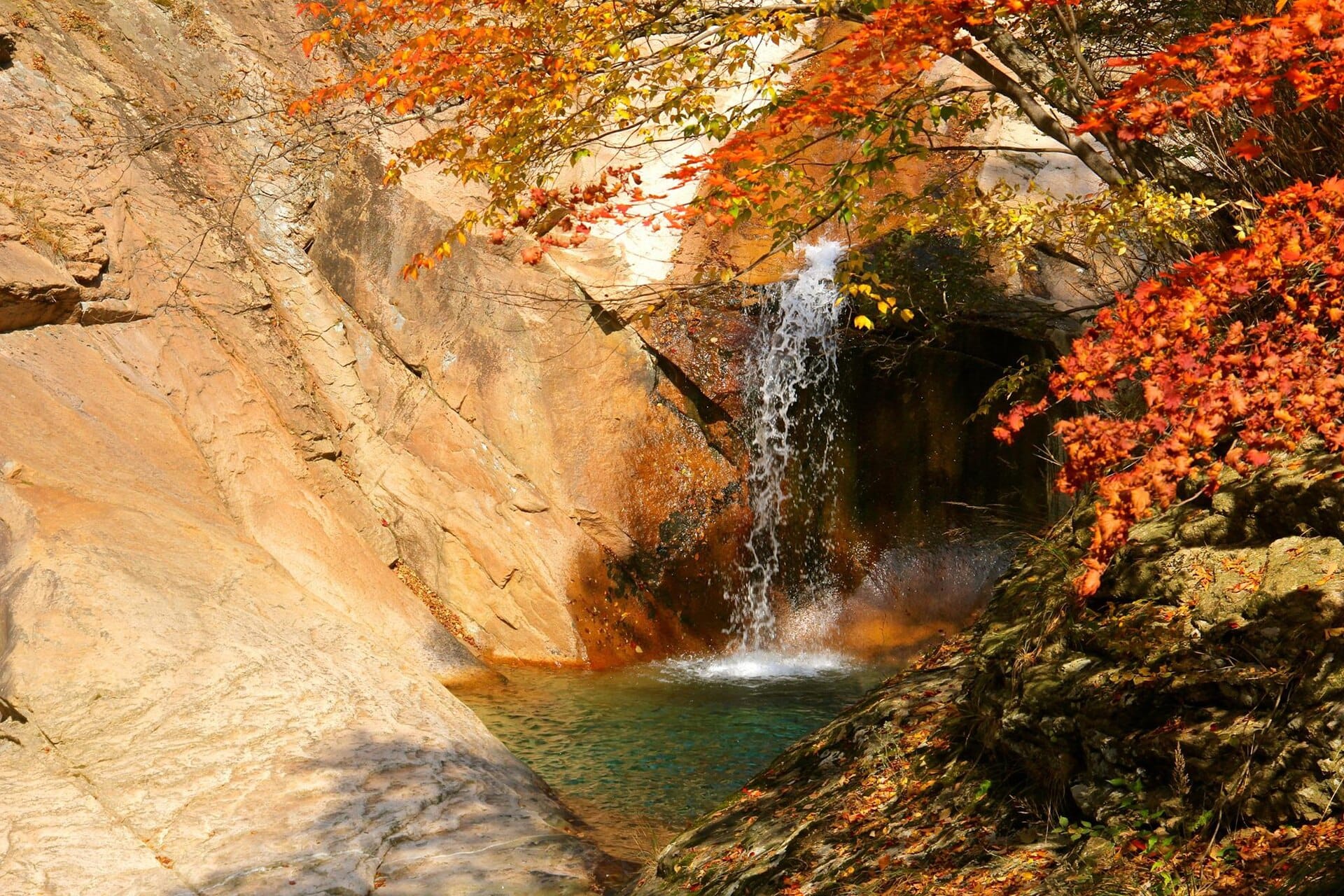
Autumn is Seoraksan’s headline season, and for good reason — as Korea’s northernmost major mountain range, it’s usually the first place in the country where the leaves turn, typically starting in late September and reaching peak color in mid-to-late October before the color front moves south and down into the lowlands over the following weeks. That timing also makes it the busiest window of the year by far, so weekday visits and an early start matter more here than almost anywhere else in Korea.
Outside autumn, each season has its own case: spring (April–May) brings azaleas and fresh green with far smaller crowds, summer is lush and cooler at altitude than Seoul but comes with monsoon rain, and winter turns the peaks snow-white and quiet, though some higher trails close or require extra gear. If you’re building a wider Korea itinerary around foliage timing, our guide to autumn foliage season covers how Seoraksan’s color front relates to Seoul’s, and our best time to visit Seoul overview weighs the seasons more broadly.
How Much Does a Seoraksan Trip Cost?
There’s no park entrance fee, so the trip’s cost comes down to transport and the cable car. Rough per-person figures for a day visit from Seoul:
| Item | Approx. cost (adult) |
|---|---|
| Intercity bus, Seoul ↔ Sokcho (round trip) | ₩34,000–50,000 |
| Bus terminal ↔ park entrance (local bus or taxi) | ₩10,000–16,000 |
| Park entrance | Free |
| Cable car (round trip) | ₩16,000 |
| Parking (if driving, per day) | ₩6,000–9,000 |
All in, a bus-and-cable-car day trip runs roughly ₩60,000–90,000 per person, before food. A guided day tour that bundles transport, entrance, and the cable car into one booking typically costs more than the DIY total but removes all the schedule-juggling, which is worth it for a first visit or a tight itinerary.
Practical Tips
- Start early, especially in October. Cable car lines and the Ulsanbawi staircase both bottleneck badly on autumn weekends — arriving at opening beats arriving mid-morning by hours, not minutes.
- Wear real hiking shoes. Even Biseondae has uneven stone sections, and Ulsanbawi’s steel stairs are unforgiving in anything without grip.
- Check the weather before committing to the cable car. It suspends service in high wind, and there’s no advance booking to fall back on if that happens.
- Bring cash and a T-money card. Local buses around Sokcho and some trailside vendors don’t reliably take foreign cards.
- Pack layers. Temperatures at the ridge and summit run noticeably cooler than Sokcho at sea level, even in early autumn.
Plan Your Trip
Start by booking your flights to Seoul✈️. Once your dates are set, decide between a rushed day trip and an overnight — if you want the ridge hike and a slower pace, our guide to where to stay in Sokcho rounds up the best bases near the Seoraksan entrance, from oceanfront resorts to walkable downtown options.
Skip the transfers. If you’d rather not manage the bus-and-local-transit chain yourself, a Seoraksan day tour with round-trip transport🎫 from Seoul handles it for you, cable car included.
Fit it into your trip. Our guide to day trips from Seoul compares Seoraksan against Korea’s other easy escapes, and our autumn foliage guide helps you time a visit around peak color.
Disclosure: This post contains affiliate links. If you book through these links, I may earn a small commission at no extra cost to you. I only recommend services I’d use myself.