
Last updated: July 2026
Quick answer: The 62nd Suwon Hwaseong Cultural Festival runs September 27–October 4, 2026 around Hwaseong Fortress in Suwon, about an hour south of Seoul. The centerpiece is a reenactment of King Jeongjo’s royal procession (neunghaengcha), with roughly 4,000 participants in period costume marching from the palace to the fortress. The festival is free to attend and works well as a day trip from Seoul by subway or train.
Table of Contents
- What Is the Suwon Hwaseong Cultural Festival?
- When Is the 2026 Festival, and What’s the Highlight?
- What Is Hwaseong Fortress?
- How Do You Get to Suwon from Seoul?
- Where Should You Stay for the Festival?
- What Else Should You Know Before You Go?
What Is the Suwon Hwaseong Cultural Festival?
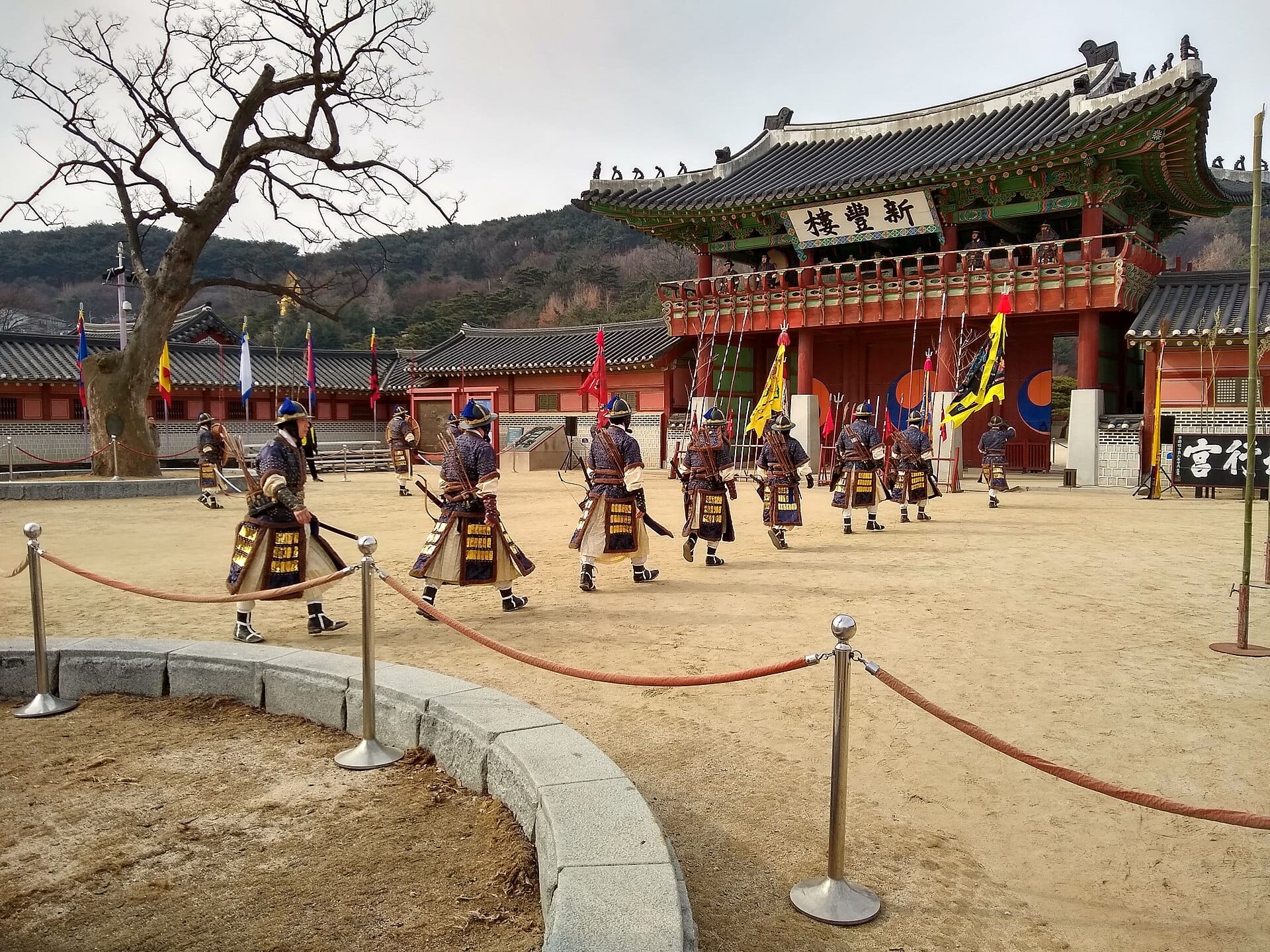
The Suwon Hwaseong Cultural Festival is an annual heritage festival held in and around Hwaseong Fortress, honoring King Jeongjo of the Joseon dynasty, who built the fortress in the 1790s and moved his father’s tomb to nearby Hwaseong in his memory. The 2026 edition is the 62nd running of the festival, one of the longer-standing city festivals in Korea, and draws both Korean families and history-minded travelers to a compact, walkable old-town setting.
Programming spans traditional music and dance performances, night-time light displays along the fortress wall, craft and food markets, and hands-on activities inside Hwaseong Haenggung Palace — but the event most visitors plan their trip around is the royal procession reenactment.
When Is the 2026 Festival, and What’s the Highlight?
The 2026 festival runs September 27 to October 4, staged across Hwaseong Fortress and the surrounding old town of Suwon. It lands the week right after Chuseok, so travelers extending a Korea trip through late September can combine the two without much extra planning.
The signature event is the reenactment of King Jeongjo’s royal procession to his father’s tomb — a real historical journey the king made annually, now restaged with roughly 4,000 costumed participants, a royal palanquin, military honor guards, and traditional court music winding through the old city and along the fortress walls. It’s one of the largest costumed processions staged anywhere in Korea and is free to watch from the street.
What Is Hwaseong Fortress?
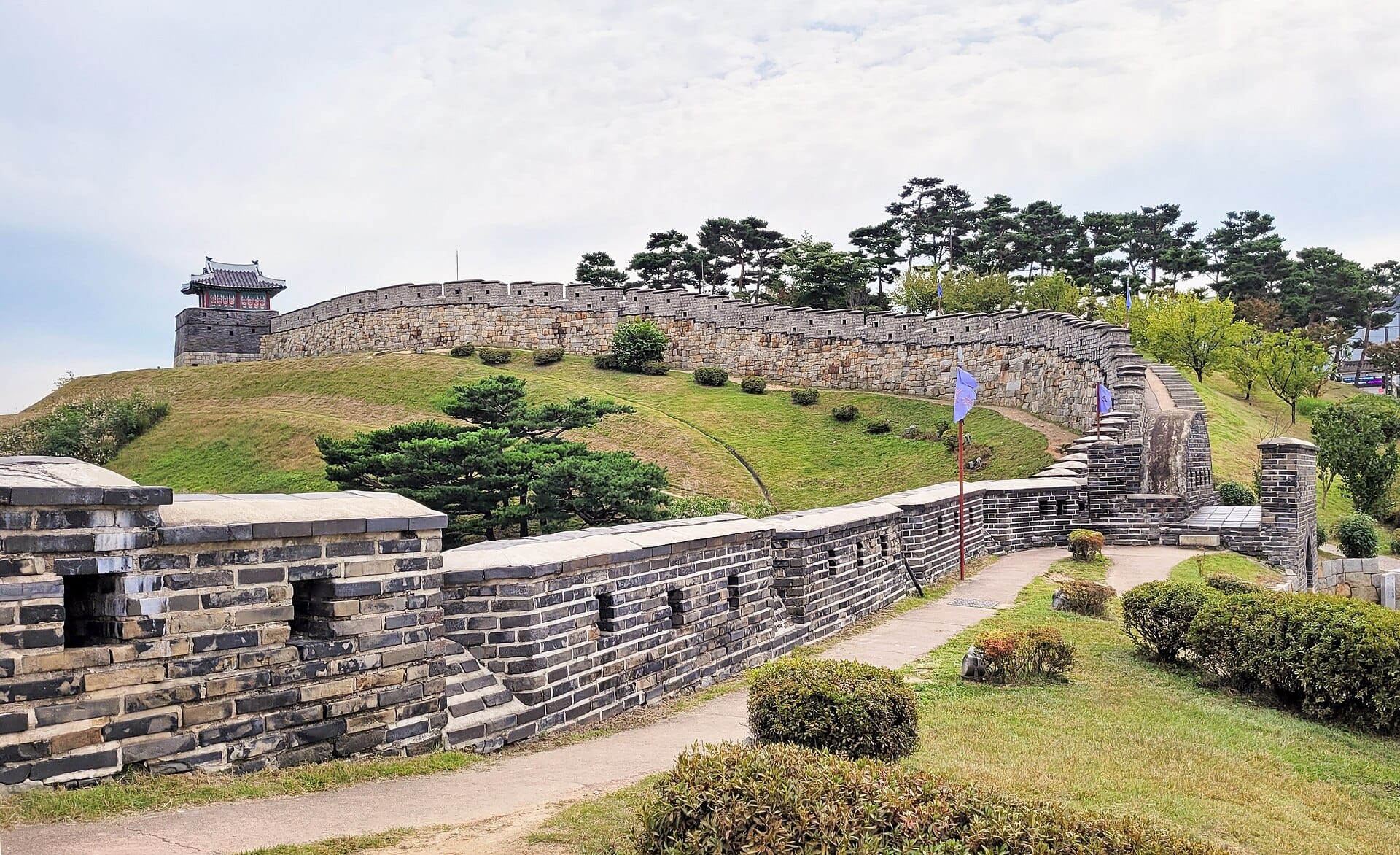
Hwaseong Fortress is an 18th-century walled city that King Jeongjo built to house his father’s relocated tomb and to project royal authority outside the capital. The wall runs for nearly six kilometers and is largely walkable, passing grand gates, guard towers, and command posts with views over Suwon’s old town. It was inscribed as a UNESCO World Heritage Site in 1997, prized for combining Korean and contemporary Chinese and Japanese fortification styles in one design.
Outside festival week, Hwaseong is already one of the easiest day trips from Seoul — during the festival, the same wall walk and palace grounds simply come with performances, lantern displays, and markets layered on top.
How Do You Get to Suwon from Seoul?
Suwon sits on Seoul’s own subway network, so no separate train ticket or reservation is needed for a day trip:
- Subway (recommended): Take Line 1 to Suwon Station, then a short taxi or local bus to Hwaseong Haenggung Palace and the fortress. From central Seoul the ride takes about an hour, using the same T-money card covered in the guide to getting around Seoul.
- KTX or ITX train: Slightly faster from Seoul Station or Yongsan, though the time saved is small given Suwon’s short distance — most visitors just take the subway.
- Guided day tour: If you’d rather not manage the transfers yourself, especially with festival crowds, you can join a day tour that bundles Suwon into a single booking🎫 with transport handled.
Expect the old town to be busier than usual on procession day, so arrive early to find a good vantage point along the route or inside the palace grounds.
Where Should You Stay for the Festival?
Suwon works well as a half-day or full-day outing rather than an overnight stop, so most visitors base themselves in Seoul and travel out for the festival. It’s worth comparing Seoul hotel rates🏨 against rooms you can bundle with onward KTX travel🏨 if you’re building a longer autumn Korea trip around the festival dates.
What Else Should You Know Before You Go?
Cost: The festival itself is free. Hwaseong Fortress’s individual sights have small separate entry fees on non-festival days, though festival-week programming is largely open-air and free to view.
Weather: Late September and early October in Suwon are mild and dry — Korea’s most comfortable stretch for walking a fortress wall, with none of the summer humidity or monsoon rain.
Food: Suwon is known nationally for galbi (grilled short ribs), and the old town around the fortress has long-running galbi restaurants worth timing lunch around.
For a broader look at how Suwon fits alongside Korea’s other easy day trips — the DMZ, Nami Island, Everland, and more — see the full day trips from Seoul guide. If your dates fall outside festival week, our Suwon Hwaseong Fortress day trip guide covers the fortress and palace year-round.
Affiliate disclosure: Some links on this page are affiliate links. If you book through them, we may earn a small commission at no extra cost to you. This does not influence which festivals or events we cover.