
Last Updated: July 2026
Quick answer: Seoul’s neighborhoods each have a distinct character — Myeongdong is the central, first-timer base; Hongdae is young and nightlife-driven; Itaewon is the international quarter; Gangnam is polished and modern; Bukchon and Insadong hold old Seoul; and Seongsu is the trendy café district. Pick the one that matches your priority, and use this hub to jump to a full guide for each.
Seoul is huge — a city of 25 million across the metro area, stitched together by one of the world’s best subways — and its character lives in its districts, not in a single downtown. Understanding the main Seoul neighborhoods before you go is the fastest way to make sense of the place: it tells you where to stay, where to spend your days, and which pocket of the city fits the trip you actually want. This guide orients you to each area — the vibe, who it suits, and where it sits — then links out to a detailed guide for every one.
Think of it as a map of the city’s personalities. If you’re planning the whole trip from scratch, start with our complete Seoul travel guide; if you already know you want to sort a base first, jump to where to stay in Seoul. Otherwise, read on and pick your area.
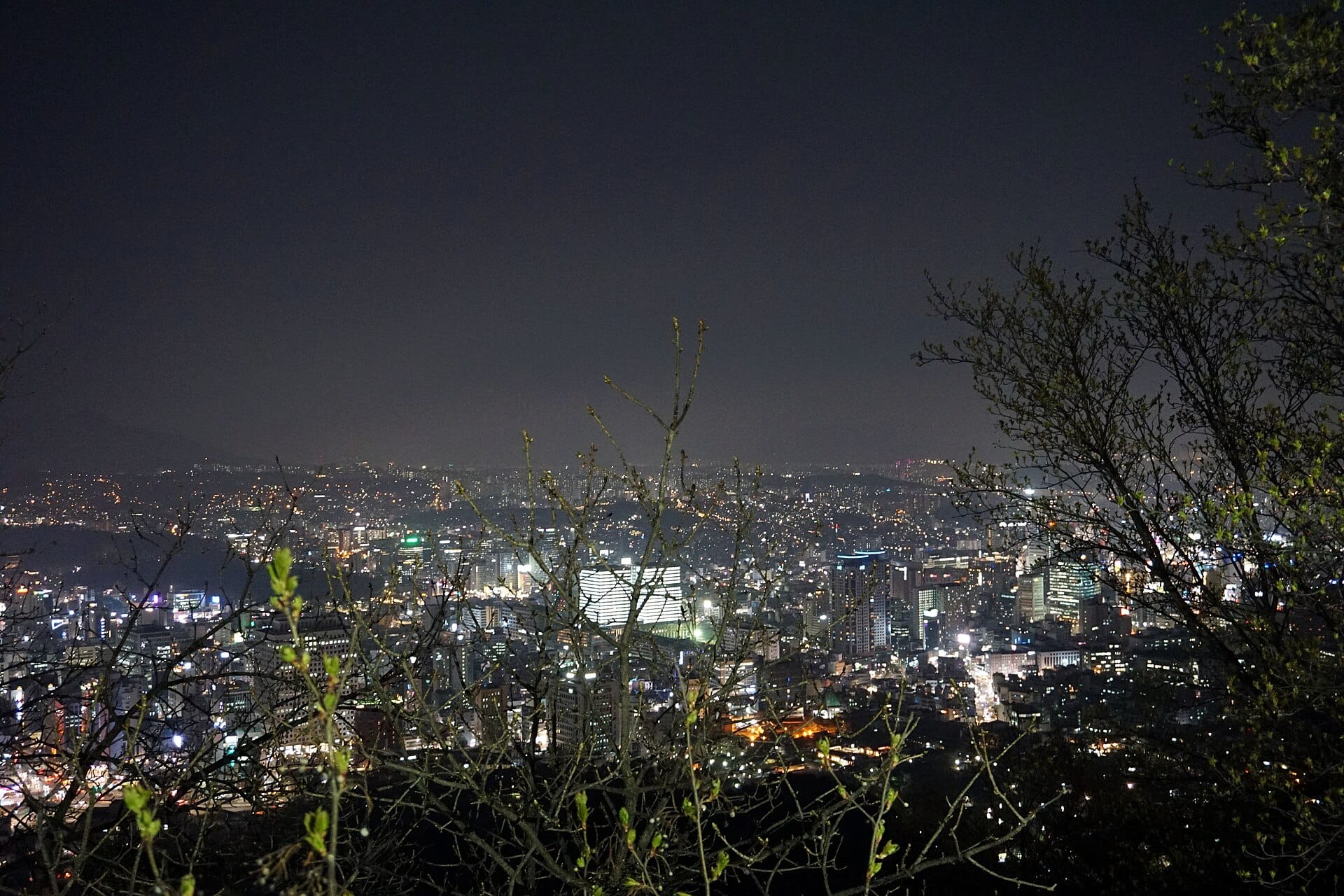
Table of Contents
- Seoul Neighborhoods at a Glance
- Myeongdong — Central & First-Timer Friendly
- Hongdae — Young, Creative & Up All Night
- Itaewon — Seoul’s International Quarter
- Gangnam — Modern, Upscale Seoul
- Bukchon & Insadong — Old Seoul
- Seongsu-dong — The Trendy Café District
- Where Should You Stay?
- Turning Neighborhoods into a Trip
Seoul Neighborhoods at a Glance
Here’s how the main areas compare at a glance — the vibe of each, who it suits best, and roughly where it sits in the city. Most Seoul neighborhoods are less than 30 minutes apart by subway, so you’ll pass through several on any trip; this is about deciding which one to anchor around.
| Neighborhood | Vibe | Best for | Where it is |
|---|---|---|---|
| Myeongdong | Busy, central, touristy | First-timers, shopping, easy transit | City center, north of the river |
| Hongdae | Young, loud, creative | Nightlife, budget, students | Northwest |
| Itaewon | Diverse, international | Global food, bars, rooftops | Central, below Namsan |
| Gangnam | Polished, modern, upscale | Shopping, beauty, business | South of the river |
| Bukchon & Insadong | Historic, quiet, atmospheric | Tradition, palaces, photos | City center, by the palaces |
| Seongsu-dong | Trendy, industrial-chic | Cafés, design, a local feel | East, north of the river |
Myeongdong — Central & First-Timer Friendly
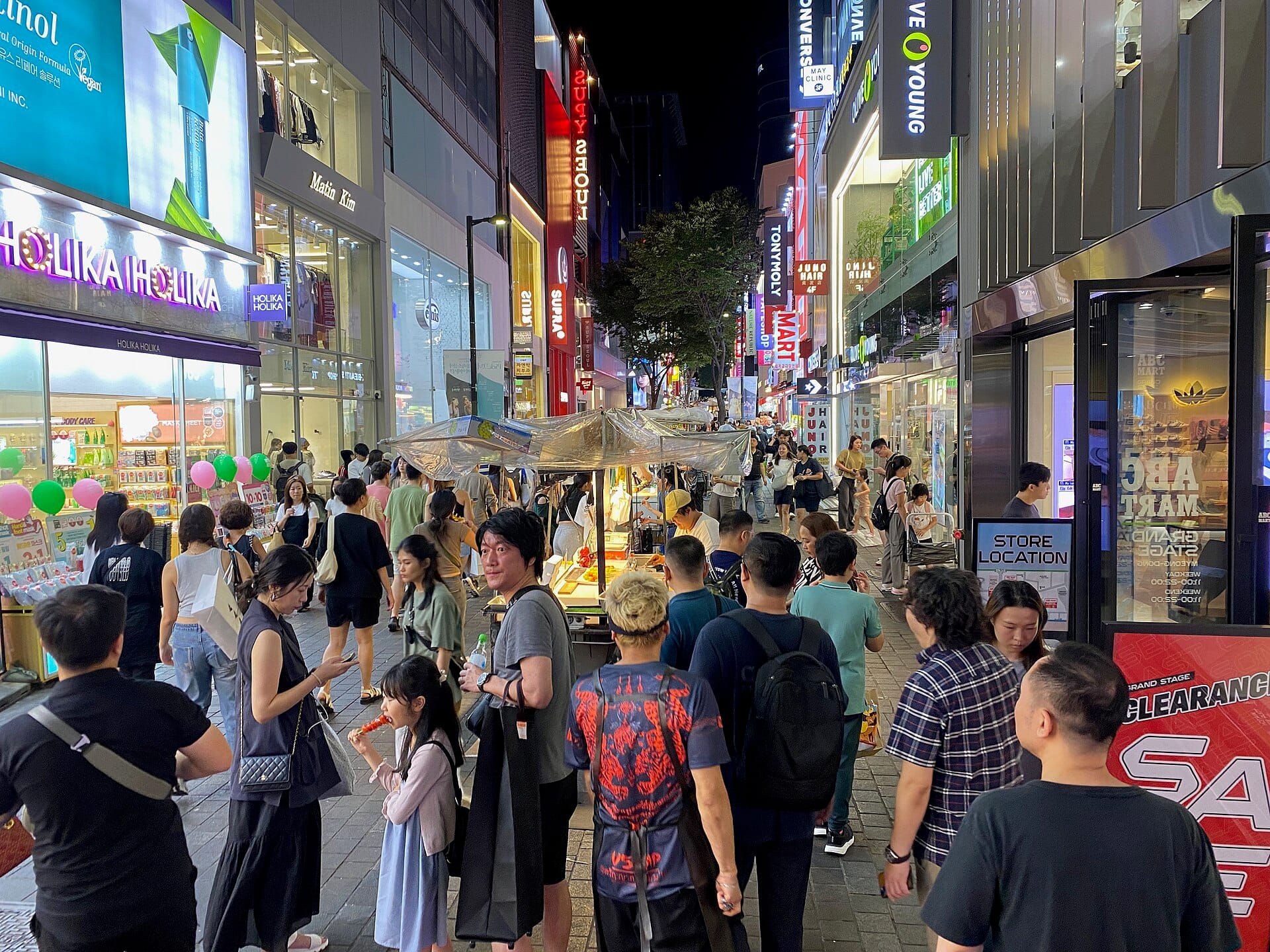
Myeongdong is the most central and convenient base in Seoul, which makes it the default pick for first-timers. It sits on two subway lines with direct airport buses, so almost everywhere is an easy ride away, and it’s within reach of the palaces, Namdaemun Market, and N Seoul Tower. The trade-off is crowds and tourist prices — locals rarely hang out here — but for a first trip the time you save is worth it. Our full Myeongdong neighborhood guide covers the shopping, street food, and sights, and for hotels at every budget and the area’s pros and cons, see our guide to where to stay in Myeongdong.
Hongdae — Young, Creative & Up All Night
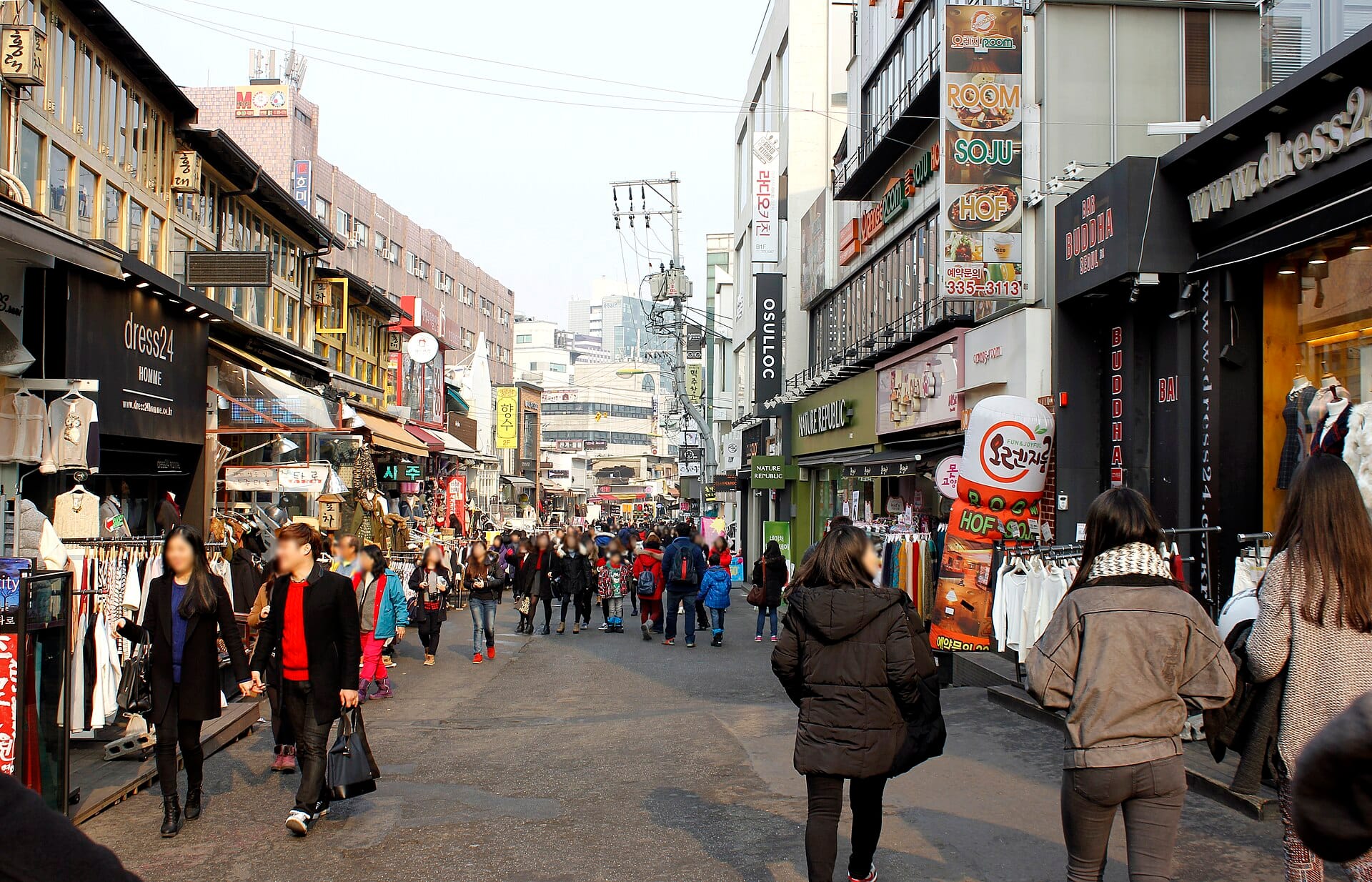
Hongdae is Seoul’s student and creative quarter, built around Hongik University — indie shops, street performers, themed cafés, and a nightlife scene that runs until sunrise. It’s younger, louder, and generally cheaper than the center, with a direct airport-train link that makes arriving and leaving painless. It’s the obvious choice if going out is part of your plan, though light sleepers should book a few streets back from the main drag. Our guide to Hongdae digs into its cafés, shops, and after-dark scene.
Itaewon — Seoul’s International Quarter
Itaewon is the most international neighborhood in the city — the best place for global food and a diverse bar scene, and it flows on foot into Gyeongnidan-gil, Hannam-dong, and Haebangchon. It’s a fun, varied place to come home to, if a little farther from the historic sights. If you want cuisines from around the world, rooftop bars, and a mixed, cosmopolitan crowd, this is your area. Our guide to Itaewon maps out its food, bars, and the lanes around it.
Gangnam — Modern, Upscale Seoul
South of the Han River, Gangnam is the polished, modern side of Seoul — glass towers, department stores, concept cafés, and a spread-out, business-district feel. It’s pricier and less historic than the north, but spotless, well-connected, and great if shopping, beauty clinics, and contemporary Seoul are what you came for. It suits travelers who don’t mind being a little farther from the palaces in exchange for newer rooms and a sleeker city. See our guide to Gangnam for what to do south of the river.
Bukchon & Insadong — Old Seoul
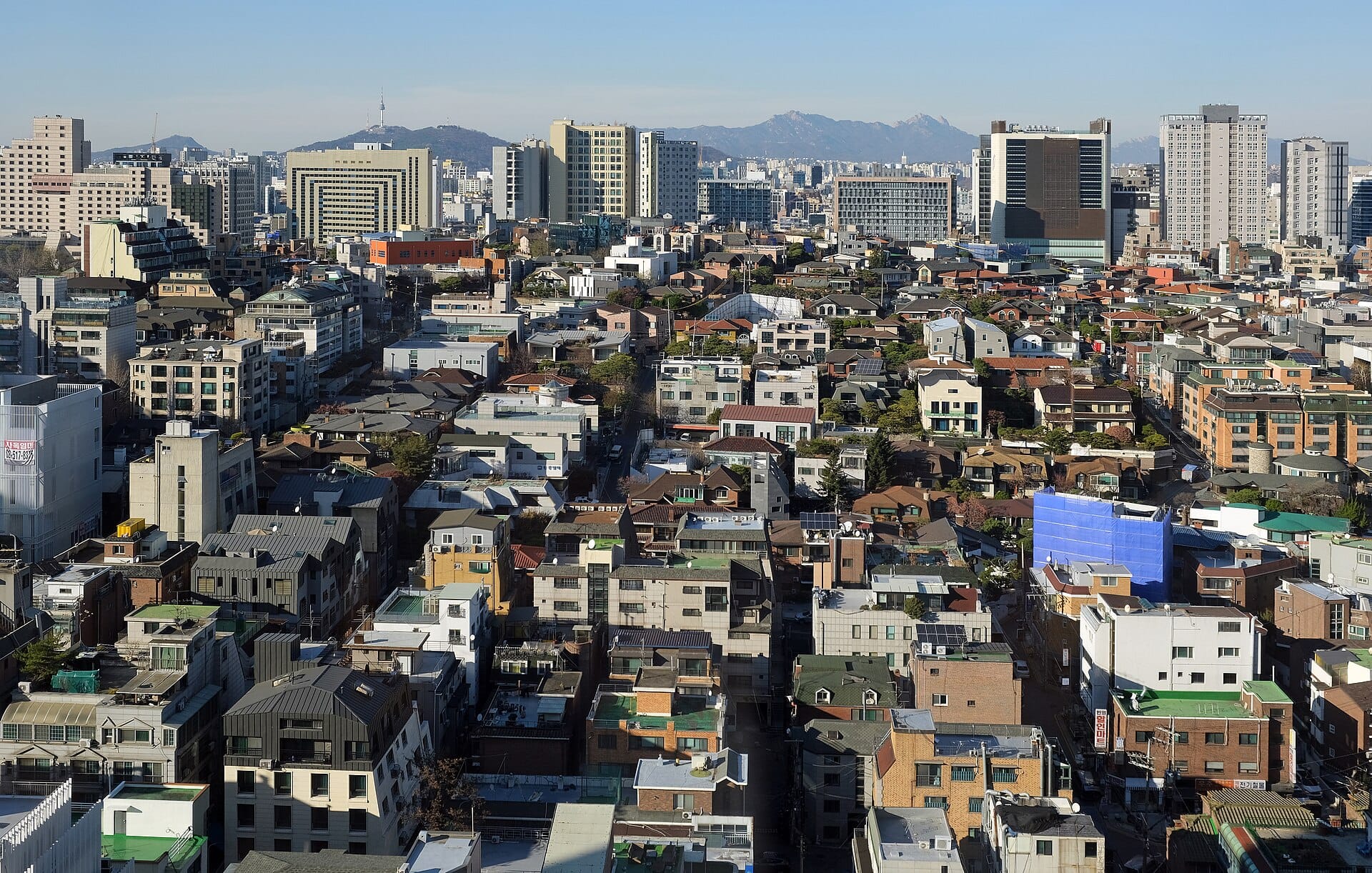
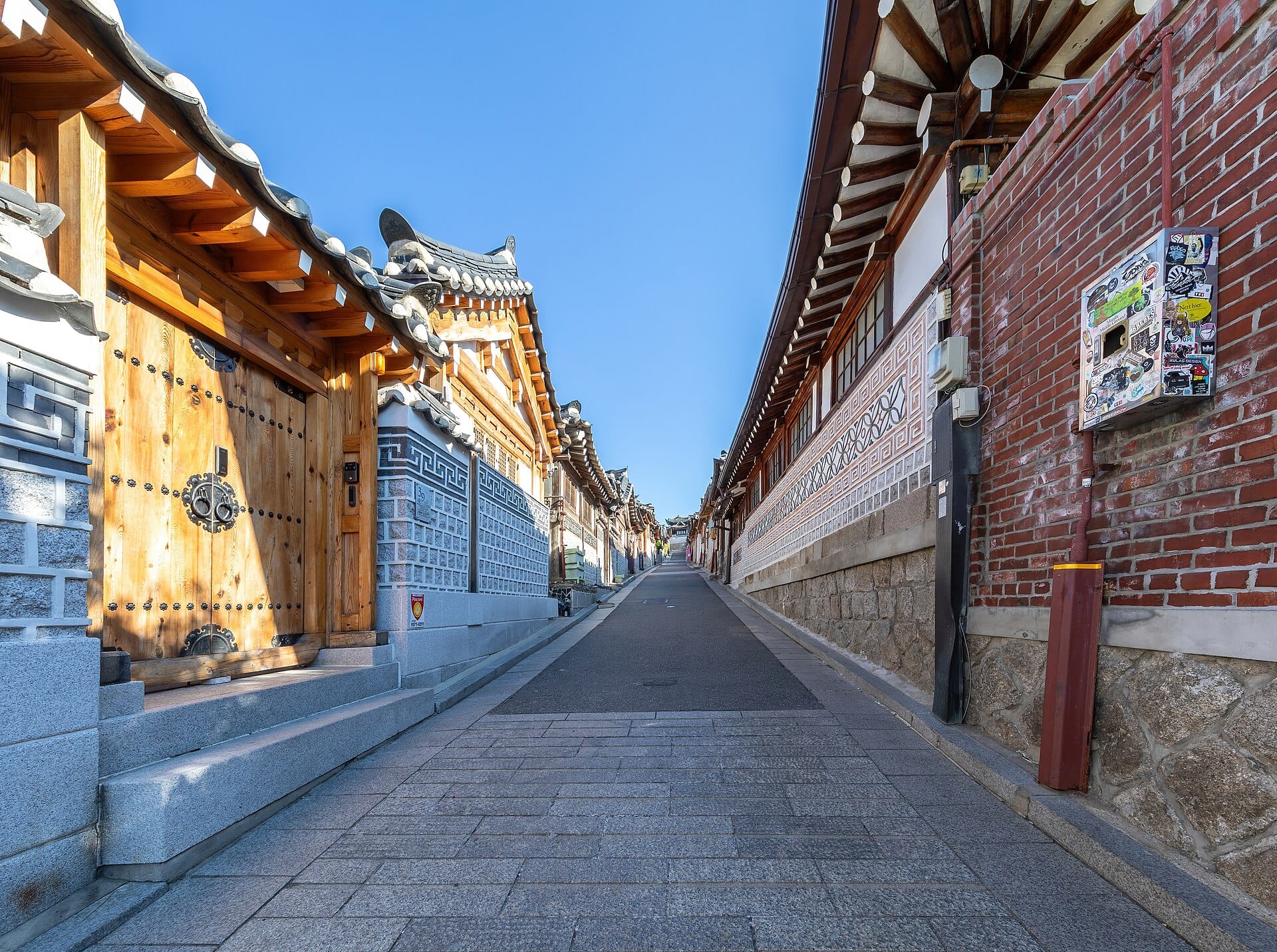
For the traditional side of the city, base yourself around Insadong and Bukchon Hanok Village, where preserved hanok houses, tea shops, and galleries sit within walking distance of the main palaces. Mornings here are calm in a way the rest of central Seoul rarely is, and it’s the most atmospheric quarter for photos and slow wandering. The trade-off is fewer budget beds and a slightly less convenient subway position. Our guide to Bukchon and Insadong covers the hanok lanes, the best photo spots, and how to visit respectfully.
Seongsu-dong — The Trendy Café District
Seongsu-dong is the “Brooklyn of Seoul” — a former factory district reborn as the city’s coolest café and concept-store quarter, all exposed brick, roasteries, and pop-up flagships. It’s where you go for a local, of-the-moment feel rather than headline sights, and it pairs well with a walk along the nearby Han River. If design, coffee, and people-watching are your thing, spend an afternoon here. Our Seongsu-dong guide covers the best cafés, shops, and where to stay in the area.
Also worth a look: Jamsil, across the river in Songpa-gu, trades street-level character for Lotte World, the Seoul Sky observatory and Seokchon Lake — the easiest base if you’re travelling with kids.
Where Should You Stay?
For most first trips, the safe answer is Myeongdong — central, well-connected, and beginner-friendly. But match the area to your priority: Hongdae for nightlife and budget, Itaewon for international food and bars, Gangnam for modern shopping, Bukchon and Insadong for atmosphere, and Seongsu for cafés and a local vibe. Whichever you choose, staying within a few minutes of a subway station matters more than the exact district.
- First trip, want it easy: Myeongdong.
- Nightlife and a younger crowd: Hongdae.
- International food and bars: Itaewon.
- Shopping and modern Seoul: Gangnam.
- Tradition, quiet, and photos: Bukchon & Insadong.
- Cafés and a local feel: Seongsu-dong.
Once you’ve settled on an area, it’s worth comparing stays across every Seoul neighborhood🏨 for your dates before you book. For a full breakdown of each base with specific hotel picks at every budget, read our complete guide to where to stay in Seoul.
Turning Neighborhoods into a Trip
Start by booking your flights to Seoul✈️. Once your dates are set, here’s how to turn these neighborhoods into a trip.
The smartest way to see Seoul is to group each day by area, so you spend your time in the city instead of on the subway. Wander old Seoul around Bukchon in the morning, break for cafés in Seongsu, and end with a night out in Hongdae or Itaewon — that’s a full, well-paced day without backtracking. Our guide to the best things to do in Seoul lays out the highlights by interest, and our 4-day Seoul itinerary threads these neighborhoods into a day-by-day plan.
Getting between them is the easy part. Seoul’s subway ties every district together, and once you have a transit card you can hop from Gangnam to Hongdae in under 40 minutes — our guide to getting around Seoul covers the subway, buses, and airport transfers. Pick your area, book a base near a station, and let the neighborhoods do the rest.
Disclosure: This post contains affiliate links. If you book through these links, I may earn a small commission at no extra cost to you. I only recommend services I’d use myself.