
Last Updated: June 2026
Quick answer: The fastest way from Incheon Airport to Seoul is the AREX express train to Seoul Station, about 43 minutes. The cheapest are the all-stop AREX train and the airport limousine buses, which run all over the city. Taxis and private transfers cost the most but are easiest with luggage or late at night.
Incheon International Airport sits about 50 kilometers west of central Seoul, so your first decision on arrival is how to cover that gap. The good news is that the options are plentiful, cheap by global standards, and well signed in English — a high-speed train, a web of buses that stop near most hotels, and metered taxis all leave from right outside arrivals. This guide compares every way to get from Incheon Airport to Seoul by time, cost, and convenience, so you can pick the right one before you even land.
Below you’ll find each option in detail, a side-by-side comparison, and tips for doing it with luggage, late at night, or on a budget.
Table of Contents
- What’s the Best Way to Get to Seoul?
- The AREX Airport Railroad
- Airport Limousine Buses
- Taxis & Private Transfers
- How Much Does It Cost & How Long?
- Getting Back to the Airport
- Practical Tips
- Plan Your Trip
What’s the Best Way to Get from Incheon Airport to Seoul?
The best way depends on where you’re staying and how much luggage you have. For most travelers, the AREX airport railroad is the sweet spot — fast, cheap, frequent, and immune to traffic. If your hotel is near a bus stop, an airport limousine bus drops you closer to the door with your bags stowed below. If you’re arriving late, traveling as a group, or simply jet-lagged and laden, a taxi or private transfer is the path of least resistance. There’s no single right answer, but the train wins for value and reliability, which is why it’s the default for independent travelers.
The AREX Airport Railroad
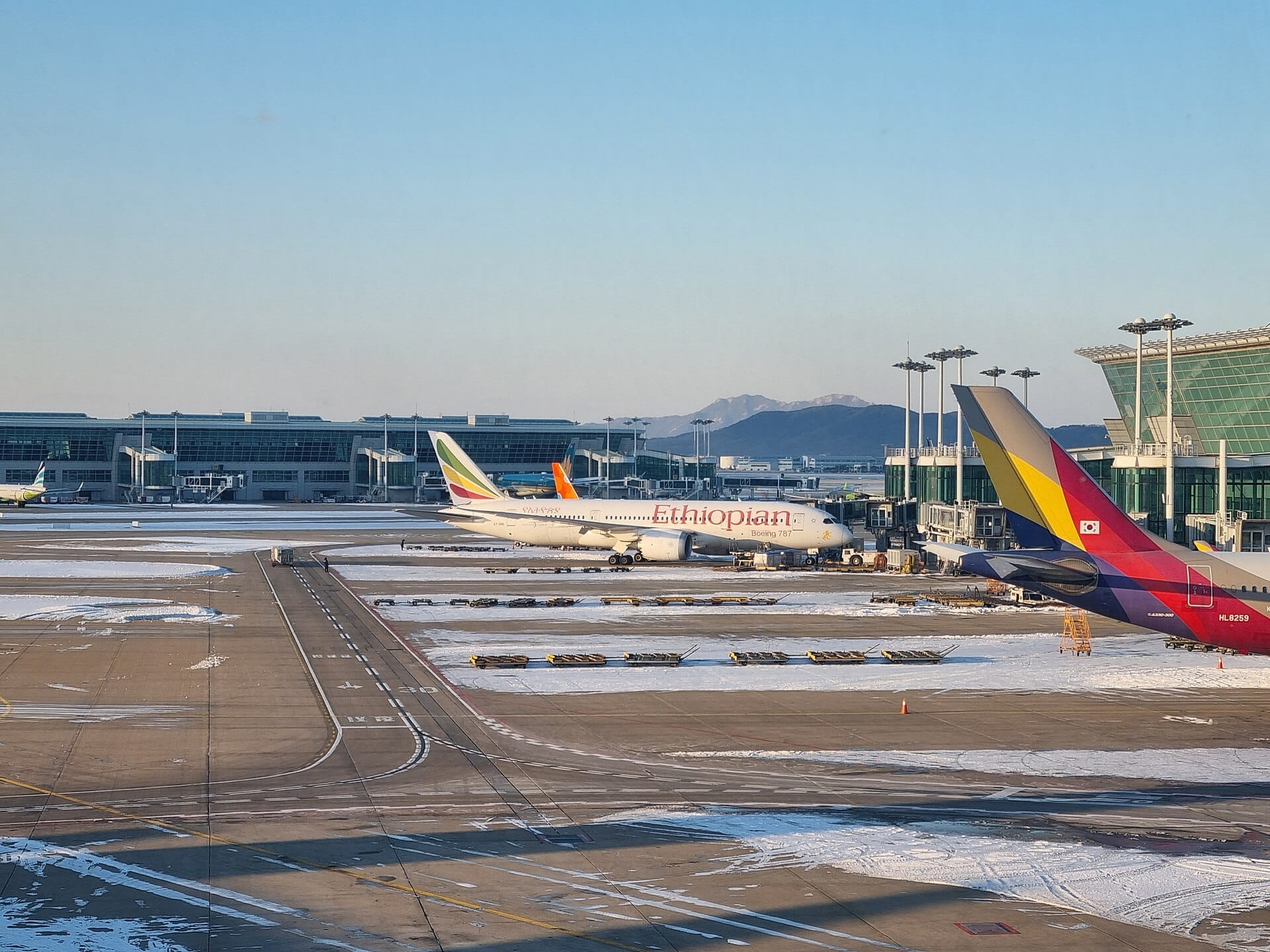
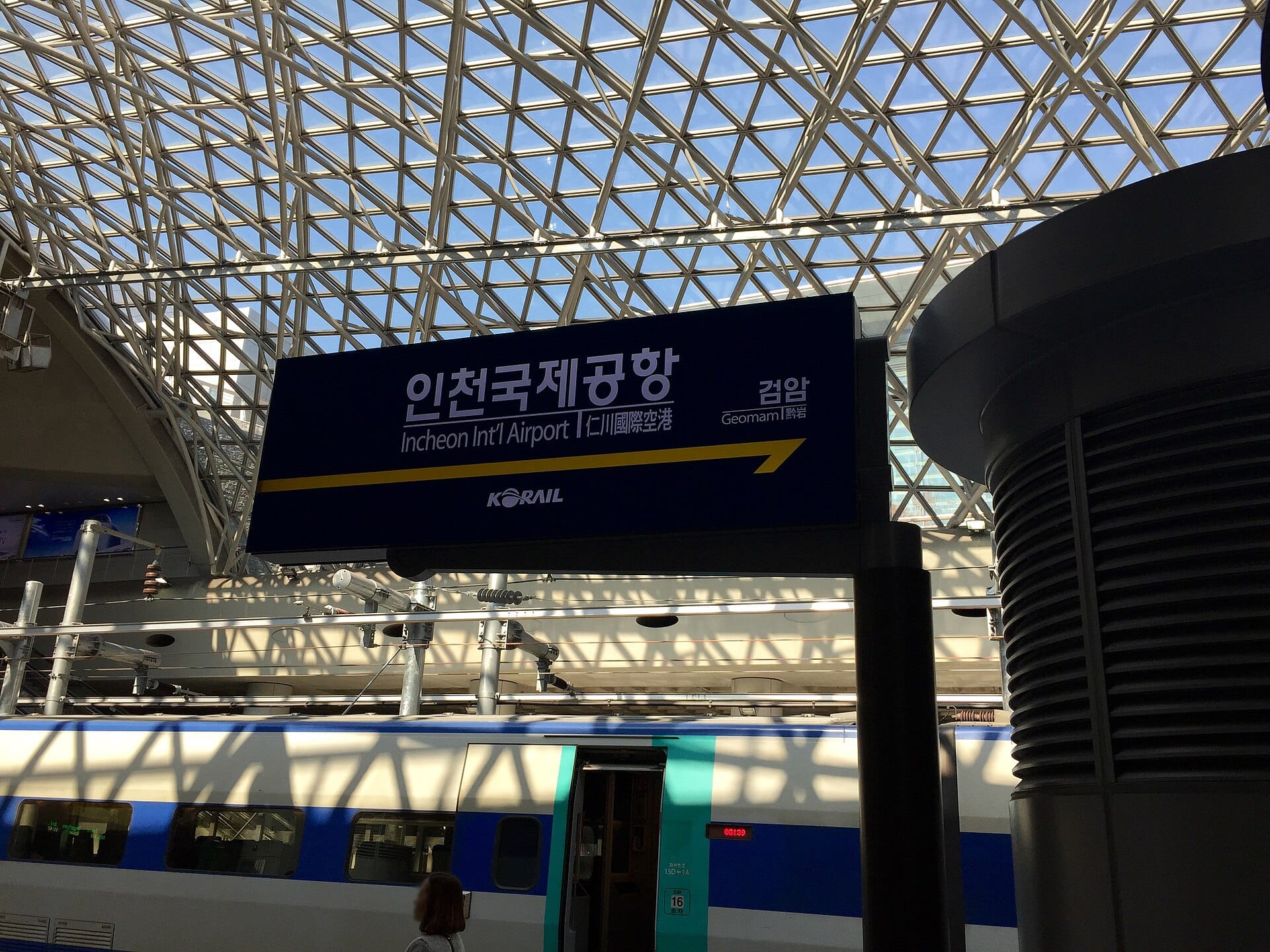
The Airport Railroad (AREX) is the backbone of the airport-to-city journey, running from both terminals straight into central Seoul. It comes in two flavors. The express train runs non-stop to Seoul Station in about 43 minutes, with assigned seats and luggage racks. The all-stop (commuter) train is the same line but stops at stations along the way — including Hongik University (Hongdae), Gongdeok, and Digital Media City — taking around 58 minutes to Seoul Station for a lower fare.
For most people the all-stop train is the better deal: it’s cheaper, comes often, and many hotels are near one of its stops or a quick transfer onto the wider subway. If you’re heading to Hongdae, the AREX is unbeatable — it’s a direct ride. You can tap through with a T-money card (the same rechargeable card you’ll use citywide) or buy a single ticket at the machines. To skip the queues you can also pre-book an airport railroad ticket🎫 online before you fly.
Airport Limousine Buses
The airport limousine buses are the most door-to-door of the public options. Dozens of routes fan out from the arrivals-level bus stops to neighborhoods all over Seoul — Myeongdong, Gangnam, Itaewon, Jamsil, and beyond — often stopping right outside major hotels. You stow your suitcase in the hold, settle into a comfortable coach seat, and let the driver handle the rest, which is a relief after a long flight. If you plan to arrive this way, it pays to pick a hotel on a bus route before you book — our Myeongdong hotel guide flags which ones have a stop at the door.
The catch is traffic: the ride takes roughly 60 to 90 minutes depending on your destination and the time of day, and rush hour can stretch it further. Buy tickets at the clearly marked counters or machines in the arrivals hall, where staff will point you to the right route number for your hotel. For travelers staying somewhere a bus serves directly, it’s often the least stressful choice — no transfers, no stairs, no dragging bags through a station.
Taxis & Private Transfers
A metered taxi from the rank outside arrivals takes about 60 to 70 minutes to central Seoul in light traffic and is the simplest option if you have a lot of luggage or you’ve landed late. Expect the fare to central districts to land in the rough range of ₩65,000–95,000 including expressway tolls, with a late-night surcharge after midnight. Regular (orange or silver) taxis are cheaper than the black “deluxe” ones lined up alongside them.
If you’d rather have a fixed price and a driver waiting with your name on a sign, a private airport transfer removes all the guesswork — handy for families, late arrivals, or anyone who simply wants to step off the plane and into a car. You can arrange a private transfer or airport pickup🎫 in advance so it’s confirmed before you travel. For getting around once you’re in town, our guide to getting around Seoul covers taxis, the Kakao T app, and the subway.
How Much Does It Cost and How Long Does It Take?
Here’s how the main options stack up for a trip to central Seoul. Times are approximate and depend on traffic and your exact destination.
| Option | Time | Rough cost | Best for |
|---|---|---|---|
| AREX express | ~43 min | $ | Speed, Seoul Station |
| AREX all-stop | ~58 min | ¢ | Budget, Hongdae |
| Limousine bus | 60–90 min | $ | Door-to-door, luggage |
| Taxi | 60–70 min | $$$ | Late arrivals, groups |
| Private transfer | 60–70 min | $$$ | Families, fixed price |
The pattern is clear: trains win on cost and reliability, buses win on convenience if one serves your hotel, and taxis or transfers win on comfort at a premium. For a first arrival when you’re tired and unsure, paying a little more for a direct ride can be worth it; on a tighter budget, the all-stop train is hard to beat.
Getting Back to the Airport
The return trip works the same way in reverse, with one tip: build in a buffer. The AREX and buses are reliable, but Seoul’s traffic is unpredictable, so for the bus or a taxi give yourself extra time in the morning and evening rush. If you’re catching an early or international flight, staying near Seoul Station the night before lets you hop straight onto the express train — our guide to where to stay in Seoul covers that area and others. Incheon also offers city check-in and baggage drop for some airlines at Seoul Station, which can lighten the journey out. If your flight is early enough that the commute isn’t worth it at all, our guide to where to stay in Incheon covers the airport-side hotels instead.
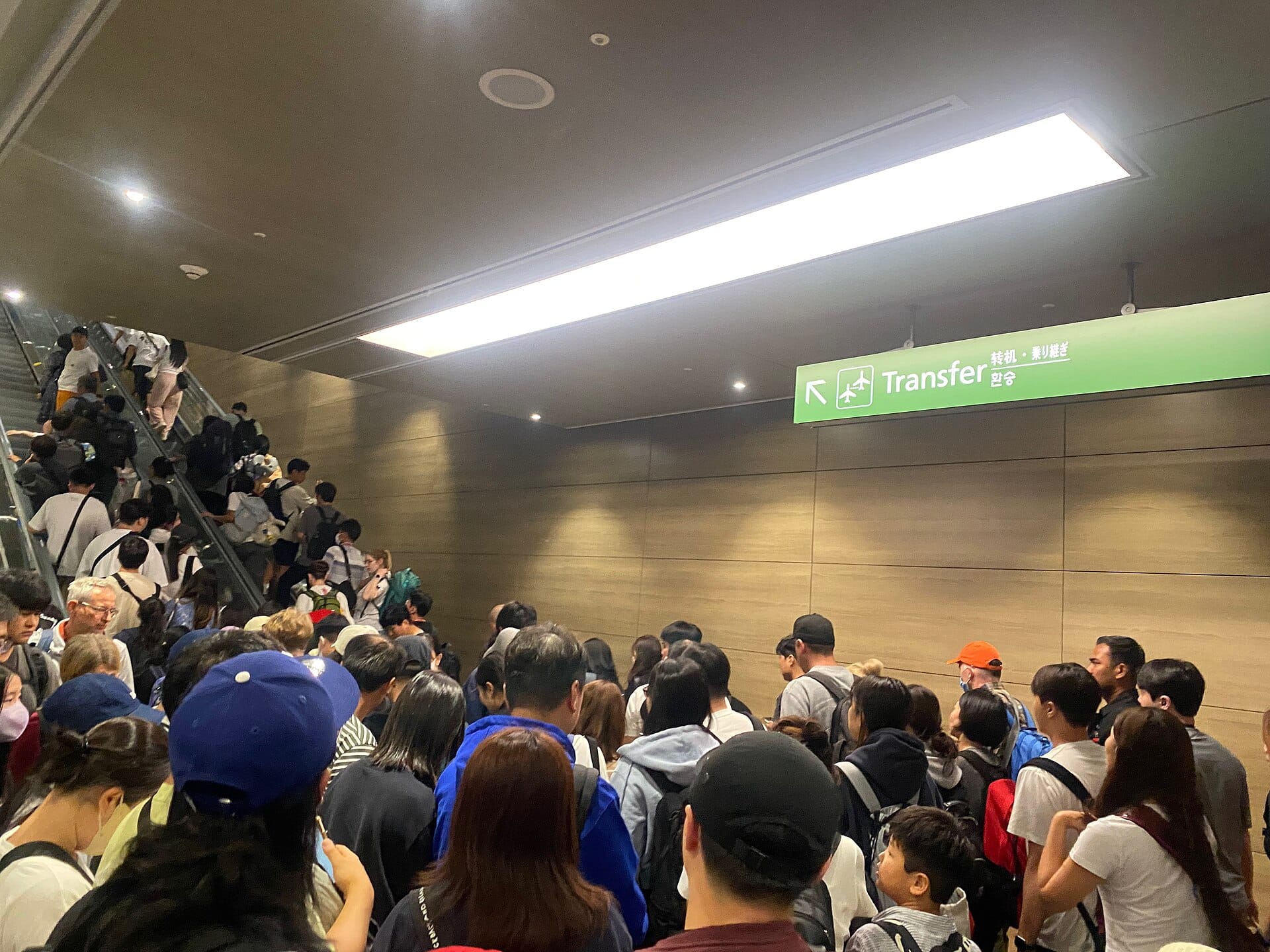
Budget for the queue before the train. Immigration is the slow step at peak times — waits hit 80 minutes this summer before the Ministry of Justice began adding officers.
Practical Tips
- Get a T-money card first. Buy one at the airport convenience store; it works on the AREX, subway, buses, and many taxis citywide.
- Get connected on arrival. A SIM or eSIM means maps and translation work from the moment you land.
- Check your terminal. Incheon has two terminals — confirm which one your airline uses, as transport stops differ.
- Note the last train. The AREX stops running late at night; if you land after it, plan on a bus or taxi.
- Have your hotel address in Korean. Show it to a bus agent or taxi driver to avoid confusion.
- Time a layover around local culture. Landing in early October? The Bupyeong Pungmul Festival is a free, no-reservation folk festival reachable from the AREX/Line 1 network without committing to a full day trip into central Seoul.
Plan Your Trip
Sort the basics. Get the rest of the city wired with our guide to getting around Seoul, and pick a well-connected base with our guide to where to stay in Seoul. And before you lock anything in, it’s worth comparing fares on the flight into Incheon✈️ once your dates are set.
Build the days. Turn your arrival into an itinerary with our 4-day Seoul itinerary — or book transfers, passes, and tours🎫 ahead for a smooth first day.
Disclosure: This post contains affiliate links. If you book through these links, I may earn a small commission at no extra cost to you. I only recommend services I’d use myself.