
Last Updated: June 2026
Quick answer: The must-try foods in Seoul are Korean BBQ, bibimbap, tteokbokki, and Korean fried chicken, plus market street food at Gwangjang and warming stews like kimchi jjigae. Most are cheap, and the markets and BBQ streets are the best places to eat them.
Figuring out what to eat in Seoul is half the fun of the trip and, for a lot of visitors, the whole reason they came. This is a city where a smoky cut of pork belly, a bubbling tofu stew, and a paper cup of spicy rice cakes from a market stall can all happen in a single afternoon — and where the food is cheap, fast, and almost impossible to get wrong.
If you’re new to Korean food, the menu can feel overwhelming. This guide cuts it down to twelve dishes worth seeking out, what each one actually is, and where to find it, so you can eat your way through the city with a plan instead of pointing at random photos.
Table of Contents
- What to Eat in Seoul: The Essentials
- Korean BBQ — Samgyeopsal & Galbi
- Bibimbap — The Mixed Rice Bowl
- Street Food — Tteokbokki, Gimbap & More
- Stews, Soups & Banchan
- Korean Fried Chicken & Beer
- Noodles, Hot and Cold
- Is Korean Food in Seoul Very Spicy?
- Where Should You Eat in Seoul?
- Dining Tips for First-Timers
- Plan Your Trip
What to Eat in Seoul: The Essentials
If you only have a few days, prioritize Korean BBQ, bibimbap, tteokbokki, and Korean fried chicken — the four dishes that best capture how Seoul eats, from sit-down feasts to street snacks. Build outward from there with a stew, a bowl of noodles, and whatever the market stall in front of you is selling. Here’s the short list at a glance.
| Dish | What it is | Best for |
|---|---|---|
| Samgyeopsal | Grilled pork belly, cooked at your table | A group dinner out |
| Galbi | Marinated grilled short ribs | A BBQ splurge |
| Bibimbap | Rice bowl with vegetables, egg & chili paste | An easy first meal |
| Tteokbokki | Chewy rice cakes in sweet-spicy sauce | Street snacking |
| Korean fried chicken | Double-fried chicken, often with beer | A casual night out |
| Kimchi jjigae | Hearty kimchi-and-pork stew | A cheap, warming lunch |
| Sundubu jjigae | Soft tofu stew with a cracked egg | Comfort food |
| Samgyetang | Whole young chicken in ginseng broth | A restorative meal |
| Naengmyeon | Cold buckwheat noodles | A summer day |
| Japchae | Stir-fried sweet-potato glass noodles | A shared side |
| Gimbap | Seaweed-and-rice rolls | A grab-and-go lunch |
| Hotteok | Griddled sweet syrup-filled pancake | A winter street treat |
Korean BBQ — Samgyeopsal & Galbi
If you eat one meal in Seoul, make it Korean BBQ. You grill the meat yourself over charcoal or gas set into the table, then wrap each bite in lettuce with garlic, grilled kimchi, and a dab of ssamjang (a savory-spicy paste). The everyday cut is samgyeopsal, thick slices of unmarinated pork belly; the celebration cut is galbi, sweet marinated beef short ribs.
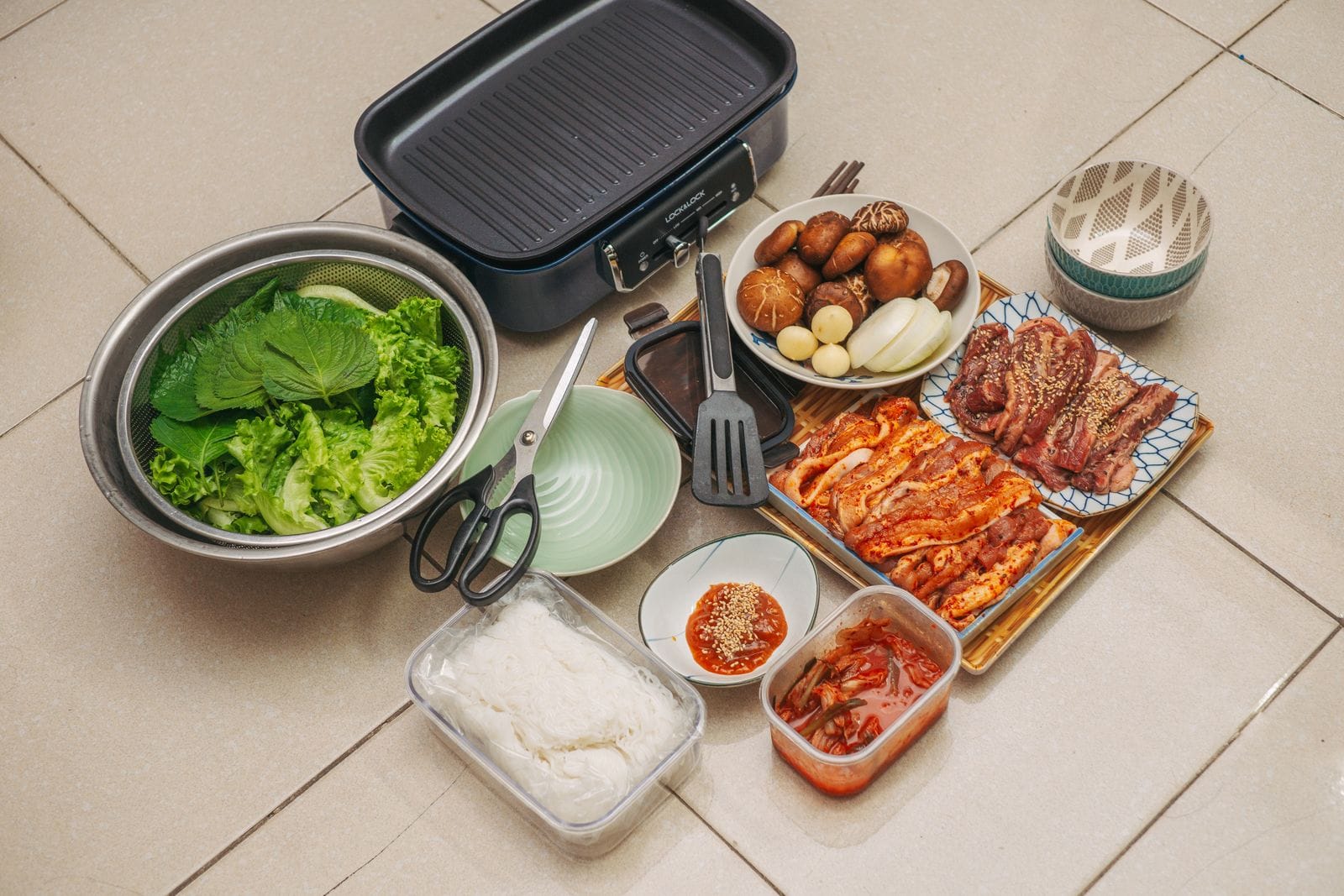
It’s a social, hands-on meal best done with a group, and the staff will usually help with the grilling if you look lost. Order a portion or two per person to start — you can always add more — and don’t skip the cold soft drinks or soju to cut the richness. Almost every neighborhood has a good BBQ joint; follow the smoke and the crowds — and see our Korean BBQ guide for how to order and grill it like a local.
Bibimbap — The Mixed Rice Bowl
Bibimbap is the easiest Korean dish to love and the safest first meal if you’re nervous about spice — a bowl of warm rice topped with seasoned vegetables, a fried egg, and a spoonful of gochujang (red chili paste) that you mix together yourself. You control the heat by how much paste you stir in.
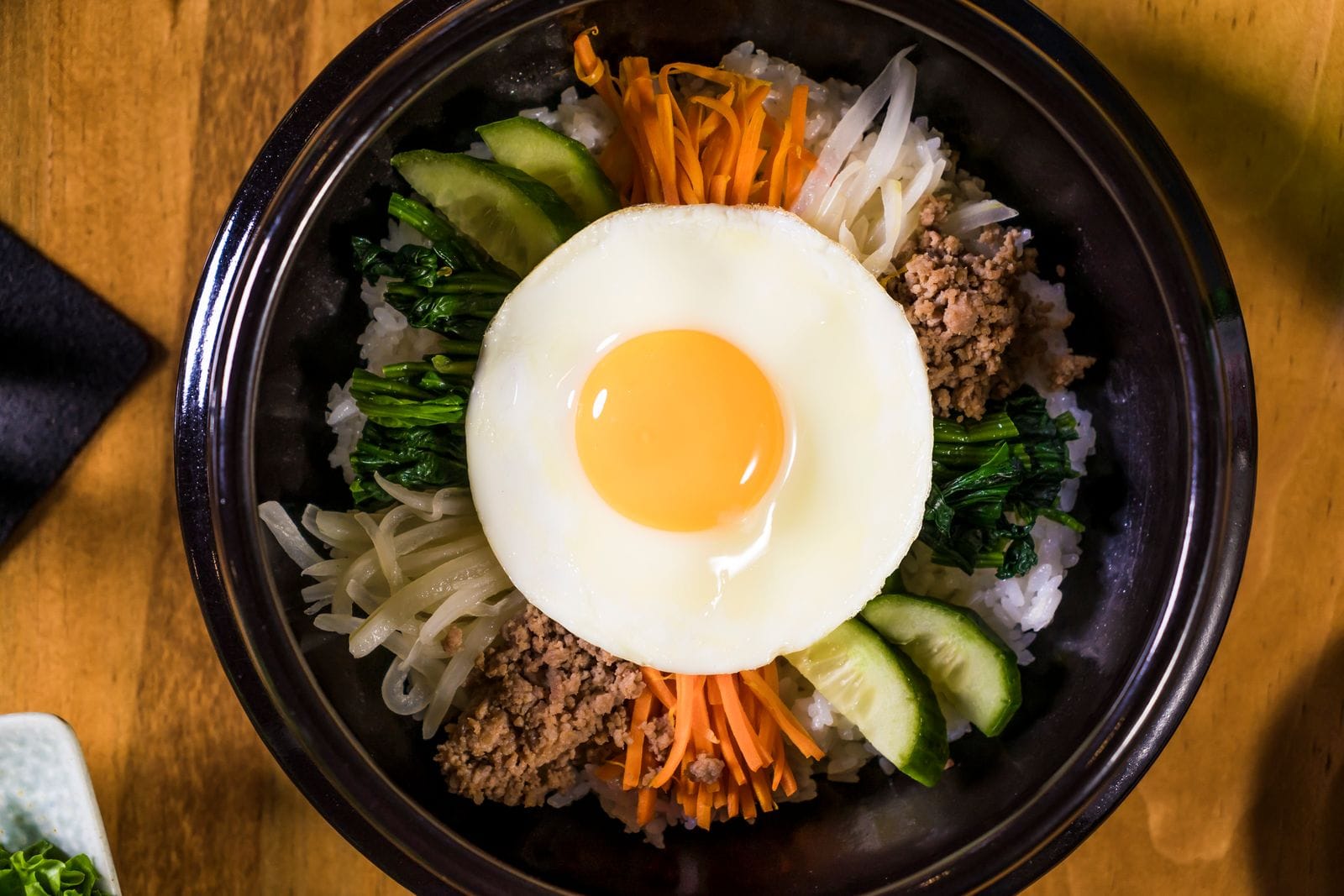
Order the dolsot (stone-pot) version if you can: it arrives sizzling in a hot stone bowl that crisps the rice at the bottom into golden, crunchy bits. Jeonju, an easy trip south, is the dish’s spiritual home — more on that in our guide to day trips from Seoul.
Street Food — Tteokbokki, Gimbap & More
Seoul’s street food is its own food group, and the markets are where it shines. The star is tteokbokki — chewy cylinders of rice cake simmered in a sweet, spicy red sauce — usually eaten standing up from a paper cup. Around it you’ll find gimbap (rice-and-filling rolls wrapped in seaweed), twigim (Korean tempura), hotteok (a syrup-filled griddle pancake), and gyeranppang (a little sweet egg bread).
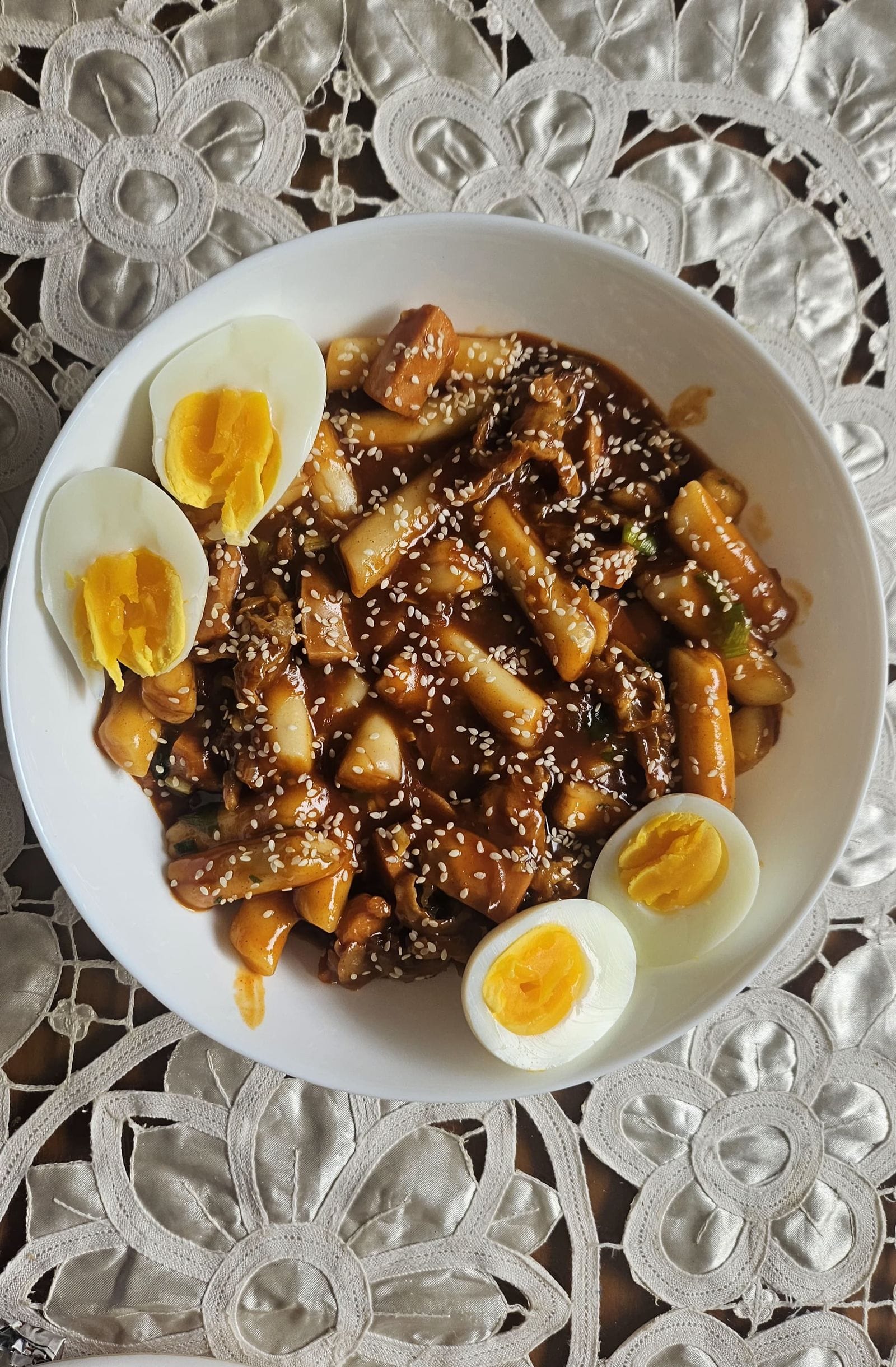
The best hunting grounds are Gwangjang Market — famous for bindaetteok (mung-bean pancakes) and mayak gimbap — and the evening stalls of Myeongdong, where the food is geared to visitors. Bring cash in small bills; most stalls don’t take cards, and portions are cheap enough to graze across a dozen of them.
Stews, Soups & Banchan
Korean comfort food is built on bubbling stews (jjigae) and soups, almost always served with rice and a spread of free side dishes. The two to know are kimchi jjigae, a tangy, warming stew of aged kimchi and pork, and sundubu jjigae, a silky soft-tofu stew with a raw egg cracked in at the table. In summer, locals counterintuitively beat the heat with samgyetang, a whole young chicken stuffed with rice and ginseng in a clear, restorative broth.
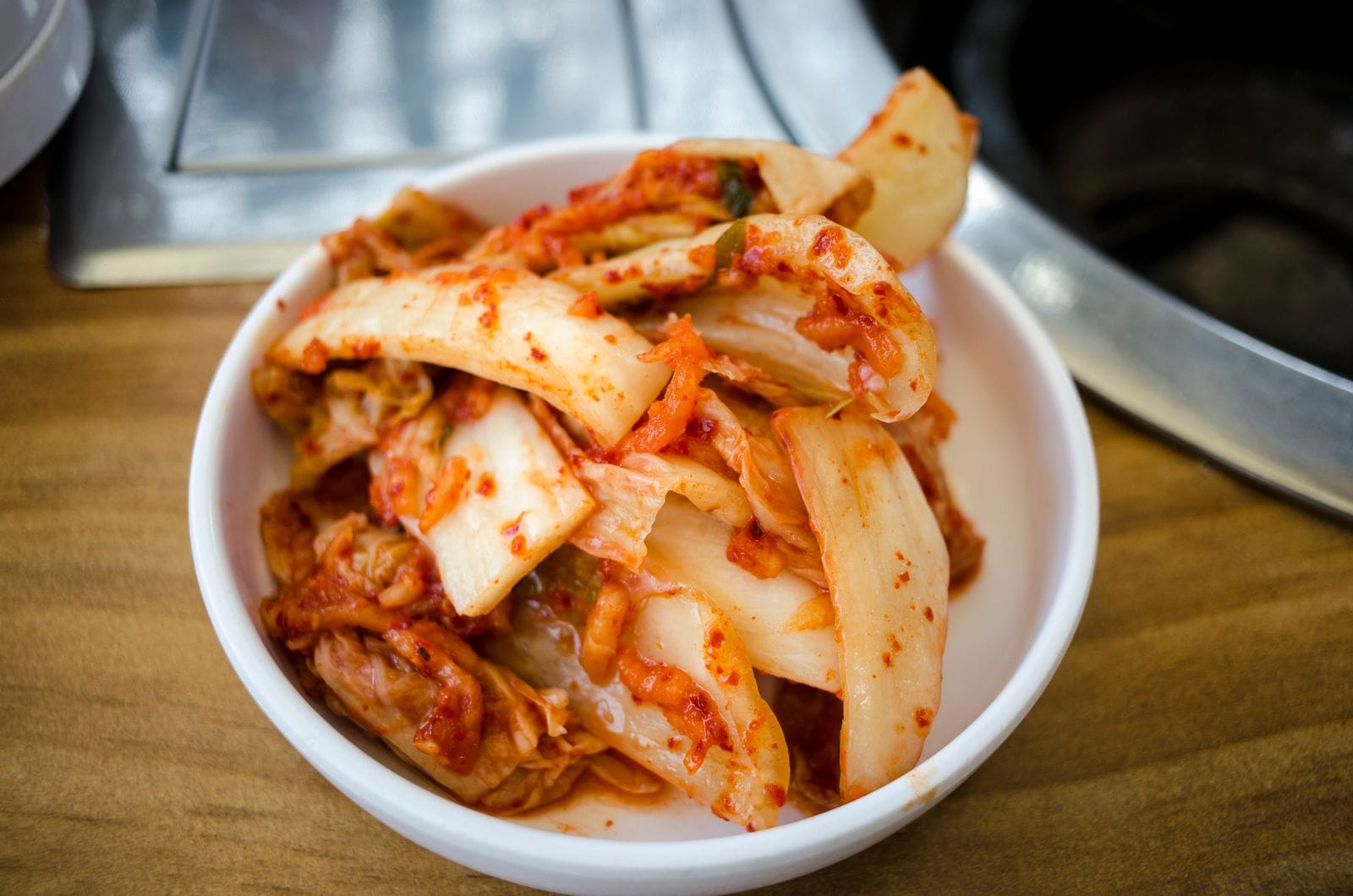
Whatever you order, it arrives with banchan — the little plates of kimchi, pickled vegetables, and seasoned greens that come free with most meals and are refilled on request. They’re not an afterthought; they’re half the meal, so work your way across all of them.
Korean Fried Chicken & Beer
Korean fried chicken is a different beast from the Western version — double-fried for an impossibly thin, glassy crust that stays crisp under its sauce. The two essentials are plain huraideu (crunchy and unsauced) and yangnyeom (coated in a sweet-and-spicy glaze); order half-and-half if you can’t decide. Paired with a cold beer, it’s known as chimaek (chicken + maekju), and it’s the country’s favorite casual night out.
It’s the perfect end to a long day of sightseeing — many places deliver to your accommodation, or you can settle into a noisy chicken-and-beer joint in Hongdae and watch the neighborhood come alive after dark.
Noodles, Hot and Cold
Two noodle dishes round out the list. Naengmyeon is the summer classic — chewy buckwheat noodles served in an icy, tangy broth (mul-naengmyeon) or tossed in a fiery sauce (bibim-naengmyeon), and the traditional partner to a BBQ meal. Japchae is the crowd-pleaser: springy sweet-potato glass noodles stir-fried with vegetables and a touch of sesame, served warm or at room temperature and easy on the spice.
For a quick, cheap solo lunch, look for kalguksu (hand-cut wheat noodles in a warm broth) — the kind of unfussy bowl Koreans eat on a rainy afternoon.
Is Korean Food in Seoul Very Spicy?
Korean food in Seoul is less spicy than its reputation suggests. Plenty of the staples are mild — bibimbap lets you add the chili paste yourself, and samgyeopsal, galbi, japchae, gimbap, and samgyetang are barely spicy at all. The fiery dishes are real but easy to spot and avoid: tteokbokki, kimchi jjigae, and yangnyeom (sauced) fried chicken are the ones that bite.
If you’re sensitive to heat, the phrase to remember when ordering is “an maewoyo” (not spicy), and a bowl of plain rice or a sip of the free water cools your mouth far faster than anything else. Dairy isn’t a given at Korean tables, so rice is your best reset between bites.
Where Should You Eat in Seoul?
For street food and traditional dishes, head to the markets — Gwangjang for the classic stall experience, Myeongdong for visitor-friendly evening snacks between the cosmetics and fashion shops. For Korean BBQ and chicken-and-beer, the lively districts of Hongdae and Jongno are reliable. And for a sit-down regional meal, the food deepens the farther you travel: Jeonju for bibimbap, Busan for seafood, both covered in our day-trips guide. And for coffee and café culture, no neighborhood beats Seongsu-dong.
If you want to go deeper fast, join a guided street-food tour of the markets🎫 with a local who can order the things you’d never find alone, or take a hands-on Korean cooking class🎫 to bring a few recipes home. Either pairs well with a market day on our 4-day Seoul itinerary.
Dining Tips for First-Timers
- Carry cash in small bills. Cards work in restaurants, but market stalls and older spots are often cash-only.
- Banchan and water are free. The side dishes refill on request, and water (often self-serve) won’t be on the bill.
- Tipping isn’t a thing. Don’t tip — it’s not expected and can cause confusion.
- Many dishes are made for two. Stews and BBQ are usually portioned for sharing, so travel light on solo orders.
- Use a translation app for menus. Papago handles Korean better than most; photo-translate a menu if there’s no English.
- Look for the busy place. A queue of locals beats an empty restaurant with a glossy English sign every time.
Plan Your Trip
Start by booking your flights to Seoul✈️. Once your dates are set, here’s how to plan the rest.
Book a food experience. A market food tour or cooking class🎫 is the fastest way to eat well on your first day, before you’ve found your footing.
Stay near the food. Basing yourself centrally puts the markets and BBQ streets within walking distance — see our guide to where to stay in Seoul for the best-placed neighborhoods.
Get there easily. The markets all sit on the subway; our guide to getting around Seoul covers the T-money card and the apps that point you to the right exit.
Disclosure: This post contains affiliate links. If you book through these links, I may earn a small commission at no extra cost to you. I only recommend services I’d use myself.