
Last Updated: July 2026
Quick answer: Where to stay in Gangneung depends on which Gangneung you came for. For the classic beach holiday, book on Gyeongpo or Gangmun Beach, the city’s main bay and its widest choice of oceanfront hotels. If you’re arriving by KTX with no car, sleep by Gangneung Station and Jungang Market downtown, the cheapest and most walkable base. And if the trip is about sunrise, sea cliffs and slow coffee, head for Anmok or Jeongdongjin on the quieter coast, where the city’s most unusual hotels sit. Below, each of those choices gets its own section with the specific hotels that make it work.
Gangneung is the largest coastal city in Gangwon Province, about two hours from Seoul by KTX. It’s known for the long sweep of Gyeongpo Beach, the coffee shops along Anmok Beach that helped start Korea’s café-street trend, and Ojukheon — the Joseon-era house where scholar Yi I (“Yulgok”) and his mother, the painter Shin Saimdang, were born, whose portraits appear on Korea’s 5,000 and 50,000 won notes. The city hosted ice sports for the 2018 PyeongChang Winter Olympics, and its annual Gangneung Danoje Festival is inscribed on UNESCO’s Intangible Cultural Heritage list — which matters for your booking, because it’s one of the weeks the city fills up.
Table of Contents
- Beach Resort, Station Downtown or Sunrise Coast — Which Gangneung Is Yours?
- Is Gyeongpo Beach Worth Paying Extra For?
- Arriving by KTX: Why Sleep Next to Gangneung Station?
- Can You Base Yourself on Anmok’s Coffee Street?
- Jeongdongjin and the Cliff Coast: Which Stay for a Sunrise?
- When Do Gangneung Prices Spike — Summer, Danoje or Holidays?
- KTX or Express Bus from Seoul — and Do You Need a Car After?
- Ojukheon, the Lake Loop and the Rest of the East Sea Coast
Beach Resort, Station Downtown or Sunrise Coast — Which Gangneung Is Yours?
Pick Gyeongpo or Gangmun Beach if you want to walk to the sand from a hotel with a pool; pick downtown near Gangneung Station if you’re traveling by train on a budget; pick Anmok or Jeongdongjin if a quiet, scenic room matters more than being central. Gangneung is strung out along the coast, so the three areas feel like different trips rather than different neighborhoods of the same one:
- Gyeongpo & Gangmun Beaches. The main resort strip — a long sandy bay lined with hotels facing the water, with Gyeongpo Lake just behind it. The default for first-timers, families, and couples who want plenty of choice.
- Gangneung Station & Jungang Market. The everyday downtown core, a few minutes from the KTX platform and the market. Plain, practical, and the easiest place to manage without a car.
- Anmok, Jeongdongjin & the art coast. The quieter coastline, with the famous coffee street at Anmok and, further south, cliffside art hotels and Korea’s best-known sunrise-viewing train station. Slower and more romantic, but more spread out.
| Area | Best for | Vibe | Typical nightly rate |
|---|---|---|---|
| Gyeongpo & Gangmun Beaches | First-timers, families, couples | Resort strip, easy beach access | ₩120,000–300,000+ |
| Gangneung Station & Jungang Market | Car-free KTX travelers | Everyday downtown, market food | ₩60,000–100,000 |
| Jeongdongjin & Anmok | Couples, art & sunrise seekers | Quiet coastal cliffs, unique stays | ₩90,000–250,000 |
Gyeongpo Beach or downtown Gangneung — which is better?
It’s a trade between view and convenience. Gyeongpo gives you the widest choice of hotels in the city, all within walking distance of the sand, usually with an ocean view and a pool. Downtown is plainer, but it puts the KTX station and Jungang Market on your doorstep and cuts out taxi rides entirely if you’re relying on the train. The two areas are only about a 10-minute taxi ride apart, so the choice is less about access and more about what you want to see when you open the curtains.
How many nights does Gangneung need?
Two nights covers the essentials — a day for Gyeongpo Beach, Ojukheon and the Anmok coffee street, and a half-day for Jeongdongjin’s sunrise coast and one of its art hotels. Add a third night if you want a slower pace, a Danoje Festival visit in early summer, or a side trip further along the coast. On a two-night trip, one base is enough; on three nights, some travelers split it — two nights on the beach strip and a final night at a cliffside stay for the sunrise.
Is Gyeongpo Beach Worth Paying Extra For?
Yes, if the beach is the point of the trip. The Gyeongpo and Gangmun strip runs roughly ₩120,000–300,000 a night — double or triple downtown — but you’re buying an ocean view, a pool, and the ability to walk to the sand and the lakeside pine forest without planning transport. These four hotels show the range, from design-led luxury to family apartments.
SEAMARQ Hotel — the splurge
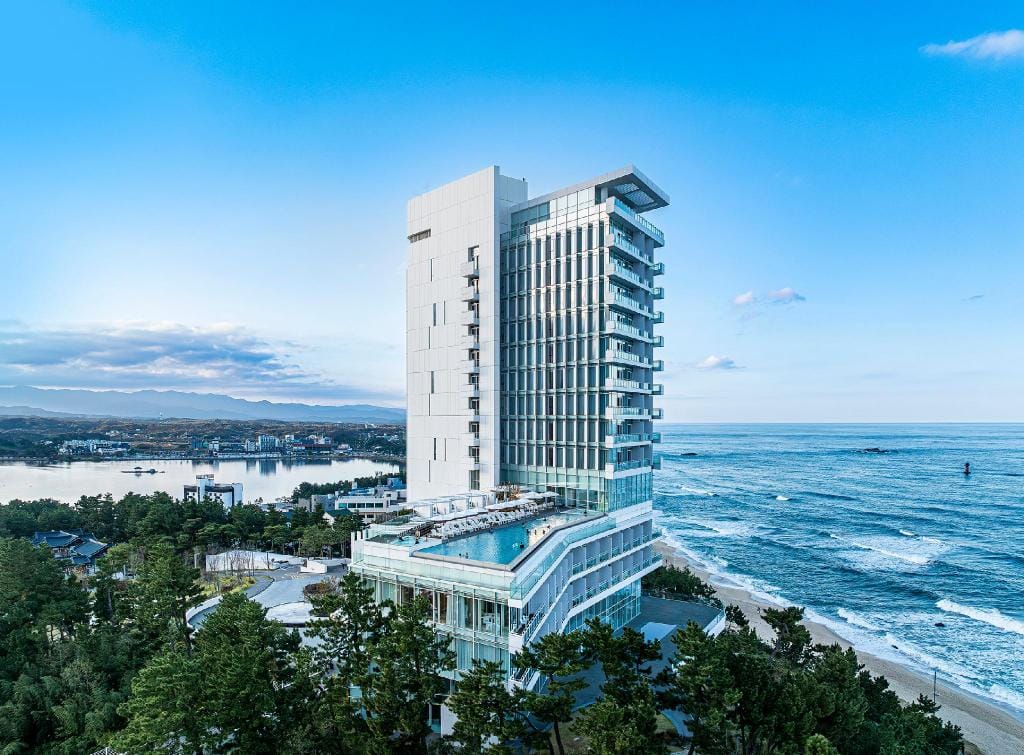
SEAMARQ Hotel🏨 is a 5-star ocean-view hotel designed by internationally renowned architect Richard Meier, overlooking Gyeongpo Beach. Every room comes with a complimentary minibar, and the heated outdoor pool runs year-round, which is what makes it a consistent favorite for couples celebrating anniversaries even outside summer. It sits at the top of the strip’s price range, so it’s the one to book when the hotel itself is part of the occasion.
Skybay Hotel Gyeongpo — a terrace in every room
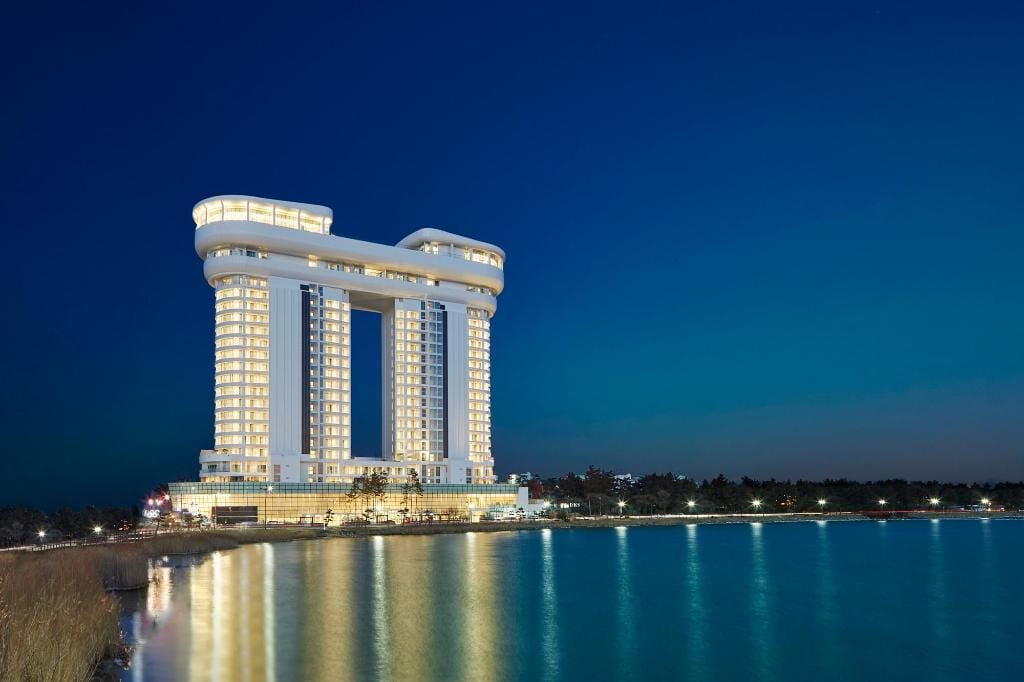
Skybay Hotel Gyeongpo🏨 sits right in front of Gyeongpo Beach, with an ocean-view terrace in every room and an infinity pool overlooking the sea. It’s the pick for couples who want a romantic stay but would rather be on the lively main strip, close to restaurants and the lake, than out on the quieter southern cliffs.
St. John’s Hotel — for families on Gangmun Beach
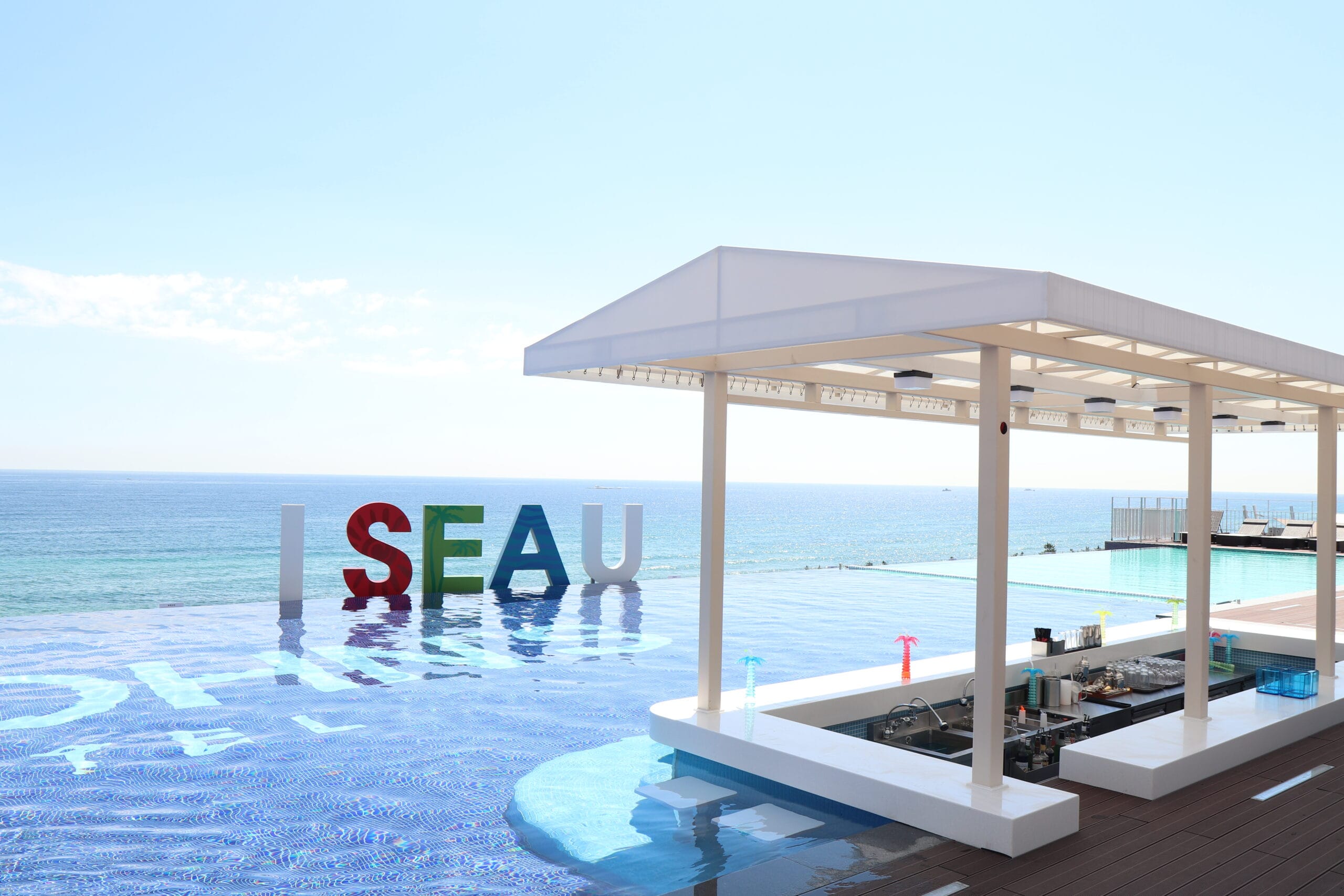
St. John’s Hotel🏨 sits directly in front of Gangmun Beach, so an ocean-view sunrise is right outside the window, and it’s close enough to Gangneung Station to make a Jeongdongjin train trip easy. The outdoor infinity pool gives kids somewhere to swim with a sea view without leaving the property — a solid choice for families who want the beach at their doorstep.
Lakai Sandpine Resort — kitchen and living room for longer stays
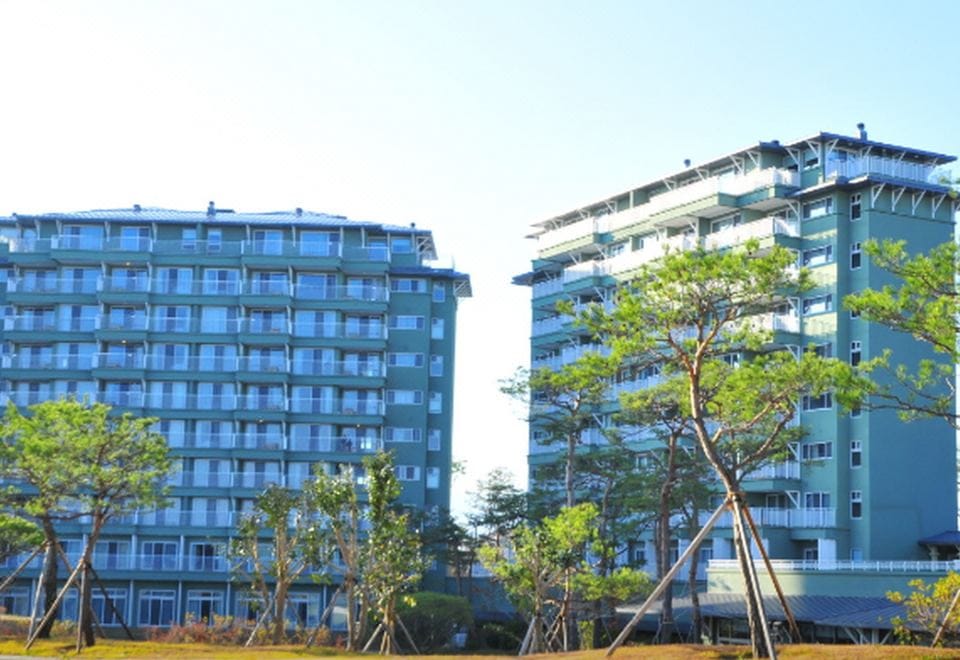
Lakai Sandpine Resort🏨 sits right in front of Gyeongpo Beach, an easy stroll to the sand, with rooms that come with a living area and a small kitchen for cooking your own meals. Indoor and outdoor pools round it out. For a family staying three or four nights, the kitchen is what tips it over the hotels above — it takes the pressure off eating every meal out.
Getting around from the strip: several hotels near the lake offer or rent bikes, and the Gyeongpo Lake loop is the easiest way to see the pavilions and pine forest without a car. Taxis to downtown or the station take about 10 minutes.
Arriving by KTX: Why Sleep Next to Gangneung Station?
Because it removes every transfer. Downtown puts the station, Jungang Market, Wolhwa Street and the bus terminal all within walking distance, and it’s the value play of the city — everyday hotels here generally run ₩60,000–100,000 a night, well below the beach strip for a comparable standard of room. Taxis and local buses then cover Gyeongpo Beach and the coffee street cheaply.
Browndot Gangneung Station
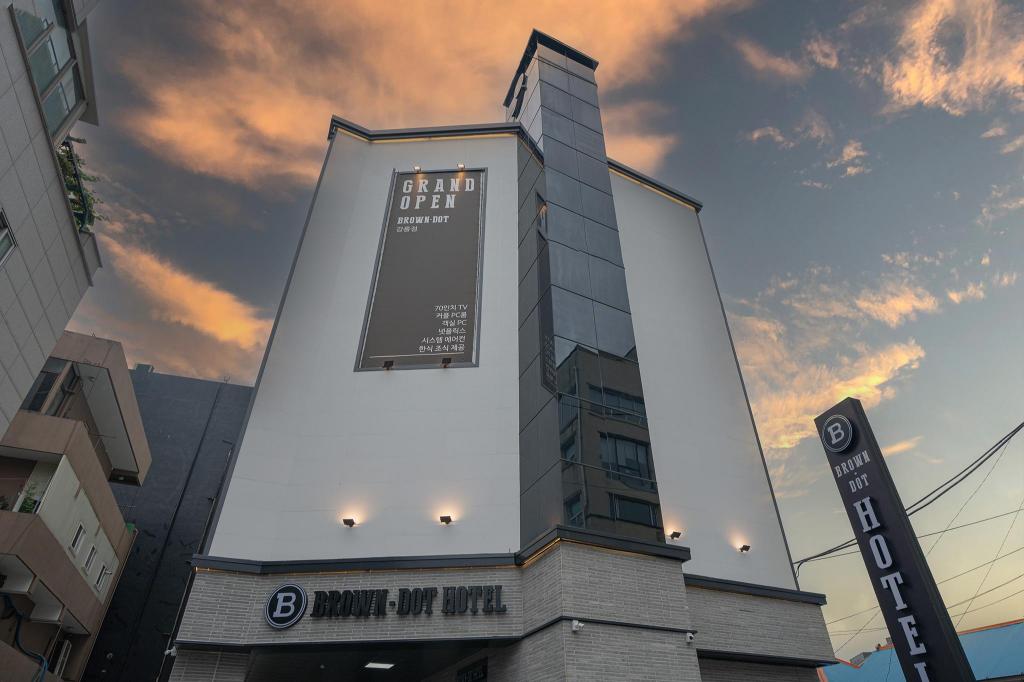
Browndot Gangneung Station🏨 is a short walk from Gangneung Station, so you can check in right after stepping off the KTX. Jungang Market and Wolhwa Street are both within walking distance, which makes evenings easy: market food for dinner, then back to the room on foot. Rooms are clean, and breakfast is a simple home-style spread — handy for fueling up before a day out on the coast. If you’re only in Gangneung for one night between trains, this is the most efficient base in the city.
Can You Base Yourself on Anmok’s Coffee Street?
You can, and it suits travelers who’d rather spend the afternoons in cafés than on a crowded beach. Anmok Beach, just north of Gyeongpo, is home to Gangneung’s famous coffee street — dozens of roasteries and cafés that helped popularize the coffee-shop culture now found across Korea. The trade-off is fewer hotels than the main strip, so the one below is the standout.
Shillamonogram Gangneung Hotel
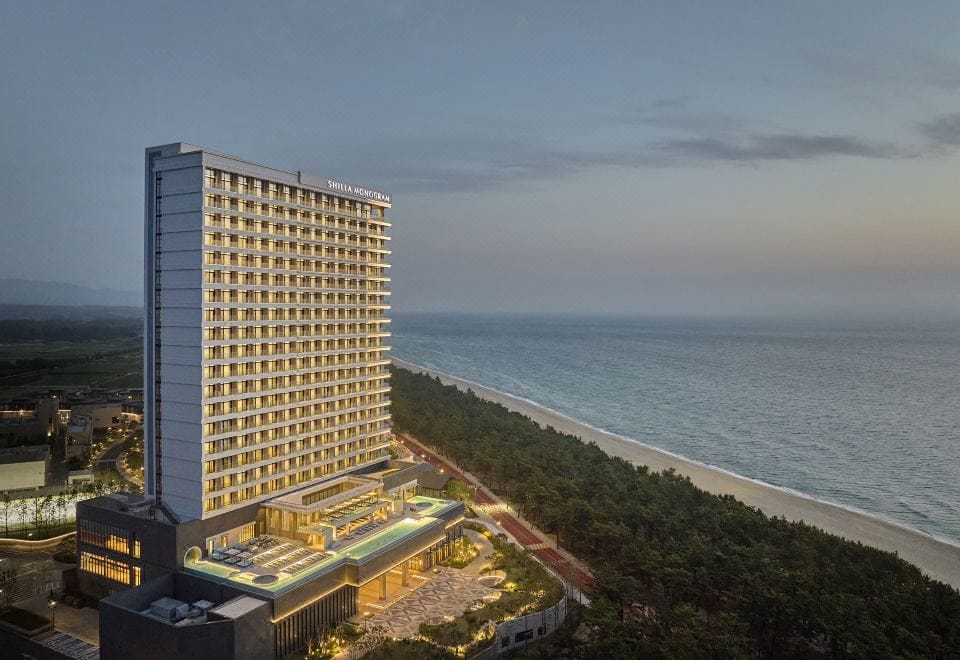
Shillamonogram Gangneung Hotel🏨 is a newly built hotel facing Anmok Beach, where rooms look out over both the ocean and a stand of pine trees at once. Gyeongpodae Pavilion and Jungang Market are both a short drive away, so staying here doesn’t cut you off from the rest of the city. As one of the newest builds in town, it’s a good alternative to the Gyeongpo strip if you’d rather wake up near the coffee street.
Jeongdongjin and the Cliff Coast: Which Stay for a Sunrise?
Jeongdongjin, a short drive or local train ride south, is known for its Guinness-recognized station right next to the sea and for being one of Korea’s most popular sunrise-viewing spots. The hotels down here are less about convenience and more about the experience — rates span roughly ₩90,000–250,000, and each of these three delivers a different kind of view.
Sun Cruise Resort and Yacht — sunrise from a “ship”
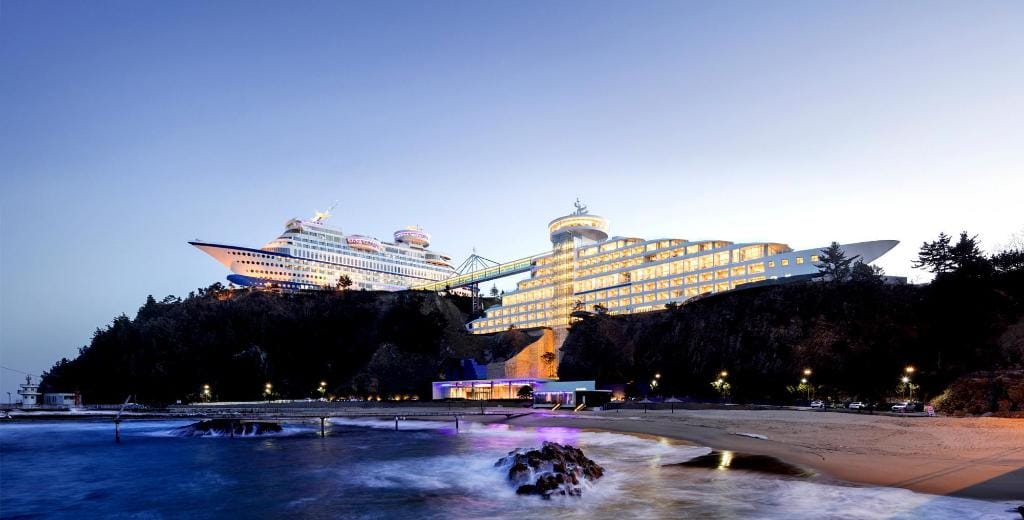
Sun Cruise Resort and Yacht🏨 is built in the shape of a cruise ship on a hillside above Jeongdongjin Beach, close to the filming spot that made the area famous. From the upper decks, it genuinely feels like watching the East Sea sunrise from the deck of a ship — a memorable pick if the view matters more than a central location.
Haslla Art World Museum Hotel — sleep inside an art project
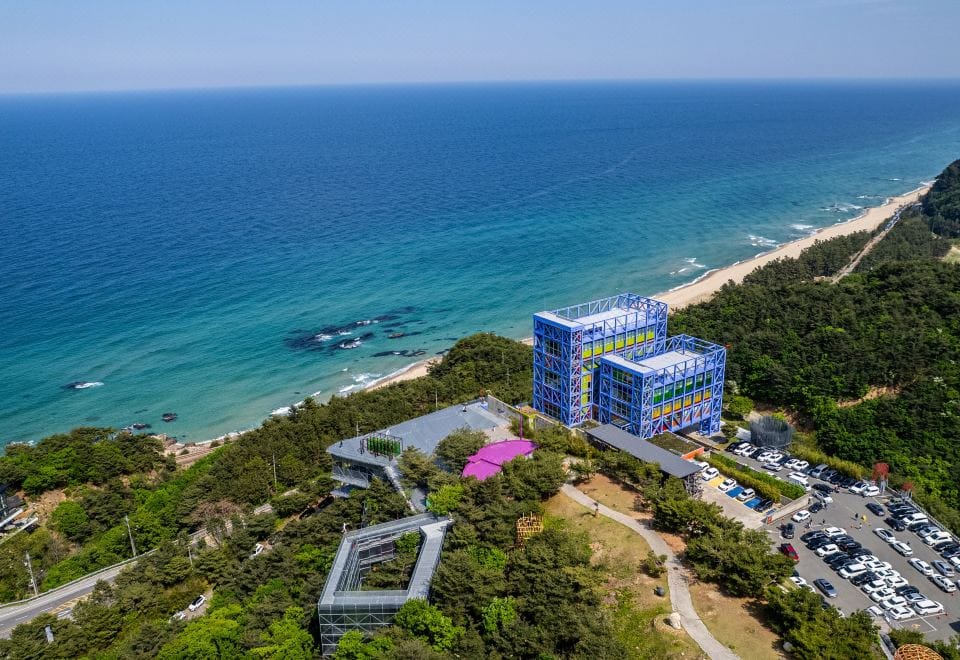
Haslla Art World Museum Hotel🏨 is a complex art space perched on coastal cliffs overlooking the East Sea near Jeongdongjin. Each room features a unique bed and bathtub personally crafted by a sculptor, giving the interior a one-of-a-kind feel — the best match for couples who want the ocean and art in one stay.
Hotel Tops 10 — hot-spring spa near Geumjin Beach
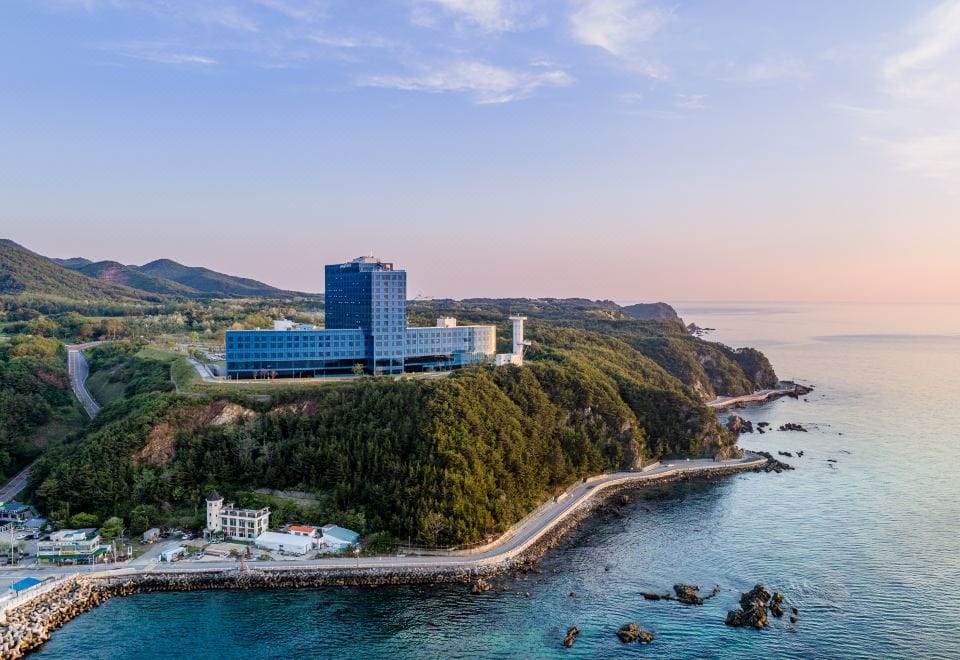
Hotel Tops 10🏨 is close to Geumjin Beach, within reach of both Jeongdongjin Sunrise Park and Haslla Art World. Its spa uses natural Geumjin hot-spring water, which is the main reason to choose it over the other two — a good way to unwind after a day of sightseeing — and rooms open onto wide-open East Sea views.
One caveat: this is the one stretch of Gangneung where a car, or at least a planned taxi budget, genuinely helps, because the sights sit further apart than they do on the beach strip or downtown.
When Do Gangneung Prices Spike — Summer, Danoje or Holidays?
All three. Rates climb around Korean holidays, during summer beach season, and in early June when the Danoje Festival fills the city. Ocean-view rooms on the Gyeongpo strip are the first to sell out, so if you have your heart set on a sea view in those weeks, book early. Outside those peaks, the price ladder stays predictable: downtown at ₩60,000–100,000, the beach strip at ₩120,000–300,000 depending on view and season, and the Jeongdongjin art hotels and resorts spread across a similarly wide band.
If budget matters more than the view, downtown near the station is the clear saving. Since the same room can price differently by site and date, it’s worth comparing rates across the big travel sites🏨 for your exact dates rather than trusting a single listing.
KTX or Express Bus from Seoul — and Do You Need a Car After?
Take the KTX if time matters, the bus if money does. The KTX Gyeonggang Line runs direct from Seoul Station or Cheongnyangni to Gangneung Station in about two hours, with frequent daily departures. Express buses from Seoul’s bus terminals take longer, around 2 hours 40 minutes to 3 hours, but run just as often and cost less. The Gyeonggang Line fills up fast around Korean holidays and summer weekends, so reserve your seat a day or two ahead if you can.
Coming from overseas, sort the long-haul leg first — flights into Seoul✈️ — then book the train onward once your Korea dates are set. Check our Korea entry requirements guide before you fly, since most visitors still need to file the free e-Arrival Card.
Do you need a car to get around Gangneung?
Not for a standard two- or three-night trip. Once you arrive, the station sits close to downtown and Gyeongpo Beach is a short taxi ride away; local buses and taxis connect downtown, Gyeongpo, Anmok and Jeongdongjin cheaply. A car only earns its keep if you plan to string several coastal sights south of the city into one day — which is exactly why the Jeongdongjin hotels above suit drivers best, and the station and beach-strip hotels suit everyone else.
Ojukheon, the Lake Loop and the Rest of the East Sea Coast
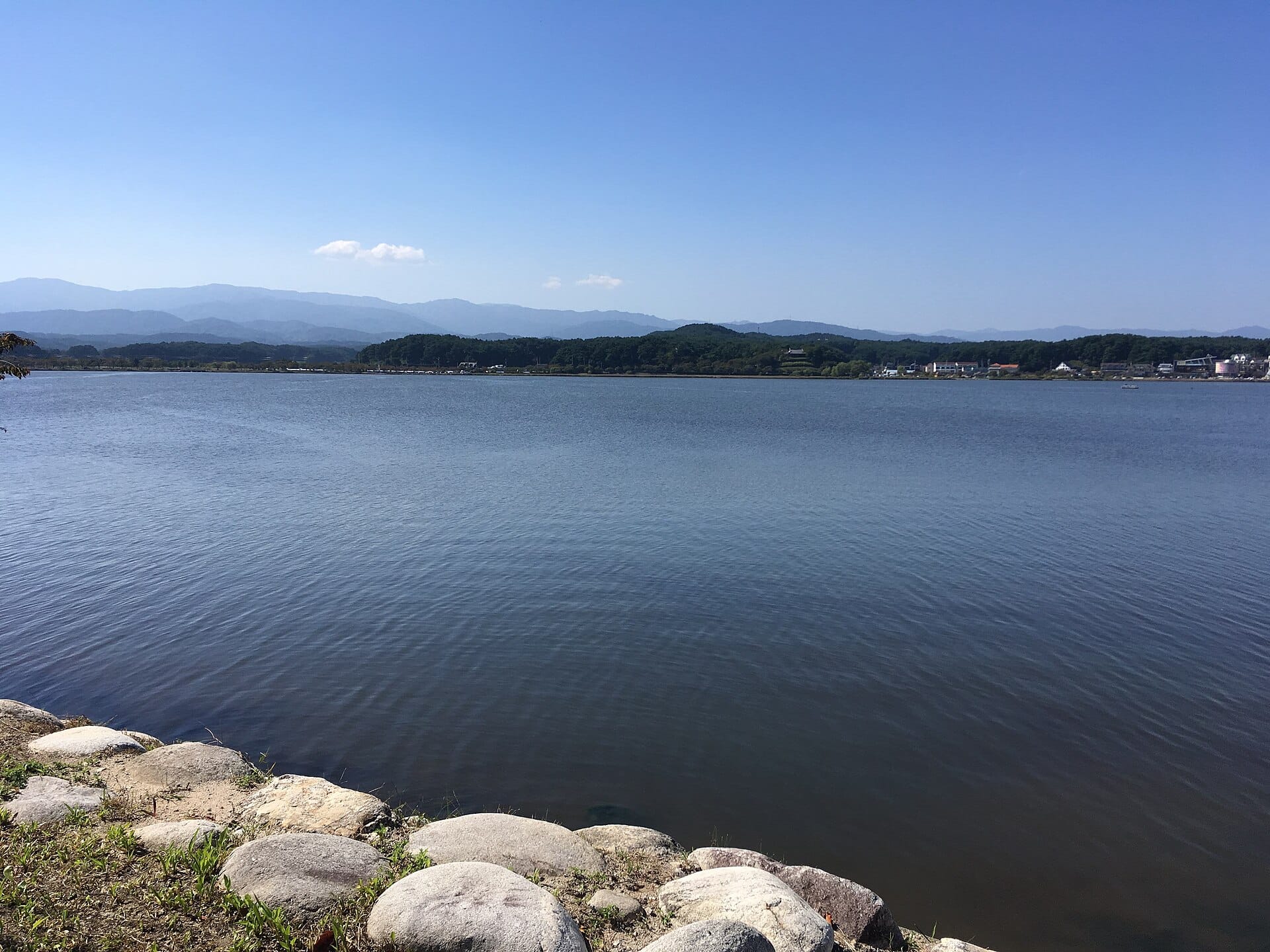
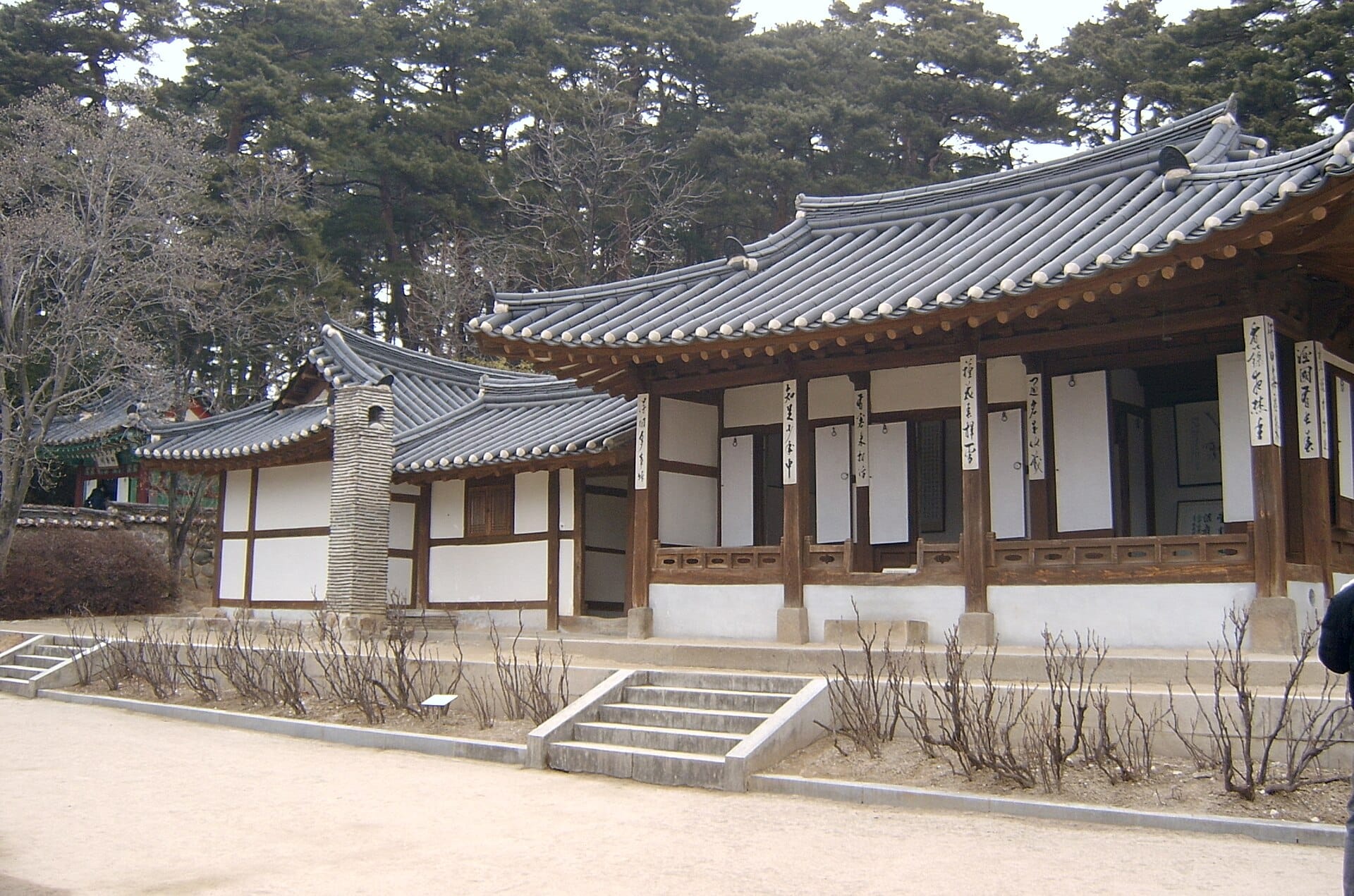
Wherever you sleep, the city’s highlights are close. Gyeongpo Beach and the lagoon behind it, Gyeongpo Lake, form the best-known stretch of coast, ringed by pine forest and pavilions. Ojukheon, a Joseon-era house and now a museum, is where Yi I and Shin Saimdang were born — a solid stop for anyone interested in Korean history, and an easy taxi from either the beach strip or downtown. Background on the wider city is on Wikipedia’s Gangneung page, and Visit Korea’s official Gangneung guide covers seasonal events like the Danoje Festival in more detail.
If Gangneung is one stop on a longer route, our guide to day trips from Seoul shows how it compares with other escapes that are worth an overnight, and where to stay in Sokcho covers the next big base up the coast, the gateway to Seoraksan. Many travelers pair the two: Gangneung for the beach, coffee and sunrise, Sokcho for the mountain.
Disclosure: This post contains affiliate links. If you book through these links, I may earn a small commission at no extra cost to you. I only recommend services I’d use myself.