Last Updated: November 2026
Quick answer: The best markets in Seoul for a first visit are Gwangjang Market for street food, Namdaemun Market for souvenirs and everyday shopping, and Noryangjin Fish Market for a seafood meal you choose straight from the tank. If you have more time, add Mangwon Market (cheap local snacks near Hongdae), Tongin Market (the coin lunchbox near Gyeongbokgung), Gyeongdong Market (herbs, ginseng and a Starbucks inside an old cinema) and the Dongmyo Flea Market for vintage clothes. Go hungry, carry some cash, and check closing days — many markets in Seoul shut on Sundays or Mondays.
This guide compares the seven traditional markets that are most worth a visitor’s time, explains what each one is actually good for, and gives you the practical details — when to go, how to pay, and how the fish-market “buy downstairs, eat upstairs” system works — so you can pick the right one for your day rather than trying to see them all.
Table of Contents
- Which Seoul Market Should You Visit?
- Gwangjang Market — Is It Still the Best for Food?
- What Can You Buy at Namdaemun Market?
- How Does Noryangjin Fish Market Work?
- Is Mangwon Market Worth the Trip?
- What Is the Tongin Market Coin Lunchbox?
- Why Visit Gyeongdong Market?
- Where Is the Best Flea Market in Seoul?
- Do Seoul Markets Take Cards? Practical Tips
- Plan Your Trip
Which Seoul Market Should You Visit?
Pick a market by what you want from it: food, shopping, seafood, or atmosphere. Seoul’s traditional markets are not interchangeable — some are mostly kitchens with a few shops attached, others are wholesale districts where food is an afterthought. The table below sums up where each one shines.
| Market | Best for | Nearest subway | Watch out for |
|---|---|---|---|
| Gwangjang | Bindaetteok, mayak gimbap, yukhoe | Jongno 5-ga (Line 1) | Crowds at the famous stalls |
| Namdaemun | Souvenirs, kitchenware, kalguksu alley | Hoehyeon (Line 4) | Many shops closed on Sundays |
| Noryangjin | Choose-your-own seafood meal | Noryangjin (Lines 1 & 9) | Compare prices before buying |
| Mangwon | Cheap local snacks, a neighborhood feel | Mangwon (Line 6) | Many stalls closed on Mondays |
| Tongin | Coin lunchbox, old Seochon streets | Gyeongbokgung (Line 3) | Lunch-only, closed some days |
| Gyeongdong | Herbs, ginseng, seasonal produce | Jegi-dong (Line 1) | Little English signage |
| Dongmyo | Vintage clothes and curios | Dongmyo (Lines 1 & 6) | Cash only, hours vary by stall |
If you only have one free afternoon, Gwangjang plus a walk to the nearby Cheonggyecheon stream is the easiest combination. If you are staying in the west of the city, Mangwon is closer and far less touristy. And if you are building a whole day around eating, our Korean street food guide explains the snacks you will see at almost every market on this list.
Gwangjang Market — Is It Still the Best for Food?
Yes — for sheer concentration of classic Korean market food, Gwangjang is still the strongest choice in Seoul, even with the crowds. It opened in 1905 as Korea’s first permanent, every-day market, and its covered food alley is where you will find the dishes most people picture when they think of Seoul market food: crispy mung-bean pancakes (bindaetteok) fried on big griddles, thumb-sized “addictive” gimbap rolls (mayak gimbap), spicy rice cakes, and raw beef tartare (yukhoe).
The catch is popularity. Since appearing on international food shows, the best-known stalls have queues at peak times, and the market has faced complaints about inconsistent prices and portions. The practical fix is timing: go on a weekday afternoon rather than a Saturday night, and sit down at a stall that is busy with Korean customers rather than the one with the longest tourist line. Our full Gwangjang Market food guide covers which stalls are worth the wait, what dishes cost, and the textile and vintage floors upstairs that most visitors never see.
What Can You Buy at Namdaemun Market?
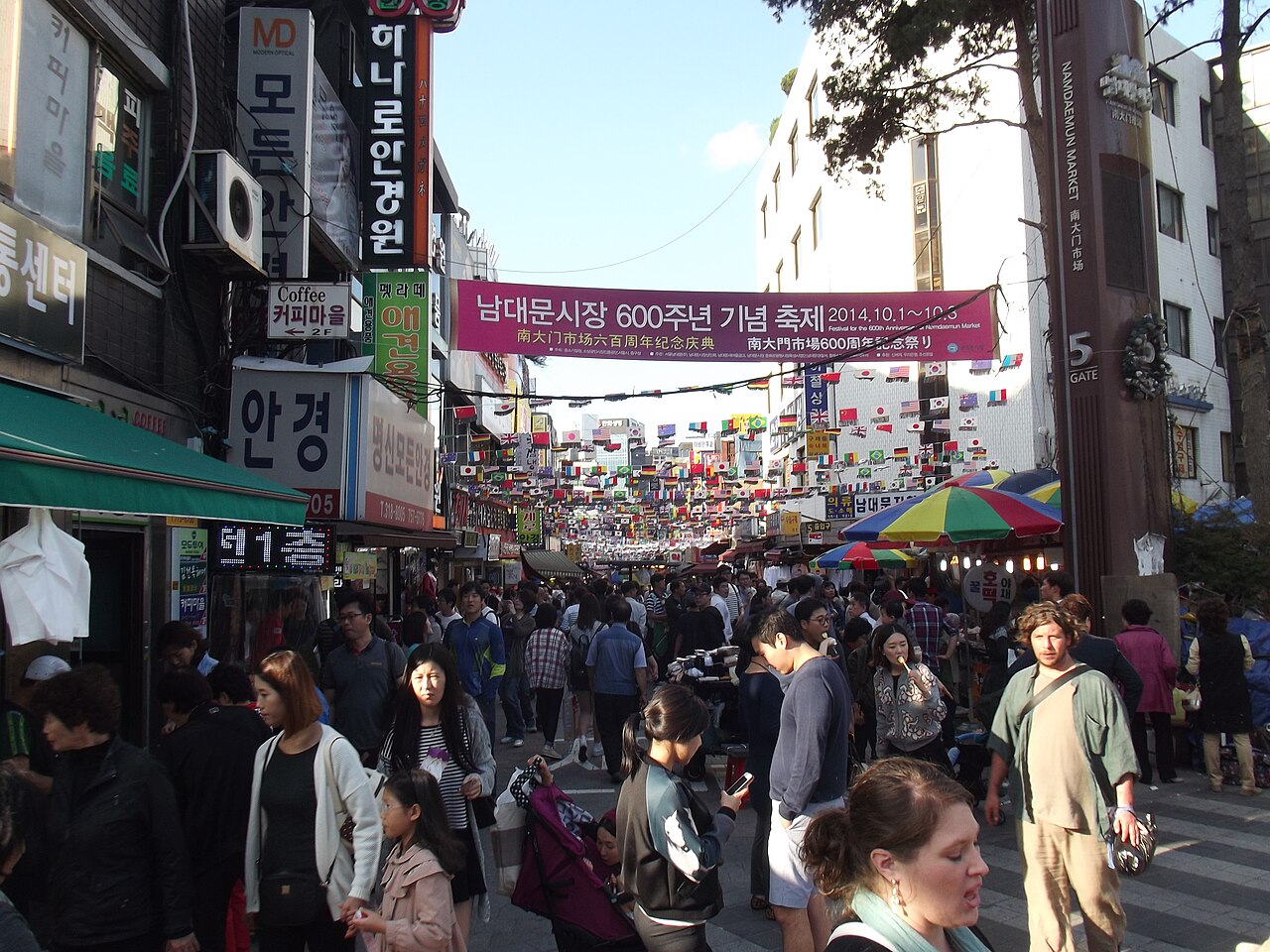
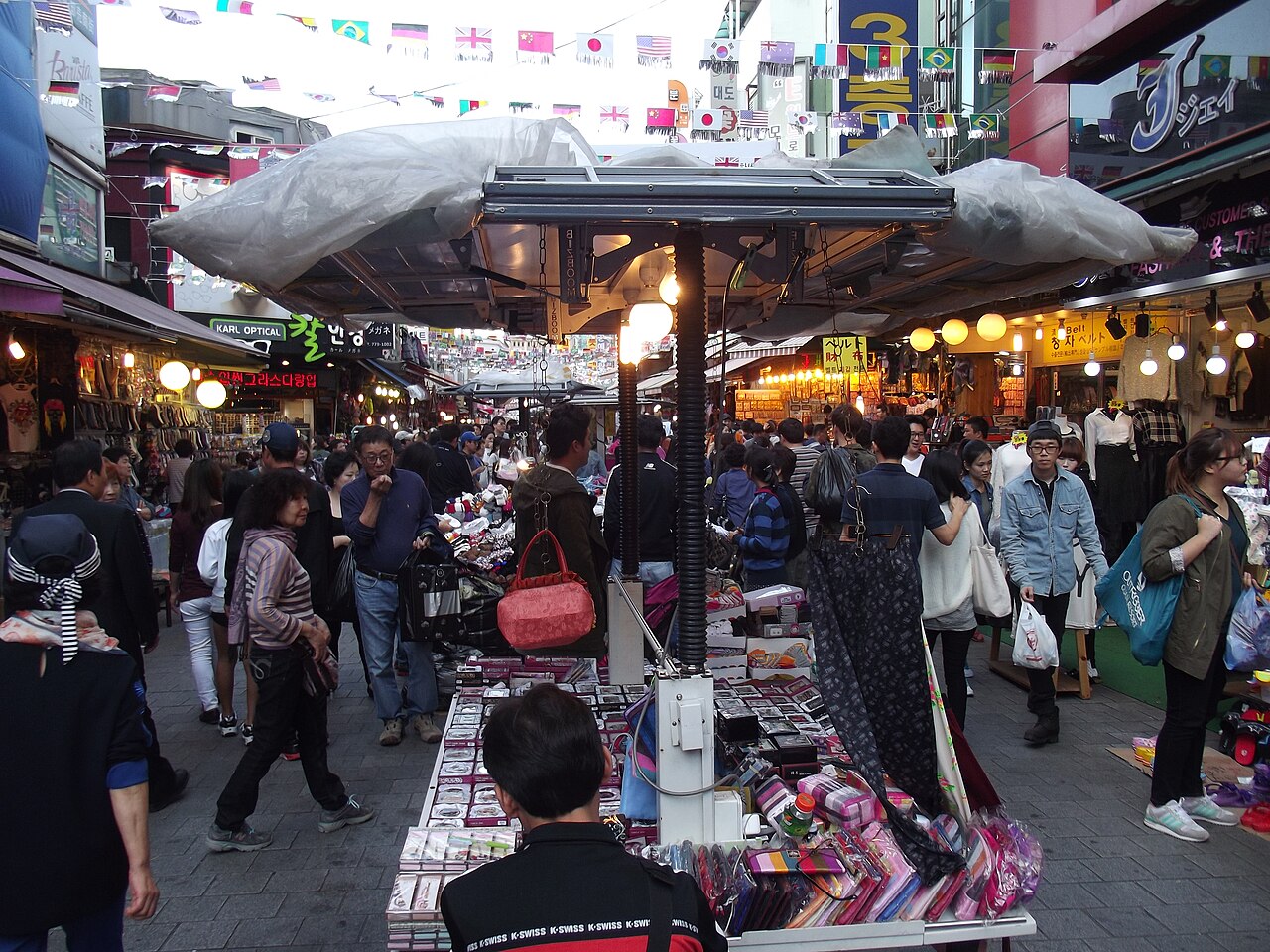
Namdaemun Market sells almost everything — clothes, accessories, kitchenware, ginseng, dried seaweed, glasses frames, camera gear and souvenirs — usually cheaper than in the department stores a few streets away. It sits beside Sungnyemun, the old south gate of the city, and is among the oldest markets still operating in Korea; it dates back to 1414, during the Joseon period, and has been rebuilt several times after fires. A 2016 count by the Seoul Institute put it at about 5,200 stores.
For visitors, Namdaemun is most useful as a souvenir and gift stop. Good things to look for:
- Seaweed, ginseng and dried snacks — easy to pack and popular gifts; ask for vacuum-sealed packs if you are flying.
- Kitchenware — stone bowls, stainless steel chopsticks and spoon sets, and the classic metal rice bowls used in Korean restaurants.
- Socks, hats and accessories — cheap, cheerful and sold by the bundle.
- The kalguksu alley — a narrow lane of counters serving hand-cut noodle soup, often with a free side of cold noodles or a mini bibimbap.
Go between Monday and Saturday, ideally in the morning: retail stalls generally keep daytime hours and many are closed on Sundays, while some wholesale sections trade through the night for shop owners rather than tourists. Namdaemun is a short walk from Myeongdong, so it pairs naturally with an evening there — see our Myeongdong Seoul guide for the street-food stalls that set up after dark.
How Does Noryangjin Fish Market Work?
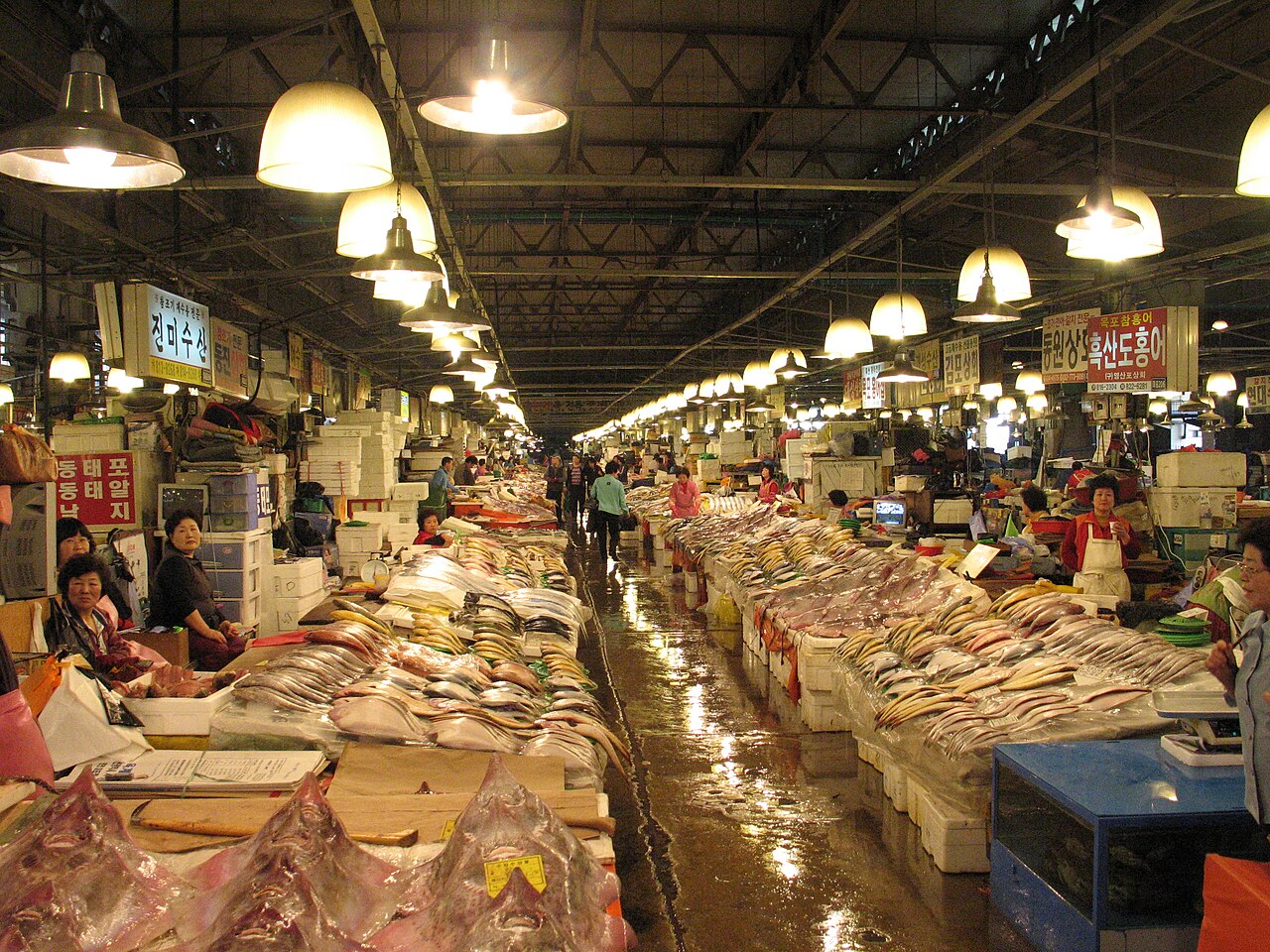
At Noryangjin, you buy seafood from a stall on the market floor, then carry it — or have the vendor send it — to a restaurant upstairs, which slices or cooks it for a per-person service fee. It is Seoul’s biggest seafood market, in business since 1927 and at its current site since 1971; the operator, the fisheries cooperative Suhyup, moved trading into a new multi-story building next to the old one in 2016. The Noryangjin Fisheries Wholesale Market is still a working wholesale market, so the busiest trading happens in the small hours, before most visitors are awake.
Here is how a meal works in practice:
- Walk the floor first. Stalls near the entrance tend to quote higher prices to visitors. Look at a few before you commit.
- Ask the price per kilogram. Seafood is priced by weight and changes by season, so ask before the vendor nets anything. A translation app helps.
- Say how you want it. Raw fish is sliced as hoe; the leftover head and bones can be made into a spicy stew (maeuntang). Crab, shrimp and shellfish are steamed or grilled.
- Go upstairs to eat. The vendor usually points you to a partner restaurant. You pay that restaurant a per-person table fee for side dishes and sauces, plus any cooking charge and drinks.
For two people, a good platter of sliced fish plus a stew makes a filling, very memorable dinner. Do not touch anything in the tanks unless you are buying it. If you would rather have someone handle the bargaining and ordering, a guided fish market food tour in Seoul🎟️ takes the guesswork out of the first visit.
Noryangjin sits on the south side of the Han River, a few minutes from Yeouido on Line 9, so it combines well with an evening walk along the river — our Han River Seoul guide covers Yeouido Hangang Park and the other riverside spots nearby.
Is Mangwon Market Worth the Trip?
Yes, if you want a market that still feels like it belongs to the neighborhood. Mangwon Market is a covered local market a short walk from Mangwon Station on Line 6, one stop from Hapjeong and an easy detour from Hongdae. Locals do their grocery shopping here, and the prices for snacks reflect that: fried chicken pieces by the cup, croquettes, hotteok pancakes, tteokbokki and fruit are sold at prices that tourist streets rarely match.
Mangwon works best as a grazing walk. Pick up a few snacks, then walk ten minutes to Mangwon Hangang Park to eat by the river, or wander the cafes of the Mangridan-gil streets nearby. Many snack stalls take Monday off, and most of the market winds down by late evening, so aim for an afternoon visit. If you are basing yourself on this side of the city, our Hongdae Seoul guide covers the neighborhood around it.
What Is the Tongin Market Coin Lunchbox?
The Tongin Market coin lunchbox (dosirak) is a build-your-own lunch: you buy a tray and a string of old-style brass coins (yeopjeon) at the market’s lunchbox cafe, then walk the stalls trading coins for small portions of side dishes, rice cakes and fried food. It is one of the most fun cheap lunches in Seoul. Expect to pay around ₩5,000–₩10,000 per person depending on how many coins you buy; rice and soup are usually bought back at the cafe, where you sit down to eat.
Tongin Market is a small, single-street market in Seochon, the old neighborhood just west of Gyeongbokgung Palace. The lunchbox program runs only around lunchtime, and the cafe is closed on some weekdays and the market on certain Sundays, so check the latest hours on the day before you go. The best plan is a morning at the palace — our Gyeongbokgung Palace guide covers tickets and the guard ceremony — followed by a coin lunch and a wander through Seochon’s alleys.
Why Visit Gyeongdong Market?
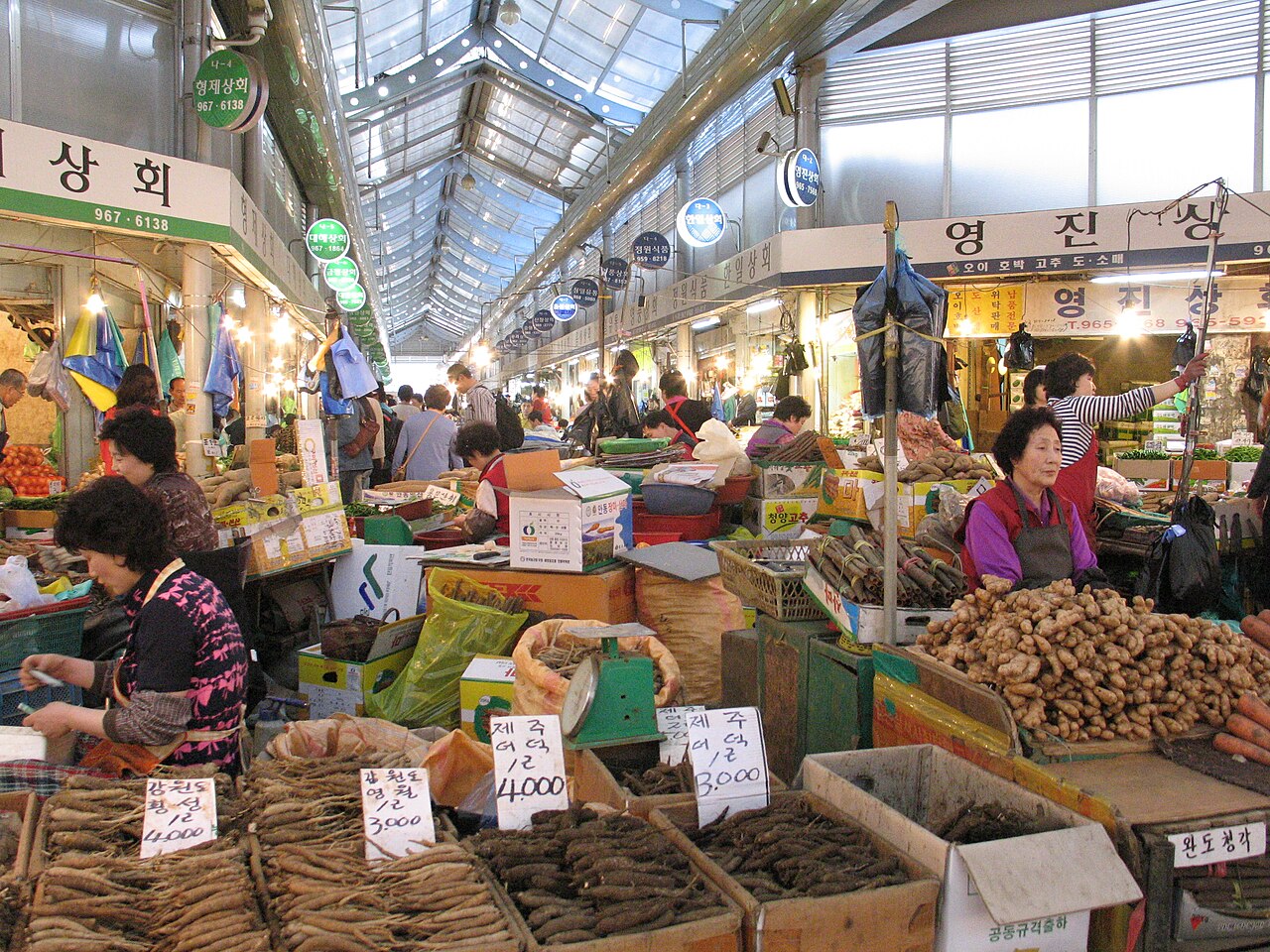
Visit Gyeongdong Market to see a side of Seoul that has nothing to do with tourism: one of Korea’s largest markets for herbal medicine, ginseng and farm produce. Gyeongdong Market was established in 1960 and is commonly said to handle around 70 percent of the country’s herbal medicine ingredients, with more than 1,000 related shops and clinics in the surrounding Jegi-dong area. The streets smell of dried roots and roasting sesame, and seasonal produce is piled high on the pavement.
The surprise is the coffee. In late 2022, Starbucks opened its Gyeongdong 1960 branch inside the market’s old cinema, keeping the tiered theater seating — the Korea JoongAng Daily described it as a community store sharing profits with the market. It is a good place to rest after walking the stalls. English signage is limited, so a translation app is useful if you want to buy ginseng or herbal teas.
Where Is the Best Flea Market in Seoul?
The best-known flea market in Seoul is the Dongmyo Flea Market, around the old Dongmyo shrine near Dongmyo Station (Lines 1 and 6). It is a sprawling, chaotic collection of street vendors and small shops selling secondhand clothes in heaps, old cameras, records, tools, toys and curios. Younger Koreans come for vintage fashion, and older locals come for everything else.
Bring cash, expect to dig, and do not expect fixed hours — each vendor keeps their own schedule, and the market is busiest on weekend afternoons. Dongmyo is one stop from Dongdaemun on Line 1, so it fits into a day of shopping on the east side; our Dongdaemun Seoul guide covers the late-night fashion malls nearby. For newer, more polished shopping, our Seoul shopping guide compares Myeongdong, Hongdae, Seongsu and Gangnam.
Do Seoul Markets Take Cards? Practical Tips
Most market shops and many food stalls in Seoul now take cards, but cash is still the safe default — small stalls, flea-market vendors and the Tongin coin booth may prefer it, and paying in cash makes small purchases quicker. Carry a mix of ₩1,000, ₩5,000 and ₩10,000 notes. Our money in Korea guide explains the best ways to get won and which cards work.
- Check the closing day. Namdaemun is mostly closed on Sundays, many Mangwon stalls on Mondays, and some markets close on a set Sunday each month.
- Go early or late on weekdays. Weekend afternoons are the busiest time almost everywhere.
- Eat standing or perched. Market stalls have stools, not tables; sharing a counter with strangers is normal.
- Ask before photographing vendors. Most do not mind, but it is polite to ask, and it matters at the fish market.
- Bring a bag. Plastic bags are not always free, and you will end up carrying snacks.
Markets are also one of the cheapest ways to eat well in Seoul. For more ways to stretch your budget, see our Seoul on a budget guide, and if you prefer a local to lead the way, an evening Seoul market food tour🎟️ usually covers two or three markets in one night.
Plan Your Trip
You can fit one market into almost any day in Seoul: Tongin with a palace morning, Gwangjang or Dongmyo with an afternoon on the east side, Namdaemun before an evening in Myeongdong, and Noryangjin for a seafood dinner south of the river. If you are still working out the order of your days, our 3 days in Seoul itinerary and what to eat in Seoul guide show how markets fit around the rest of the city.
If you have not booked yet, it is worth taking a minute to compare current fares to Seoul✈️ before you settle on dates. For the bigger picture, start with our Seoul travel guide.
Disclosure: This post contains affiliate links. If you book through these links, I may earn a small commission at no extra cost to you. I only recommend services I’d use myself.