
Last Updated: November 2026
Quick answer: The best Jeju itinerary for a first visit is three days, one coast per day: Day 1 in the east (sunrise at Seongsan Ilchulbong, the ferry to Udo island and the Seopjikoji headland), Day 2 in the south around Seogwipo (Jusangjeolli lava cliffs, Jeongbang and Cheonjiyeon waterfalls, and the Olle Market), and Day 3 in the west (the Osulloc tea fields, Hallim Park and Hyeopjae Beach, then the Aewol café coast). Rent a car if you can — Jeju’s sights are spread around a coast road roughly 200 km long — and add a fourth day if you want to climb Hallasan.
Jeju looks small on a map of Korea, but it is not a place you can see from one base on foot. The island’s highlights sit on opposite coasts, about an hour’s drive apart, and the volcano in the middle means most roads loop around rather than across. The mistake first-timers make is treating it like a city — Sunrise Peak in the morning, a west-coast beach at lunch, a south-coast waterfall at dusk — and spending half the trip in the car. This 3-day Jeju itinerary keeps each day on one side of the island, with realistic driving times, where to eat, how to do it without a car, and what to swap in for winter or a fourth day.
Table of Contents
- How Many Days Do You Need in Jeju?
- What Does a 3-Day Jeju Itinerary Look Like?
- Day 1: Sunrise Peak, Udo and the East Coast
- Day 2: Lava Cliffs and Waterfalls Around Seogwipo
- Day 3: Tea Fields, Hyeopjae Beach and the West Coast
- Can You Follow This Itinerary Without a Car?
- Should You Move Hotels or Keep One Base?
- How Do You Add a Hallasan Hike?
- Does This Plan Work in Winter?
- Plan Your Jeju Trip
How Many Days Do You Need in Jeju?
Three full days is the right length for a first Jeju trip. It gives you one day for each coast — east, south and west — which is how the island’s main sights naturally group, without rushing or doubling back. Two days works if you drop the west coast; four days lets you add a Hallasan hike or simply slow down, which is what Jeju is best at. Our Jeju Island guide covers the background — what the island is known for, the beaches and the food — while this page is the day-by-day plan.
Count your days on the ground, not nights. Flights from Seoul’s Gimpo Airport take about an hour, and the Gimpo–Jeju route runs dozens of departures a day, so an early flight on day one and an evening flight home on day three gives you three usable days with only two nights.
What Does a 3-Day Jeju Itinerary Look Like?
Here is the whole plan at a glance. Each day follows one stretch of the coast road, so you drive in a line rather than back and forth.
| Day | Coast | Main stops | Evening |
|---|---|---|---|
| Day 1 | East (Seongsan, Gujwa) | Seongsan Ilchulbong at sunrise, Udo island, Seopjikoji | Woljeongri Beach cafés or back to Jeju City |
| Day 2 | South (Seogwipo, Jungmun) | Jusangjeolli Cliff, Jeongbang Waterfall, Seogwipo Maeil Olle Market | Cheonjiyeon Waterfall, lit after dark |
| Day 3 | West (Andeok, Hallim, Aewol) | Osulloc Tea Museum, Hallim Park, Hyeopjae Beach | Aewol coast at sunset, Dongmun night market |
The order matters for one reason: sunrise. Seongsan Ilchulbong faces east, so it is at its best first thing, and the east coast is closest to the airport side of the island if you land early. The west coast faces the sunset, which is why it closes the trip.
Day 1: Sunrise Peak, Udo and the East Coast
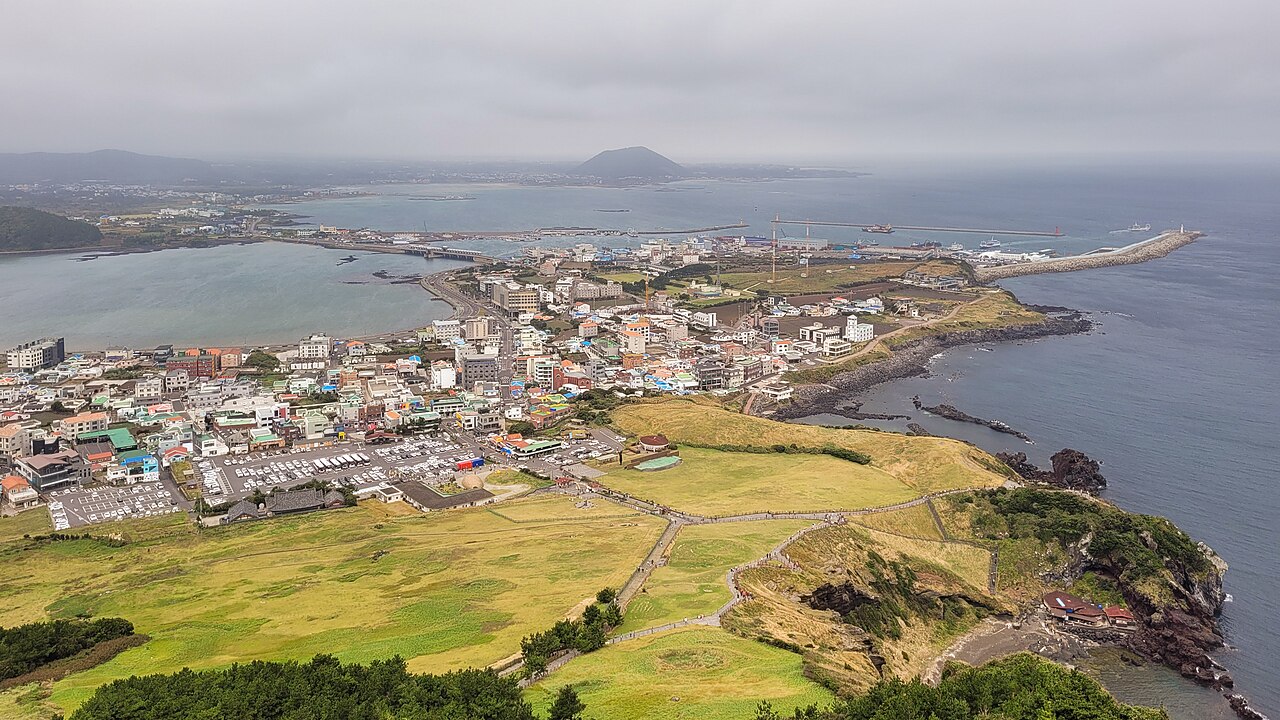
Day 1 covers the volcanic east coast, about an hour’s drive from Jeju City. It is the most famous stretch of the island and the one that rewards an early start.
Early morning: Seongsan Ilchulbong (Sunrise Peak)
Seongsan Ilchulbong is a tuff cone that erupted from the sea and left a near-perfect crater bowl on top. It is part of the UNESCO World Heritage site Jeju Volcanic Island and Lava Tubes. The climb is a steep staircase of 20–30 minutes each way, and reaching the rim around sunrise is the classic Jeju moment. Opening hours change by season so the gate opens before dawn; adult admission has been around 5,000 won, and the summit trail closes on the first Monday of each month. Check the current hours on Visit Jeju the night before.
After the climb, walk down to the shore on the left side of the peak, where Jeju’s haenyeo — the women free-divers who harvest shellfish and seaweed without breathing gear — sometimes give demonstrations and sell their catch.
Late morning: the ferry to Udo
Udo is a small, flat island just off Seongsan, reached by a ferry of about 15 minutes from Seongsan Port, a five-minute drive from the peak. Bring your passport: foreign passengers fill in a boarding form and show ID to buy a ticket. Rental cars are generally not allowed onto the island, so park at the port and get around Udo by the island’s circular bus or by renting an electric bike or scooter near the pier. A loop takes two to three hours, with stops at the pale-sand beaches on the north side, the lighthouse viewpoint on Udobong, and a cup of the island’s peanut ice cream. Check the last ferry back before you set off — it leaves earlier in winter.
If you would rather not drive at all on Day 1, an east Jeju day tour with Udo🎟️ bundles Sunrise Peak, the ferry and Seopjikoji with transport from Jeju City.
Afternoon: Seopjikoji and Woljeongri Beach
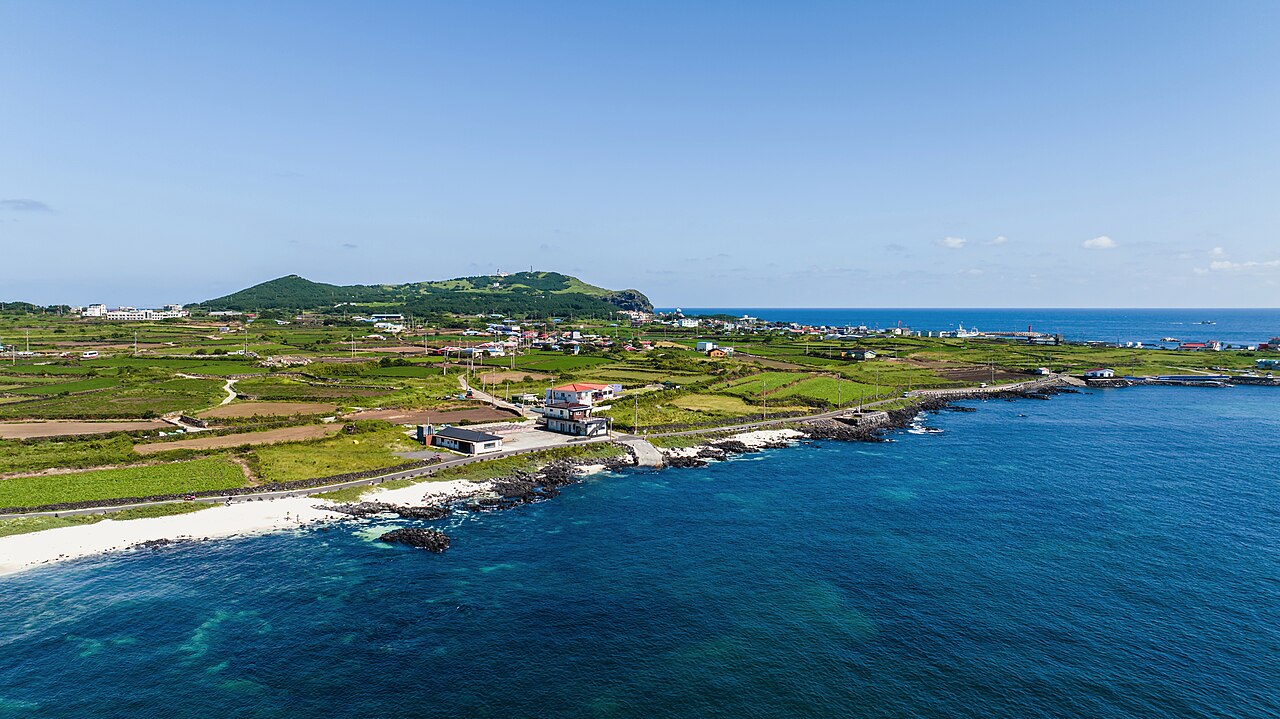
Back on the main island, drive 15 minutes south to Seopjikoji, a grassy headland with a small lighthouse and a clifftop path that looks straight back at Sunrise Peak. In spring the fields here turn yellow with canola flowers. Then head north up the coast road to Woljeongri Beach, a strip of turquoise water lined with cafés where you can sit with a view until it is time to drive back to Jeju City for dinner. If you have energy left, the black-pork restaurants near Jeju City’s old town are the island’s signature meal.
Day 2: Lava Cliffs and Waterfalls Around Seogwipo
Day 2 crosses to the south coast — about an hour’s drive over the shoulder of Hallasan — where Jeju is warmer, greener and full of waterfalls. Seogwipo, the island’s second city, is the hub.
Morning: Jusangjeolli Cliff
Start in the Jungmun resort area at Jusangjeolli, a stretch of coast lined with tall hexagonal basalt columns, formed when lava flowing into the sea cooled and cracked. A boardwalk runs above the columns, and on a windy day the waves explode against them. It takes 30–45 minutes. From here, Jungmun’s beach and resort hotels are a few minutes away if you want a coffee with a sea view.
Midday: Jeongbang Waterfall and lunch at the Olle Market
Drive 20 minutes east into Seogwipo for Jeongbang Waterfall, one of the few waterfalls in Asia said to fall straight into the sea. Scramble over the boulders at the bottom to stand close to the spray. Then walk or drive to the Seogwipo Maeil Olle Market, a covered market of seafood, tangerines and street food, open daily from morning into the evening. Look for grilled hairtail fish, fried seafood rolls and anything made with Jeju’s mandarins.
Afternoon: Olle Trail and Seogwipo harbor
Walk off lunch on a short section of the Jeju Olle Trail, the network of coastal walking routes that circles the island. The section around Seogwipo passes Oedolgae, a lone sea stack standing off the cliffs, and is easy to do in an hour or two. Alternatively, cross the pedestrian Saeyeongyo bridge to Saeseom islet at the harbor mouth for an easy loop with views back to Hallasan.
Evening: Cheonjiyeon Waterfall after dark
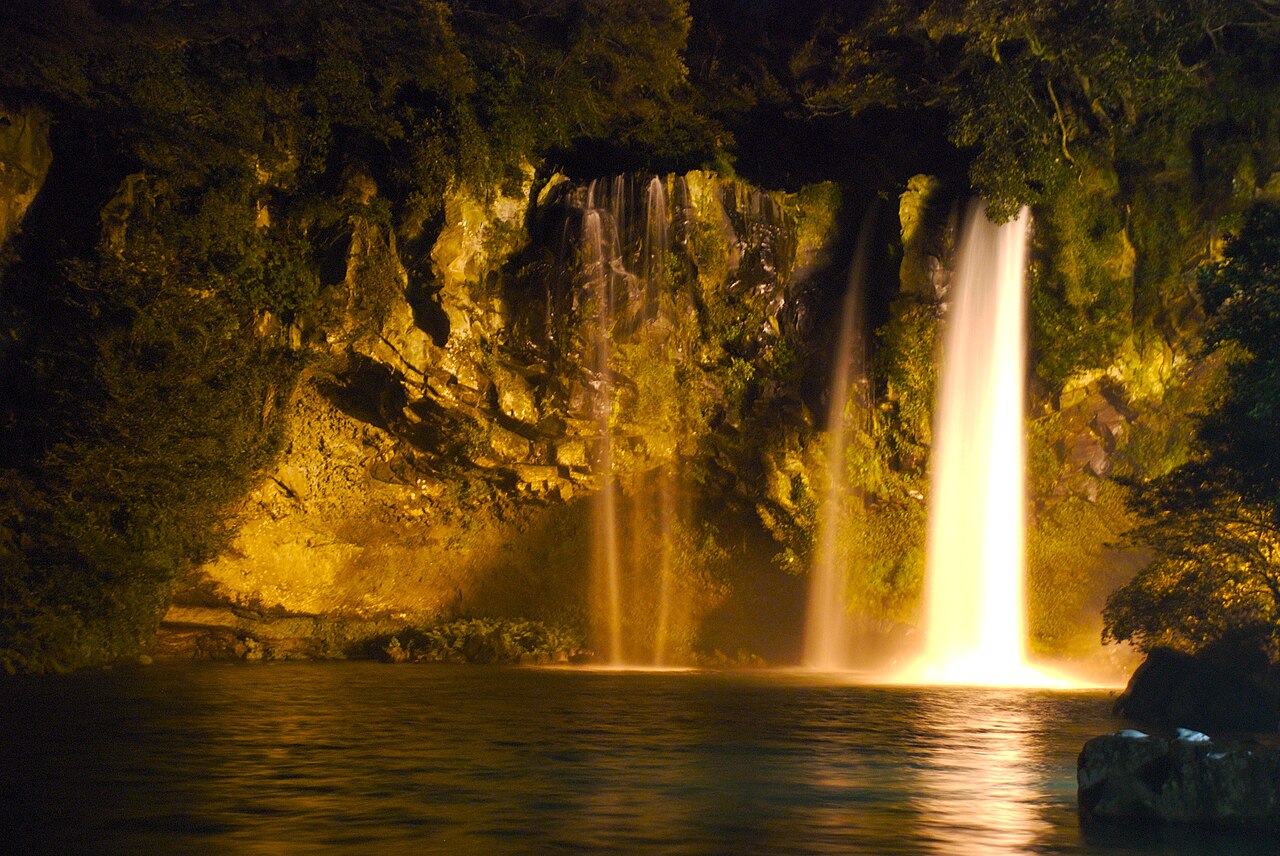
Cheonjiyeon Waterfall, a short walk from Seogwipo harbor, stays open into the evening and is lit up after dark, which makes it a calm, atmospheric last stop when most visitors have left. The path from the entrance is flat and takes about 15 minutes each way through a subtropical gorge.
Day 3: Tea Fields, Hyeopjae Beach and the West Coast
Day 3 takes the west side of the island, which is gentler, flatter and the best place on Jeju for a beach afternoon. It also loops neatly back to Jeju City and the airport.
Morning: Osulloc Tea Museum and the green tea fields
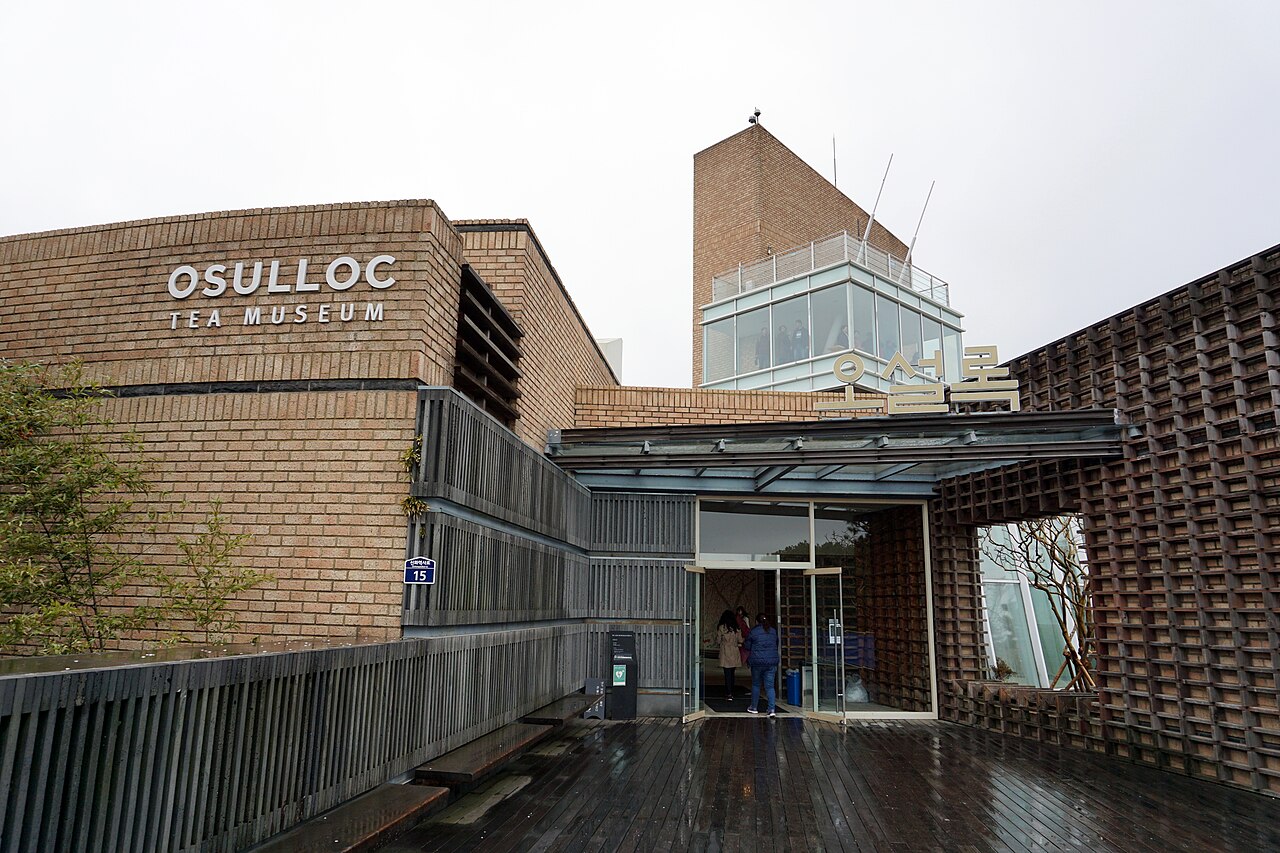
Start at the Osulloc Tea Museum in Andeok, about 30 minutes west of Jungmun, where rows of green tea bushes stretch away from a modern tea house and shop. Entry to the museum is free, and the fields are best early before tour buses arrive. Order a green tea ice cream or a matcha roll cake, then walk the paths between the rows. If you like tea, the café upstairs has a view over the fields.
Midday: Hallim Park and Hyeopjae Beach
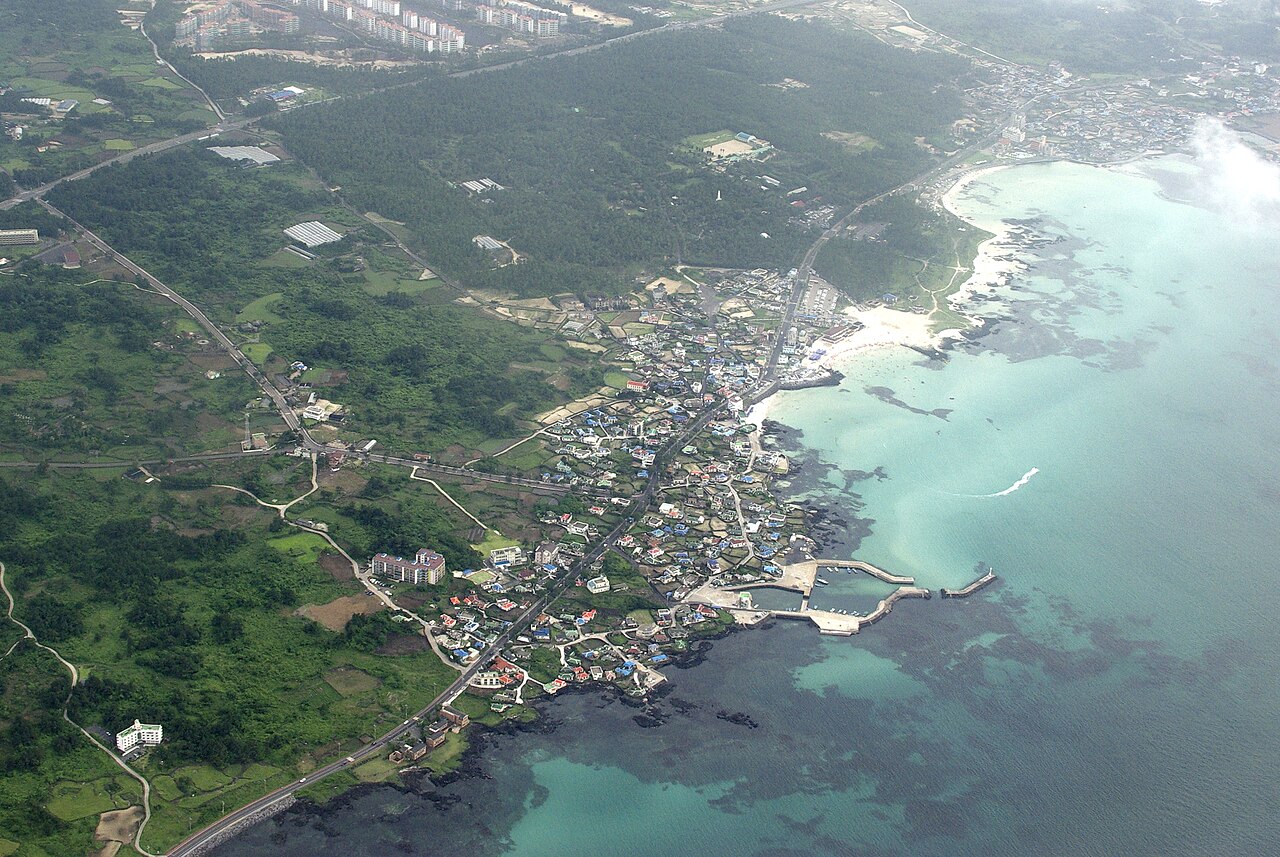
Drive north to Hallim Park, a large garden of palms, seasonal flowers and two small lava caves, then cross the road to Hyeopjae Beach. Hyeopjae is Jeju’s most photographed beach: pale sand, shallow emerald water and the cone-shaped Biyangdo island floating offshore. Even out of swimming season it is a beautiful place to walk, and the next bay along, Geumneung, is quieter.
Afternoon and evening: the Aewol coast and Dongmun Market
Follow the coast road north-east through Aewol, Jeju’s café coast, where seaside cafés and bakeries sit on the rocks facing west. Time it for sunset. Jeju City is only 30 minutes further on, so you can drop the car near the airport and spend your last evening at Dongmun Market, Jeju City’s oldest traditional market, whose night-market section serves grilled black pork, abalone, tangerine juice and fusion snacks from early evening until late. It is a good place to buy boxed tangerines and Jeju chocolate to take home.
Can You Follow This Itinerary Without a Car?
Yes, but expect each day to cover less. Jeju’s buses reach every stop on this itinerary, and express red buses link the airport, Jeju City and Seogwipo, while airport limousine buses run to the Jungmun resort area and Seogwipo. The problem is frequency: rural routes can run once every 30–60 minutes, so a full coast in a day becomes two or three stops. Use Naver Map or Kakao Map for live bus times — they are far more reliable on Jeju than global map apps — and make sure you have data; our Korea SIM and eSIM guide compares the options.
- Rental car: the easiest option. You must bring an International Driving Permit along with your home licence, plus your passport. Drivers keep to the right, and speed cameras are everywhere — keep to the limits.
- Day tours: the best car-free choice for the east and west coasts, where sights are farthest apart. A west and south Jeju day tour🎟️ covers Day 2 and Day 3 highlights in one go.
- Taxis: plentiful in Jeju City and Seogwipo and reasonable for short hops, and Kakao T works on the island. For a full day, a private driver hire is often cheaper than it sounds when split between three or four people.
Should You Move Hotels or Keep One Base?
With a car, one base is fine, and the simplest split is to stay in Jeju City for the first night and Seogwipo or Jungmun for the second. That puts you an hour closer to Day 2, cuts the Day 1 return drive, and leaves Day 3 ending near the airport. Without a car, stay in Jeju City for the whole trip: it is where the airport, the express buses and most tours start.
| Base | Best for | Trade-off |
|---|---|---|
| Jeju City | Airport access, buses and tours, restaurants, budget stays | An hour from the south coast |
| Jungmun / Seogwipo | Resorts, waterfalls, warmer weather | Long drive to the airport |
| Seongsan | Sunrise at the peak, quiet coast | Few restaurants at night, car essential |
For the south-coast night, The Shilla Jeju in Jungmun🏨 is the classic resort stay, with a heated outdoor pool. In Jeju City, Grand Hyatt Jeju🏨 sits in the island’s tallest tower, 15 minutes from the airport. Our guide to where to stay in Jeju compares every area with specific hotels at each budget.
How Do You Add a Hallasan Hike?
Add a fourth day. Hallasan, the volcano at the center of Jeju, is South Korea’s highest mountain at 1,947 meters, and reaching the summit crater lake, Baengnokdam, is a full day’s effort. The two summit routes, Seongpanak and Gwaneumsa, require a free advance booking on the official Hallasan reservation site, with a daily cap on hikers; you scan a QR code at the trailhead. A round trip on Seongpanak takes most hikers eight to ten hours, and there are cut-off times at the shelters below the summit, so start at dawn.
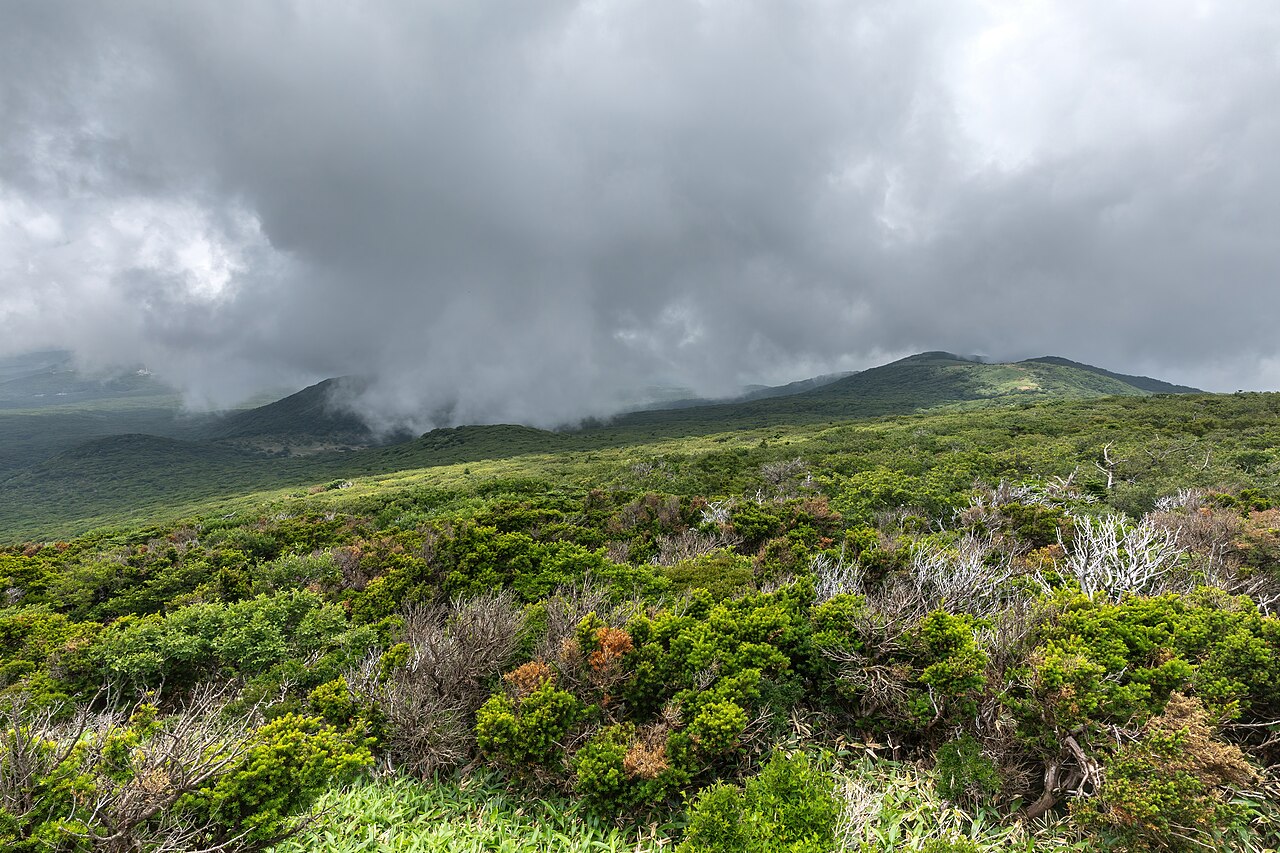
If that sounds like too much, the Eorimok and Yeongsil trails need no booking and climb to the Witse-oreum shelter, high on the mountain with views of the summit walls, in about two to three hours one way. Yeongsil is the shorter and more scenic of the two. In winter, all trails require crampons or chain spikes, and the park closes routes in heavy snow or high wind.
Does This Plan Work in Winter?
Yes — Jeju is one of the mildest places in Korea in winter, and November to February is tangerine season, when farms along the south coast open for picking and roadside stalls sell boxes of mandarins. Winter adds camellia gardens in bloom and snow on Hallasan, but also strong sea wind, so pack a windproof jacket for Sunrise Peak and Udo. Sunrise comes later in winter, which makes the Day 1 start easier. If you are visiting in late November, the Jeju Citrus Expo 2026 in Seogwipo fits neatly into Day 2.
In summer, start each day earlier to beat the heat, expect crowds at Hyeopjae and Udo in July and August, and watch the forecast in typhoon season (late summer to early autumn), when ferries to Udo can be cancelled. Spring brings canola flowers and cherry blossoms along the island’s roads.
Plan Your Jeju Trip
Before you go, check seasonal opening hours and festival dates on the official Visit Jeju site and VisitKorea. Book your rental car and your first night’s hotel early for weekends and Korean holidays, when the island fills with domestic visitors.
Jeju International Airport has direct international flights as well as the domestic shuttle from Seoul, so if the island is a big part of your trip it is worth taking a minute to compare fares to Jeju✈️. If Jeju is one stop on a longer trip, our 7-day Korea itinerary shows how to combine it with Seoul and Busan, and our money in Korea guide covers cards, cash and ATMs.
Disclosure: This post contains affiliate links. If you book through these links, I may earn a small commission at no extra cost to you. I only recommend services I’d use myself.