
Last Updated: June 2026
Quick answer: For Korean BBQ, order samgyeopsal (pork belly) and a marinated cut like galbi, grill it yourself at the table, then wrap each bite in lettuce with garlic and ssamjang. The free banchan sides are bottomless. Expect about ₩15,000–25,000 per person at a casual pork joint.
If you eat one meal in Seoul, make it Korean BBQ. There’s nothing quite like it — you grill marbled cuts of meat yourself over coals set into the table, wrap each smoky bite in lettuce with garlic and a dab of savory paste, and wash it down with a cold drink as the table fills with little plates of free sides. It’s hands-on, social, and endlessly satisfying, and it’s the meal first-timers remember most. But the menu can baffle newcomers, so this guide walks you through the cuts, the method, the etiquette, and where to find a good grill.
Here’s everything you need to order with confidence and grill like you’ve done it before.
Table of Contents
- What Is Korean BBQ?
- What to Order: The Cuts
- How to Grill at the Table
- Sides, Wraps & Sauces
- Korean BBQ Etiquette
- Where to Eat Korean BBQ in Seoul
- How Much Does Korean BBQ Cost?
- Tips for First-Timers
- Plan Your Trip
What Is Korean BBQ?
Korean BBQ is a style of meal where you cook the meat yourself at a grill built into your table, then eat it in small, wrapped bites with rice, sides, and condiments. It’s communal by design — meant to be shared by a group over a long, lively dinner — and it comes in two broad camps: pork, led by the everyday favorite samgyeopsal, and beef, led by the celebratory galbi and the premium hanwoo. The staff usually help with the grilling, the sides are bottomless, and the whole thing unfolds at a relaxed, table-side pace. It’s as much an experience as a meal.
What to Order: The Cuts
The essentials to know:
| Cut | What it is |
|---|---|
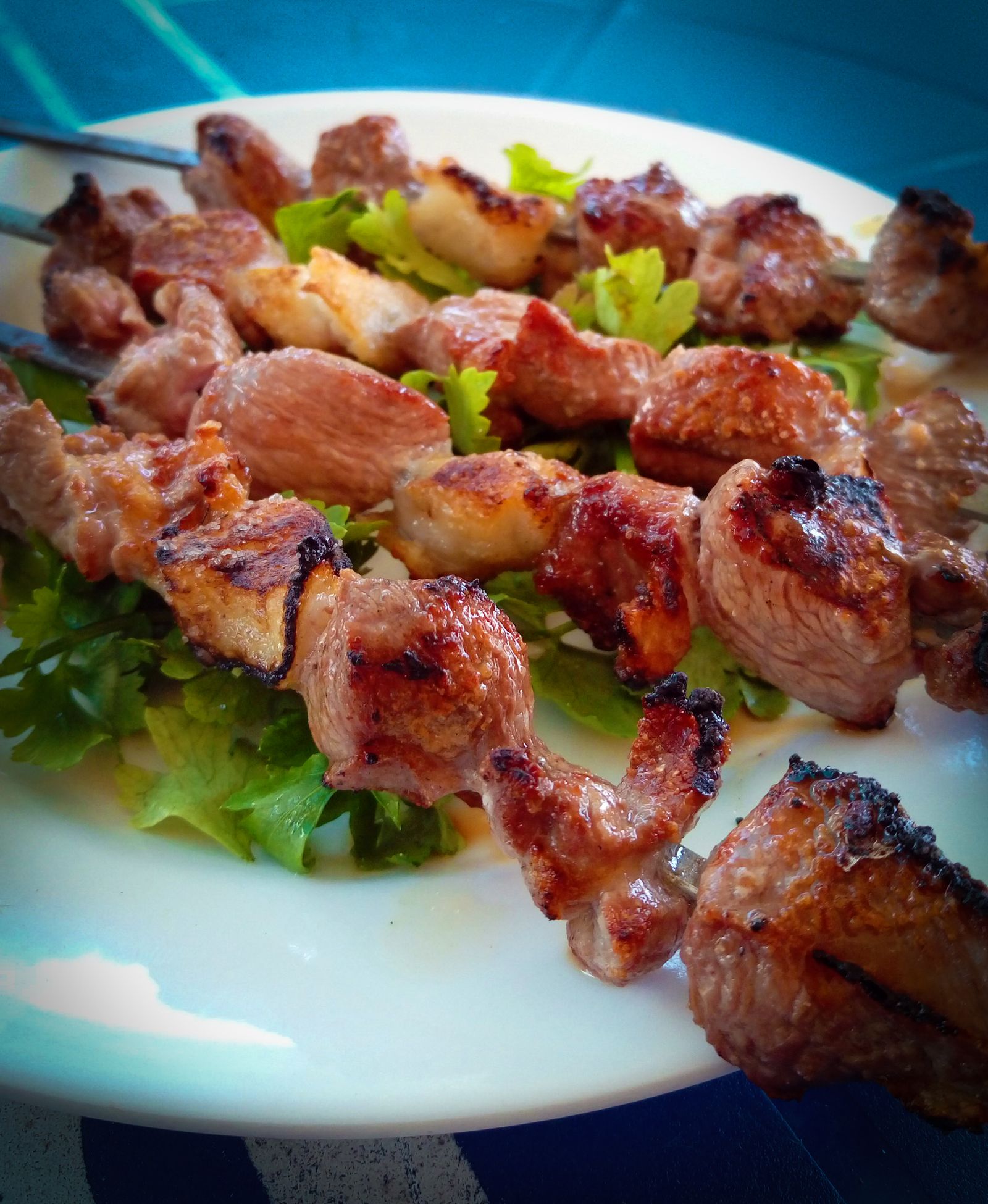
| Samgyeopsal | Thick, unmarinated pork belly — the everyday classic |
| Moksal | Pork shoulder/neck, leaner than belly |
| Galbi | Marinated beef short ribs, sweet and tender |
| Bulgogi | Thin marinated beef, often cooked in a domed pan |
| Hanwoo | Prized Korean beef, the premium splurge |
| Galmaegisal | Pork skirt, a chewy, flavorful insider’s pick |
A good first order is samgyeopsal and a marinated cut like galbi, a portion or two per person to start — you can always add more. Don’t overthink it: most menus have photos, and the staff are used to guiding visitors.
How to Grill at the Table
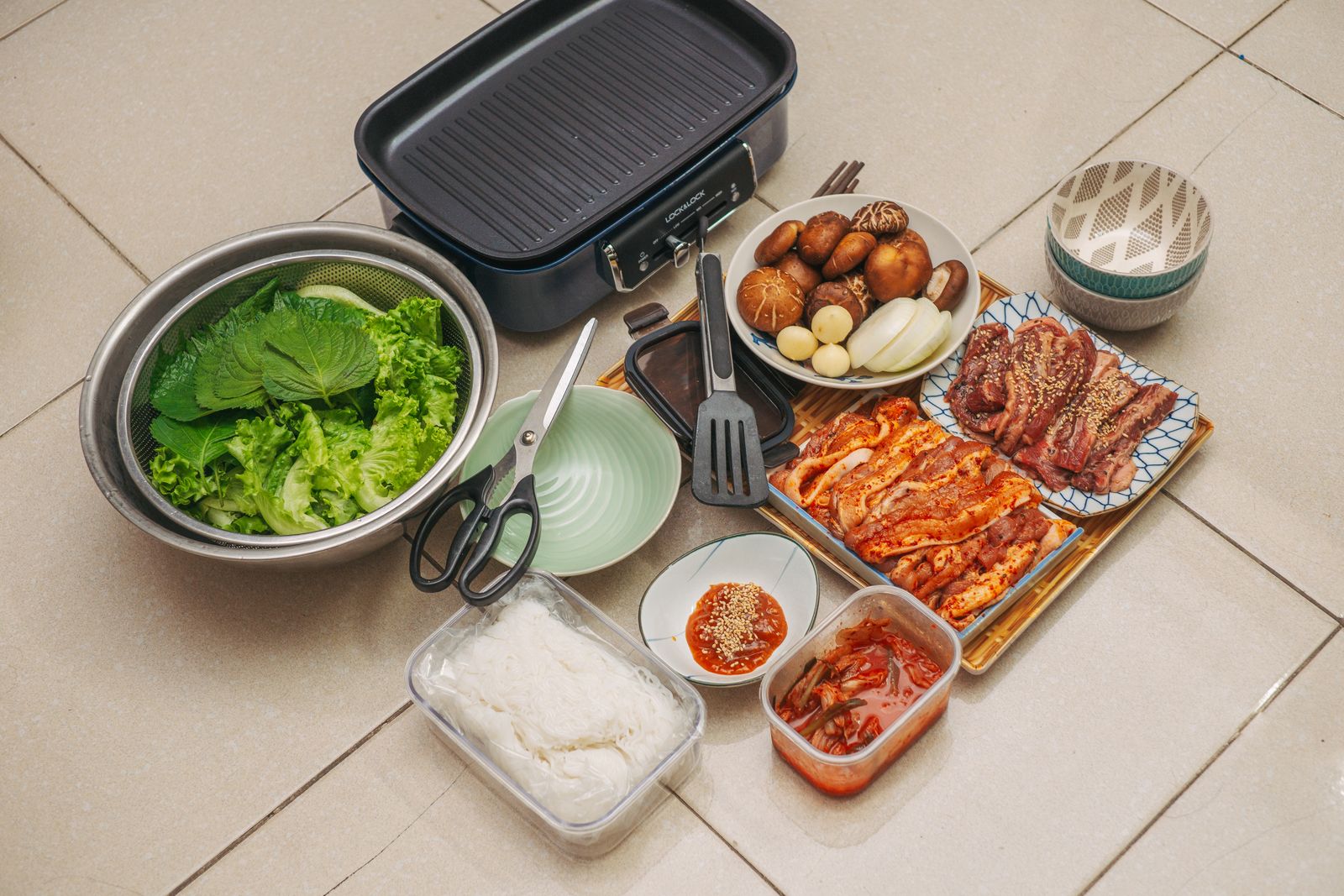
Grilling is simpler than it looks, and staff often start you off. Lay the meat on the hot grill, leave it to sear, then flip once it’s browned, using the scissors and tongs provided to snip it into bite-size pieces as it cooks. Unmarinated cuts like samgyeopsal need only a few minutes a side; marinated cuts cook faster and can catch, so watch them. Push cooked pieces to the cooler edge while the next batch sears, and grill the kimchi and garlic alongside the meat — they’re delicious charred. When in doubt, let the staff take over; they’re happy to.
Sides, Wraps & Sauces
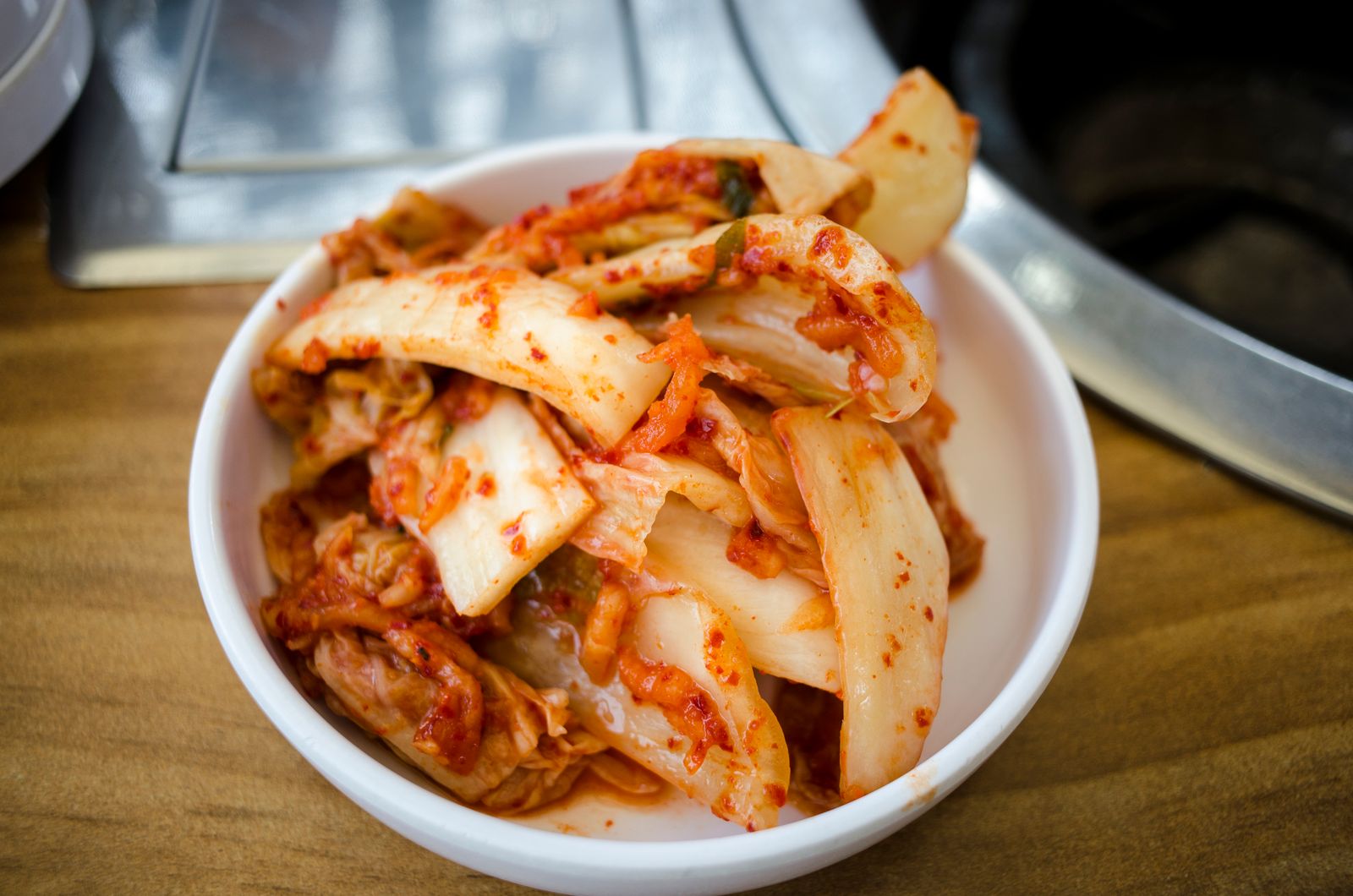
Half the joy of Korean BBQ is the assembly. The meat arrives with banchan — free side dishes of kimchi, pickled vegetables, and seasoned greens, refilled on request — plus lettuce and perilla leaves for wrapping. The classic bite, ssam, is a piece of grilled meat tucked into a leaf with a smear of ssamjang (a savory-spicy paste), a slice of raw garlic, and maybe a sliver of green chili or grilled kimchi, then eaten in one mouthful. Dip leaner cuts in sesame oil and salt. Build each wrap to taste — there’s no wrong way.
Korean BBQ Etiquette
A few small customs smooth the meal. It’s polite for the youngest or most junior person to grill and to pour drinks for others, holding the bottle with two hands and not filling your own glass. Eat each ssam in a single bite rather than taking halves. It’s normal to order in rounds rather than all at once, and to end a heavy BBQ meal with a cold noodle dish or a simple stew. Tipping isn’t expected anywhere in Korea, so don’t. None of this is strict for visitors — a little awareness just makes the table flow.
Where to Eat Korean BBQ in Seoul
Good BBQ is everywhere in Seoul — follow the smoke and the crowds. The historic Jongno area and the grilled-meat alleys around Euljiro are classic, Hongdae does cheap-and-lively student-style BBQ, and Gangnam has upscale hanwoo specialists. For the most local feel, look for a busy place full of Koreans rather than a glossy English sign. Our guide to what to eat in Seoul and Korean street food guide round out the rest of the city’s eating.
How Much Does Korean BBQ Cost?
Korean BBQ spans every budget. At a casual, local pork joint, you can eat well for around ₩15,000–25,000 per person, ordering a couple of portions of samgyeopsal with the free sides and a drink. Mid-range places and beef cuts push that to roughly ₩30,000–50,000, and premium hanwoo beef at an upscale restaurant can run far higher — a genuine splurge. Meat is usually priced per portion (around 150–200g) and you order in rounds, so a shared table of two or three keeps the per-person cost reasonable. The bottomless banchan, the lettuce for wrapping, and often the rice and a stew are included, which makes even a modest order feel generous.
Tips for First-Timers
- Go with a group if you can. BBQ is built for sharing, and portions suit two or more.
- Let the staff help. They’ll grill, snip, and guide you — just ask.
- Order in rounds. Start small and add cuts as you go.
- Eat the ssam in one bite. Build the wrap, then finish it whole.
- Pair with soju or a cold drink. It cuts the richness of the meat.
Plan Your Trip
Start by booking your flights to Seoul✈️. Once your dates are set, here’s how to plan the rest.
Go deeper with a guide. You can join a food tour or cooking class🎫 to learn the cuts and the wraps from a local.
Build it into your trip. Slot a BBQ dinner into our 4-day Seoul itinerary, and stay near the grilled-meat districts with our guide to where to stay in Seoul.
Disclosure: This post contains affiliate links. If you book through these links, I may earn a small commission at no extra cost to you. I only recommend services I’d use myself.